Category: Europe
Lazy loading
 5th September 2020
 It may be autumn now and the nights really are drawing in on us, but I still have walking ideas. They are fairly local, which is useful given the times in which we find ourselves. For instance, I have another idea for a walk between Whaley Bridge and Macclesfield: this one would go via the Goyt Valley instead of Taxal Edge where the previous ones went.
There is another, and that brings me to recent wanderings. One of those took me from Leek to Buxton via Ramshaw Rocks. Since the day became dull, I would like to go back to those rocky outcrops again to come away with better photos. Such a route could be varied according to available hours of daylight, if so needed.
Other rambles did better with sunshine. One took me around hills near Church Stretton in Shropshire, while another gained me my only exposure to sea air of the year so far. That was around the Great Orme near Llandudno in Wales, and it rounded off an extended bank holiday weekend that also featured the aforementioned Shropshire and Staffordshire/Derbyshire hikes. All were good for my emotional well-being during what has been a very tough year for all of us. It may be that I am starting to regain my footing after all that has happened.
As a dark patch continues to lift, I also got in some website tinkering, and that explains the title of this post. Some may not have heard of the term, yet many will have encountered the behaviour: a web page that does not load all at once, but only when a visitor scrolls down far enough to need the outstanding sections. That is called lazy loading, and I decided to try it out with the images on this blog. If it is too much of an acquired taste or is too distracting, just let me know and I will make adjustments. Otherwise, the tinkering and the toddling will continue. Technology continues on its inexorable itinerary, pandemic or no pandemic.
Same month, two consecutive years, two very different seasons
28th August 2020 During July, I read Barry Lopez's Horizon and its prose has the same elegance and attention to description that I enjoyed when reading Arctic Dreams, one of his earlier works. The main reason that I mention summer 2020 reading here is that it mentions the explorer Captain James Cook and this trip report includes two different excursions into countryside that he would have known well. After all, he had his upbringing in Great Ayton that was the start and end point for two very distinct walks.
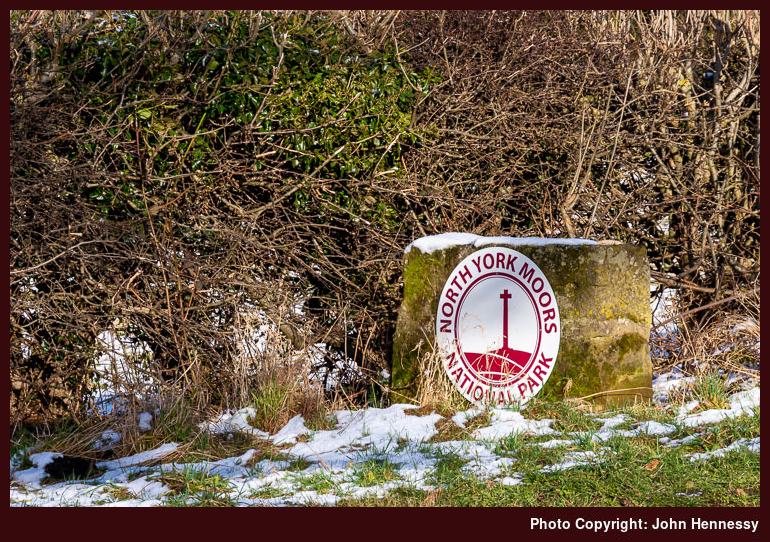
It was not so much the routes that differed but the weather and ground conditions. The first encounter was on a wintry Wednesday in 2018 while the second was on a summer-like Saturday with many more about since it also was during a school midterm break. In fact, the weather drew many to travel by train to Whitby and it was a mild if greyer day spent there that took me past Roseberry Topping and Great Ayton in the first place.
Preceding Reconnaissance
The North York Moors have lain beyond the extent of north of England hill wandering for a long time before I made an actual incursion. Part of this is because getting to the North York Moors is a little awkward from where I live, especially for a day trip. For one thing, train travel takes quite a while and that especially applies to the Esk Valley railway line, scenic though it is. After all, it takes a few hours to get from Middlesbrough to Whitby and service frequency is of the order of number of trains per day rather than number of trains per day. As it happens, bus travel from Leeds can work just as well so that probably is saying something.
Given that, it perhaps is unsurprising that I undertook a reconnaissance visit before undertaking anything more intensive. That was how I got to go to Whitby on the Wednesday before Christmas 2017 and looking back at photos made then surprises me for I was a lot luckier with sunny spells than I then had supposed.
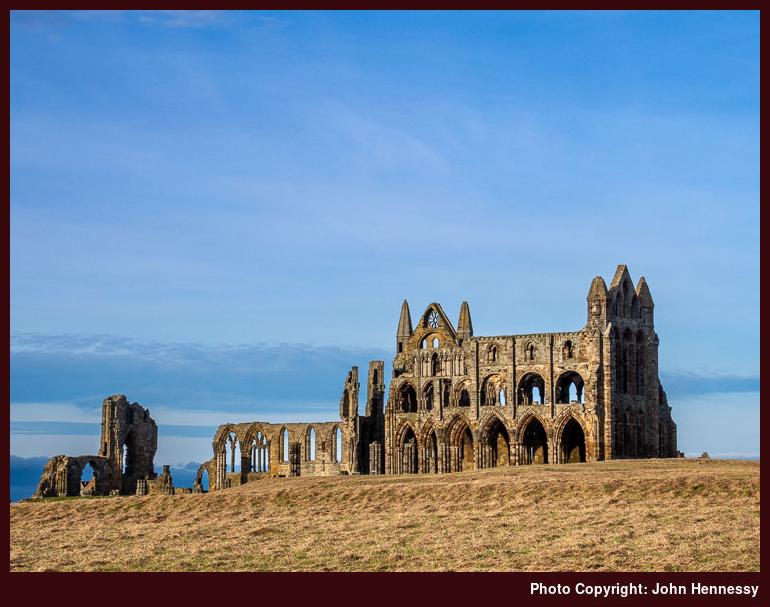

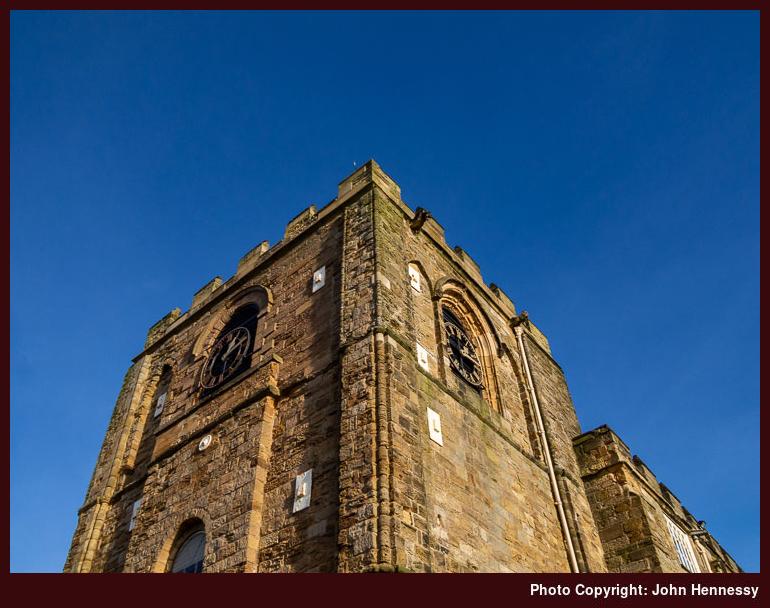
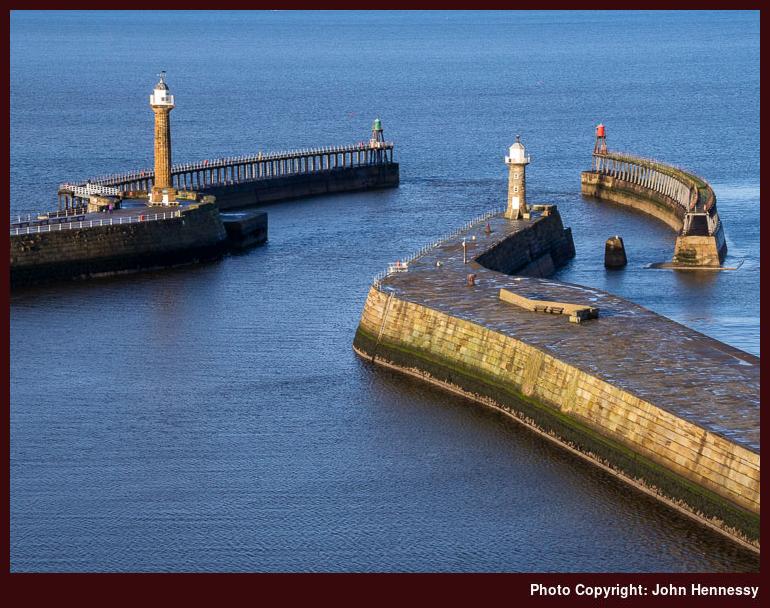
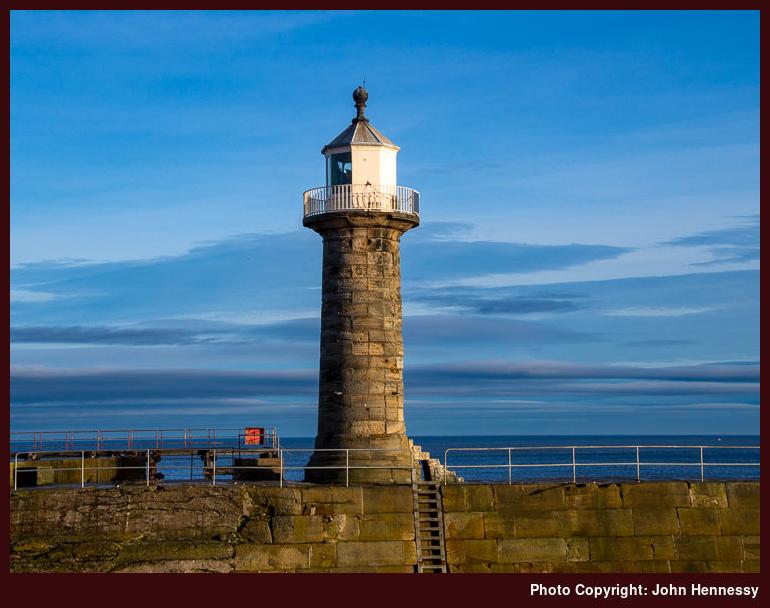
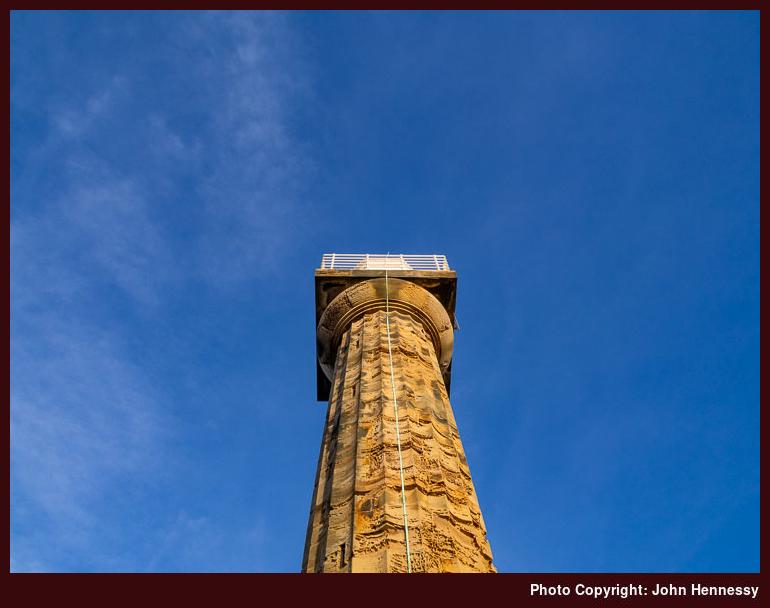
When I reached Whitby after savouring the scenery along the way from Middlesbrough, I naturally got to potter about the place to get a closer look at the ruins of its abbey and anything else that caught my eye while I was there. There even was a bit of coastal walking and a chance to dip my footwear in the incoming waves of the North Sea.
Not wanting to await the next train to Middlesbrough, I caught a bus to Leeds from where I started my train journey home again. Sitting in the top deck of that double-decker meant that I spent more time looking at what lay about me on the way than progressing with any reading material that I brought with me. After all, I was getting to see places where I had not been and that was the point of my outing. It duly achieved its purpose and the possibility of a walking incursion into the North York Moors became all the more real.
True Winter
That I only got to glimpse Roseberry Topping in reality during my 2017 reconnaissance trip might make you think that I may not have known of the hill for very long, but that is not the case at all. After all, the photographic craftsmanship of Joe Cornish is something that I have appreciated for nearly two decades and this has been one of his favourite subjects. More recently, I got to know that it is a local hill for world-class mountaineer Alan Hinkes.
It also is low in stature and near a train station once you get there, so that made visiting it on a day trip more realisable than other parts of the North York Moors. That made it a plausible option when I desired a short afternoon stroll even when cold weather was forecast. It also helped that I could add to the route, thus gaining a wider appreciation of the area.
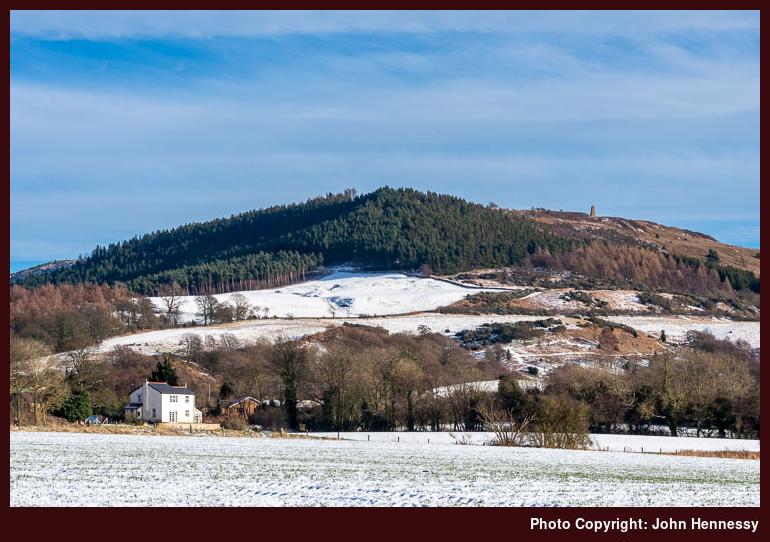
On arrival at Great Ayton by bus, I was greeted by bright sunshine and the frigid forecast proved to be correct with a thin coating of snow and many icy patches that required extra care as I went. The village looked well in the sun as I left it to go via the train station to Great Ayton Moor accompanied by views of the Captain Cook Monument on Easby Moor. The folly of thinking that going by bus would give me more time was exposed by the arrival of a train from Middlesbrough as I passed on the bridge over the station. It was only later when I needed to await a bus after missing a train that any wisdom such be extracted from the approach.
Nevertheless, I continued along Dikes Lane before leaving it for a public footpath near Gribdale Terrace. It may have been how icy the road had been that encouraged such a choice, especially with my going uphill. In time, I would meet with the Cleveland Way for the next part of my hike.
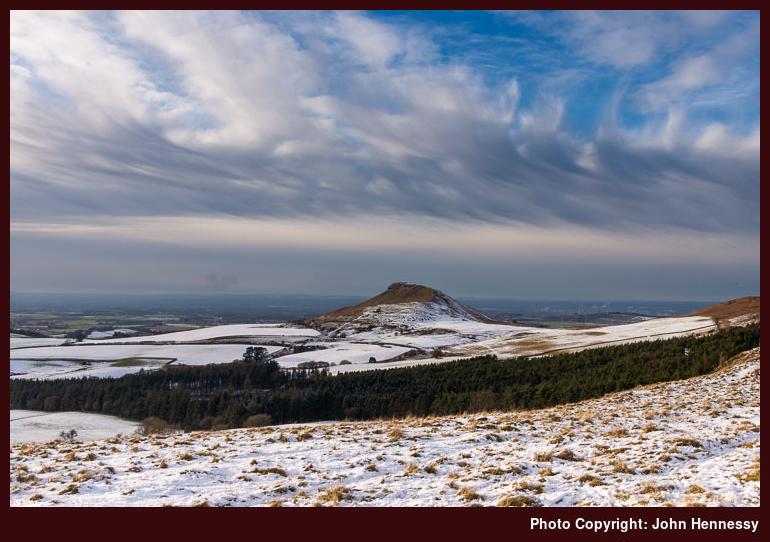
That was to lead me over Great Ayton Moor and Newton Moor while previously clear blue skies became filled with cloud cover. There were few others about so I enjoyed more solitary strolling with views opening up around me to include Roseberry Topping itself. The Cleveland Way does include the aforementioned hill as a side trip on its way from Helmsley to Filey and that decided the route I would take to reach its summit.
First, I needed to drop down carefully off Newton Moor after passing Slacks Wood. As I did so, I debated the good sense of proceeding with the ascent given the conditions. Looking at the photos since then though, I realise that I missed a trick because not all sides of Roseberry Topping were coated with snow so I could have gone with an alternative route to that which I took. This might have saved reproaches against my stubbornness and coming off a different way might have appeal if I had not scared myself on the way up.
The way down was testing with the prospect of a long slide down steep slopes not appealing to me given the chance of injury. There was a short controlled slide but that only restored confidence rather than causing the feared outcome. It all slowed progress in declining light and I sensibly put aside the possibility of missing a train in preference to risking a more serious slip.
Thankfully, the steepest descent was behind me quickly enough, though I retain a few lessons about looking for a less snow-coated route, having better traction equipment and even leaving a possibility for another time. They were being stored as I continued down to Aireyholme Farm where I met with a tarmac track back to Dikes Lane again. Though I missed the train by a matter of minutes, it was better not to rush and I returned to Great Ayton to await a bus instead. Then, my journey home began.
More like Summer
It was partly a desire to capture a photo of Roseberry Topping in sunnier weather that drew me back to the North York Moors and a February day that felt more like summer offered just that. Added enthusiasm came from the suspension of a Northern Rail strike that meant that no Saturday services had been operated by the company for many months. The train service restoration had the effect of encouraging me to embark on numerous trips to Yorkshire during the spring of 2019.
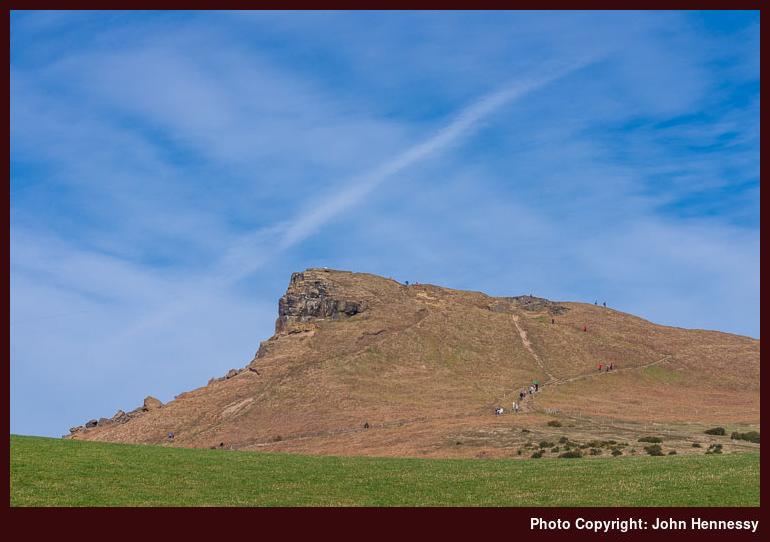
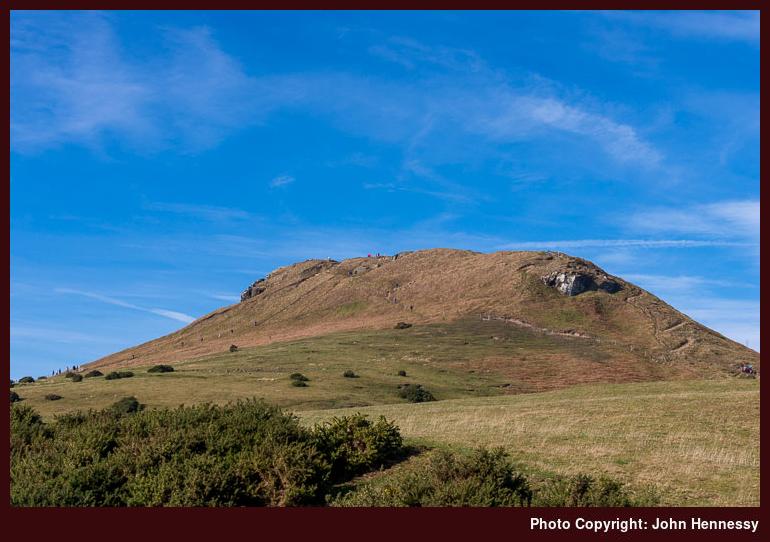
My previous encounter had happened on a wintry Wednesday so it was very quiet with plenty of solitary walking. It was not just the unseasonably mild weather that added company the second time around for this a Saturday during the spring school midterm break too. That almost guaranteed that Roseberry would have plenty of people around, as might be spotted in the photos by careful observers.
The first part of my way up there was quieter though and was a reprise of my previous descent route via Aireyholme Farm. With all of those who were around Roseberry Topping, my call to the summit involved little in the way of delay with some leaving me pass since they were slower than I was. In any event, I was seeking quieter surroundings and it did not take long to find them.
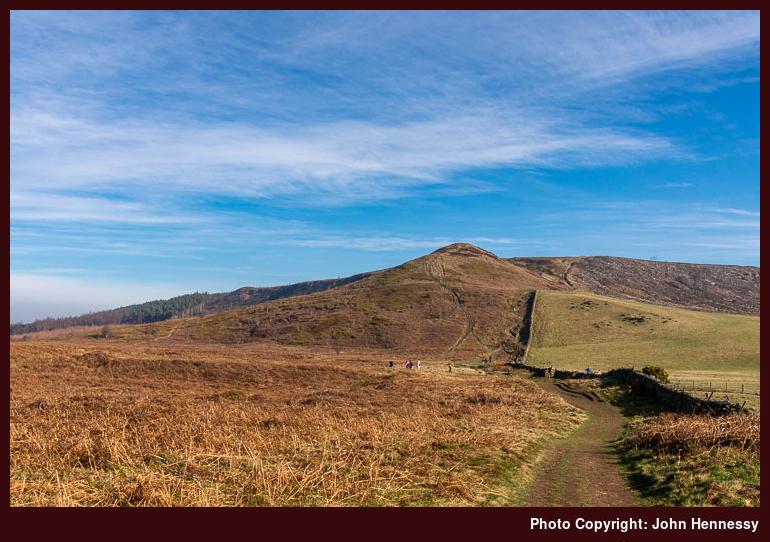
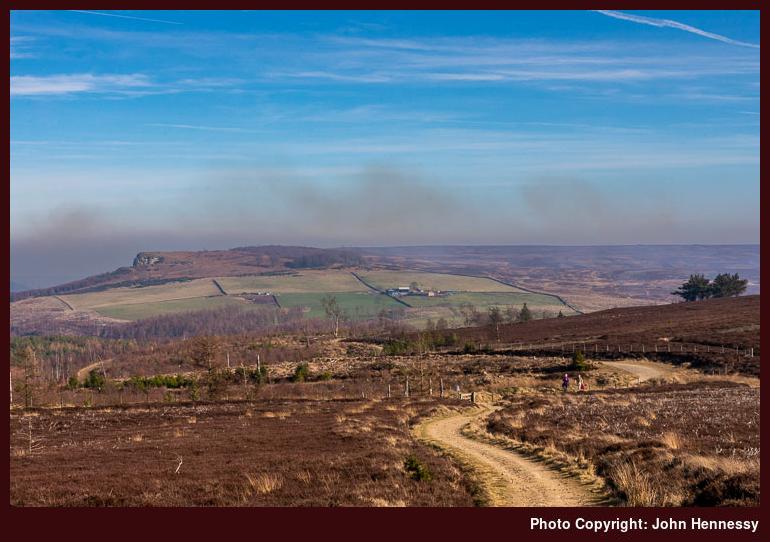
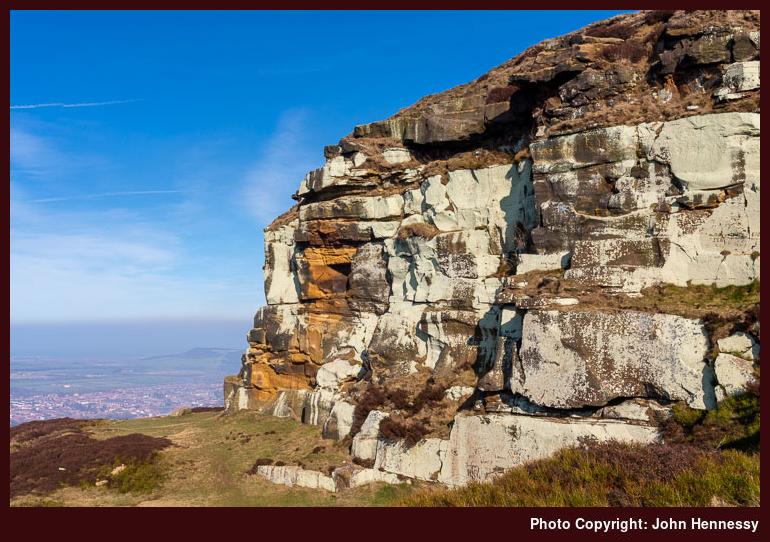
All I needed to do was to go following the Cleveland Way as far as Highcliff Nab. That journey carried me over Newton Moor, Hutton Moor and Black Nab along the way. As I crossed near Hutton Lowcross Woods, the landscape took on something of a desolate quality to my eyes for some reason. The variety of landscapes encountered on the day made sure that I would dwell on such an impression.
The final part of the journey to Highcliff Nab was a simple out and back affair that involved spending a little time around the crag. That said, it did not detain me and others were stationed there already so I started on the next part of my hike. That took me across Codhill Heights and Kildale Moor where I met with a tarmac lane. Then, I doubled back to meet with a path that went across Great Ayton Moor. As I got closer to the car park near Cockshaw Hill, I encountered more people again and there was a certain recognition of where I was since I was going past places that I first saw on my previous visit to the area.
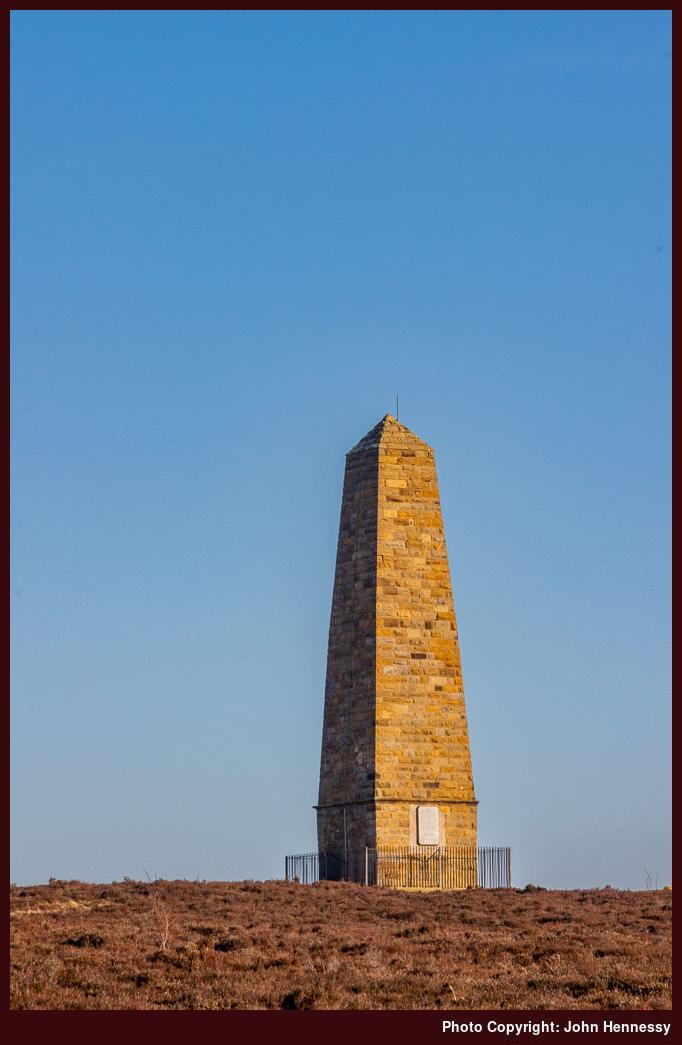
Reaching Captain Cook's monument was an attraction for quite a few visitors so I needed to share the trail over Cockshaw Hill and Great Ayton Moor to reach the obelisk on Easby Moor. There were still quite interludes though since it was by then later afternoon. After spending some of my own time up there, I continued down to Great Ayton's train station and gained more solitude along the way. The path down through Ayton Banks Wood was gentle at first but later became steep enough that I resorted to holding on to tree trunks in an effort to steady my nerves. That was behind me soon enough so I trotted along a bridleway and a byway to reach the Dikes Lane and the train station again after a good day of hill wandering. Even so, the possibilities of this area are far from being exhausted and other halts on the Esk Valley Railway may offer additional departure points for future explorations on foot.
Travel Arrangements
Getting to and from Whitby involved an outbound train journey with changes at Manchester and Middlesbrough, while the way back made use of the Coastliner bus service to get from Whitby to York from where I continued back to Macclesfield with a change in Manchester. The first trip to Great Ayton needed a return train journey between Macclesfield and Middlesbrough with a change in Manchester and bus connections were used to get between there and Great Ayton. With changes in Manchester and Middlesbrough, the second journey to Great Ayton was an all-rail affair unlike its predecessors.
A baptism
23rd August 2020 It may seem an odd thing to do in the middle of a pandemic but, once I regained trust in home delivery, I have been replenishing or reinforcing my collection of hiking gear. Some items have lasted until now and need replacing while new needs also get identified along the way.
One of those new needs was having a smaller daypack than my somewhat worn 35 litre Lowe Alpine Walkabout 35. The reasoning was my not wanting to be so conspicuous on public transport during the times in which we are living. Usually, my Osprey Atmos 50 might have been out and about on many day trips too but I fancied something much smaller than that again.
In fact, I have stripped back what I carried to the bare minimum and none of my hiking trips have gone any further than Kinder Scout this year in any case. That may explain why I have navigated using the OS smartphone app in so many places when I knew so much of where I was going anyway. Even with staying close to home, the messaging about public transport usage remained with me so I even resorted to using a shopping bag in case any questions got asked. That worked until it amused a fellow hiker so it was time to get something more auspicious and it also helped that everything was opening up more and more by that point.

The result was the acquisition of a Lowe Alpine AirZone Trail 25 daypack. It had not come to my notice at the time that the item's maker had gained an association with fellow outdoor gear purveyor Rab and that was less obvious that the number in the pack's name because it was the 25 litre capacity that better suited my needs.
The pack's profile is long and narrow but it accommodates necessary items like waterproof clothing, camera equipment, folded walking poles, water bottles and maps. The last of these fits into an exterior pocket while anything else that I need goes into trouser, shirt and jacket pockets anyway. In short, it swallows so much that I wonder how I managed to need bigger packs anyway but I suppose that anyone can fill whatever they have to hand.
While the exterior of the pack does share its feel with waterproof clothing, it was not something that I intended to test quite as soon as I did. That happened on a walk from Whaley Bridge back to my house while a long hefty shower soaked me near Windgather Rocks. Nothing inside got wet so I was left to dry out as I sauntered over Cat's Tor and Shining Tor. The sun even came out to heat up the day as I passed Lamaload Reservoir and stayed that way as I went around by Rainow.
Rain performance has not been tested since then but the pack continues to see use and there was a reprise of the route a few days later in better weather so any irritation caused by not passing the way is well absolved by now. Now that I understand how people manage with smaller pack sizes, the AirZone Trail 25 could see ever more use yet.
Virtually goes it
22nd August 2020 Many events are becoming virtual these days. My first notice of the ongoing trend was with business conferences in my line of business but it has not stopped there. As it happens, the pandemic means that large gatherings of people are not the wisest right now so this is perhaps less of a surprise. That last point had me questioning the sense of even delaying events like the Photography Show for six months but even that is going virtual next month as well. This is a trend that applies to both business and lesiure.
After all, Wanderlust have a YouTube channel with recordings of a few of these collected. Some are recordings of live events from before the start of the current pandemic but others like Incredible Iceland or Uncover Guyana are entirely virtual affairs. In fact, I got to join the two events that I have mentioned and would not have got to them if in-person attendance was a must because they often have been held in London.
That last point has not gone unnoticed by organisers either. Regardless of the professional or leisure character of the subjects being covered, attendances are higher with more joining from different parts of the world. The ongoing pandemic may be keeping us apart in some ways but it is bringing us together in others.
There also is the matter of travelling virtually as well. This year, I might have hoped to get to Colorado but that became totally unrealisable and that reality even applies to the matter of getting to and from Ireland too. Normally, I should have gone to my home country at least twice by now and there should be two more before the year is out. 2021 looks more feasible now and it is hard to say how that might go at this stage. Given that, it is little wonder that services like Trek Ireland are turning up for those of us restricted to armchair explorations.
In my case, those home-based global explorations have cause me to survey Backpacker's Get Out More TV on their own YouTube channel. It is true that these feature a lot of product placement as well as segments from outdoor retailers but keeping our attention on a hiking film possibly demands a lot of patience anyway. Still, they do show something of the areas that each episode showcases so that probably will be enough to get me watching more than the first three episodes that I have seen so far.
Traipsing through two countries and three counties
28th June 2020 The start of a new year is often a time for reflection on what has gone before, as much as pondering the prospects of a year to come. In this, 2018 was no different, and I was in the middle of a career break as well, so the thinking turned to my next career moves and the choices that I arrived at in January 2018 continue to pervade more than two years later.
In fact, they affected the start of this year with another work break that allowed the taking of stock in light of then seemingly pervasive threats. Throughout this, I also got to wonder about future transatlantic excursions as a form of distraction. Many do love planning, but you need to be without an intrusive global event to make it happen. So all those dreams from January and February of this year are placed on hold.
Thankfully, it was only my own speed of inquiry and assessment that forestalled any overseas travel dreams in 2018. Other plans could be made to happen in a piecemeal if imperfect manner. What I needed to do is get over the residual stresses caused by what needed doing during 2016. At least, I did not have a global pandemic back, and I count myself very fortunate for that.
Returning to 2018 though, it was not as if all the required introspection ruled out day trips, quite like the activities or the weather of the first two months of this year. In fact, a few of those took me to Wales and the principality had not seen my making trips there for quite a while if I recall correctly. The sequence of Welsh outings actually began before Christmas 2017 when I embarked on a trip through the western end of the Brecon Beacons National Park. That took me through Abergavenny and Brecon as far as Neath before I continued my way home. In time, the possibility of exploring another quiet part of Wales may come to something.
My first Welsh excursion of 2018 actually took me to Cardiff, a city that I have long neglected, and the outing was repeated in part on the Spring Bank Holiday of 2019. Then, there may have been a Spice Girls reunion concert, yet what intruded on my ambling more were groups of cyclists going along multi-use trails. Sunshine pervaded on both visits, but thoughts of basing myself in Cardiff for a few days to explore the countryside within its vicinity retain their appeal. While I might do some cycling of my own too, I do intend to leave better space for walkers, especially around the delightful Bute Park and along the banks of the River Taff.
So far, what I am talking about is a spot of reconnaissance that may lead to future trips and there is one other excursion in January 2018 that deserves a mention before the main trip report, and it leads easily into it. That took me from Macclesfield to Aberystwyth via Shrewsbury and Llangurig. Not only did that take me past Pumlumon Fawr by bus, but the stopover at Llangurig also allowed some muddy walking along part of the Wye Valley Walk. What I really was exploring though were the logistics of getting near Pumlumon Fawr for an ascent of one of the highest hills in mid-Wales. That left me with the framework for a scheme that either would use Aberystwyth as a base or involve a bivvy on the side of the hill, depending on how brave I feel.
The Wye and Severn rivers both rise on Pumlumon Fawr, yet that was not where my Welsh wandering took me next. It may have featured the same River Wye, but this was a circular ramble, with Monmouth at its starting and ending points. In truth, I also fancy a visit to Tintern Abbey, but remains outstanding too, and the idea for the Monmouth excursion lay in my mind for quite a while before it happened.
Calling the route a circular one does much to hide its actual complexity, with some of that arising from serendipity. At my arrival in Monmouth, all that was yet unknown as I passed through it heart, with older buildings like those of its church and its independent school adding interest along the way. The school's students were going hither and thither in their boisterous ways and, fancying an air of greater peace, I left them to those to reach the River Wye.
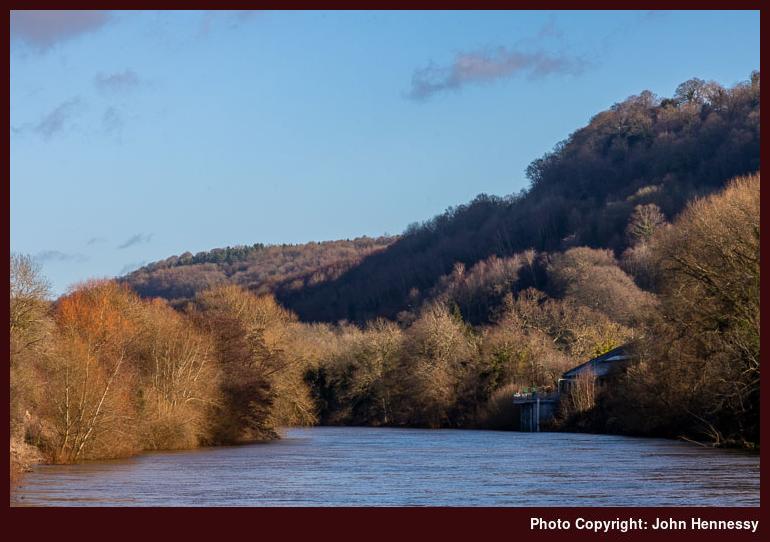
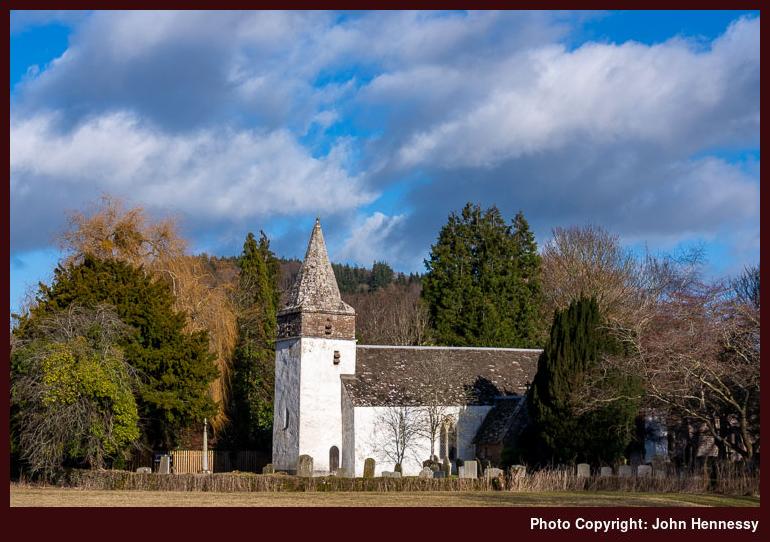
There, I met up with the Wye Valley Walk that was to convey me along the Welsh side of the river; Offa's Dyke Path also passed hereabouts, but that was not part of my designs since I was bound for Symonds Yat. With the hubbub of the A40 in the background, I relished the sunny morning as much as I could. Apart perhaps from the likes of St. Peter's Church near Dixton, those early stages were not to be peppered with so much in the way of human construction.
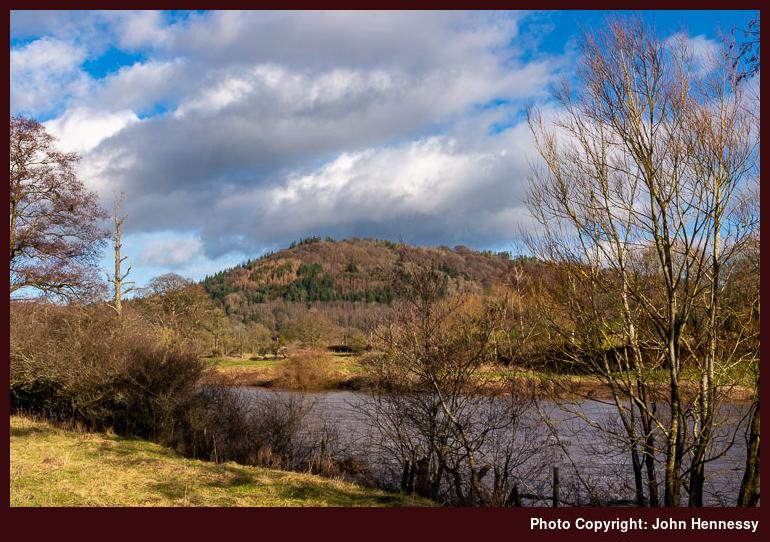
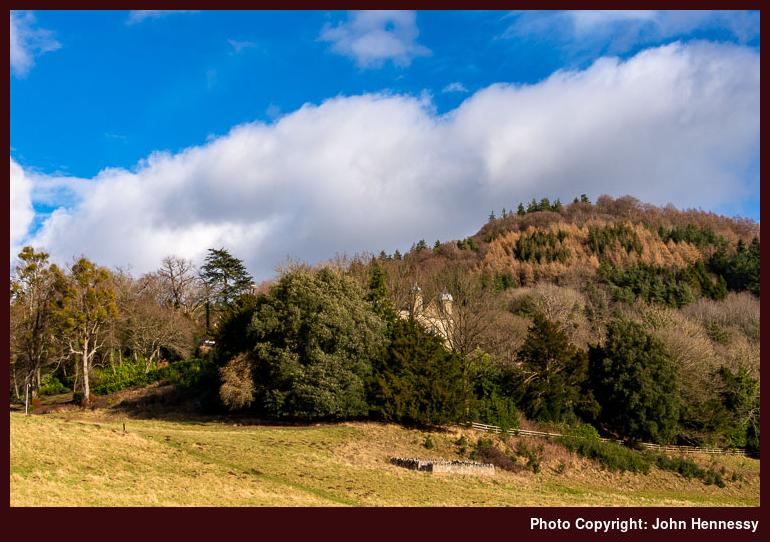
Forested hills lay to my right and in front of me as I went, and it was around these that I was to spend much of my time. Some were to be more easily named than others, but that did not detain my thinking as I reached the point where the river parted from the busy motorised thoroughfare. Beyond Wyastone Leys, my surrounding were to become much quieter and much now forested.
The forested route may have limited opportunities for photography, but I was soon enough at The Biblins where I would cross the Wye and encounter a greater human presence. Some were walking and others cycling, but there was enough room for all of us, and I still recall having the place to myself at times.
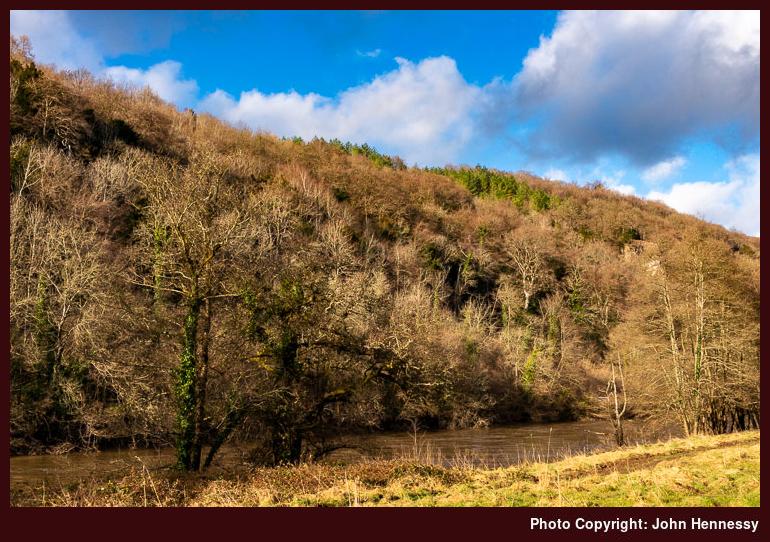
It was afternoon by the time that I reached the eastern part of Symonds Yat. Not only had the trail led me onto tarmac, but I had crossed into England and was in Herefordshire. The road and any traffic that was passing along it was left behind to round Huntsham Hill and return through Elliot's Wood. What became clear was how late in the afternoon it was getting, so I was anxious to keep going and photographic efforts stopped.
After reaching a road again, I then left it to go through Mailscot Wood and into both Gloucestershire and part of the Forest of Dean. With the road to Christchurch never far away, I was lured along a trail nearly as far as Hillersland before I turned in the direction of the River Wye again. That felt longer than was ideal given how late it was in the shortness of a January day.
Soon enough, though, I was back on the route of the Wye Valley Walk and heading towards Monmouth again. However, I decided against crossing the river until I reached the Wye Bridge in Monmouth, so following Route 423 of the National Cycle Network. By now I was back in Wales and soon enough reached a section of the railway that once connected Monmouth and Symonds Yat. That made navigation less of a concern as the hours of daylight faded.
Eventually, the gloaming would turn into full darkness and torch-lit walking along tarmac returned me to Monmouth, where I had plenty of time to find the bus terminus that I had not used on my arrival. Tintern was passed in darkness on the way home, but that fact did nothing to spoil the satisfying day out. In fact, it remains a useful excuse for returning to a delightful part of Wales.
Travel Arrangements
Train journey from Macclesfield to Hereford with a change at Stockport, followed by bus travel from Hereford to Monmouth using service 36. Bus journey from Monmouth to Chepstow using service 69 followed by train travel from there back to Macclesfield with a change in Birmingham New Street.


