Category: Europe
Now that an arctic visitor has departed
 22nd January 2010
 One night last week, after I had tired of trying to break up ice on the footway outside my house, I finally got to watch my copy of the BMC's Winter Skills DVD. That act may have brought a wealth of information my way but I have no intention of launching a full-scale incursion into hill country whenever weather like that which we had for the last month arrives. What I am planning to do with the information is to use it as a stepping stone to more learning experiences. Knowing the basics regarding crampon and ice axe usage along with a smattering of avalanche and winter navigation awareness is only ever a beginning. While winter hillwalking is my interest, there was climbing content in there too but I'll give that possibility a miss with my head for heights not being what it might be.
In among all the expected winter skills stuff was a discussion of winter weather trends. The DVD was made a few years back and the winters at the start of the century were of the milder variety. With the wider awareness of global warming, some of us were beginning to think that cold winter weather, like what we had recently, was set to become a memory. At this point, I have to say that included me, but these things now look cyclical after the last few winters having longer spells of snowy weather and it appears that it has been like that for a while. There was a mention of the green winters of the 1950's and they were followed by much colder ones in the early years of the next decade. This was all before my time but I do remember cold snaps during the winters of the 1980's with my being unable to get to school for the most of a month one winter and the water to my parent's house being frozen for a similar length of time during another. The last decade of the twentieth century wasn't one with much in the way of snowy winters if I recall correctly and I was living in Edinburgh at the time.
It seems that every time that hefty snowfall visits us, travel chaos results and a whole cacophony of media comment ensues. That may amaze those from places that have cold weather every year such as Montreal or Berlin, but the maritime climate of Britain and Ireland must mean that we see such things less frequently anyway. Not only does that mean that it is difficult to justify investing in measures to deal with the sorts of conditions that prevailed from last year into this one but it must also mean that we are not so practised when it comes to dealing with them either. This thinking also sets me to asking question of my own skills and experience. Spending my early years in the milder rain-soaked part of the world that is the south-west of Ireland would mean that I wouldn't get to sample as much of the white stuff as others do elsewhere. One consequence of that is that I only recently took a bicycle for a spin on snow, an act that taught me the importance of maintaining good contact between the tyres and the road through any skids were arrested by planting a Hedgehog-shod foot squarely on the ground.
In a way, I suppose that what we got was a rare experience for many of us. An Irish television meteorologist was heard to opine on air that a retreat to the record books was to see how the length of the cold spell was compared with previous forbears. In Britain, many were cut off by a covering of several feet of snow with an excursion for a Christmas turkey in the far north of Scotland taking a month longer than expected. The hills of Cheshire and Derbyshire were so plastered with snow that many were cut off by closed roads and I know a few of them. In the middle of all this, I got to read Joe Cornish's experiences of walking in deep snow in the Lairig Ghru without skis or snowshoes. Whatever I may have made of his exploits, his latest book, Scotland's Mountains, is well worth a look and the images in there amaze me with their lighting and sharpness. My own attempts are pale reflections in comparison. All of this was causing the usual questions regarding personal preparedness to bubble up in my mind.
It wouldn't be the first time because I penned an entry on the subject over a year ago after another snowy visitation and recycling of content is not really my style if I can help it. This winter's arctic episode, it was on with a semi-retired pair of Scarpa boots for getting to and from work, a job that they did with aplomb until everywhere became icy. Before that point, I made good use of what lay on the ground for confidence building and I am not just talking about a certain pre-Christmas constitutional. Well, there was a lunchtime amble about Nether Alderley and that piece of reconnaissance that took me to Buxton and Bakewell, both in the first full week of the year. It was because the snow on the pavement outside my house had become packed and even turned to ice that I was out with that spade.
Now that I have come to thinking of ice, I am minded to add a set of Kahtoola Microspikes to my gear collection because snow usually doesn't stay long and the customary icy aftermath is always both a danger and a nuisance. In fact, they even might come in handy for low-level trips in hill country too; I feel the need to add to my experience of snow-covered terrain but without rashly putting myself in the way of danger. On the same subject, there's also Icebugs's Trail BUGweb with steel carbide studs for gripping on ice and they do footwear with the same type of thing integrated into their soles, an interesting innovation though I see it having more use in their home country of Sweden.
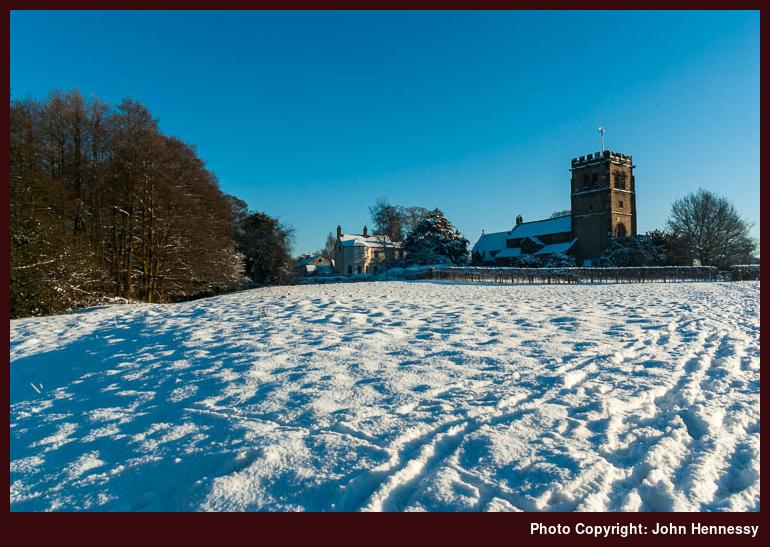
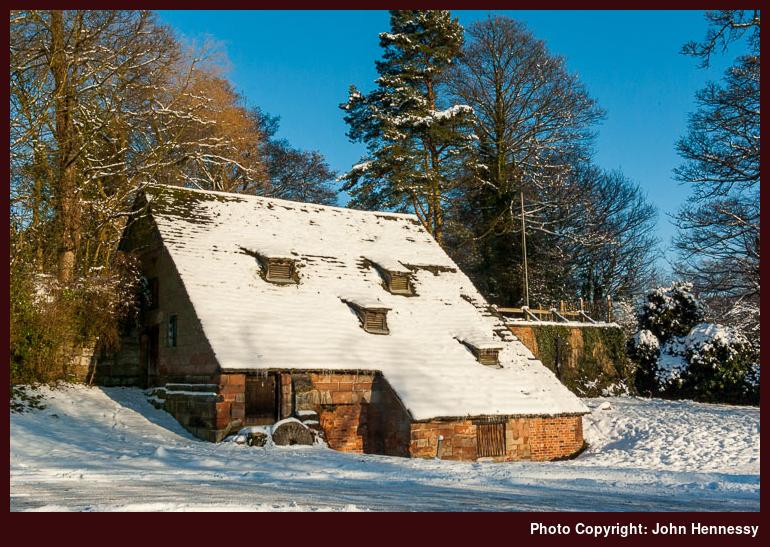
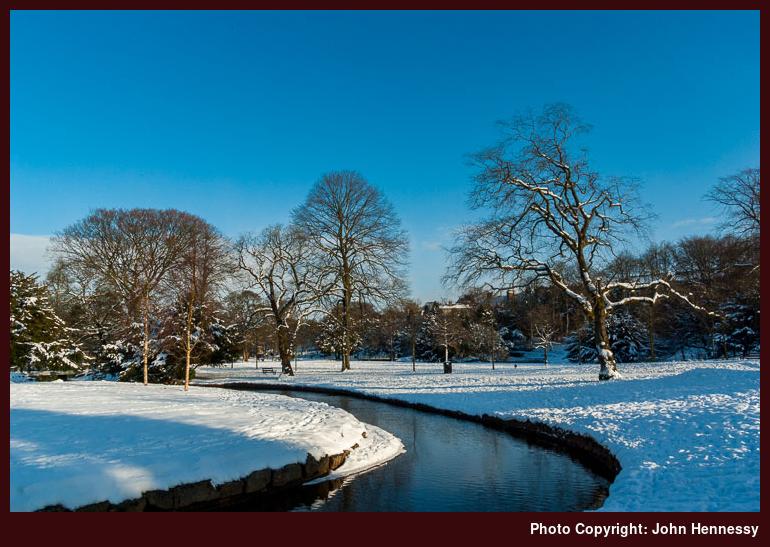
It's all very fine talking about walking on level ground, but uphill gradients are another matter. It's then that the sight of ice really does concentrate the mind like it did when I went exploring the Howgills near the end of 2008. After all, you don't want to slip and end up careering downhill towards a stone wall or worse. Though noting the amount of effort expended in travelling over about a foot of snow played a part in my rethinking of plans on that outing, it was the ice lower down that really constrained my upland wandering. Walks over some hills between Buxton and Macclesfield when snow lay underfoot haven't troubled me as much, but that may be down to local knowledge and experience as much as anything else. However, on the whole, I think that a certain glimmer of confidence is creeping upon me with regard to winter conditions. The acquisition of an ice axe is being pondered though I don't intend going beyond the softer snow of lower reaches for now. That isn't going to make the ideas of having an appropriate boot/crampon combination go away or do the same with the idea of getting in some training. The recent conditions may have added to my level of experience and that DVD supplied me with additional information, but there's a good way to go yet. Quite how the desired experience is going to accumulate is a journey whose course is as yet unknown.
Alterations
18th January 2010 Those of you who are regulars may note a certain change in the colours around here. Another bit of electronic fiddling was the cause of bringing the background colour to my notice. The new year has yet to see a proper piece of outdoors action. That's not to say that I didn't inspect the recent snow, especially given how much of it was plastered on the hills between Macclesfield and Buxton. That viewing took place on the second Saturday of the year from the confines of a warm bus rather than in an attempt to flounder through fields hosting feet of snow. Hearing and seeing how much was up there, thoughts were attuned to the need for snow shoes in such circumstances. It's little wonder that folk took to skis and going downhill on unexpected slopes like those of Kerridge Hill near Bollington. Drifting snow was starting to impede traffic while I was on my little excursion and it later closed the A537 Cat and Fiddle road almost completely. Buxton looked very pretty in its white coat on a bright day, but things were duller by the time that I reached Bakewell. It all made for an enjoyable spot of reconnaissance but a fuller bout of hill wandering is in order now that things are calming down, though there is more snow on the horizon for the middle of the week. It would appear that 2010 is getting an interesting start.
A longer winter break
6th January 2010 We have had the cold winter mixture of snow and ice for so long now that it almost is no longer newsworthy. It was there before I set off on a winter airborne crossing of the Irish Sea and remained to welcome me back on my return. That's not to say that it isn't causing disruption, with travel being a casualty from time to time. It also explains why I was out on Christmas Day and the day after (Boxing Day to some, St. Stephen's Day to others) breaking ice to clear tracks so that those with older bones than mine didn't go breaking them. There was a useful thaw thereafter that allowed things to dry up before the next round of frosts and I took my chance on an afternoon stroll around by Springfield Castle in the winter sun. Traffic, thankfully, was light on the roads that conveyed me much of the way and most of the ice had gone. In fact, I found more of that on the back avenue of Springfield Castle than anywhere else, including the front avenue. The latter allowed me to escape from a sizeable bunch who were engaged in pucking sliotars (hitting hurling balls with hurling sticks to the uninitiated) along the road from Broadford to Dromcollogher. Apart from that collective, places were otherwise quiet with only the occasional soul encountered along the way. It was a useful escape from worrying about the effects of slips on those who really could do without a knock.
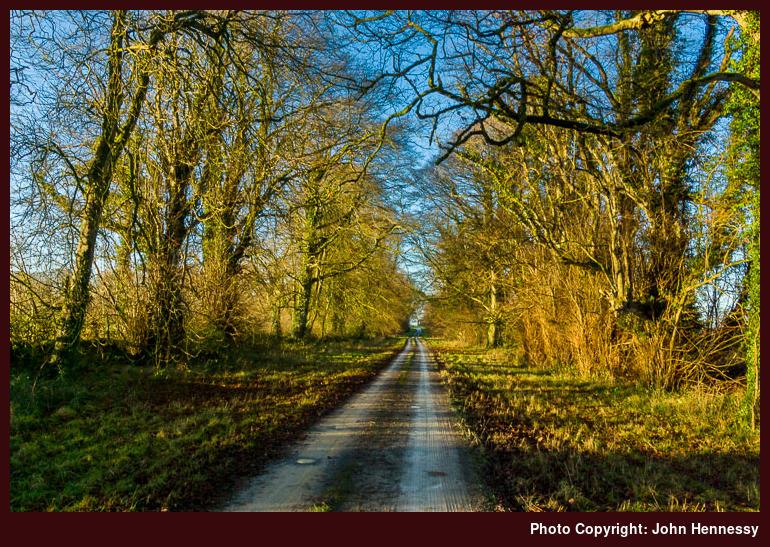
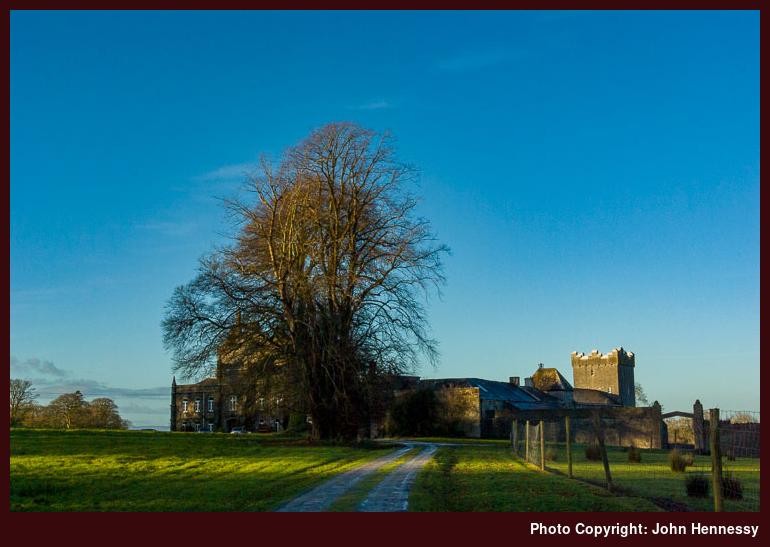
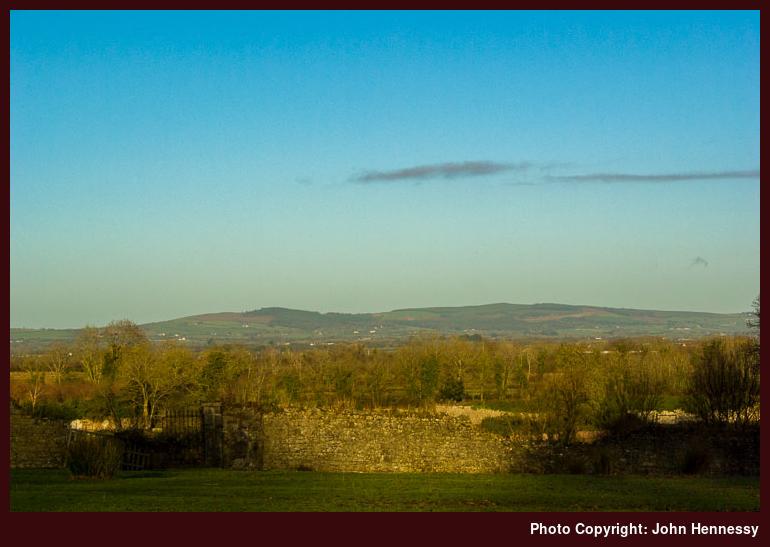
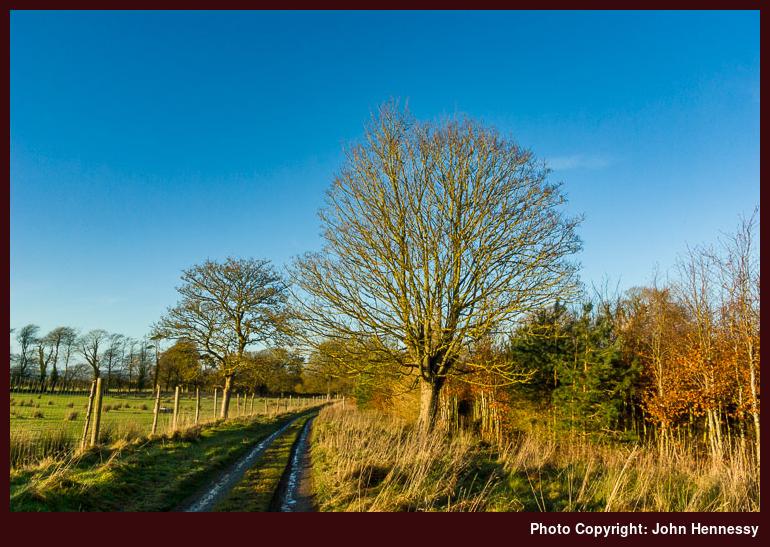
The only other trot of note was an afternoon jaunt around by Kilmeedy on an increasingly foggy New Year's Day. Though I gained some height, the lack of visibility meant that wide-ranging views were out of the question so I contented myself with decent progress along largely ice-free and dry roads with little or no traffic on them. It was, but an unremarkable few hours out in the cold air apart from the sight of a pair of swans in the River Deel near Belville. Even so, it was a good way to let the mind loose to lose any stresses and strains that had been collecting.
Apart from those bursts of road walking, the countryside journeying was largely virtual with some books capturing my attention. The first of these was found around my parents' house and caught my eye. Tales of canal boating do not normally attract my interest, but Gerald Potterton's In the Wake of Giants kept me occupied for a few hours with its mix of modern-day anecdotes and historical interjections. Ostensibly, it is a tale of someone fulfilling an interest in journeying along the Grand Canal and the River Barrow with its numerous canal cuttings for the avoidance of weirs. Naturally, this took me around by locales that wouldn't have crept too high up my list of places to visit and told me a little about them too, adding to my knowledge of the "Old Country". The tale may have stuttered to life like a marinised old Ford diesel engine that is used as a power unit for a canal boat, but the narrative soon got going in its own inimitable manner and went to show that there can be more to tillage farmers than meets the eye.
The second occupier of any free moments was a volume that I picked up a while back and lay on my reading list before I got around to it. Joseph Murphy's At the Edge does fit in rather better on a blog full of walking trip reports than a tome on canal boating and it has its own soul too. The backbone of the thing is a walk along the coasts of Ireland and Scotland from Kerry to Lewis made by someone who feels that he has lost a little something of his Irish heritage. Along the way, he gets to pondering Gaelic culture and the differences between Ireland become apparent with the emptiness of Scotland contrasting with an Ireland peopled with obliging folk; interlopers who fail to engage with their Scottish surroundings stick out like sore thumbs later on in the narrative. While I may have developed a beady eye with all my online scribblings, there were times when perceived typographical errors intruded on any sense of reverie (I know that I'm only human, so please let me know privately about any failings of my own making). Clearly, a spot of improvement on the proofreading side is needed on the part of the publishers and the author. Even with intrusions, the explorations of exile and connectedness drew me in as the journey continued; I suppose that my being an Irishman living and working in England had something to do with this, though my affinity for the places visited along the way may have helped too.
Just as there are Irishmen in England, there are Englishmen in Ireland and Tim Robinson has been one of the latter since 1972. On the return trip to Cheshire, I felt the need for a book and his Stones of Aran: Pilgrimage became my accompaniment as I left the branch of Easons on Dublin's O' Connell Street. It's an intense piece of writing that needs to be savoured away from the vacant prattling of drunken folk on trains. Quite how he can make so much of coastal explorations with only the occasional diversion inland is surprising. Until a few years ago, it was out of print but Faber & Faber brought out a new edition with a forward by Robert Macfarlane. There is a companion volume called Stones of Aran: Labyrinth that also was out of print until the New York Review of Books addressed that situation last year. More recently, he wrote a counterpart pair on Connemara with titles such as Connemara: Listening to the Wind and Connemara: The Last Pool of Darkness, both published by Penguin Ireland. The latter of these is in my possession and remains unfinished but it very typically was on the wrong side of the Irish Sea when it would have been continued. Of course, that's a human failing with my not thinking that I'd not be reading that much while ensconced in West Limerick. It's also an unusual one for me, but carriage of paper items is sure to add weight that can prove expensive if indiscipline is allowed to reign. In that light, the extra purchase can be seen as a comparative bargain.
With all this reading about a country to which I haven't done justice in walking terms, you might think that 2010 is set to be a year when Ireland might see more of me. That, however, is not mine to see. The start of any year usually is like beginning with a blank slate, but 2010 seems more wide open than other years. While grand designs are not my style, I am more inclined to avoid them this year than I otherwise might do. It will be a case of meeting the future one day at a time and seeing where things take me from here.
More snow in the air
22nd December 2009 Now, I know why it was a good idea to sit schtum on Sunday. This afternoon, I took a bus over the hills to find a Buxton constantly beset by snow showers. Even with my being shod in North Face Hedgehogs, a certain chill was felt as I negotiated soft and often slushy snow underfoot in its main shopping precinct. Thankfully, they have good grippy soles with decent cleats.
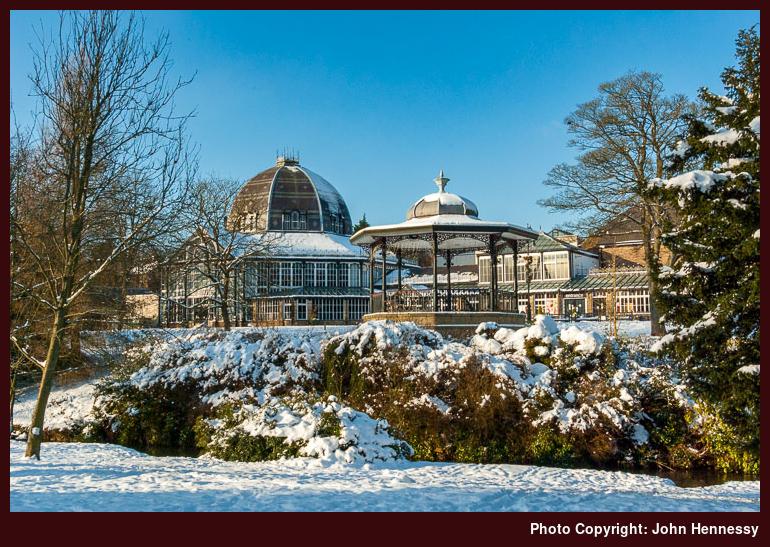
The snow did leave off for a while and I got to take in a very snow-covered Pavilion Gardens during the respite. Some sled-riding was in progress on The Slopes in the heart of the town, so not getting mowed down by one took up a certain amount of attention. That snow-less interval didn't last long, and enough snow soon filled the air to make the idea of returning home seem sensible.
On that return journey, the effect of all that snow was immediately apparent, with a definite slowdown in the speed of traffic around both Buxton and Macclesfield; the occurrence of an accident didn't help the latter. Then there was the matter of negotiating a snow-covered twisty road complete with sharp uphill and downhill sections. Visibility wasn't great either, and seeing the whereabouts of the road cannot have been easy at times. Being well familiar with where you are going has to help with getting through it all.
It's no wonder that the A537 gets closed in severe weather, and I didn't envy the lot of the bus driver either. The outbound journey was benign in comparison, with enough clarity in the air to see the well snow-covered hills all around, and the road was much clearer too. The whole experience was an education, and I was glad to be back home safe and sound. Things can get very lively up there, and going home via Buxton can be a better option at times. Trains may be more resilient than buses in these situations.
Sticking with what was near at hand
21st December 2009 In those rare times when snow pays a visit, thoughts can turn to going elsewhere. So, it was on Monday after with Sunday's snow covering. In the end, I wisely stuck with enjoying what lay on my doorstep and spent an afternoon among Macclesfield's nearby hills. Traffic may have been free-flowing and public transport running well enough for an excursion to the likes of North Wales to have worked but it would have been shameful to ignore the wonder that lay near me.
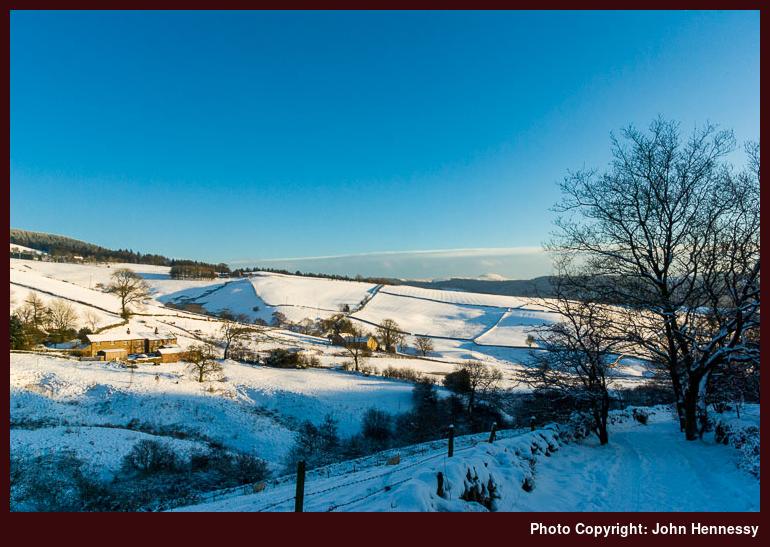
The route that I took was a familiar mix of roads and other rights of way. To start, I found my way onto the Macclesfield Canal via a very attractive Victoria Park and followed it until I reached the road near Sutton Hall, a pub near Gurnett, having taken in a section that was closed up to October. Having missed out on one or two public footpath options, I followed the road around by Lyme Green to Sutton where I made photographic use of the local parish church. After that, it was more roadside footway travel until Langley where I picked up a bridleway by Teggsnose Reservoir. As I shortened the distance to the visitor centre and car park at Tegg's Nose Country Park, the views opened up with Shutlingsloe being backed by a bank of cloud. From there, I joined the Gritstone Trail through snowy fields with the hillsides developing a certain alpenglow in the late afternoon sun. On reaching, the A537, the ridge that is Kerridge Hill lay tantalisingly before me but I tamed my ambitions to content myself with a road walk to Rainow, avoiding the steep up and down of the Gritstone Trail alternative. An untrodden public footpath beckoned, but a tight stile persuaded me to stay on tarmac. From Rainow, it was roadside footway travel all the way home in the declining light. There was a tempting bus option but I stuck with the plan of a circular walk from my own house with the street lights coming on as I went.
All of this was on familiar turf but that made it no less wonderful; never discount snow's transforming powers. There was a mixture of uninterrupted reverie interspersed with encounters with snowball throwing and sled riding that remained of the detached observation variety. Everyone was out enjoying the results of the previous day's hefty snowfall in their own way, no bad thing, though there's something to be said for leaving things where they have fallen for the enjoyment of others. After all, the chances of replenishment are not so high these days. In a way, that may make us all make more of what comes when it does and that applies to me as much as anyone. Then there's the chance to add to your experience of winter conditions too.


