Exploring the Natural Beauty of South Africa: From Mountains to Coastline
South Africa may seem distant from the British Isles, yet it holds considerable appeal for travellers seeking dramatic landscapes and diverse experiences. An article on walking in the Drakensberg Mountains appeared in Country Walking magazine, sparking my interest in exploring what this vast country offers beyond the familiar wildlife safari narrative. What follows is an overview of South Africa's regions, natural attractions and practical considerations for those contemplating a visit, drawing together information that may prove useful for planning a journey to this complex and compelling destination.
A Land of Remarkable Contrasts
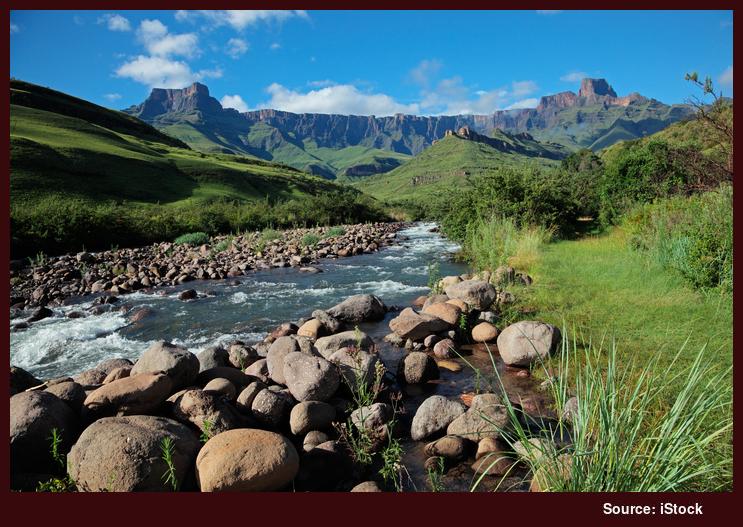
The country turns out to be one of many contrasts, and its vast size partly explains that diversity. South Africa experiences dramatic regional variations in both landscape and climate. In the north and northeast, elephants, hippos and other animals that you would associate strongly with Africa roam the bushveld, whilst things look ever more temperate the further south you travel. The photograph that accompanies this article shows a part of the Drakensberg mountain range that looks so very green that it is reminiscent of a summer day in Britain or Ireland.
The climate varies considerably from region to region. KwaZulu-Natal enjoys a subtropical climate with warm rain throughout much of the year, whilst the Eastern Cape experiences a Mediterranean climate with hot, dry summers and wetter winters. The Western Cape around Cape Town is famed for its Mediterranean climate, with winter rainfall from May to August and dry, sunny summers. Most of the interior plateau experiences hot summers and cold winters, with summer rainfall across much of the country.
The Magnificent Drakensberg
The Drakensberg Mountains are the most striking feature of South Africa's landscape. Dutch settlers called this range the Drakensberg, meaning Dragon Mountains in Afrikaans, whilst the Zulu people know it as uKhahlamba, the Barrier of Spears. This evocative name perfectly captures the dramatic appearance of the jagged peaks and steep escarpments that characterise the range.
The Drakensberg forms the eastern portion of the Great Escarpment, stretching for more than 1,000 kilometres along the southeastern side of South Africa. The range runs parallel to the coast, forming borders between several provinces and the mountain kingdom of Lesotho. In places, the mountains rise to more than 3,400 metres above sea level, with the highest peak, Thabana Ntlenyana in Lesotho, reaching 3,482 metres, making it the tallest mountain in Southern Africa.
The range includes spectacular natural features such as the Amphitheatre in Royal Natal National Park, a dramatic cliff face that stretches for 5 kilometres and rises over 1,200 metres. The mountains are also home to the Tugela Falls, which has a total drop of 947 metres, making it one of the highest waterfalls in the world. These rivers that flow from the Drakensberg are essential resources for South Africa's economy, providing water for industrial provinces including Johannesburg.
The Drakensberg was designated a UNESCO World Heritage Site in 2000, recognised not only for its natural beauty but also for the thousands of rock art paintings created by the San people over millennia. The high peaks support unique alpine grasslands and woodlands, whilst the lower slopes feature endemic plant species, with 98 species found nowhere else on Earth.
The Western Cape and Cape Town
At the southwestern tip of Africa lies Cape Town, often described as one of the world's most beautiful cities. The city sits beneath the dramatic Table Mountain, a flat-topped peak that dominates the skyline and forms part of Table Mountain National Park. The mountain can be ascended by cable car or via numerous hiking trails, offering spectacular views across the city, the Atlantic Ocean and False Bay.
The Cape Peninsula extends southward from Cape Town, culminating at the Cape of Good Hope, a rocky headland that marks the point where the Atlantic and Indian Oceans meet. The peninsula features stunning coastal scenery, including Chapman's Peak Drive, one of the world's most scenic coastal roads and Boulders Beach, home to a colony of African penguins.
Beyond the city, the Western Cape encompasses some of South Africa's most celebrated wine regions. The Cape Winelands, centred on the historic towns of Stellenbosch, Franschhoek and Paarl, produce world-class wines amidst stunning mountain scenery. The region's Cape Dutch architecture, with its distinctive white-walled, gabled buildings, adds to the aesthetic appeal. The winelands offer not only tastings and cellar tours, but also excellent restaurants showcasing South African cuisine.
The West Coast north of Cape Town presents a wilder character, with fishing villages, rugged coastline and the spectacular spring wildflower displays of Namaqualand. Each spring (August to September), the semi-arid landscape transforms into a carpet of colourful daisies and other flowers, attracting visitors from around the world.
The Garden Route and Eastern Cape
The Garden Route stretches along the southern coast from Mossel Bay to Storms River, offering perhaps South Africa's most diverse coastal scenery. The route takes its name from the lush vegetation that characterises the region, particularly the indigenous forests of Tsitsikamma and Knysna. These ancient forests harbour giant yellowwood trees, some over 800 years old, and support diverse birdlife and small antelope species.
Knysna, situated on a lagoon surrounded by forested hills, serves as the jewel of the Garden Route. The town is well-known for its oysters, waterfront setting and proximity to both beaches and nature reserves. Nearby Plettenberg Bay offers beautiful beaches and whale-watching opportunities (June to November), whilst the Tsitsikamma section of Garden Route National Park protects dramatic coastal cliffs, indigenous forest and river gorges.
Further east, the Eastern Cape presents a varied landscape. The province includes Addo Elephant National Park, one of the best places to see African elephants in their natural habitat, with the park now home to over 600 elephants along with other wildlife. The Wild Coast, stretching from East London to the KwaZulu-Natal border, remains one of South Africa's most unspoilt coastal regions, with traditional Xhosa villages, rolling hills and dramatic cliffs meeting the Indian Ocean.
The Eastern Cape also holds particular historical significance as the birthplace of Nelson Mandela. The village of Qunu, where Mandela spent his childhood, and nearby Mthatha offer insights into his early life, whilst Gqeberha (formerly Port Elizabeth) serves as the region's main urban centre and gateway to coastal attractions.
Wildlife and Safari Country
For many visitors, South Africa means wildlife, and the country offers exceptional opportunities for safari experiences. Kruger National Park, one of Africa's largest game reserves, covers an area roughly the size of Wales and is home to an extraordinary diversity of species. The park hosts the Big Five (lion, leopard, elephant, buffalo and rhinoceros) along with hundreds of other mammal species, over 500 bird species and diverse reptiles and plants.
Kruger can be explored independently by self-drive visitors or through guided safari tours. The park offers various rest camps with accommodation ranging from camping to luxury lodges. The western boundary of Kruger adjoins numerous private game reserves, including the renowned Sabi Sand Reserve, where luxury lodges offer intimate wildlife encounters and exceptional guiding.
Mpumalanga Province, which encompasses the southern portion of Kruger, also features the spectacular Blyde River Canyon, one of the largest canyons on Earth and a geological wonder carved through red sandstone. The Panorama Route along the Drakensberg Escarpment includes dramatic viewpoints such as God's Window and the Three Rondavels, alongside waterfalls including the impressive Lisbon Falls.
Further north, Limpopo Province offers additional wildlife experiences in reserves such as Mapungubwe National Park, a UNESCO World Heritage Site significant for both its wildlife and archaeological importance as the site of an ancient kingdom. The province also features the baobab trees of the Limpopo Valley, with the ages of some of these being estimated to be over 2,000 years old.
The Interior Provinces
Gauteng, South Africa's smallest province, serves as the country's economic heartland. Johannesburg, Africa's wealthiest city, has transformed from its gold-mining origins into a modern metropolis. The city offers excellent museums, including the Apartheid Museum, which provides essential context for understanding South Africa's recent history and Constitution Hill, a former prison complex now housing the Constitutional Court.
The sprawling township of Soweto, once a symbol of apartheid oppression, has become a significant tourist destination. Vilakazi Street in Soweto is notable as the only street in the world where two Nobel Prize winners (Nelson Mandela and Archbishop Desmond Tutu) lived. Township tours offer insights into daily life, history and the vibrant culture that emerged despite decades of adversity.
Pretoria (Tshwane), the administrative capital located north of Johannesburg, presents a more sedate character with its jacaranda-lined streets, which burst into purple blooms each October. The city houses the Union Buildings, seat of government, and numerous monuments and museums relating to South African history.
The Free State, occupying the central plateau, offers wide golden grasslands and highland wilderness areas. The Golden Gate Highlands National Park protects sandstone formations and rare species, including the bearded vulture. The province also contains significant San rock art sites and fossil remains, including dinosaur fossils at sites near Clarens.
The Northern Cape, South Africa's largest province, encompasses much of the arid interior. The province includes the Kalahari Desert, where the Kgalagadi Transfrontier Park offers exceptional desert wildlife viewing in a remote setting. The provincial capital Kimberley holds historical significance as the centre of South Africa's diamond-mining industry, with the Big Hole remaining as evidence of the massive excavation undertaken during the diamond rush.
Visiting South Africa
For those planning a visit, South Africa offers an extraordinary range of experiences, from wildlife safaris in the north to wine estates in the Western Cape, from the dramatic peaks of the Drakensberg to the beautiful coastlines along both the Atlantic and Indian Oceans. The country averages 2,500 hours of sunshine per year, making it an excellent destination throughout much of the year, though timing depends on which region you intend to visit.
National Information
This social enterprise promotes community tourism projects across several countries in Southern Africa, including the Drakensberg region. Their focus on community-based tourism provides authentic experiences whilst generating income for local communities.
A comprehensive tourism portal providing information about accommodation, activities and attractions across South Africa. A good starting point when plotting a visit.
South African National Parks (SANParks)
The official organisation managing over 19 national parks across South Africa, including Kruger National Park, Table Mountain National Park, Addo Elephant National Park and many others. Essential for booking accommodation and activities in national parks.
Official information from the South African Government about visa requirements for visitors. Many nationalities can visit visa-free for up to 90 days. Check requirements before travelling.
Regional Resources
KwaZulu-Natal and Drakensberg
The governmental organisation responsible for managing wildlife conservation areas and biodiversity in KwaZulu-Natal Province, including the uKhahlamba Drakensberg Park.
The official portal of the Drakensberg Experience Tourism Association, offering a comprehensive guide to accommodation, activities and adventures in the Northern and Central Drakensberg regions.
The official tourism authority for KwaZulu-Natal Province, promoting the region's diverse attractions from the Drakensberg Mountains to the subtropical coastline, Zulu cultural experiences and battlefields.
Western Cape and Cape Town
The official destination marketing organisation for Cape Town, providing comprehensive information about attractions, accommodation, activities and events in one of the world's most beautiful cities.
The conservation authority managing over 90 nature reserves and wilderness areas across the Western Cape, including popular hiking destinations and biodiversity hotspots.
The official portal for South Africa's premier wine region, featuring over 200 wine estates around Stellenbosch, Franschhoek and Paarl offering tastings, tours and accommodation.
Promoting tourism across the broader Western Cape region, including the Overberg, West Coast and Karoo areas beyond Cape Town.
Garden Route
The official tourism portal for South Africa's famous Garden Route, stretching from Mossel Bay to Storms River along the scenic southern coast, featuring forests, lagoons, beaches and charming towns.
Tourism information for Knysna, the jewel of the Garden Route, known for its lagoon, indigenous forests, oysters and proximity to beaches and nature reserves.
Eastern Cape
The provincial tourism authority promoting the Eastern Cape's diverse attractions, including the Wild Coast, Addo Elephant National Park, historical towns and Nelson Mandela heritage sites.
Tourism organisation for the metropolitan area of Gqeberha (Port Elizabeth), promoting beaches, wildlife experiences and historical attractions in South Africa's watersports capital.
Mpumalanga and Kruger Region
The official tourism authority for Mpumalanga Province, gateway to Kruger National Park and home to the dramatic Blyde River Canyon, waterfalls and the scenic Panorama Route.
Comprehensive information portal for South Africa's flagship wildlife reserve, one of the largest game reserves in Africa, home to the Big Five and exceptional biodiversity.
Limpopo
Provincial tourism organisation promoting the diverse attractions of Limpopo, including wildlife reserves, the Waterberg Mountains, baobab trees and rich cultural heritage.
Gauteng
The tourism organisation for Gauteng Province, South Africa's economic heartland, encompassing Johannesburg, Pretoria and surrounding areas with museums, shopping, nightlife and historical sites.
Official destination marketing for Johannesburg, Africa's economic powerhouse, offering urban attractions, Soweto township tours, gold-mining heritage and vibrant cultural experiences.
Northern Cape
Tourism authority for South Africa's largest and most sparsely populated province, featuring the Kalahari Desert, diamond-mining heritage in Kimberley and spectacular spring wildflower displays.
Information about this vast wilderness park straddling South Africa and Botswana, offering exceptional desert wildlife viewing including black-maned Kalahari lions, in remote and pristine landscapes.
Free State
Provincial tourism organisation promoting the Free State's golden sandstone landscapes, highland wilderness areas, dinosaur fossils and San rock art sites.
Car-Free Travel in South Africa
Intercity Buses: South Africa has reliable intercity bus services connecting major cities and towns. The three main operators offer comfortable, air-conditioned coaches with onboard facilities.
The largest intercity bus operator in Southern Africa, with routes throughout South Africa, Namibia, Botswana, Zimbabwe and Mozambique. Offers Mainliner (standard) and Sleepliner (luxury) services.
Established luxury coach operator connecting major South African cities. Coaches feature air conditioning, reclining seats, onboard toilets and entertainment systems.
Passenger Rail: South Africa's rail network includes both practical commuter services and world-renowned luxury experiences. Long-distance passenger rail has largely declined, with the network now emphasising freight and urban commuter transport.
Modern, safe and efficient rapid rail system in Gauteng Province, linking Johannesburg, Pretoria, Sandton and OR Tambo International Airport. Takes 15 minutes from Sandton to the airport and 35 minutes from Pretoria to Johannesburg. The most reliable passenger rail option for travellers, with 10 stations and integrated bus services.
PRASA (Passenger Rail Agency of South Africa)
The state operator of urban commuter rail services (Metrorail) in Gauteng, Western Cape, KwaZulu-Natal and Eastern Cape, connecting suburban areas with city centres. Also operates intercity bus services through Autopax (Translux and City to City). Primarily serves daily commuters rather than tourists.
Luxury train offering an Edwardian-era experience with routes across Southern Africa. Popular journeys include Pretoria to Cape Town, trips to Kruger National Park and longer expeditions to Victoria Falls or Dar es Salaam in Tanzania. Features fine dining, elegant lounges, private suites with en-suite bathrooms and bespoke excursions.
Five-star luxury train travelling between Pretoria and Cape Town, showcasing South Africa's varied landscapes, with a stop in Kimberley to explore diamond-mining history. Offers butler service, observation cars, fine dining and opulent private suites.
Domestic Flights: For covering long distances quickly, South Africa has excellent domestic air connections between major cities.
South Africa's largest domestic airline by seat capacity, offering low-cost flights to nine destinations including Cape Town, Durban and Johannesburg.
The country's largest airline by fleet size, serving 17 domestic and 33 international destinations across Southern Africa. Offers both economy and business class on a modern Embraer fleet.
The national flag carrier, serving major domestic routes between Johannesburg, Cape Town, Durban and Port Elizabeth.
History, Economy and Contemporary Challenges
Historical Context
What is now called the Republic of South Africa has had a contentious history. Before apartheid, there was colonisation by European settlers, who overcame the indigenous tribes with superior weaponry. The era of racial segregation known as apartheid lasted until the start of the 1990s, when Nelson Mandela was finally released from prison on 11 February 1990 after 27 years of incarceration. His release marked a turning point, leading to negotiations that dismantled apartheid and resulted in South Africa's first democratic elections in 1994, when Mandela became the country's first black president.
Economic Realities
The legacy of apartheid continues to shape South Africa's economy. Over the past decade, economic growth has averaged just 0.7% annually, leaving real GDP per capita at 2007 levels. Unemployment is among the highest rates globally and the country exhibits one of the world's highest inequality levels, reflecting persistent disparities in wealth and limited economic mobility.
In this challenging context, tourism has emerged as a vital sector. The government has implemented strategic initiatives including expanding airlift capacity, improving visa systems and deploying thousands of tourism monitors at key sites, recognising tourism's potential for job creation where traditional employment opportunities remain scarce.
Crime and Safety for Visitors
The economic challenges outlined above, rooted in historical inequality, have contributed to South Africa's crime problem. The country ranks fifth globally for crime rates, experiencing high levels of violent crime driven by poverty, unemployment and organised criminal activity.
For tourists, the situation requires context. Actual murders of foreign visitors are extremely rare (only a handful documented in Cape Town over the past decade). Most violent crime occurs between people who know each other in townships away from tourist destinations. Robberies targeting tourists do occur, particularly at airports, on hiking trails like Table Mountain and on secondary roads. Nevertheless, the main tourist areas remain relatively safe with dedicated tourist police patrols.
Practical advice for visitors includes staying in tourist-friendly neighbourhoods such as Cape Town's V&A Waterfront, Camps Bay, Gardens and Sea Point. Avoid displaying valuables, use reputable taxi services or ride-hailing apps rather than walking after dark, and visit townships only during daylight hours with a knowledgeable local guide. When hiking, go in groups and stick to well-marked, busy paths. If driving, use main roads, keep doors locked and windows up and avoid stopping in isolated areas. Most visitors who take sensible precautions have safe and rewarding experiences, but maintaining awareness of your surroundings is essential.
A Journey Ahead
South Africa presents a destination of remarkable contrasts and contradictions. It offers some of the world's most spectacular natural scenery, from the jagged peaks of the Drakensberg to the dramatic coastline of the Cape Peninsula, alongside exceptional opportunities to encounter African wildlife in their natural habitats. The country's cultural diversity, visible legacy of its complex history and warm hospitality create experiences that few destinations can match.
Yet, South Africa also demands honesty about its challenges. The persistent inequalities rooted in apartheid continue to manifest in high unemployment, economic disparities and crime rates that cannot be ignored. For visitors, this means exercising greater vigilance than in many destinations, whilst recognising that millions travel here safely each year by taking sensible precautions.
South Africa rewards those who approach it with both enthusiasm and awareness. The extraordinary landscapes, wildlife encounters and cultural experiences justify the journey, whilst understanding the context enriches the visit beyond simple sightseeing. For those willing to navigate its complexities, South Africa offers travel experiences that linger long in the memory.


