Category: North America
From coast to highland: A selection of hiking routes across six continents
 6th October 2025
 Recently, I finished reading through DK's Hike: Walk the World. This follows their Outdoor Europe, regarding which I compiled another piece on here. In the same vein, here is one inspired by the more recently read title. The included routes range from rail beds reimagined as greenways to high passes braided between glaciers, allowing for a variety that is wide enough to cover moods, seasons and levels of ambition. Since the volume is a global collation, it offers is a tour through options on several continents, moving from cold coasts to jungled interiors and back to highlands again, with each region contributing trails that say something different about the land and the people who have used it.
North America: Pacific and Mountain West
On the Pacific edge and across North American mountains, routes range from the historic Chilkoot Trail, which once carried prospectors between tidewater and interior valleys, to the contemporary ʔapsčiik t̓ašii that shares the beaches and forests of Vancouver Island's wild outer coast. Volcanic plateaux and rainforest carve their own paths on the Hoh River Trail, while sea cliffs appear again on the Ka'ena Point Trail at the far end of O'ahu. Inland, granite basins and reservoirs frame the Wapama and Rancheria Falls Trail, and high ranges shape long days on the Pacific Crest Trail. Red rock country invites detours such as the East Mesa Trail to Observation Point and the Fairyland Loop Trail, both giving grandstand views over canyons. Further north and east, the Tonquin Valley Trail and the Plain of Six Glaciers Trail bring ice-carved scenery into reach, while the Teton Crest Trail and the classic Rim-to-Rim crossing push deep into mountain and desert environments. In Colorado, the West Maroon Pass Trail strings together alpine meadows, and the Black Elk Peak Trail crowns the Black Hills with a granite outlook.
North America: Northeast and Great Lakes
In the northeast and along the Great Lakes, shoreline and escarpment are the guiding lines. The Bruce Trail traces the Niagara Escarpment for hundreds of kilometres, while the Fundy Footpath and the Skyline Trail make the most of the tides and highland plateaus in Atlantic Canada. Nearer the ocean again, the East Coast Trail strings together headlands and kittiwake colonies along Newfoundland's ragged shore, and the Charlevoix Traverse adds a wilderness link across Quebec's shield country. South of the border, the Superior Hiking Trail follows the scalloped edge of Lake Superior, the Northville–Placid Trail cuts a quieter course through the Adirondacks, and the Lake Chicot Loop creates a gentle circuit around an oxbow in the American South. In the desert south-west, the Pueblo Alto Loop Trail explores masonry and viewpoints above a great house complex, and the idiosyncratic Spite Highway offers a different kind of straight-line progress through a chain of islands.
North America: Long-Distance and Island Trails
North America also remains the home of through-routes that many recognise by name. The Appalachian Trail links ridgelines from Georgia to Maine and continues to inspire section walks that fit around everyday life. The Bermuda Railway Trail, once the province of rolling stock, now invites an unhurried crossing of the islands by foot, while the Blue Mountain Peak Trail climbs to Jamaica's high point for cool dawn views. Island walking continues on the Waitukubuli National Trail across Dominica, where rainforest, ridges and fishing villages pass by in a slow procession. Much further north, the Arctic Circle Trail in Greenland introduces a different register again, with silence and long horizons guiding the stride through a treeless interior.
Central and South America
Southwards from the Caribbean and Gulf shores, the choice widens into jungle, canyon and altiplano. El Mirador remains a draw for those interested in long days among the remnants of a forested civilisation. Wildlife-rich slopes and cloud forest link together on the Quetzal Trail, while Corcovado National Park keeps the Pacific meeting wildland on its own demanding tracks. The Valle de Cocora and Quilotoa Loop combine wax palms with crater rims in an Andean double act, and Choquequirao adds its terraced amphitheatres to the list of remote objectives. Elsewhere in the highlands, the Colca Canyon / Isla del Sol duo places terraced valleys beside a lake of myth, each with paths that rise and fall through successive pockets of history and everyday life.
Further east and south, Atlantic rainforest and island circuits form their own collection. The Trilho do Ouro keeps company with river, bridge and old stonework, and the Ilha Grande Circuit circles beaches and coves under forested hills. Patagonia brings precise outlines and clearer air, with Laguna de los Tres offering a close encounter with Fitz Roy's buttresses, while the Dientes de Navarino Circuit adds a subpolar alternative just beyond the Beagle Channel. Out in the Pacific, the Birdman Trail tells another story in rock and sea as it loops over a volcanic isle where legends once carried real weight.
North Atlantic Islands
Across the North Atlantic, volcanic corridors and fjord-side paths set the tone before gentler farmland returns. In Iceland, Laugavegur Trail & The Postman's Path stitch together rhyolite ridges, geothermal flats and sea-cliff ledges in two very different moods of the same island. The Besseggen Ridge presents a confident arc above turquoise and slate-blue lakes, while Skåneleden drifts past skerries, beech woods and old walls along the south of Sweden. A lighter project again, Camønoen turns a Danish island into a multi-day stroll that never strays far from sea breezes and village harbours.
Britain and Ireland
Britain and Ireland add coastal circuits, ridge paths and heritage themes to any itinerary. The National Famine Way follows a poignant migration route that threads together river, canal and market town. Out on the peninsula and headland country of England's south-west, the South West Coast Path breaks the shoreline into digestible edges, while the Peddars Way and Norfolk Coast Path marry a Roman marching line with dune-backed beaches. Inland, Cat Bells remains a short yet airy Lake District ascent, and Cwm Idwal distils mountain geology into a half-day circuit that feels larger than it is. Long-distance connectors include the Great Glen Way, making use of glens and lochs to pass from west to east in Scotland, and the Fife Coastal Path that gives a more intimate, village-to-village alternative. A more experimental flavour appears on the Twin Valley Ley Line Trail, which borrows from folklore while traversing moorland and field.
Continental Europe: North and Alps
Continental options move from lowland long-distance footpaths to dramatic limestone and gneiss. The Dutch Pieterpad shows how a flat country can reveal its variation when taken step by step, and the Escapardenne Eislek Trail does something similar among the ridges and valleys that link Luxembourg and Belgium. The Moselsteig threads vineyards and meanders; the Malerweg turns the Elbe Sandstone Mountains into a gallery of pinnacles; and the Heidschnuckenweg explores heath, woodland and quiet villages with seasonal colour. The Alps provide classic waymarking with the Inn Valley High Trail giving balcony views above Tyrolean towns, the Adlerweg joining key passes, and day routes such as Tre Cime di Lavaredo and the Faulhornweg taking in limestone towers and grassy spines. Multi-country circuits like the Tour du Mont Blanc remain perennially popular, while the GR20 on Corsica keeps testing legs on a granitic spine that asks for sure-footedness as well as patience.
Southern Europe and Mediterranean
Southern Europe and its islands broaden the palette. The Loire Valley softens the stride with river bends and cultural landmarks, whereas the Cares Gorge turns the Picos de Europa into a limestone slot with airy walkways. The Sámara Circuit offers a volcanic take on circular walking, and the Camino de Santiago provides a network of routes whose destination is as important as the journey. Atlantic islands contribute their own wet rock and levadas, with Levada das 25 Fontes tracing channels through laurel forest, while the Seven Hanging Valleys Trail in the Algarve brings clifftop arches and ochre layers within easy reach. Further east, the Viru Bog Trail makes sense of peatland with boardwalks that lift the walker above mirror-like pools, and the Wooden Architecture Route presents timber churches and wayside details across rolling lowlands. Newer additions include the Via Transilvanica, which strings together villages and forest edges through a long Romanian corridor, and Planinica, a shorter name for an ascent that opens onto wide views above limestone and lake. Beyond the Adriatic, the Samaria Gorge carries stream and footpath between walls that almost meet, the Carian Trail repurposes old mule paths along a rocky Aegean coast, and Upper Svaneti blends stone towers with Caucasian valleys where glaciers remain part of the skyline.
Middle East and North Africa
To the south and east of the Mediterranean, walking meets canyon, desert and high plateau. Wadi Ghuweir Trail takes advantage of sandstone corridors where palms and water persist in sheltered places. In Oman, The Balcony Walk follows a ledge high above a canyon floor, providing lofty views with minimal exposure to the midday sun, and in North Africa the Toubkal Circuit brings the highest Atlas summits into a planning horizon that can be adjusted to the season.
Sub-Saharan Africa
Sub-Saharan Africa offers rainforest, highlands and coastlines that reward careful timing. In West Africa, the route from Gola Rainforest to Tiwai Island brings primate calls and river islands into the day's rhythm. The Simien Mountains National Park contains escarpments and grasslands with long-ranging views that change with the light, while the Congo-Nile Trail in the Great Lakes region mixes lake shore with cultivated hillsides. East Africa contributes emerald glades and blue pools in the Ngare Ndare Forest, and the Mulanje Grand Traverse in the south turns a granite massif into a multi-day expedition. Island walking appears again among the Grands Circuits, a term that covers extended tours with a feel for volcanic amphitheatres, and desert becomes a companion on the Tok Tokkie Trails, which make good use of dawn and dusk. Finally, the Otter Trail threads coastal forest, river mouth and rock platform into a five-day sequence that rewards steady attention to tide and weather.
Asia: High Ranges and Subcontinent
Asia carries some of the world's highest ranges and a great many quieter corners as well. The Ak-Suu Transverse traverses alpine meadows and passes with a steady progression that makes sense on a map as well as underfoot, while the K2 Base Camp Trek adds moraine and glacier travel to the repertoire for those with the time and stamina. India and its neighbours provide further contrasts, from the Chhattisgarh Jungle Trek with its village-to-village intimacy to the Valley of Flowers where monsoon-fed meadows frame a short season of blossoms. South across the Palk Strait, World's End and Baker's Falls combine cliff-edge viewpoints with shaded sections that keep temperatures tolerable. The Langtang Valley shows how a single valley can be enough for a week of walking, and the Druk Path steps between lakes and ridges to link two Bhutanese towns across high ground.
Asia: East and Southeast
Further east and south-east, tropical limestone and island summits sit beside urban long-distance routes. Thailand's Tab Kak Hang Nak Nature Trail earns its viewpoint with a warm climb through forest; Kulen Mountain in Cambodia mixes jungle paths with relics and riverbeds; and the Viet Hai Trail on Cát Bà Island introduces karst scenery from a human scale. In the Philippines, the Batad Rice Terrace Trail uses centuries-old engineering to shape a route, while the MacLehose Trail in Hong Kong and the Teapot Trail in Taiwan show how metropolitan areas can leave room for multi-day walking. Mainland China maintains massive walls that double as routes in their own right, and the Tiger Leaping Gorge Trail remains a classic high balcony above one of Asia's great rivers. To the north, the Great Baikal Trail links villages and bays with Siberian water and taiga as constant companions, the Seoul City Wall Trail traces history along a ridge of fortifications, and Japan provides both the primeval forests around Mount Miyanoura and the sweeping shoreline of the Michinoku Coastal Trail as study in contrast.
Australia
Australia's choice spans Indian Ocean capes, sandstone escarpments and long South Australian ridgelines. The Cape to Cape makes a point of coastal geology and surf along the Margaret River region, while the Barrk Sandstone Walk turns a loop over ancient rock country where galleries and lookouts appear in turn. The Heysen Trail ranges for many weeks through wine country, ranges and mallee, and the Grampians Peak Trail gathers the highlights of a serrated mountain chain into a well-defined traverse. Cooler air and button grass arrive with Dove Lake-Cradle Mountain, a circuit that frames a well-known crag, and the K'gari (Fraser Island) Great Walk makes use of island lakes, dunes and forest tracks to craft inland and coastal days. New South Wales contributes the Solitary Islands Coastal Walk, which links headlands, beaches and lagoons with regular public transport options for shorter sections.
New Zealand
Across the Tasman Sea, New Zealand takes the idea of single-day highlights and longer undertakings and offers a choice of both. The Rakiura Track sets a gentle rhythm on Stewart Island with bays and bush, while the Hooker Valley Track presents a straightforward approach towards ice and moraine under Aoraki's shadow. Multi-day classics such as the Milford Track and the Queen Charlotte Track combine boat landings with high passes or ridgeline strolling, and the Tongariro Alpine Crossing guides walkers through an active volcanic zone of craters, lakes and pumice. The Lake Waikaremoana Track completes the picture with a journey along a forested shore and over a bluff-backed ridge that looks out across a broad inland sea.
Conclusion
One issue with a compilation such as this one is that you almost know you cannot walk every trail that it includes. In short, you have to pick and choose, since it is all too easy for a mind to range around a planet compared to the realities of getting a body about it. Speaking of realities, there were places featured that are not as accessible as they once were; these have been removed. While some magazines feature such places (I encountered examples in issues of Wanderlust and Wired for Adventure), albeit with caveats, that is not what I do on here. Also, there are more hiking and walking trails in the world than are featured above, meaning that going deeper forsakes any sense of depth, and that is more than acceptable too.
Into 2025
1st January 2025 There was a time when I ensured that the start of a new year and the anniversary of my setting up this place got marked with a piece like this one. That lapsed over the years. Other distractions took hold, and the marking of these occasions felt less important.
Yesterday, I reflected on the year just gone, with all its ambles along Celtic and French trails. This time, I try to look ahead while bearing in mind that much is uncertain. After a break to sort out matters in Ireland, my freelance business needs to be put back in operation; its technology needs an upgrade too. That likely will mean less time for other things.
Even so, some things always need to progress; it is always a matter of prioritisation and balance. Working from Ireland might become a possibility, for instance. That would allow Irish explorations to continue, recognising that one base is not enough and that staying somewhere like Galway has its uses.
At one point, I toyed with a Pacific northwest escapade in the U.S. until I realise that some added work was required for assembling such an excursion. Piecing together a trip featuring both Seattle and Portland (the one in Oregon) sounded like a task for a travel agency or concierge. While 2020 may have begun with weeks of research, that is five years ago now. Thus, some undistracted time is in order to piece things together. Until I see how the U.S. goes, that will wait for now. The main thing that stalled it last year was the need to attend to other matters that are now in hand.
Canada comes to mind as another option for a transatlantic undertaking. Toronto is coming to mind here, and I am checking out the hiking possibilities for a non-driving enthusiast like myself. The early signs are encouraging, so looking into accommodation and travel arrangements could be a next step there. New AI tools are proving their worth as I ponder any prospects.
A few days based in Inverness would allow for something closer to home to go with any Irish hiking. Other ideas could emerge yet, and continental Europe has its share of options. Non-flying ones could work: train travel could return me to Switzerland after a long time, for instance. Norway is another place that I would like to see again, either by spending more time in Oslo or going further north. With enough time, both could be part of the same trip.
Time for idea gathering would add to the above, since things are very open at the moment. Many years begin like that for me. The serendipity of life adds to its variety, so we should plan that out of existence. First, I need to get used to dividing my time between two places before adding in others on a temporary basis. In some ways, that has been done before, so it cannot be ruled out now. For now, though, I hope that 2025 brings you some good things as counterpoints to the challenges that no one can avoid.
Pondering past trends
22nd August 2024 Some years feature multiple visits to a single area, or a sign of a developing theme. Going back in time, 2001 was the year of the Peak District, while it was the turn of the Yorkshire Dales in 2002. 2003 then became a year for the Lake District.
Other places were visited too as I began my hill wandering journey in those years. After all, the first decade of the century saw ever deeper incursions into Scotland, while Wales did not get neglected either. The mention of Wales brings me to 2005, when I spent a good deal of time around Denbighshire and Gwynedd.
2007 was a year for a single theme: long-distance trails. Both the West Highland Way and the Gritstone were completed then using a section hiking approach. That has not been the end of long-distance trail walking for me, partly because it is difficult to avoid them if you want something more established than making your own way.
Some years have not offered any meaningful trend. 2004 was one of those, and not a year best remembered for its weather. House moving also limited movements. 2008 is remembered for recovering from a mental travail as much as its most dramatic foray: spending some time around Skye and the Western Isles. 2009 did get me to the Cairngorms, but only twice before career travails overtook me.
A new job limited things from 2010 before family bereavements then dominated things. After that, international travel took over for a while from 2015 onward. Even so, 2014 can be remembered for multiple visits to the Lake District, offering a much-needed respite from what was happening at the time.
A developing taste for overseas explorations was set back with the onset of the pandemic. Before that, destinations of a Scandinavian or Alpine feel were attracting my attention, and there was a first leisure trip to North America that took me to British Columbia. Local hill country across the Peak District then became a godsend in both 2020 and 2021, though I also got to Shropshire and the Llandudno during 2020.
2022 not only marked the start of my returning to travelling farther away from home, but it also became the first year with numerous incursions into Irish hill country. The moors around Marsden also got some of my attention, as did some Lakeland fells and Scottish hills, and Wales was not excluded either. Even so, the Irish excursions in the counties of Dublin, Limerick, Clare, Tipperary, Kerry and Cork were the big feature of the year. It was as if I were moving beyond the pandemic more in my native country than anywhere else.
The Irish explorations were fewer in 2023, while Wales got much of my attention, and there was a longer distance escapade to the San Francisco Bay Area. The Channel Islands became the subject of two visits too, with the first of these allowing a day excursion to Saint-Malo in France.
Thus far, 2024 has become another year with numerous Irish explorations. The counties of Cork, Kerry, Limerick and Waterford all featured. However, it also has been a year with numerous Scottish incursions, reaching the Trossachs, Strathspey and Lochaber. Other business has deflected explorations from Inverness that would take in more around Loch Ness, as well as getting a hike in from Achnasheen. Much like a mooted trip to the American Pacific Northwest, these will need to wait. Having unused ideas cannot be a source of criticism. France also featured on two itineraries that took in its capital city, Brittany and Grenoble. They may not end explorations of a country that I scarcely had probed, but some extra reflection and learning needs to precede such things.
More photos of North America
21st March 2024 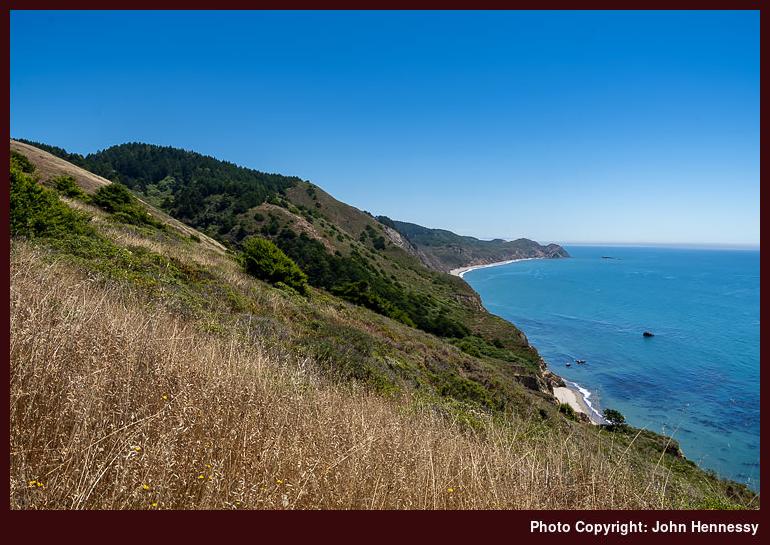
The North America section of the photo gallery now looks a little more substantial after adding an album for photos from last year's trip to the San Francisco Bay Area. There already was one for those from 2019's trip to British Columbia, and that looked a bit lonely on its own. It is not so easy to claim an interest in exploring another continent with only one substantive visit having happened.
While my appetite for North American explorations has been sated somewhat by those two trips, I cannot rule out the possibility of there being another this year. Seattle and Washington State both look tempting. A visit to Olympic National Park could be a possibility. However, as I know from my designs on Denver and Boulder in Colorado for the summer of 2020, anything could happen that stymies such schemes. Nothing has been planned yet, since I have a few things on my plate at the moment.
It helps to have good maps…
1st March 2024 While writing trip reports for Tenerife, I was reminded of the travails that I encountered with using the maps that I had in my possession. At the time, I found myself cross-referencing data between different providers for working out where I was going. That was not ideal, but I managed to make it work.
Something similar happened in Canada. When the maps from Natural Resources Canada did not have all the detail that I expected, I resorted to using the base map provided by ViewRanger because it showed trails on there. For my various traipsings, that did suffice, even if there are possible risks like those highlighted in an article on the TGO website.
In the UK or Ireland, it may be that the tracks shown cannot be used by the public, so you need to check how things look on the ground. Then, there are possible errors because many trails are crowdsourced. That is another reason for checking on what surrounds you and applies when using user routes found on various apps and websites. The likes of AllTrails and Outdooractive come to mind here.
In my case, I ran into no problems in Canada because I was following low-level trails and established tracks much of the time. For off-trail use, mapping from National Resources Canada would have proved as necessary as the use of a compass and awareness of wildlife. Hiking in North America takes one into wilder places after all. Finding paper maps takes a bit more work, as I found, but the added effort pays dividends as long as you watch coverage of where you are planning to go.
In a more recent excursion to California, the Gaia GPS app became invaluable as long as I had downloaded the map data before setting off on hiking trips. Topo Maps+ from Glacier Peak Studios may be another option for users of Apple devices, but I stuck with what I had courtesy of a subscription to Outside+. In any case, Gaia GPS did whatever I needed, and I hardly needed to check any paper maps that I had.
That was just as well, since map scales vary widely for U.S. hiking areas anyway. USGS quads may be standardised, but the same cannot be said for other publishers, with National Geographic being a prominent example. Still, any device has a limited battery lifetime so being proficient with a map and compass remains a necessity, especially in remote areas where mobile signal may be too limited.


