Category: Outdoor Activities
A trot around and over Caer Caradoc
 25th November 2010
 Since I first glimpsed the hills around Church Stretton while en route to Abergavenny for a day of walking around there, Shropshire's hill country hasn't seen that much of me. Whether it's because I have failed to find ways of extending my explorations from those visits that I have made or there is another explanation, it's a part of the world that I reckon needs more of my attention.
After that, there is a copy of Cicerone's guide to the area sitting on my bookshelf, and it was from this that the idea of a walk around and over Caer Caradoc was put my way for something to made of it the Sunday before last. That it's a short hop within a proverbial stone's throw of Church Stretton at a time of year when days are short added to the appeal of the idea. It also meant that a later start than might be ideal did nothing to spoil the afternoon that it occupied for me.
Though the forecast was more hopeful, the day was to stay cloudy until the sun found a western gap in the cover late in the day. As it happened, it seemed that the North Wales were doing rather better with catching the sun than where I was spending my time. Nevertheless, I am putting any such galling thoughts out of my mind to enjoy what I had.
Travel arrangements meant a stopover in Shrewsbury and I took to take another little poke around the town. From a previous quick taster, I wasn't ignorant of its attraction, with quite a few pretty old buildings around the heart of the place. This time around, I stayed near to the train station to gawp at Charles Darwin's old school, now a public library, and to sample a little of the town's castle. A bit more sun and blues skies would have made the place that little bit harder to leave, while convincing me that popping down there for a few hours would be no waste of time.
Though the skies were brightening, I stuck to my plan, and I was soon to find how usefully near to Church Stretton Caer Caradoc was to be. After crossing the A49, I picked my way through streets to make for what once was the road to Cardington, and there even are Cardington Way markers on the route too. Part of what seems to have been the course of that old thoroughfare is now a sunken passageway hosting a stream. The right of way doesn't use this but leaves the tarmac roadway leading to New House Farm to follow the hedge that is by its side. Not unsurprisingly given the often wet autumn, the going was soft and muddy underfoot, something that wasn't unexpected anyway.
It didn't take long for me to pick up the old track where it enters the field and follow it into the dip between the wooded Helmeth Hill and the bare Caer Caradoc. Staying with the track, I went around underneath the slopes of Three Fingers Rock, having some easy height gains as I did so. Here, immersed in rolling hill country, it was difficult to believe that civilisation, a railway and a busy modern road weren't at all far away.
Seeing a path climbing up the hillside before me, I left the track to pick my way to the top of Caer Caradoc. What the hills of South Shropshire lack in height, they compensate by having steep sides, and Caer Caradoc is no different. It was a matter of letting the summit come when it did and stopping whenever more level ground allowed. The sun was struggling to get through the cloudy layer without much in the way of success; if it had done so, copious amounts of photographic activity would have ensued with hummocks like Hope Bowdler Hill, Robin's Tump and The Wilderness (not as wild as the name suggests, incidentally) featuring in resulting photos.
The 459-metre-high top of Caer Caradoc was once a fort, and you might see why it would be secure if you ever walked up there. To my eyes, the old ramparts weren't so obvious, though I was later to see the signs of an old ditch. The name comes from a Celtic chief who fought the Romans only to lose and fall into their hands to get carried to Rome; apparently, he possessed enough guile to ensure that he and his family didn't meet a sticky end at the hand of his captors with his living out his days in that foreign land to die a natural death. Today, the hill is seemingly well frequented though, as I found, not so much as to deprive anyone of peaceful relaxing moments to survey the surrounding panoramic views. It was from here that I spied sunlit Welsh hills beyond the Cheshire Plain, while making such neighbouring hillocks as The Lawley.
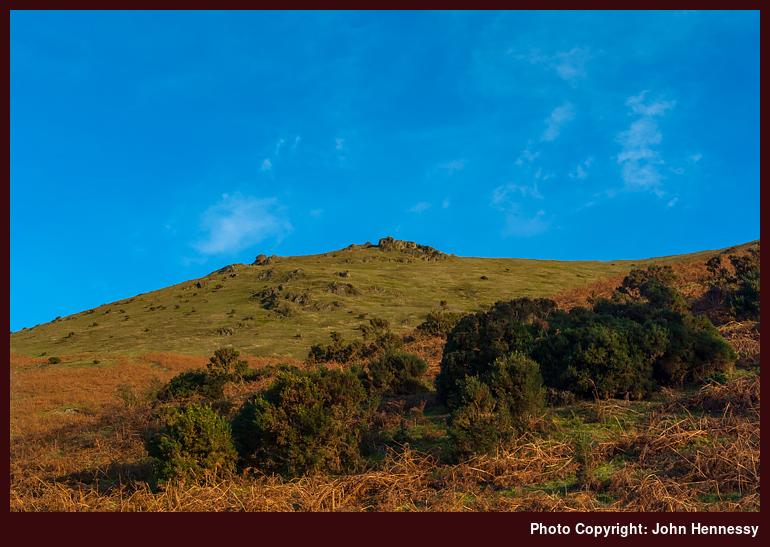
On the way down, I went around the smaller Little Caradoc though that involved a little diversion from what might have been my intended route back to civilisation. That deviation was well worth it, with only passing dog walkers to disturb my reverie while I took a breather after the steep descent from Caer Caradoc. Then, I needed to regain some height before picking up the path that was to take me along the lower slopes of Caer Caradoc while losing height all the while. It was while I was trotting along here that I spied the prospect of some late evening sun before it did come my way. When it did come, many hillsides were pleasingly lit, though its time of arrival meant that it was short-lived. That wasn't to be a cause for complaint, since it was the icing on the cake for me.
More steep descent lay ahead of me before I was to descend to the dip between Caer Caradoc and Helmeth Hill. Some of these were to be well eroded too, so I took a slight deviation from the direct route to be on more trustworthy ground. Before that was to pass, I was tramping along a path that reminded me of a similar approach that I took to walking Place Fell near Ullswater earlier in the year.
Once down in the dip between the two hills, it was a matter of retracing my steps to return to Church Stretton's train station in fading light. When I set foot onto the tarmac again, the street lights had come on, but there still was some light in the sky. A tempting public footpath diversion was discounted in favour of being sure of my route, and I was at the train station with enough time to spare for a spot of grocery shopping before staring my journey home.
One thing that I suspect after this trip is that I shouldn't be devoid of ideas for further walks in the area. After all, repeating the walk when there is more sun is one option and more hills are there to be walked too. For instance, I quite fancy reaching the top of The Lawley and seeing how things look from there. After that, there's another route that has come to my attention since the walk: The Ancient Portway, a hike from Church Stretton to Pulverbatch and Pontesbury. This would be a day-long affair for the full route, but it could be cut short at Pulverbatch if needed. It's a refrain that I may repeat too often, yet it's best to leave anywhere with more things to be doing on any return, and it's true of my wandering around Caer Caradoc. All in all, it was a satisfactory afternoon outside and in an area that wasn't overrun with folk, either. With that, there can be no complaints and there is always that Cicerone guide should these possibilities be exhausted.
Travel Arrangements:
Bus service 130 from Macclesfield to Wilmslow; train from there to Church Stretton with a change in Shrewsbury; train from Church Stretton to Crewe with a change in Shrewsbury, bus service 38 from Crewe to Macclesfield.
Last of the summer time
22nd November 2010 At the end of October, I managed to drag myself out of doors for a trot in the Derbyshire Dales. The plan was to walk south along the High Peak and Tissington trails, both part of the Pennine Bridleway network. These are former railway lines that have been converted into useful trails for walkers, joggers, cyclists and horse riders. Temptingly, there are places along the way that offer bicycle hire and refreshments that are operated by the Peak District National Park Authority. Typically, these were situated where railway stations once stood and signage usefully told you how far you were from the next one. Those staging posts include Hurdlow, Parsley Hay, Hartington, Alsop en le Dale, Tissington, Thorpe and Ashbourne with each offering car parking for those seeking only to wander part of the way.
That railway past means that ups and downs are curtailed, so easy progress is assured, even if it makes them more attractive to those for whom walking in the countryside is not such a regular activity. Nevertheless, anything that gets more sedentary folk moving in the outdoors has to be a good thing. As it happened, that's what brought my attention to them after what has been a reduction in my explorations of the countryside after that change of job during the summer.
As ever, it took the prospect of what for October felt like a rare sunny day to draw me out for one last hurrah before the onset of winter time and its final demolition of any sense of our having some evening light. For about half the walk, there were blue skies and sunshine, but clouds grew more plentiful the further south that I went until it completely took over the sky to give a grey end to the day. That's never to say that I was disappointed by this though it would have been nice to have had some pleasing sunshine for any glimpses of Dovedale that I was allowed.
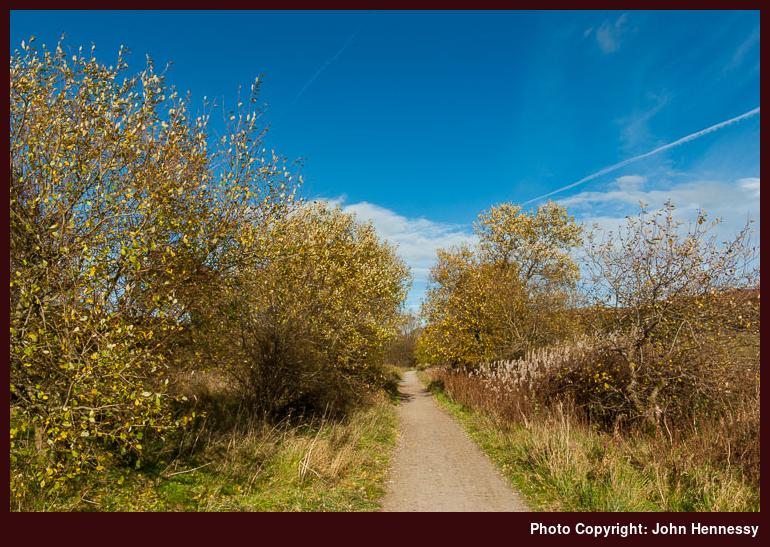
From Pomeroy's pub, it was a matter of picking up a public footpath to reach the old railway. Once on it, I played with the idea of an out and back hike to the start of the High Peak Trail. In the event, that was left for another day and any misgivings that I may have had were quenched well before I reached Ashbourne. As I journeyed south, there were other leisure seekers out on the trail with me, but that's not to say that there weren't any quieter interludes because there were plenty of those too. Navigation was going to be a real issue though I was checking the map to see how I was going and useful mileposts highlighting the distances between the former train stations.
What expands many of my trip reports are recollections of the route and the impressions that my surroundings made on me. For the first part of my walk along the High Peak and Tissington trails, it is difficult to do much like this. The surrounding countryside was pretty rolling pasture without move in the way of indentations so I wasn't rooted to the spot engaged in photography as often as sometimes is the case with me. The fact that it was easy to walk quickly and that a good distance lay ahead of me might have helped me pass from staging post to staging post until I met the junction of both trails. That speedy progress is a reminder that these are cycling trails too and the landscape allows you to glide through it, perhaps more easily than it ought to do in some respects.
Beyond the junction of the High Peak and Tissington trails, it was straight into a cutting and then onto an alignment that was raised above the surrounding landscape and away from the A515. That feeling of elevation was to remain the case for much of the distance and the old signal box belonging to Hartington station came into view soon enough. Once through there and its surrounding nature reserve with its attendant strollers, it was onto the long stretch to Alsop en le Dale with the trail nearing the A515 again, much like it is around Parsley Hay.
Misplaced young backpackers ended up being redirected, by me of all people, around Biggin with the skies having turned from blue to grey. The terrain does show some light buckling around there but I am amazed by the more striking indentations that I seem to have missed. A look now at a map causes me to marvel at how well hidden the likes of Long Dale, Biggin Dale and Wolfscote Dale seemed to be from me. They look so close to the line that I was taking and wonder why I never noticed them; was I travelling through cuttings when I might have been savouring their delights? As it happened, it was to take until I was beside Dove Dale before I noted any major impression that had been made on the High Peak plateau. Some good walking trips could be made of exploring these natural cuttings and I'll be keeping those options in mind. They may even yield pleasing photos, too, and that's a ruse that I often use to get me out of doors.
After a crossing under the A515, Alsop was reached earlier than expected and it was from then on that my legs began to feel more leaden. As I drew nearer and nearer to Tissington, I was on the lookout for Parwich but it stayed hidden like so much else earlier in the hike. There must be something about the way that the landscape keeps things hidden around this part of the world and makes you go into its dips before you truly can say that have been. At Tissington, a short refreshment stop was in order though I wasn't drawn into exploring the village itself. After, the day was remaining resolutely grey and I'd rather see pretty places with sunshine falling upon them.
Though I did wonder about catching a bus from there, I set off to reach Ashbourne. A certain feeling of fatigue made me wonder at the wisdom of my decision. Could it also have made me that little bit more impatient too? As long as I had a map to tell me how I was doing, this could be contained but an OS Explorer 24 doesn't extend all the way to Ashbourne and I didn't have OS Explorer 259 to take over after Thorpe. Knowing that there never was any chance of getting lost staved away any pangs of navigational panic. It simply had to be a matter of putting one foot after another and letting the end of my walk come when it did.
It helped that I took a nibble of the Ashbourne end of the Tissington Trail and there was no problem reaching the town centre through the former railway tunnel. That piece of recce resulted from a trip around by a cold grey Buxton that took me to an Ashbourne blessed by blue skies and bright sunshine, a different place to where I finished my walk in the sense that it now was a grey as Buxton was on that other day. The hike had been a long one after which it took several days for my legs to recover but it was an introduction to a part of the world that I ended up ignoring for so long. The next phase is to go exploring those hidden dips to see what delights lie within them. It looks as if I won't be disappointed.
Travel Arrangements:
Bus service 58 from Macclesfield to Buxton, bus service 42 to Pomeroy, bus service 108 from Ashbourne to Macclesfield.
Of urban strolls and hilly hikes
7th November 2010 Sometimes, it takes what feels like an age for a trip report to become reality, and an end of August visit to Aberdeen and Braemar has become an example. Various things can delay the burst of inspiration that's needed to write these things, with a busy work life and after work fatigue not helping. That well may be, but I need to ensure that I get out into the outdoors from time to time, even if that's a work in progress for now.
It was having a look at old photos that put the idea of heading to Aberdeen into my head in the first place. After all, it had been over a decade since I made that solitary visit to the place to attend a scientific conference during the week after the death of Princess Diana. It helped that there was a bank holiday weekend in the offing at the end of August and that I fancied a getaway that didn't need too much energy expenditure when it came to planning. What was needed was a place to base myself that would keep me occupied regardless of whatever weather was there at the time.
In the event, I was to find enough rain to make me wonder if I had continued too far north. After all, Edinburgh looked resplendent if busy during the short time that I could spend there in between trains. A trot that evening saw me caught out in a heavy downpour that had me catching a bus from Old Aberdeen, a very pretty spot in the right weather, back to the city centre where I grabbed some food before returning to my lodgings for the night.
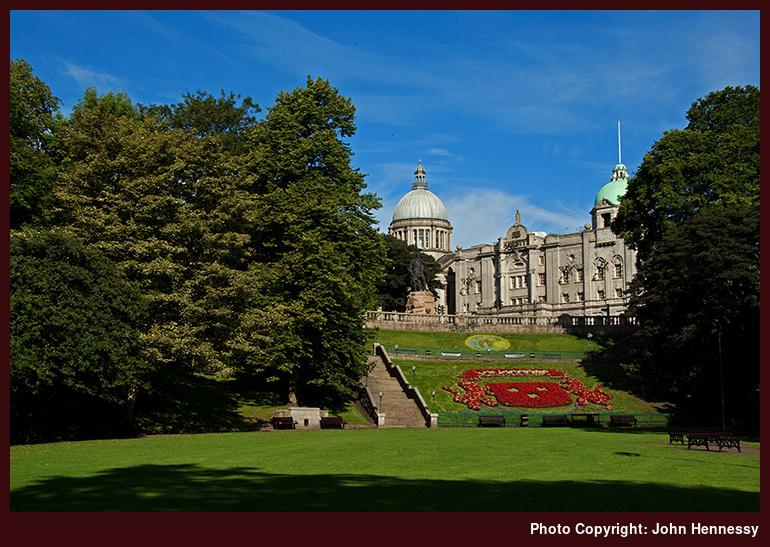
Saturday started much better when it came to weather, with blue skies and sunshine doing the Granite City a few favours. It was only right that I spent some time in Union Terrace Gardens while I walked back to Old Aberdeen to see it in better light. However, the good weather was short-lived and after grabbing a few photos of the University of Aberdeen's King's College, I found myself sheltering while awaiting the abatement of a light rain shower.
With the dampness out of the way I continued towards St. Machar's Cathedral and wandering through nearby Seaton Park under skies that wanted to stay leaden in appearance though there was some brightness from time to time. Eventually, I was to reach the old Bridge of Don for a look at the structure that is now off limits to motorised traffic. If there had been some sun, it would have made for some pleasing photography.
Next up was a spot of lunch before I followed the sandy coast on my way back to the heart of Aberdeen again. The atmosphere was eerily reminiscent of that which I felt while wandering along by the Northumberland coast. Given that I was by the North Sea there too, maybe that wasn't too inappropriate. Though there was a busy road not far away from where I and many others were walking, it still felt a world away from the bustling city centre, whose landmarks could be seen in the near distance.
Eventually, I was to find myself wandering by working docks and the air was not too dry. Still, I spotted the Kirkwall and Lerwick ferry and made a mental note for any occasion when a brainwave might carry me north towards the Orkney or Shetland islands. As if to spring a pleasant surprise, the rain passed on ward to reveal blue skies again. By then, I was in the vicinity of Aberdeen's Town House, Salvation Army Citadel and Mercat Cross in conditions suitable for photographic activity. Mind you, I now realise that there may have been better vantage points for what I was doing.
The fair weather interlude may not have lasted, but it hadn't done a bad thing. After a spot of shopping, an easy evening ensued as I organised myself for a more energetic excursion on the day after.
When Sunday morning came, there wasn't much in the way of blue skies, and the rain that fell while I made my way to Aberdeen's bus station would have had anyone asking why a trip to Braemar would have seemed in any way to be sensible. Nevertheless, a continuing improvement over the course of the day was what was promised in the forecast, and I took a chance with that.
Things did dry up before I was on a coach destined for Royal Deeside. If I was so minded, there were a number of castles that I could visit and Balmoral would only have been one of these, with Braemar being another. For a walking idea, a trot from the former to Braemar would have been tempting, but the idea of mounting Morrone (also known as Morvern) had taken hold.
Though there was plenty of sun to be seen out the coach window, Braemar wasn't fully dry when I arrived and wet weather gear was to be in use for much of my hike; a chill in the air ensuring that I wasn't going to overheat. In some ways, it was frustrating to have sunshine and rain together because having raindrops on a camera lens doesn't help to make pleasing photos, even if you have a skylight filter in front of it for the sake of protection. There were quite a few times when mine needed wiping down.
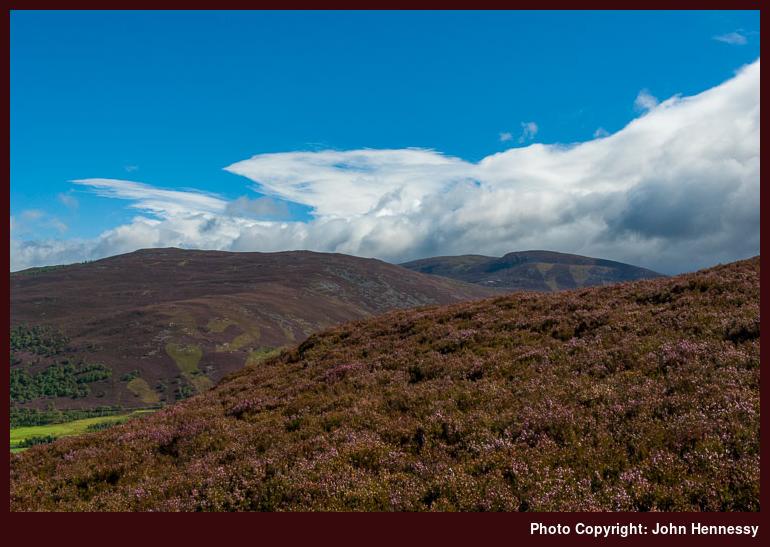
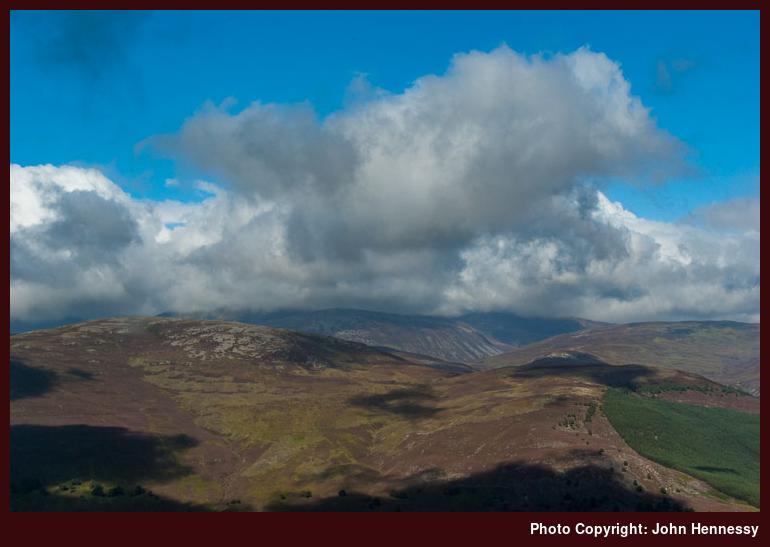
Since I was set on a walk, I navigated my way to the good path leading to the top of Morrone. Though there was a good deal of height to be gained, it wasn't anything that steady progress couldn't overcome. As I made my ascent, the countryside round about me opened out before me. To the west, I could gaze towards the hills around the Linn of Dee. What lay to the north was beset by the low cloud associated with passing showers, but these were the sort of stony heights that I have never gained on foot anyway. There were hills to be seen everywhere, and I could look across Glen Clunie too.
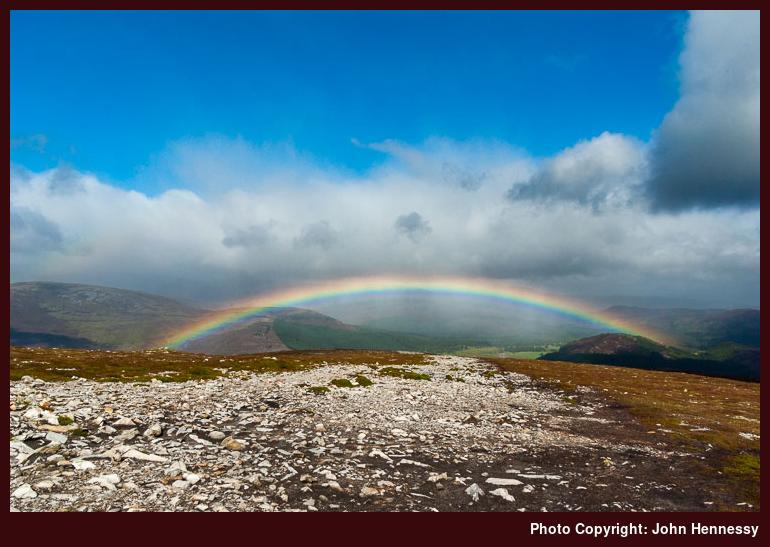
The showers did eventually stop, but not until they had produced some of the best rainbows that I ever have seen. Being able to photograph a rainbow without too much of a rush has been a privilege that wasn't really mine until that day. My only hope is that I didn't waste it.
When I finally did gain the top of Morrone, a cloud cap lay overhead to obstruct the sun, and that was to be the story of much of the rest of the walk for me. Having gained most of the vistas on the way, I wasn't going to delay on a flat, stony summit next to a transmitter on a day cold enough to be more typical of October than August. A vehicle track was soon found for the purpose of coming down again to fashion a circular route. The predominant greyness meant that my camera was given a rest, though I did deviate from the track to reach a shoulder of Carn na Droichaide before I returned to it again. Though tempted, I was content to leaving alluringly accessible nearby heights for another time. Overdoing things on a first visit is needless, and it's always good to leave somewhere with a reason to return.
The track soon enough deposited me on a quiet lane in Glen Clunie. When it came to lighting the hills, the sun was very spotty, so I tramped the tarmac without much in the way of distraction. There was the occasional car but not so many as to be intrusive as the signs of Braemar become the more apparent as I neared the place. My return wasn't in time for much more than the tail-end of a bagpipe band performance, and shops were coming towards the end of their working day anyway. Maybe it was just as well that I had decided on catching the next bus to Aberdeen, and the cold didn't make hanging around so enticing.
As if to lure me back, the sun could be seen to light the surroundings on that return journey. The next day, it was time to go south again on another improving day when Edinburgh looked resplendent in sunshine as crowds heaved around it to catch that last of any festival events. It had been good to get away, and it may not be the last visit to Braemar and Royal Deeside. From what I saw, it deserves more exploration.
A Canal Bank Trot
28th October 2010 A few Sundays ago, I made my way onto the banks of Macclesfield Canal with the idea of making some photos of it to improve on those that I already had. In addition, I also was entertaining the thought of making a loop that took in Pott Shrigley and doing the same for there. However, I ended up sticking with the canal all the way to Marple, where it joins the Peak Forest Canal.
The day was certainly the sort that would entice you outside, and the bright sunshine was warming too. Nevertheless, cloud cover was forecast to take over the sky in the afternoon, and it duly did, yet not before I was delighted by the sights that I encountered. After getting rid of an irritating autumn cold, this was to be just the thing for getting me out in the fresh air again.
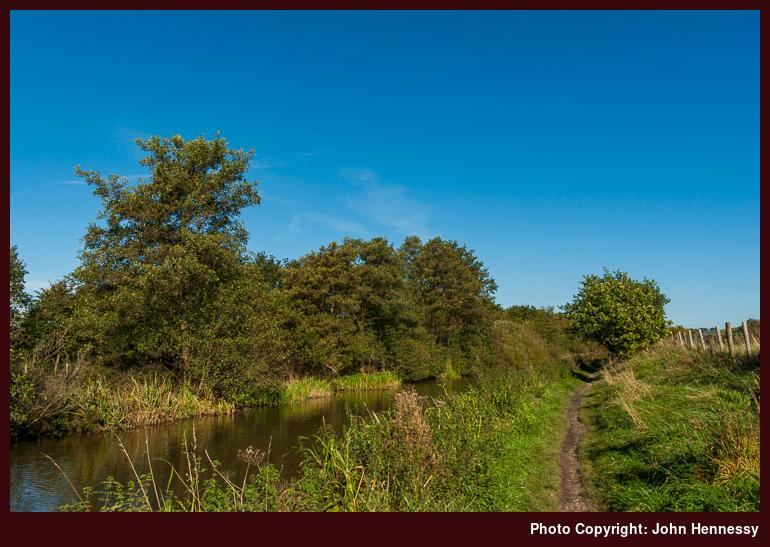
To get to the canal, I used a familiar route that took in part of the Middlewood until I rounded the perimeter of AstraZeneca's manufacturing site to reach the canal. Unsurprisingly, there were others who had the same idea as I had. Nevertheless, things weren't to get overly busy until I passed near to Bollington, where a canoeing competition meant that walkers weren't the only ones using the amenity.
It took a while after Bollington before things became quieter again, and I could relax into an unperturbed gait. At this stage, I was still not fully decided on whether I'd call to Pott Shrigley or keep going along the canal at least as far as High Lane before making my way home again. Blue skies and bright sunshine added to my indecision, but I eventually chose to stick with the canal, albeit with mixed feelings.
Those doubts were to be banished by passage through delightful wooded areas, such as those around Middlewood, later on. Near Higher Poynton, the banks again became busy with many folk strolling along them but they, as always is the case with strollers, weren't going far, and I was to have quieter surroundings from which to survey the hill country around Lyme Park with Cage Hill being identifiable thanks to its folly. It was one reminder as to how high the canal remained, even the surrounding countryside was much lower.
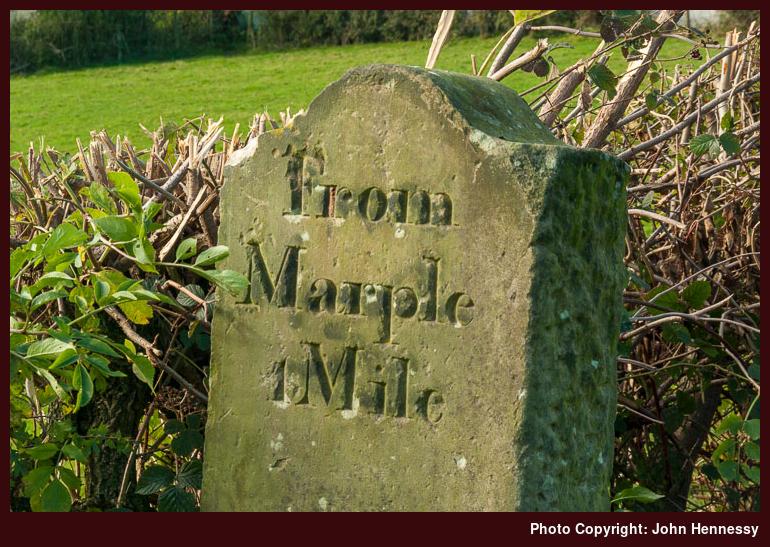
Cloud had usurped the sun by the time that I was plying the old towpath between High Lane and Marple. When travelling by bicycle to the aforementioned Lyme Park, had been along this stretch before and more than satisfied myself that it wasn't the greatest of places to be cycling. It felt somewhat to be near built up areas and have so few people walking along at the same time as I was there, but the space was welcome nonetheless. My legs were tiring by then anyway, and I was keeping a close idea on the distance left to Marple train station. One hint was the numbers on the bridges over the canal that were counting down; they must have been numbered in the southbound direction from the junction with the Peak Forest Canal.
The sight of a mill in grotty condition to my right was another pointer to my journey nearing its end, and the manicuring of the canal banks after this was in complete contrast. It was a reminder of how well-kept its counterparts around Bollington and Macclesfield are in comparison. The condition of the canal surroundings itself acted as a trigger for wondering as to how British Waterways can keep its waterways once it has transitioned from being a government to being a charity like the National Trust. A return at a time when Marple is sunlit seems in order after what I saw, and I hope that things don't go downhill for the waterways.
Tired limbs pulled me around two bridges before I was on the bank of the Peak Forest Canal and passing the locks that help to get boats up and down the incline. Along the way, I spotted a sign saying that it was 11 miles to Macclesfield. Had I really walked that far on a whim? That downward slope was nothing compared to that of the road leading from the canal to the train station. It was leading to the Goyt, yet another Cheshire river (and one that finds itself in the invention that is Greater Manchester these days) nestling in a deep sided valley. With the next train being an hour away, I chose the bus option to start on my way home, convinced that I must resume my outdoors excursions after something of a lay-off.
Travel Details:
The return journey was made using bus service 384 from Marple to Stockport and by train from there to Macclesfield.
Contemplating explorations of southern Derbyshire Dales
3rd October 2010 A reduction in outdoors outings seems to have coincided with a change of job a few months ago so I am wondering about changing that state of affairs. Whether it is the busy working weeks or something else such as unappealing weather that has broken my stride, it now feels as if usual haunts such as Cumbria or North Wales have got that little further away. The result is that I am wondering about destinations not so far away from home such as Shropshire, Staffordshire and Derbyshire.
The mention of Derbyshire brings me to a short run out last weekend. The possibility of some sun was enough to get me wondering about a photographic outing to Buxton. However, the afternoon became very grey and there was a biting cold wind too. The result was that I ended up in Ashbourne for a little while. While there, I did a little exploration and found the Tissington Trail on an improving afternoon. There was only enough time for a short stretch along the well used former railway but it was enough to etch thoughts about further explorations into my mind, especially with the rare experience of walking through an old railway tunnel included. After all, I had passed through the pretty estate village of Tissington while en route to Ashbourne and that deserves a proper visit and not just a glimpse through a bus window.
The result of my brief taste of this area was that I have been perusing Mark Richards' White Peak Walks: The Southern Dales, published by Cicerone, in the name of learning more. Though largely pastoral now, the landscape has had an industrial past that gives us the railway alignments that nowadays find recreational use as the Tissington and High Peak trails, among others. All in all, there seems to be plenty to explore and it all seems to be the sort of walking that would ease someone into the outdoors again after a layoff. That isn't to say that there isn't something for the cyclist too as I discovered a cycle hire service near the start of the Tissington Trail.
In a way, it's a surprise that I hadn't been around these parts before now. As to why that has been the case is unclear to me but perceived greater ease of access using public transport might have had something to do with it. Even so, there are a good number of bus services doing duty in these parts and there are YHA hostels (Hartington and Youlgreave) too if I fancy staying overnight somewhere and can find a space available. Now, what needs doing is to firmly pencil in some time for plying paths and trails so as to avert any fatigue-inspired foot-dragging.
Travel details:
Bus services 58 from Macclesfield to Buxton, 42 from Buxton to Ashbourne and 108 from Ashbourne to Macclesfield via Leek.


