Category: Ireland
In need of some tidal awareness
 23rd September 2024
 Recent Irish rambles have brought home to me an important lesson to which I hardly devoted much attention before. It may be because I have spent much of my life inland and that I am attracted to a variety of hill country. The subject pertains to tides.
It is true that I made my over and back from the tidal Cramond Island near Edinburgh without incident. That perhaps was because the tide tables were posted on signs nearby. Then, I could assess if such a crossing was feasible so as now to get marooned. That is one of the few, if not the only tidal island that I recall visiting.
Otherwise, risk averseness has its part to play. Worms Head near Rhossili on the Gower in Wales comes to mind. The sight of others did little to encourage me out there. Knowing that I was without important knowledge was enough to stop me needing the services of the Coastguard. No rescue is needed when the risk is not taken.
The same applied to a visit to Galway where I did make my way out and back from Illaunafamona, near Salthill, without getting stranded on there. However, the encroaching tide forced me to go through a caravan park to get back on the return route to Galway to catch a coach back to Cork. Leaving later would have been better but for having made an advance booking; the evening was brightening, so it would have been worthwhile. Still, I got to the Coach Station with minutes to spare. My trespassing nearly cost me that too, and landowners may not have been impressed with a stranding on an island that they owned if it were to happen. The caravan park owners did not intercept me either, yet it is not something that I plan to repeat.
A stroll around Crosshaven was nowhere as dramatic. However, the tide was in, which meant that the absence of a cliff path sent me on a circuit that I had not planned. Given the other delights that were encountered, I do not feel short-changed. There had been a walk along the Greenway from Carrigaline in good autumn sunshine, and all else was favourable until I had to alter my route. In fact, I had the sun at my back, a favourable position for photographic exploits.
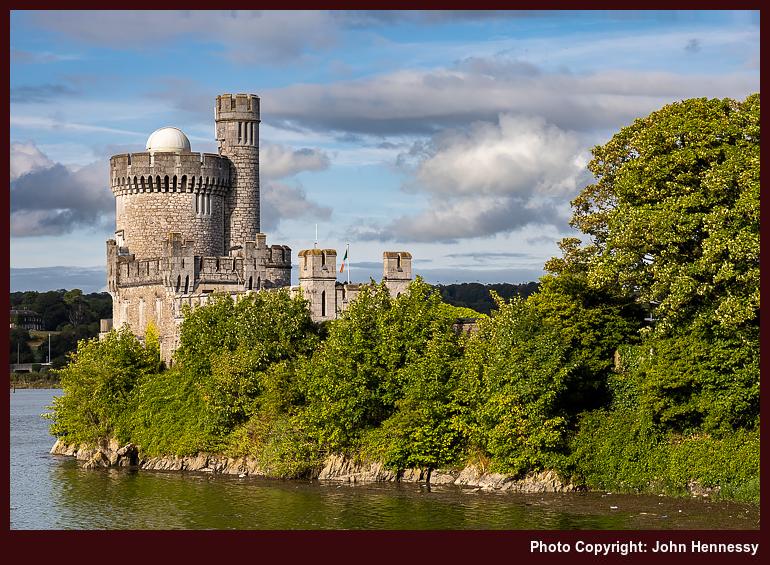
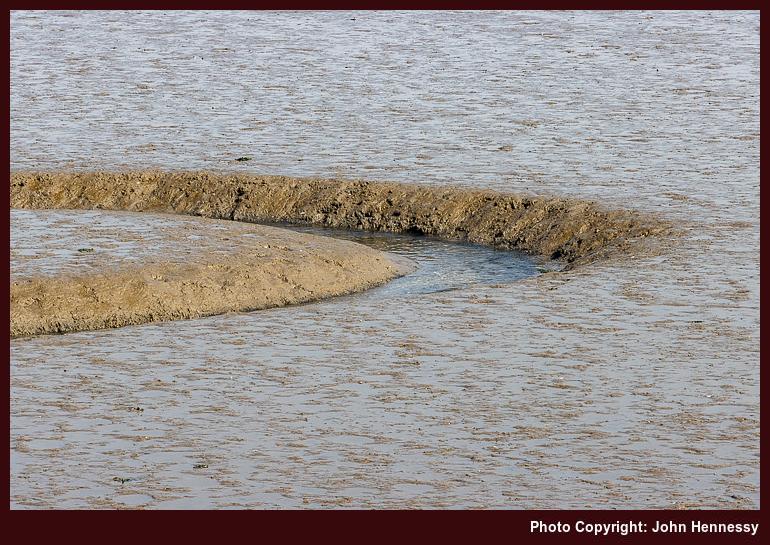
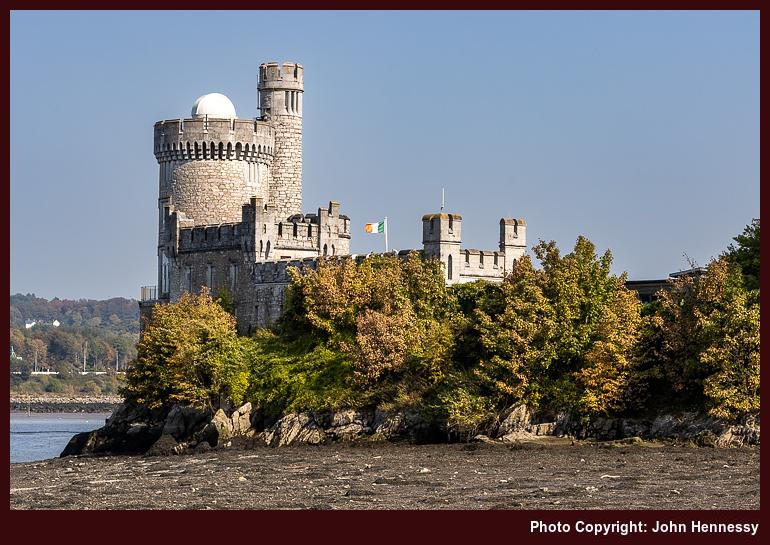
My having acquired a new base in Cork means that I now am nearer the coast than I ever have been and for longer too. That means that I get to notice the coming and going of the tides more than I ever have. A walking route that goes along the shore of Lough Mahon assures that. The mudflats that low tide exposes attracts its share of bird life too, so a set of binoculars has its uses here.
The subject of tides also cropped up on a circuit of Cork Harbour's Great Island that started and ended in Cobh. A narrow road along the north side of the island was seeing some encroachment through the very drainage culverts that ought to drain it. There were no such issues around Marloag Point and any other place that I passed, yet I did not delay. The hour of day ensured that as much as the chances of getting wet feet.
The cumulative effect of these encounters with sections of coastline is that I need to add checks of tide times to weather, transport and other things. Recalling the speed of tides on the island of Jersey accentuates this. It is little wonder that the U.K.'s Met Office includes this kind of information with its coastal location forecasts. It builds out the picture, especially when seas are roughened by gales.
Older Irish summers
6th September 2024 During the last few years, I have been exploring the country of my birth more than I ever have. This has helped me to bridge a chasm created by moving to Scotland for postgraduate education, and was sustained by my working in England thereafter. In too many ways, this website has its genesis in those early years spent finding my feet in the U.K. and with no roots in the place where I lived before then.
Places to Go
After a summer that took me around many places on the Emerald Isle, it is not before time that I extended the timeline back further. Thus, we reach a time with long summer holidays from school and university. They allowed for many family day trips around the Irish province of Munster.
Coastal destinations featured so much that I began to tire of them. Those in Clare, like Kilkee or Spanish Point, retained their appeal, possibly because we did not go to these so often. Anyway, cliff scenery offers more to the eye than beaches. Maybe, that is why Beale, Ballyheigue or Banna in Kerry were not a major draw for me. Ballybunion got visited too often for me, though I went back there once in 2023.
Historical interest pervaded too. A trip to Blarney Castle involved a steep descent made in the belief that we were going the wrong way. The one-way system has changed, so you ascend this way and go down what once was the way up. Lough Gur was another calling point, along with other places that lay outside the consciousness of most, like Springfield Castle, for instance.
Touring
Where there is ruggedness and a chance to stretch my legs, the appeal never wanes. That started off in those years, and got repurposed in Scotland and England before I headed into Wales and other places. Killarney was favoured then, as it is now. Gougane Barra was another, even if current public transport provision is insufficient for getting back there now. Other destinations included the Ballyhoura Mountains, the Glen of Aherlow and Mount Melleray Abbey.
Touring by car was favoured by my father more than self-powered travel. Lack of patience for walking was part of this, as much as the need to return home for evening farm work. Even so, there were some epics, like a 180-mile circuit from home that got us around the Ring of Beara on a day trip. Others include a round that took us through the Black Valley and the Gap of Dunloe. The Healy Pass was another favoured route on the Beara peninsula. The trouble with all this driving was that you scarcely got time for a lunch stop, let alone a break for stretching your legs. It often felt as if you were skimming the landscape; getting out on foot ensures a much deeper experience.
Local Explorations
At the time, it was cycling that did that for me. Over the course of the summer, this started with short circuits to build up fitness before lengthening them. The later times for sunset in Ireland allowed more time for those evening bike rides, especially in August. The earlier sunsets in September curtailed such escapades during my university years. The outcome was that I cycled through many of the local towns and villages at some stage. Roads in various states of repair were endured, and I paid numerous visits to an aunt, too. Dry weather was seen as best for all of these, though rainwear allowed for travel in the rain as well.
The first bike that took me out on these circuits was an elderly item without much braking power. That was resolved by my putting my feet on the ground, a habit that resulted in a somersault when a saddle broke under me. That mishap put paid to a visit to my aunt for that evening. The lack of braking efficiency possibly left a mark on my psyche that continues to this day, a lack of trust in bicycle brakes that causes me not to let go of the brakes when going downhill, hardly the best at times when there are other road users going their way.
Aside from borrowing a racing bicycle at times, the other bike used on these travels was a one acquired new at the end of the first summer. This had three speed gearing and much better brakes. Others probably preferred my having something safer to use. However, there was one other hazard that it did nothing to avoid: dogs at the hour of dusk. One nipped me while returning from my aunt's, ensuring a visit to the family doctor for a tetanus booster. Wariness around dogs still remains with me.
Rupture and Restoration
Most of this was left after me when I moved to Scotland. It took until the last Christmas when we were all together for me to realise that. Other things occupied my life after that, yet there were occasions of reconnection. Ambiences stay with me, and one from six years ago is one of them. That was a week when I was staying at the old family home and savouring the long summer evenings at the time. The sense of calm of an evening while at the back of the house remains with me. In some ways, it may have taken my mind back to years before.
Two years ago, the inspiration for various explorations of the Irish countryside came from those years while living full-time in Ireland. Killarney and West Cork were among these. The Clare Glens between Newport and Murroe also covered ground from that time. The retracing of steps did nothing to stop me from going to Galway and Connemara (a 2018 outing), the Sheep's Head peninsula, Cahir, Clonmel, Clogheen or Killaloe, new places for me. Still, the list of repeat visits lengthens: the Dingle peninsula, Mount Melleray Abbey, Cashel, Blarney, Cobh, Fota, Bunratty, Doneraile and the Ballyhoura Mountains.
Even with a list that suggests a constant going over of old ground, there are new experiences that change how things feel to me. That all adds up. The accumulation means that you start to take ownership of things in a way that you could not do before. These are not just places where your parents took you; they become yours, too.
One thing that has struck me repeatedly in recent months: there is also something about hearing music from another time that sends you back there. Even so, you now look at things with different eyes and understand them in different ways. The occasions can be prompted by something like the playlist during a hotel stay in Tralee or what is played on a radio station. Even looking up a tune on a streaming service has a similar effect, restoring old connections in the process. It helps if you encounter these in an environment that is not so far removed from the time to which you are being transported. The result can be a melding of time that closes gaps, and mends ruptures in this way.
The closing of gaps has been a recurring theme during the last few years, and it is something that continues. Nevertheless, there is much more to Ireland than all this. The acquisition of a new base to use may mean more visits and the spending of more time there. With that, explorations can go even deeper than they already have. The experience of exploring other parts of the world can be brought home.
Some experiences of Irish hiking maps
5th September 2024 Much of my hiking has been in England, Scotland and Wales, where I have been rather spoiled by the quality of Ordnance Survey mapping. Things are quite different in Ireland, though the mapping offered here is nowhere as difficult to use as in other places where I have been.
The Standard Option
My go-to scale in OS mapping is 1:25000, while 1:50000 is the most common one offered by Tailte Éireann (formerly Ordnance Survey Ireland or OSi). That makes a difference when estimating distances on a ready reckoning basis. The smaller scale makes it easier to underestimate the length of a trail, and hence the amount of time that it will take to complete. With a need to make a bus back from a day hike, that can be a challenge, but one that is eased by doing things more rigorously in advance. Adding extra slack on the day will help too.
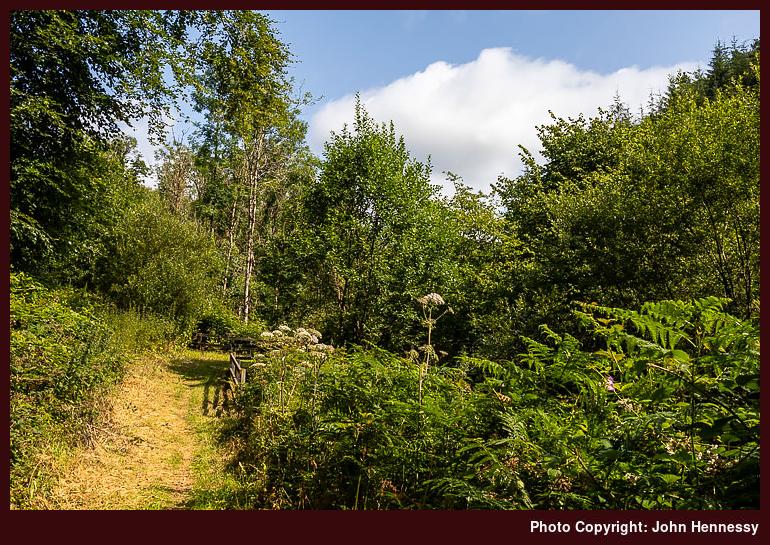
Another habit into which I have fallen is to look at a map to see what trails are available. This again is something that Tailte Éireann could improve. One absence is the lack of Greenway depiction; often, you get the disused railway line, which is a hint, but marking the recreational trail would be even better. While someone has put together a web app to show where Greenways are, having something more official would be better and may have more staying power than a volunteer effort.
It may have something to do with publishing schedules, but not all looped walks may get marked. That is what I founded with the Fastnet Trails around Schull and Ballydehob. At least, there is a website for those. Even so, having more of them marked on a map would help even more. Nevertheless, some are marked already, so some credit is due.
The same could not be said so emphatically for the trails around Mount Melleray Abbey near Cappoquin and Lismore in County Waterford. That might have helped me avoid some rough cross-country travel on a day hike around there that ruined a hiking trousers on me. Saint Declan's Way is completely absent too, so I ended up loading a GPX track onto Outdooractive for future reference. Since this goes from Ardmore to Cashel and through the Knockmealdown Mountains, it could offer hiking possibilities for another time.
Alternative Options
Following the aforementioned escapade, curiosity had me explore what is offered by EastWest mapping these days. They still cover the Wicklow and Dublin Mountains like they always have, and Wild Nephin is another area that they have covered for many years, but other ones are included now.
Parts of Munster now benefit, and the range includes the Knockmealdown Mountains, the Galtee Mountains and the Comeragh Mountains, not always ones that you hear much about when it comes to Irish hillwalking. The county of Cork is absent thus far, while the mountains of Kerry around Killarney and Dingle gain deserved coverage. In Connemara, there is a guide to the Western Way between Oughterard and Westport, along with maps of Connemara, Mweelrea and Croagh Patrick, and Achill and Corraun with Clare Island.
While I do have a Wicklow Mountains map in my collection, I have added one for Knockmealdown Mountains. Like many others in the range, it has a scale of 1:25000, which is more like what I find in Great Britain (Northern Irish mapping is much like what you find in the Republic). Those missing trails from the Tailte Éireann maps are noted too. Should a return to those parts come to pass, the new map will have its uses.
All in all, EastWest is on its way to becoming Ireland's answer to Harvey Maps in Scotland. That operation does not abandon Ireland, either. In fact, it offers two more than it once did: Dingle Peninsula and the Mourne Mountains. They complement longstanding coverage of the Wicklow Mountains, MacGillycuddy's Reeks and Connemara. Most are 1:30000, with the Mourne Mountains getting 1:25000 coverage.
What About Digital?
Much of the discussion here would apply to paper maps, yet I often use the Outdooractive app these days. That is equipped with maps from both Tailte Éireann and Harvey Maps. If I were to do the same for EastWest Mapping, I would need the Hiiker app. Since I plan to stick with what I have for now, I will leave the addition of another app until later. Even so, mixing information from different sources only helps when plying the trails, boreens, and ancient paths that criss-cross the Emerald Isle. Having a paper map and compass to complement digital tooling remains essential too. My Irish explorations may be facing a hiatus for numerous reasons, yet there is so much more to explore.
An Irish summer
3rd September 2024 This summer, I needed to be in Ireland to progress a piece of work that I have wanted to do for a while now. That needed me to have a base here, the purchase of which was completed not so long ago. The work did not need all of my time, so I also got to fit in some day hikes here and there. They allowed me to develop a connection with the place that I never had before, even if this is where I was born, had my upbringing and gained most of my education.
Killarney's hold on my affections was enough to stymie an ascent of Mangerton with a diversion around by the Knockreer estate and Ross Castle. A second attempt needed self-restraint given those other distractions. That succeeded, and it helped that cloud cover broke to allow some pleasing photos to be made, so much so that I could have missed my train back to Cork. In the event, there was plenty of time for everything. There were other rugged eminences, and they needed to be left for another occasion; an abundance of ruggedness will keep any hill wanderer busy hereabouts.
There was a time in my life when family outings took us to the Ballyhoura Mountains that line part of the county boundary between Limerick and Cork. More recently, though, I have been passing them rather than exploring them. A long summer day provided an exception to this: an out and back trek between Ballyhea and Seefin Mountain, near Ardpatrick. Though plenty of delights were encountered, it also took its toll on me and a period of recovery ensued. Recollections of surrounding views over the counties of Cork, Limerick and Tipperary stay with me, including those of the Galtee Mountains.
Another destination for family outings was Mount Melleray Abbey near Cappoquin in County Waterford. This also inspired a visit when the weather offered. That took in Glenshelane on the way from Cappoquin, and some rough cross-country travel was the cause of getting me to Lismore by following Saint Declan's Way for much of the route, despite it not being marked on my map. An alternative from EastWest Mapping was acquired later, and I have added a GPX track to Outdooractive for any future traipsing that may come to pass. After all, Lismore remains worth another visit because of its castle; I fancy a photo when the time of day ensures sunlight from the right direction. The place also has associations with the late travel writer, Dervla Murphy.
There was time for a brace of walks near the West Cork coastline too. The first took me from Schull to Ballydehob in bright sunshine. Then, Glengarriff's nature reserve surprised me with its diverse trails, leaving me eager to return and explore more of the area. Thus, a challenging but rewarding hike along part of the Beara Way from Adrigole to Glengarriff followed, offering impressive scenery despite waterlogged terrain and often cloudy skies. The end of the set took me to the Sheep's Head Peninsula for a short walk between Kilcrohane and Ahakista that bus service timings allowed. Though a little too rushed for my liking given the stunning surroundings, There remained ample time for admiring stunning views of both the Beara and Mizen Head peninsulas across their respective bays, Bantry Bay and Dunmanus Bay.
These were not all, since there have been encounters with Doneraile, Cashel, Cahir and Galway too. There may not have been hiking trips, per se, but some lay the ground for future escapades, too. All in all, it has been a summer filled with traipsing along long-distance trails and looped walks, along with other bespoke routing. The variety has extended from hill tops and forested trails to coastal paths and historic sites, mostly accompanied by some sunshine.
All reconnected me with my home country in a new way, while also doing the same for reminisces from a past before life spent in Scotland and England. Back then, Irish public transport did not offer what it does now. The recent expansion under the Connecting Rural Ireland banner has opened up opportunities where once there were few. That really helps for day trips, though the advantages of staying in an area for exploring it in more detail remains. Here, I think about Castletownbere for a walk between there and Adrigole as well as strolling around nearby Bere Island. Something similar applies to exploring many of West Cork's offshore islands.

That gets accentuated with increasing mileage. For instance, a day trip to Connemara from Cork does not work very well. Limerick might work better, but Galway is a much better base. Even then, that probably is not so ideal for Mayo, while Sligo and Donegal are another matter entirely. Even with a base in a country, it only allows for so much.
All of that is thinking ahead, though. The reality is that this summer has both reminded of past ones in Ireland and better connected me with various stomping grounds, old and new. For too long, I chided myself for not savouring the delights of the place of my birth. That has changed in recent years, and there is much more to sample yet.
Last hurrahs
29th August 2024 These days, this time of year makes me wistful at the passing of summer. However, it was not always so. This also is the season when academic years start, so there are beginnings as well as endings. Even then, the decline in hours of daylight and dropping temperatures brought any attempts to hang onto a sense of summer to an unyielding halt.
Towards the end of my secondary schooling, the purchase of a new bicycle meant cycling it home. That was not only a sixteen-kilometre distance but a frustrating struggle against autumnal winds. That which was plausible in the summer months had become less easy away from them. There were a few more years of summertime cycling, building up distance with the passage of time, that not only met shortening evenings but also the commencing of studies again. That was broken when I moved to Edinburgh, meaning that my time in Ireland was much more limited.
With the end of my university years, the association of autumn with beginnings was broken. It all ended with a job search that preceded by a tour of the Scottish highlands and islands with my brother before a quick trip to Ireland. In truth, the continuity of a research degree throughout the year had faded the sense of autumnal beginnings anyway.
My career saw me move to England, where I had much more time for exploring than I ever did. Without the ebb and flow of academic life, it was all too tempting to try overlooking the seasons, especially when moving south took up so much of spring and summer. August was when the hills of Cheshire and Derbyshire still any prospects of exploring hill country by bike. Walking became the way forward. As the month ended, I made my first trip to Wales in mixed weather that was hinting that overlooking seasons was not an option.
In ensuing years, the range of experiences broadened. A few saw me returning to Edinburgh in August to note how autumnal the place could feel at that time of year. Academic pressures and lack of experience meant that I had been overlooking this. That even included a week of conference attendance in Aberdeen during my research degree. The sense was there yet not prioritised.
Sometimes, autumn can make amends for a less satisfying summer. Being soaked around Lorn and Lochaber during a week at the end of July was enough to send me north again. Numerous visits to the Lake District in August had not healed wounds that only a weekend visit to Lochaber at the end of August could do. The year after was wet for much of the time, and I moved house too. Thus, a muddy November hike from the Cat and Fiddle Inn to Rushton Spencer marked something of a beginning.
September is a month with its illusions too. There can be a lot of sun, so it is easy to think of endless summer. That certainly fitted a sunny weekend around Moffat, crowned by a stunning walk along the Southern Upland Way. The changing colours and closure of businesses at the end of the busy tourist season countermand this. The latter hit me while on a September visit to Gougane Barra with my parents. Still, autumn can offer its chances for partial continuity with local hikes through October, November and into December. There have been a few years of that too.
Seasons are not the only transitions that we meet in life. A change of employer once became a major career event for me, Before the turmoil that led to this, there were contrasting trips to Yorkshire, one in September and another in October. The first was to a sunny Wharfedale, while an often grey Ingleton became my lot for the second. After the changeover, my energy for walking trips was curtailed, yet there was an October stroll along the High Peak Trail and a November excursion to Church Stretton. Though work pressures grew after that, the wandering was much needed and happened more often than not. When even that was halted, local cycles and walks often provided release.
Family ageing, infirmity and bereavement took hold of a few years after that. Grieving continued through spring, beyond summer and into autumn. Nothing could stop an October hike from the Cat and Fiddle inn to Whaley Bridge, such were my needs at the time. The real end of August feel pervaded a weekend divided between Durham and York. This may have been the Summer Bank Holiday one in England, but it often just feels too late for it. As it happens, the same complaint can be levelled at the timing of the British Spring Bank Holiday weekend.
Feelings eased by the next autumn, though a weekend spent in mixed weather around Oban reflected a sense of political tumult that only got more intense in ensuing years. Eventually, a sense of release emerged to allow a memorable September Swiss escapade. Bern and Kleine Scheidegg were grey under autumn clouds, yet Geneva, Zermatt and Grindelwald continued the sunny theme. Inheritance matters lay ahead, but not before a November interlude around Warwick, Stratford-upon-Avon and Bath.
International travel was getting going for me, and dotted the year for a few weeks. An end-of-August trip to sunny Oslo and rainy Bergen bookended the summer the year after the Swiss trip. Inheritance matters were coming to a head to show that office work need not note the passing of seasons, unlike outdoor activities. They were to cause exhaustion, so a later autumn would see decompression at the start of a much-needed career break. That year, there was continuity of a sort from a week in Sweden in August to October day hikes in the Peak District and South Pennines.
Before the pandemic years, my freelancing faced an autumnal challenge that got addressed before the onset of restrictions. In September, there were visits to Oxford and Bath following a summer in British Columbia. The autumnal atmosphere of those, even if people were dressed in period costume around Bath for an event, reflected my mood at the time, for more things were ending than starting in that year.
The pandemic did nothing to halt hiking and, in 2020, even caused a resurgence of cycling. Getting outdoors then was much needed, resulting in a surprisingly rich year of day trips. That more or less ended at the end of September on a day that turned from sunny to grey as I walked from Hayfield to Chapel en le Frith. In the subsequent twelve months, things became less restricted, perhaps too quickly for my sensibilities. That made the discovery of Combs Moss near Buxton an uncrowded godsend during August and September that year. More were to be found when a new variant brought more restrictions around the end of the year.
Since then, the last few years have been about changing what I own. Some is being sold, and I now have a base in Cork that I can use. Manageability is what I am trying to improve now. More time has been spent in the outdoors as well, especially in Ireland. When it comes to the ending of summer, that does not feature so much, though. In the year before last, August was ended with a sunny ascent of Helvellyn followed by less satisfying trips to the Ochil Hills and Trossachs, extending activities into September.
Last year, a longstanding personal matter got attention and progress has felt rather miraculous. That started in August of last year and was got helped by numerous hill walks in Wales in August and September, a trip to Guernsey at the end of August, and a satisfying October encounter with the Ochil Hills from Stirling. While there was a sense of curtailment as the year wore on and other matters intruded, it still is remarkable to note what was happening then in any case.
This year has seen numerous walking trips in various places. Wales, Scotland, France and Ireland all provide the locations. Irish responsibilities continue to be reduced alongside these, and I am looking to progress other work activities as well. Autumn this year is about looking forward more than looking back during a period of letting go of things.
Autumn can feel quiet, yet it is often busy. Places can feel less thronged, giving a sense of new beginning that gets thwarted by the increasing sense of approaching winter. Even so, the working lives of many become more busy, as do places of learning. The latter can be filled with hubris that then is vanquished by academic pressures. This is an odd time of year, looking forward with anticipation, but also looking back with poignancy. Maybe, that is what transition brings. Nevertheless, spring is more to my liking and likely will remain thus.


