Category: Europe
Time for a return to cycling?
 4th January 2014
 Due to a problem with its brakes that I could not get myself to sort for too long, I have been away from cycling for the most of two years. Today, I finally decided to see if I could draw a line under the problem. While the result of my efforts was that I took the bike out for a quick run, I am not so convinced that the back brakes are fully up to the job just yet. Nevertheless, I have no intention to leave this one lie.
Even on that short cycle, I noticed that I was using muscles that were not used as much as they once were. So, I plan to do something about that during 2014. In fact, I am playing with the idea of getting a folding bicycle for trips to other parts that could offer some cycling. While doing some online and offline window shopping, it is amazing me who will sell you one of these. While Evans Cycles would be expected on many a shortlist and Halfords have been doing so for a while, names like Decathlon and Go Outdoors also come up. Also, for a name associated with motoring, it surprised me to see that around half the floor space in the Macclesfield branch of Halfords is devoted to cycling and there is a large variety of bikes on display too. Decathlon have a very nice commuting bike in stock and Go Outdoors have folding bikes for between £100 and £200 so there is a lot of temptation. Quite how cheaper bikes do over longer distances is another matter so it might be worth paying a little extra for something more decent.
As for those destinations where a folding bike would be handy, my mind does not need to roam far from home. Parts of the Peak District that are served by train come to mind and going along the Monsal Trail, the High Peak Trail or the Tissington Trail may become possibilities. The Longdendale Trail is served by trains to Hadfield but a folding bike is still handier than a full sized item. These are just a few off road cycling trails and pondering others takes into Wales for the Mawdach Trail and tracks into remote country in the Scottish Highlands become possibilities for more robust bicycles. The track by Loch Ericht first came to mind here but that by Loch Shiel also falls into the same category and both are served by convenient train stations at Dalwhinnie and Glenfinnan, respectively. Maybe hiring out a bike for a day would be no bad idea. Before then, my legs need more cycling acclimatisation (as does my head when it comes to road sense and confidence if a minor misjudgement at one end of the road on which I live is any indication) and staying modest for a little while sounds sensible. Longer days may have something to offer yet.
Postscript 1
Since writing this, I found an article about bicycle braking that suggests that front brakes are better than back ones for stopping a bike. Of course, that makes me wonder about putting yourself out over handlebars on doing so yet the author says that keeping your arms straight avoids this. Nevertheless, speaking with someone at work revealed tales from childhood of getting thrown over bicycle handlebars and with broken wrists after one such mishap. Maybe I need to consult a book on cycling technique...
Postscript 2
During a conversation with a work colleague, minds wandered back to harem scarem antics with bicycles on Irish country roads. Her dad and his pals used to race downhill as fast as they could to see far they could freewheel uphill afterwards. If want a picture in your mind's eye, think of a steep drop to a bridge crossing a stream and a steep rise immediately afterwards. Only for cars being rare in Ireland at the time, one doesn't dare to wonder what would happen if one did pass the way around this hilly part of Wicklow.
As for myself, recollections of travelling around none too flat roads around West Limerick on a hand-me-down bike from my brother with ineffective brakes come to mind. A set of trainers got well worn on tarmac that summer; foot braking was in order. There was one mishap when my aged Brooks saddle broke and I somersaulted onto the grass roadside verge as a result. Small wonder then that my trust in bicycle brakes is so minuscule. Having cycled around Edinburgh's hills cannot have helped, especially when a torrential downpour was the cause of my being unable to stop on Lothian Road one July afternoon. Even now, it is an effort to get myself cycling down steeper inclines so gaining some extra confidence is well in order.
2012, before an advancing life storm
31st December 2013 For various reasons, this summary of my walking during 2012 is arriving twelve months late. That's mainly because I was not in the right frame of mind for writing it this time last year. The subsequent year has been life changing yet wandering through countryside not only did not stop but its restorative effects never were more needed. Before that though, things felt more steady and here is how things went.
January saw me staying local with a three counties stride (Cheshire, Derbyshire & Staffordshire) between the Cat and Fiddle Inn and Buxton that took in the Three Shire Heads bridge. It was having extra time on the day that allowed that to happen, even if I arrived at Grinlow Tower, or Solomon's Temple, too late in the day for much in the way of photography. Even now, I have yet to be there on an occasion when the conditions allowed for the sort of photographs that I like to savour, and there were two visits during 2013. Some things take time to happen, so patience is a prerequisite.
There no such constraints when I walked from Alnmouth train station to Embleton by way of Northumberland's pleasing North Sea coastline and the remains of Dunstanburgh Castle, now under the care of English Heritage. What I got to experience was the sort of crisp sunny day that adds so much to a walk. That was much more than a previous walk in the same area more than six years before.
March was a quiet month on the walking front because of heavy work commitments, and April was hardly any better, even if I was not working as hard. Even so, I did to walk up Nab Head near Bollington as an addition to a cycle that circled around by Pott Shrigley. Even with a heavy cold towards its end, May worked out much better with an evening spent around Tatton Park and other spots in Knutsford. The next day saw me get as far as Waterhouses in Staffordshire to fulfil an often aborted scheme: following the Manifold Trail from there to Hulme End. When that turned out to take less time than expected, I extended the walk to take in both Wolfscote Dale and Biggin Dale to finish up in Hartington. That was another design fulfilled on a day when sunshine eventually beat cloud cover to deliver its delights to anyone out and about. Later in May, I returned to Northumberland to visit Alnwick and Warkworth to see their castles. The day was hot, so it was best to limit exertions, and a previous heavy cold made that all the better as a plan. There were enough sights to savour anyway and, with views along the Aln and the Coquet available so easily, there was little need to rush along anyway.
The extended public holiday weekend at the start of June, the bank holiday was moved from its usual place at the end of May, offered an opportunity for a getaway and I struck lucky in Scotland's Eastern Highlands. Having based myself in Pitlochry, I took in the shores of Loch Ericht and sampled a little of the scenic drama of Glen Tilt. Sun was in short supply at times, and it limited what I could do when capturing a view of Blair Castle. Even that was better than the wetting that anyone attending the Diamond Jubilee Events in London, when rain that was very typical of the year pervaded. Just like a previous trip to Pitlochry nearly six years earlier, my walks were mere tasters, and I was more than happy with that at the time, unlike that preceding visit that left me yearning for more.
Having had it in my head for a while, I finally got to do an evening walk from Wilmslow to home after work during June, mostly using the route of the Bollin Valley Way except for where bank erosion necessitated an untidy diversion. It should have been a matter of reversing a previous walk along the route done of a winter afternoon whose timing mostly is lost to memory unless digital photos offer some resuscitation.
Even with 2012's reputation for wet weather, I still got some other pickings from its summer, and limitations on sunshine were a marked feature of otherwise dry weather walks. Looking on the positive side, it may have been better than walking in sultry heat. One outing in such conditions happened in July with a visit to Sedbergh, from where I walked as far as The Calf in the Howgill Fells. That out and back trek definitely was satisfying and left me open to more like it. That I tasted my best fish and chip supper added to the appeal. Maybe I should go there again, and there's more of Cumbria and Yorkshire to be explored or revisited as well.
August saw me head to Wales twice. First, it was to the Gower where I walked over Rhossili Common before picking up the coastal path from Rhossili to Port-Eynon by way of Worm's Head. The walk was glorious, even with cloud cover advancing from the west all the while. Also, I'd like to revisit the portion near Port-Eynon because it looked very primeval, and I was passing it with the object of catching a bus on my mind. As it happened, roads around the Gower were chaotic and the bus that I was making nearly was two hours late as a result. Still, I got back to Swansea for the night before light failed, and electrical rainstorms made landfall.
The Summer Bank Holiday weekend allowed time for a trip to Pembrokeshire, again revisiting somewhere not sampled since 2006. Only the Sunday of the weekend offered much in the way of dry weather, and there even were showers in the evening time. Before then, I got in a walk from Strumble Head all the way to Fishguard under ever cloudier skies. The day started well, so I saw Strumble Head at its best and very nearly got lured south-west instead of following the planned eastbound course. It was completed in dry weather, so there were no complaints, especially with the drenching that came the next day.
The second weekend of September granted us a glimpse of how the summer of 2012 might have been, and I popped over the county boundary into Derbyshire for a stroll by the River Dove that took me from Thorpe to Hartington. The southern end of Dovedale was mobbed with families and I couldn't get into my stride as I would have liked, but things were so much quieter north of Milldale that there was no such concern. What took over as I neared Hartington was how hot the day felt in the afternoon sun after I had emerged from Wolfscote Dale. Any thoughts of an extension as far as Longnor or Crowdicote were set aside in favour of returning home. Quite how those wearing suits during the well dressing ceremony stuck their attire in the heat is beyond me. Maybe I am more warm-blooded than some...
September ended with another sunny interlude, and that drew me along the Saddle of Kerridge and onto Tegg's Nose before I turned for home in the fading light. Ambitions for a trip to Teesdale in County Durham were frustrated by fatigue, so the more local yomp was what was needed. Indeed, it made me ask why I didn't head out among nearby hills more often than I did. Local walking has set that to rights, though a Teesdale incursion has yet to happen.
The first Sunday in October allowed a trot along the Goyt Valley that had lain in my mind for a while. On the day, so many walking possibilities came to mind that I had difficulty choosing between them. There was walking home from the Cat and Fiddle Inn to take in Shutlingsloe along the way. Trotting along the Gritstone Way between Bollington and Disley was another, though a late start put paid to that option; it was to serve me well later. The sight of clouds advancing from the south decided me at the Cat and Fiddle Inn, so I headed for the Goyt Valley, and it wasn't a bad choice at all. The ground conditions were well soggy after all the rain that had fallen during the preceding six months, and that was expected. Autumn and winter walks bring with them encounters with mud, so that was no irritation, and I had sunshine as far as the dam of Errwood Reservoir. Cloud took over then and the shore of Fernilee Reservoir was shadowed under overcast skies. Since I quite fancy retracing these steps with some sun, that is another excuse for a return sometime. When Whaley Bridge was reached, there was no dissatisfaction, and it had been great to clear my mind.
November saw me make two trips to Tatton Park near Knutsford after some photos of autumn colour. The first of these involved some foolish conduct on my part and what I got for my pains was a ripped jacket, soggy feet and clouding skies that thwarted my hopes. The second outing set things to rights and all was unperturbed again. It was in that spirit that I made use of a possibility left unused the month before: following the Gritstone Trail from Bollington to Disley with a visit to Lyme Park. The morning was glorious and clouds left the sun alone until I had got as far as Sponds Hill. Much was savoured before them, and it was my first sighting of sunlit Derbyshire hills from there. It was with satisfaction that I dropped into Lyme Park and ambled unhurried from there into Disley. There was one final trot before November was done: along the Macclesfield to Congleton along the banks of the local canal. The section between the Bosley locks and Buglawton was a delight, even under cloudy skies and with declining light. Though I repeated the trek in the opposite direction, it remains worth revisiting.
December brought more fraught prospects and Christmas week was a difficult one for our family. Worries about my parents' health pervaded, and there were much needed short walks taken for head clearance. One of these took me over to Tatton Park again and the winter sunlight did nothing to disappoint, if only I wasn't feeling so raw inside. 2013 then looked a tall order, yet I made it through the year. At the point, 2014 looks less foreboding, and it will be taken one day at a time. Life is not for grand designs right now, but smaller ones will do just fine. Hopefully, your 2014 will bring you good things, while I am happy to await what it brings me.
Simple walks around a time of tumult
14th December 2013 At the end of November last year, I set aside some time for a what I would call a mid-winter break prior to the onslaught of the Christmas season. Such was my torpor that I did not get away anywhere and so more than contented myself with two walks near home. The account of the first of these already has appeared on here and took me from Bollington to Disley by way of the Gritstone Trail so it is the second that inspires this posting. The tale also carries us into 2013 after a spot of life upheaval along the way too.
November 25th, 2012
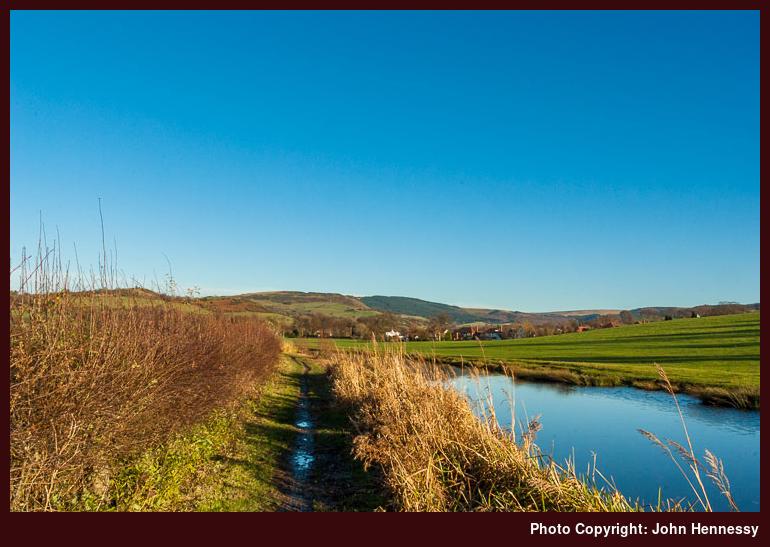
That second walk was a far simpler affair and went along the banks of the Macclesfield Canal between the town that gives it its name and Congleton. Foolishly, I began my journey later in the day than was appropriate for a distance of around ten miles; looking back at the photos, I now realise that I dawdled around Victoria Park in Macclesfield too and that cannot have helped timing. The trajectory was southward and I had sunshine on me nearly as far as the flight of 12 locks near Bosley. That part was more than familiar to me following various trots over the past decade and a Spring Bank Holiday Monday evening was spent getting that far before returning home again via Gawsworth.
Even with the prospect of clouding skies and declining light, I continued south as far as Congleton on my November stroll. Bosley's flight of locks are an impressive construction in their own way and remind me of another Thomas Telford design: Neptune's Staircase on the Caledonian Canal near Banavie. Cheshire's counterpart drops or raises boats around 36 metres and it led me towards the part of the Macclesfield Canal that I consider the most scenic. After proceeding in a near straight line south from Oakgrove, it then doglegs along the Dane valley towards Buglawton. As it does so, it passes The Cloud and that adds to the attraction of walking this way.
With cloudy skies and the time of day on a November afternoon, I made a mental note to return this way again with better light. Even with an eye on the time, this was a pleasurable stretch that I could enjoy without any semblance of it being crowded. Even so, there was no time for dallying and I noted the landmarks that told me how much progress I was making. Buglawton came before daylight failed and lured me into thinking that there was so much further that I needed to go before reaching Congleton's train station and street lights. Before then, I made good use of my head torch as I dealt with damp and soggy stretches left after one of the wettest years on record.
January 20th, 2013
December 2012 turned out a difficult month and it looked like January was to be no better. There was a heightened sense of my parents' mortality and neither were in good health during Christmas 2012. During this time, there needed to be some walking with a visit to Tatton Park at December's start and more trots in Ireland during Christmas week itself. Anyone's head just needs clearing in those circumstances. Serious actions were facing us and a resistance was overcome only by a near-death experience at the start of 2013.
There was a period of uneasy settlement then and it was then when I got to reprise November's walk along the Macclesfield Canal, albeit with a start in Congleton instead. My hopes were for a sunlit trot at least as far as the Bosley locks because I have seen the rest in sunny conditions before, not least that November walk. A morning start was to ensure that I reached Macclesfield in daylight and it was promisingly frosty too. There were blue skies, but the sunshine was being filtered by a certain haze, so photographic ambitions were not to be fully realised.
Still, I was to glimpse more of what lies around Congleton than on the previous sitting and others were wandering the way too, though never so many for a sense of crowding. The drop into the valley of Dane in Shaw Brook was visible in all its glory instead of being hidden in darkness's cloak of invisibility. Just before light completely failed on that November walk, the elevation above Timbers Brook was discerned and it was all the clearer in the morning light. Both valleys highlight the elevated course of the canal through largely rural surroundings as it goes from Congleton's train station to Buglawton on the town's outskirts. In the reverse direction, meeting with Buglawton can make you think that you are nearer to the centre of Congleton than you are, a point brought home to me in declining November evening light.
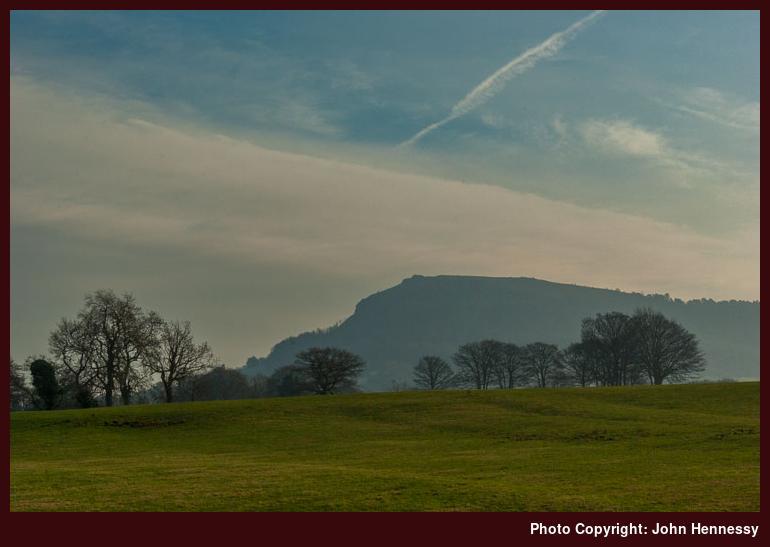
North of Buglawton, the canal swings east to shadow the course of the River Dane. Unlike Timbers Brook and Dane in Shaw Brook, the river valley must have seemed too wide for Telford to have engineered a direct crossing and the later viaduct carrying the West Coast Mainline just how wide an expanse this is. The dogleg is handy though in that it offers a passing wander the chance to take in multiple sightings of The Cloud. As if that weren't enough, there is the sense of immersion in manicured countryside, plausibly away from everything and maybe everyone. At least, it felt like that I was passing the way as clouds hijacked the sky and put a stop to the sunshine.
After turning north again at what felt like a valley head, it was on to Bosley's twelve locks under darker skies. There was plenty left in the day, but the weather was turning. Each lock number and feeder pond was being noted on the ascent as a way of checking progress. Then, there was passing under the A54 that runs from Congleton to Buxton. Near the last of the locks, I spied an open public convenience that came in handy. Noting its offering of showers and washing machines made me realise what the Canal and Rivers Trust offers to those plying these thoroughfares by boat. It was a passing CRT staff member who had opened the convenience and locked again before he left, possibly for the day. That was fortunate timing for a grateful traveller.
It was all familiar territory from here to Macclesfield, and the various landmarks were reassuring signs of steady weaving progress as I wind my way through the countryside. The road crossing near Oakgrove really granted me a sense that I was nearing home again. So did passing near the railway line and Dane's Moss wood. Crossing under the A523 between Macclesfield and Leek came next and I was well on the outskirts of my destination by now.
Lyme Green was left behind as I made for Gurnett with Sutton's church steeple to seen to my right. A cutting then conveyed me towards Buxton Road from where I was to thread streets on my way home. The cause of the darkening skies was ever more apparent now as snowflakes tentatively drifted through the air. None of them were staying though, and the ground stayed as it was, at least for as long as it took me to reach my house again. Later, the snow was to grow heavier and coat any surfaces on which it fell. By then, I was satisfied at home and resting after the hike that I had undertaken. There still were excuses for a repeat, though.
Any more to come?
At various sittings, I have covered most of the length of the Macclesfield Canal on foot. In fact, the only outstanding sections lie between Congleton and Kidsgrove and I hope to sample these sometime soon as well. The Macclesfield Canal is one of those that suits walking more than cycling or horse riding, both tempting possibilities given its length. It is the towpath's lack of girth that stymies those possibilities, though I have tried on a few occasions, such as between Marple and High Lane while going from the end of Middlewood Way to Lyme Park. Other stretches around Macclesfield are the same, so my assessment has been strengthened. The handy nearby walking and its being ever different should keep me plying the towpath of our local canal for a while yet. Then, there's the Peak Forest Canal along with the Trent and Mersey Canal if I ever want to continue the theme. The latter has a wider towpath should I wish to cycle that way. Hopefully, no life traumas are needed to provide encouragement to make use of these brainwaves.
Travel Arrangements:
Bus service 38 between Macclesfield and Congleton. It brought me home after November 2012's walk and took me to Congleton for the January 2013 reprise.
Why not a thousand?
16th October 2013 It seems that September is a time for releasing books and showing new documentaries on television. At it has felt that way with what I have seen in branches of Waterstones and on the BBC. The latter's iPlayer has made me aware of the television efforts of Paul Murton with his Grand Tours of the Scottish Islands still on BBC 1 in Scotland and three previous series of Grand Tours of Scotland. The viewing is undemanding and Scotland's scenery is the real star. Just like the country itself, the television series features a real variety ranging from inland islands on Loch Lomond to Lismore, Colonsay and Oronsay on Scotland's western seaboard. It's been a while since I explored and offshore Scottish island so revisiting their delights sounds like a plan to have in hand give the pleasures that I have met on them on previous trips.
Returning to the topic of books, it may be the looming end of the year and the lengthening of nights but there was an explosion in book launches last month. While my yearling Google Nexus 7 spends part of its life as an eBook reader and that has made sure that some more fleeting volumes actually do get read and not just collected, there remains a certain something about the traditional paper book than has been with us for hundreds of years. The packaging is part of the appeal and probably will ensure that at least some of us stick with them in preference to the lure of electronic gadgets. It seems that publishers have improved on presentation exactly when it was needed but there is one thing about the dead tree tome that I haven't found as easy to do with an eBook: dip in and out of the pages out of sequence as and when the mood takes you.
Both attributes certainly apply to Simon Jenkins' latest offering: England's 100 Best Views. This almost is the sort of book to have on a nearby shelf for spontaneous perusal of some random page in there. The same approach probably applies to predecessor tomes from the same author like England's Thousand Best Churches, England's Thousand Best Houses or Wales: Churches, Houses, Castles. Extending the analogy further, you even could apply this thinking to any walking guide that you care to have in your possession. Maybe, that added randomness could spice up route planning more than checking out the route pages of a walking magazine.
England's 100 Best Views does betray its associations with the National Trust, of which Jenkins is its chairman, as it seems that there seems to be some element of man's presence in any selected view so as a grand house or another equivalent focal point. In Britain and Ireland, it is hard to avoid human influence on a landscape but it seems even harder in England though featuring buildings pretty well makes this most obvious. Landscapes completely manufactured by man hardly are excluded either though the author is not a fan of such modern intrusions as wind farms, car parks and the wiring needed all over the place for modern living.
However, the National Trust was set up to conserve countryside and not the sort of old country houses of which it is custodian all over England and Wales. That only happened around the time of World War II and its role was sealed by the Office of Works (now English Heritage) being dissuaded from engaging in the same kind of thing by the government of the day in another time of austerity. It can be odd how things go with organisations at times.
There are landscape views without sizeable buildings in them too. The coastline of the south-west of England is an obvious example as is the Lake District. With his other books, it is surprising that Jenkins didn't try for a thousand views because they have to be out there. After Cheshire just has one entry - Peckforton Castle & Beeston Castle atop neighbouring sandstone outcrops in the west of the county - and gets into the West Midlands section for some reason. Quite why it is excluded from that devoted to the English Northwest is beyond me and there are plenty of other sights that could be added. A number from between Macclesfield and Buxton come to mind: looking towards Shutlingsloe from Tegg's Nose and looking north while descending from Shining Tor to Lamaload Reservoir are just two. Thinking about it now, views over reservoirs may not be amenable to Jenkins but it does highlight that there are so many alternatives from from which to choose. Of course, doing justice to each of them may have lead to cutting down the number so as to give descriptions of the chosen few more room to breathe. There are times when your cloth has to be cut according to your measure and so it seems with England's 100 Best Views. Any new viewpoints are to be celebrated and there always are more than a few to be found in a book like this; just like the aforementioned television series, it too does not disappoint.
Secrets of the Irish Landscape
15th October 2013 During May of this year, the Republic of Ireland's national broadcaster RTÉ ran a three part documentary series called Secrets of the Irish Landscape. The documentary series tells the story of the Irish landscape and is built around the work of Robert Lloyd Praeger that started a hundred years ago. His 1937 book, The Way That I Went, contributed to the inspiration for the series. With all of the references to this book, I am left wondering why a re-issue wasn't planned, especially since the last re-print was done by Collins Press around 15 years ago. The only way to acquire a copy now is to go out on the second hand market and I have seen prices reaching hundreds of pounds. Those may be for original editions but even a second hand paperback edition from Collins Press seems to attract prices of £20-30. At least, that's what my own copy cost me and it's in decent condition too, albeit with yellowed pages and bent corner to a few of them that I largely have straightened. What struck me though was the size of the book since he didn't write a slim tome while he was at the task. What really helps though is that it remains well readable from what I have read of it so far and spans a remarkable time in Ireland's history.
Praeger had much experience in writing since he co-edited the Irish Naturalist (when this ceased to exist in 1924, it was succeeded by the Irish Naturalist's Journal in 1925) and contributed also to the Proceedings of the Royal Irish Academy. One of those was published in 1901, Irish Topographical Botany: This was a weighty contribution with the descriptive treated almost as a preface with pages numbered using Roman numerals and what otherwise could be seen as an appendix gaining the Arabic ones to which we all are accustomed. Though largely a work of scientific reporting, mentions of fondness regarding the Irish outdoors were snook onto page lxxxix. Here is a first quote where a brief interlude of reminiscence was allowed:
The long summer days spent in the Limestone Plain,
where the gentle undulations of the ground
only occasionally hid the distant rim of brown and blue hills;
the marshy meadows, heavy with the scent of flowers;
the great brown bogs, where the curlews alone relieved the loneliness;
the bare limestone pavements and gaunt grey hills of Clare and Galway;
the savage cliffs of the Mayo coast;
the flower-filled sand-dunes which fringe the Irish Sea;
the fertile undulations of southern Ulster;
the swift brown current of the Barrow;
the fretted limestone shores of the great western lakes;
the towering cones of the Galtees:
all have left memories that can never be effaced.
That expression of affection was followed by another on the same page that suggests an innocence lost when it comes to access to the Irish countryside on foot. It sounds utopian to my ears now but it does seem that walking around Ireland in the late nineteenth century was more carefree than is the case today:
Ireland is a delightful country for the pursuit of work in the field.
Enclosed or preserved ground is but seldom met with,
and the country is free and open.
Few rivers but can be, forded;
few marshes or bogs but can be crossed;
few precipices but yield their treasures to the mountaineer;
few spots are so remote but they may be visited
in a good day's walking from the nearest stopping-place.
Praeger's scientific endeavours had him criss-crossing the Irish countryside on foot during weekend excursions and the Office of Public Works still has something on the web that offers a flavour of his itineraries. He depended on the rail network for these and never took to the car, perhaps seen as a newfangled development in his lifetime. His research was both done for the love of it and to sate a certain curiosity. It was the sort of enterprise that Brian Cox was describing in his documentary series Science Britannica on BBC television.
Just like its aforementioned BBC counterpart, the RTÉ series was a three part affair and these seem to be becoming a regular occurrence even on British television. Secrets of the Irish Landscape was a major effort for a national broadcaster whose finances have not been so healthy since the economic downturn of 2008 and its first episode was no shabby affair at all. But for what was going on in my life at the time, I might have caught up with all three programmes though only the first would have been seen in Ireland itself. RTÉ has a far more liberal approach to folk on the British side of the Irish Sea viewing or listening to its broadcasting over the web, more so than the BBC when it comes to seeing their output in Éire. The whole series could have been seen and there was a season of programmes under the Ireland Goes Wild banner to go along with Secrets of the Irish Landscape too.
Just as there has been no reissuing of Preager's The Way That I Went, Secrets of the Irish Landscape has not come out on DVD either; there is a teaser trailer still is to be found on YouTube where you can see how it took my fancy. What we have in its stead is a glossy coffee table format book featuring subjects covered in the series. It is a collection of scientific essays with accompanying photos from different experts with the whole being edited by Matthew Jebb of the National Botanic Gardens in Dublin and Colm Crowley of RTÉ. Given what's on offer, I am left wondering if a more portable format might have been a better choice; then, it not only would come on a journey with you or even live more easily on a nearby bookshelf to be picked up for a short perusal during a quiet few minutes. My own copy came from the Limerick city centre branch of Eason's a few months after the series had been on the Irish airwaves and has been perused in fits and starts since its organisation suits that more random approach. This also is something that can be done more easily with a book printed on paper than a digital equivalent.
There is one final thought that comes to mind when I think of what Praeger did. His explorations of Ireland remind me of my own outings though there remain great differences. The use of public transport over a hundred years ago and the long walks could be part of many an outdoors enthusiast's weekend away and they remind me of my own escapades. In place of seeking of peace and quiet for the soothing of the human spirit, Praeger had loftier ambitions and much more substantive achievements. In contrast to the seeking of an unperturbed ambience and fleeting light that brightened a pleasing vista for a photo that has motivated me, he wanted to know what plants were in Ireland and from where they had come after the last Ice Age. He sought knowledge and left a legacy while I have acquired memories that help to balm life's wounds. The comparison makes me wonder if something more would be in order but, for now, that's something for contemplation rather than rash action.


