Category: Times and Seasons
Into 2025
 1st January 2025
 There was a time when I ensured that the start of a new year and the anniversary of my setting up this place got marked with a piece like this one. That lapsed over the years. Other distractions took hold, and the marking of these occasions felt less important.
Yesterday, I reflected on the year just gone, with all its ambles along Celtic and French trails. This time, I try to look ahead while bearing in mind that much is uncertain. After a break to sort out matters in Ireland, my freelance business needs to be put back in operation; its technology needs an upgrade too. That likely will mean less time for other things.
Even so, some things always need to progress; it is always a matter of prioritisation and balance. Working from Ireland might become a possibility, for instance. That would allow Irish explorations to continue, recognising that one base is not enough and that staying somewhere like Galway has its uses.
At one point, I toyed with a Pacific northwest escapade in the U.S. until I realise that some added work was required for assembling such an excursion. Piecing together a trip featuring both Seattle and Portland (the one in Oregon) sounded like a task for a travel agency or concierge. While 2020 may have begun with weeks of research, that is five years ago now. Thus, some undistracted time is in order to piece things together. Until I see how the U.S. goes, that will wait for now. The main thing that stalled it last year was the need to attend to other matters that are now in hand.
Canada comes to mind as another option for a transatlantic undertaking. Toronto is coming to mind here, and I am checking out the hiking possibilities for a non-driving enthusiast like myself. The early signs are encouraging, so looking into accommodation and travel arrangements could be a next step there. New AI tools are proving their worth as I ponder any prospects.
A few days based in Inverness would allow for something closer to home to go with any Irish hiking. Other ideas could emerge yet, and continental Europe has its share of options. Non-flying ones could work: train travel could return me to Switzerland after a long time, for instance. Norway is another place that I would like to see again, either by spending more time in Oslo or going further north. With enough time, both could be part of the same trip.
Time for idea gathering would add to the above, since things are very open at the moment. Many years begin like that for me. The serendipity of life adds to its variety, so we should plan that out of existence. First, I need to get used to dividing my time between two places before adding in others on a temporary basis. In some ways, that has been done before, so it cannot be ruled out now. For now, though, I hope that 2025 brings you some good things as counterpoints to the challenges that no one can avoid.
2024: A year of Celtic trails and French summits
31st December 2024 There once was a time when every year would get a retrospective review at the end, or not long afterwards. That has slipped for various reasons. However, this piece reinstates that for this year. Whatever happens in coming years cannot be known; we only know the present, and our recollections of the past are prone to the ravages of time, though some have better memories than others.
Highland Rambles to Start a Year
For me, this year began in Aviemore after the preceding disruption of storm Gerrit. New Year's Day was spent hiking around Rothiemurchus, with many wishing Happy New Year to each other. Lochan Mor, Loch an Eilein, Loch Gamhna and Loch Morlich all featured as landmarks on an amble on a crisp sunny winter's day. The volume of traffic along the road between Aviemore and Glen More was more akin to a motorway than a thoroughfare in a protected part of Scotland. With no public transport in operation, private transport possibly was the only realistic option for getting around.
The next day saw a return to Inverness for a hike from there to the shores of Loch Ness at Lochend. The paths by the River Ness and the Caledonian Canal were pleasant, though sunshine was scarce. The same could not be said for walking along the side of the A82, yet seeds were sown for future rambles that use Inverness as a base. Walking back from Drumnadrochit to Inverness along part of the Great Glen Way is among these, as is a circuit through the hills near Achnashellach train station in Scotland's more remote northwest. South Loch Ness Trail is another option that appeals. If other things had not intruded, these ideas may have been used sometime this year. For now, they remain in my catalogue of ideas for the future.
February's Fresh Start In Cork
The rest of January was occupied with many handover sessions in advance of a work contract coming to an end. This was a process that took its toll on me, setting some of the scene for the start of February. Nevertheless, property hunting took me to Cork for around two weeks. That was complemented by strolls along the disjointed sections of the Cork Harbour Greenway along with some pottering around Crosshaven, Fota and Cobh. A day trip to Killarney saw me reprise part of a route taken during the first full day of my stay there in August 2022; the initial idea was to head to Glengarriff, but the bus ticket machine would not sell me a day return ticket and I took that as a sign that it might be best left for another time. The deviation around by Torc Waterfall made for a late return to Killarney bus station; it was as well that later services operate on a Sunday, or my incaution might have left me marooned. There was a circuit of Muckross Lake too, which might have made the day a little too long in hindsight.
March in Aberystwyth: Coastal Walks and Windy Summits
In March, there was a return visit to Aberystwyth to follow up on a stay there the preceding September. A good weather window was what prompted me, and I got in some coastal walking on the first full day there. The main stretch was part of the Wales Coast Path that returned me to Aberystwyth from Borth after some pottering around Aberystwyth. Pumlumon Fawr got an ascent on a bracing day with a cold gusty wind reducing the time spent on the said summit. It might have been better not to have gone up there at all, but for my stubbornness. Lower level hiking was less affected by the wind and I wandered about by Bwlch Nant-yr-Arian before continuing to Ponterwyd. The tale of my day made a bus driver laugh when I said it was the wind that was the greatest challenge.
April Escapades: From Stirling to the Tops and Lochs of Central Scotland
Eastertide house decluttering and a run of uninspiring weather meant that it was the end of April when I next got out and about. This time, I based myself in Stirling. The preceding November saw me making an impromptu incursion into the Ochil Hills by following a track while wearing trail shoes. That act eliminated those eminences from my attention, so it was the need to experience a hike around Ben Ledi with more sunshine that became the main motivation. Before that, I enjoyed a delightful stroll around Stirling in the pleasant evening sunshine, even if it wearied me a bit for the main ascent.
The route to Ben Ledi went along that of the Rob Roy Way from Callander before deviating onto a forestry track that carried me around Boschastle Hill. That saved some steep ascent at the beginning, only for more height gain to try my legs on the way up to the summit. With sunlit views like I never saw them before, there were ample excuses for rest breaks to ease the burden. Once over the summit, I descended below Bealach nan Crop into Stank Glen from where I reached the shore of Loch Lubnaig, where I loitered a while before dropping into a Forest Holidays shop for some refreshments. The way back to Callander from there was swifter than I had expected, allowing me to use an earlier bus for the return to Stirling.
The next day saw me back in Callander for what became a hike to Aberfoyle along the southern shore of Loch Venachar before a diversion to Brig o' Turk prompted by curiosity and Loch Achray. Concerns about making the last bus of the day and the growing heat persuaded me not to visit Loch Katrine, so I hotfooted the rest of the way on forestry tracks, only to find that my fears were unfounded. The initial plan had been to do a circuit of Loch Venachar until distances and the heat caused a change of mind. Very weary legs were rested in Aberfoyle before that bus appeared, and the stop also allowed a chance to imbibe some refreshments.
May: Revisiting the Trails around Aviemore, Rothiemurchus and Kingussie
The start of May was graced with a repeat visit to Aviemore. The main motivation might have been an out and back hike to Loch Eanaich after high water halted the errand the previous December. That was just as well since there still was a stream crossing without a bridge that got me wet feet and boots. This was the sort of thing that perhaps was best left for the last day of a stay instead of the first. Nevertheless, I got where I fancied going. Ronald Turnbull has published a route leading this way to Carn Ban Mor and other nearby hills. It does not look like a day hike to me unless you make use of a mountain bike. Backpacking might be the better approach after some strength training to cope with your load. The next day saw me reprise a hike from Kingussie to Aviemore with variations to the route. This included closer proximity to Glen Feshie and a more direct if muddier route from Moor of Feshie to Loch Gamhna. Otherwise, it was good to redo this with longer hours of daylight.
June: West Highland Retrospectives and French Forays
The West Highland Way got some repeat attention at the start of June during a stay in Fort William. First up was the section between Fort William and Kinlochleven after a deviation around by Cow Hill near the start. Though used by many more people on the day, it was great to revisit a trail that I had not walked for more than twenty years, even if it took a toll on me because of a rush to catch a bus at a reasonable hour. That was not how things worked out for me between Glen Coe and Bridge of Orchy. Though wintry showers peppered the day, there were periods of bright sunshine that may up for these and a shorter route with better public transport connections made for a more relaxing hike. All was settled gain, even if the numbers heading north made me wonder about overtourism. My recollection of passing the same way around twenty years before was that things were much quieter back then.
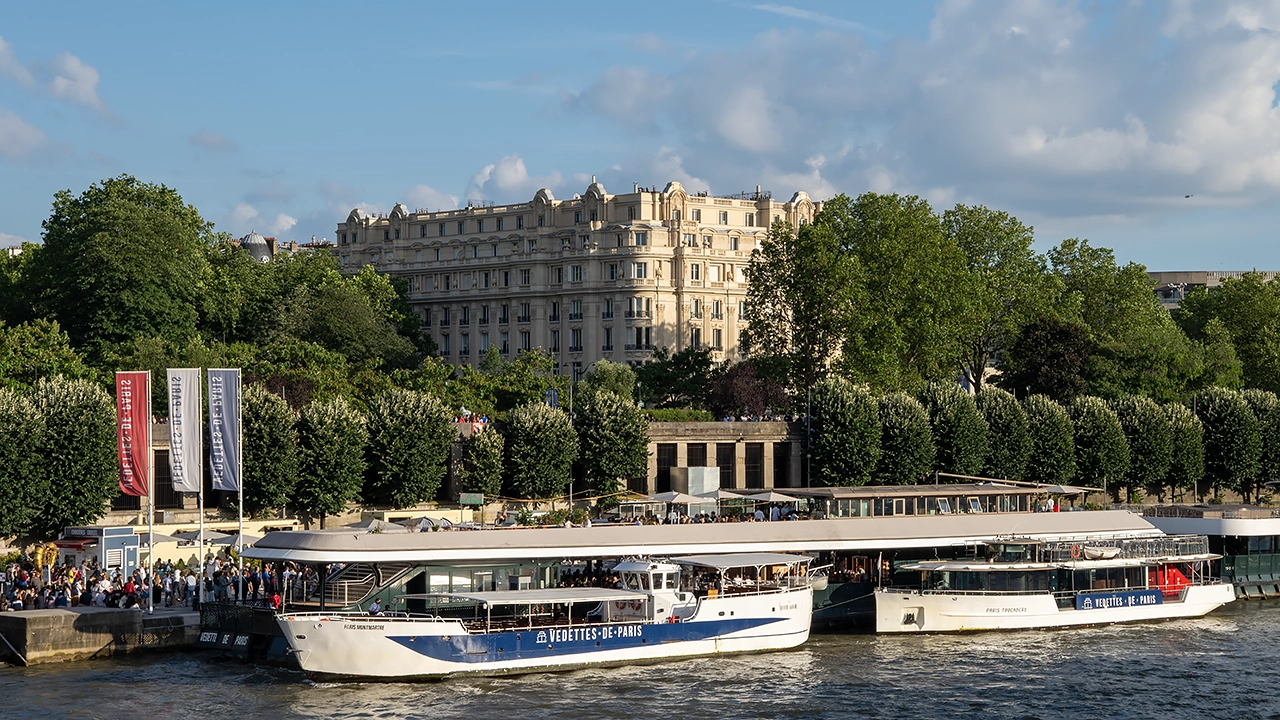
This also was a year with two trips to France. A passport bungle meant that I could not use a booked ferry trip, so I rearranged it for later. The stay in Paris still went ahead in May. Rennes and Versailles were the object of side trips during a getaway that featured mixed weather and extensive urban walking. The summer solstice was when I used the ferry booking between Portsmouth and Saint-Malo, where there was the only episode of mixed weather. Otherwise, there was no shortage of sunshine in Paris or Versailles, even if restrictions were becoming more intrusive ahead of the Olympic and Paralympic Games. Grenoble became my main base, allowing plenty of hiking to happen. The routes took me to Mont Rachais, the Desert de Jean-Jacques Rousseau, Charvet, Sassenage, Mont-Saint-Martin and along the River Isère. While tongue-tied by my grasp of French at times, much was to be enjoyed, too. All was accomplished by surface travel, which was even better in these days of climate crisis. That may set up some excursions in times to come.
A Southern Irish Summer: Traversing Hilltops, Coastlines and Peninsulas
Somewhat like 2010, 2024 feels like a year of two halves after I acquired a new Irish base in Cork city. Thus, July and August saw a lot of Irish traipsing in between attending to other matters that have been in the offing for a while. Killarney saw two back to back day trips, the second saw me reach the summit of Mangerton after being stymied by going around by Knockreer and Ross Castle on the first day. A full day was spent traversing the Ballyhoura Mountains from Ballyhea to Seefin and back. The three Atlantic peninsulas of West Cork, Mizen, Beara and Sheep's Head, all got visits. The first involved hiking from Schull to Ballydehob and the last allowed me to go from Kilcrohane to Ahakista via the top of Seefin (the name pops up in a few places on this evidence). Glengarriff's Nature Trails were a lure to the Beara Peninsula early in August, only to be followed with possibly the soggiest and wettest hike in my life along the Beara Way from Adrigole to Glengarriff. Other summertime forays took me to Cashel and Cahir, as well as the Knockmealdown Mountain foothills on a saunter from Cappoquin to Lismore.
A Subsequent Lull
The summer wanderings were followed by a lull in August. Fatigue and other distractions like testing out Generative AI curtailed things in the autumn before the weather fell into a rut uncongenial to hill wandering. There still was a loop around Great Island in Cork Harbour as well as more local forays to known spots until thing perked up more recently with visits to Blarney, Ballincollig and Kinsale.
Ideas for an Open Book
2025 remains an open book at this stage, though there are some ideas that are readily to hand. One is a sojourn in Inverness, while a transatlantic escapade cannot be ruled out either. Given recent political developments, Canada looks more likely than its southern neighbour. The need to use Virgin points may encourage me to go to Canada yet. Toronto could be a base for what surrounds it, and Galway could act in a similar fashion in Ireland. Business matters need added attention, so I do not have a free hand in all of this. Only time will tell what happens next.
Emerging from a rut
30th December 2024 The last word in the title for this piece nearly became "funk". That would have reflected the absence of any longer hikes since the end of August and the dominance of any other preoccupations like experimenting with Generative AI or various changes that I have been making to my business affairs, especially in Ireland.
When I went about checking out the meaning of funk, I was directed to the concept of an emotional funk, with one of the proposed remedies being the taking of simple steps as part of progressing one's emergence. While in the UK before Christmas, a day trip to Edinburgh along with sorting out other matters and generating ideas for the start of 2025 was part of the process. In some ways, getting out and about in Macclesfield is simpler than doing the same in Cork.
While stationed in Cork, it has meant finding ways to get places for shorter outdoor outings that cannot be frustrated by a sense of inertia. One trick was to get to Blarney to use some public trails that AllTrails brought to my attention; it also helped with ideas for around Kinsale too. These gain various names from the likes of Ardmadane, River Martin, Knocknasubh and Clogheenmilcon Fen. Putting them all together in some sort of fashion easily wiled away an otherwise dry afternoon when sunshine was coming and going. Going with the flow to an extent was the cause of my starting in Blarney and finishing up in Killeens. Varying the routes to add variety could mean having these on a proverbial shelf for ideas in advance of being able to make a short getaway.
Ballincollig Regional Park was another option that became useful, especially when I was not equipped for muddy trails. Though the place was busy with families while I was there, there were some quieter interludes along its network of trails. Some are part of a network called the Ballincollig Gunpowder Trails, reflecting the fact that there was a gunpowder mill in the place once upon a time. Many of these shadow the River Lee too, and that especially applies to the Otter Trail; the area apparently is a stronghold for otters, though their nocturnal or near-nocturnal habits make it less likely that you will see one. A city centre change of bus makes this one work for me, and connections are far off being seamless with nearby of shared stops and frequent running. That might help to extinguish any excuses in the future.
As described in a previous trip report, Kinsale is not so far from Cork city and the changing of a bus can be made to work well, especially on the return journey when a stop is shared between the required routes. The Scilly Walk proved its worth on the way to Charles Fort and then on by Middle Cove and Lower Cove before muddy tramping on the way around by Preghane Point. Brief, light if wetting showers came and went, interspersed with any spells of sunshine, as I progressively evaded humanity the further that I continued. While the price might have been muddied clothes and momentary wettings, the rewards of solitary ambling with clifftop views cannot be underestimated.
With other things in mind and not having information from the likes of AllTrails, I eschewed the tempting footpath leading to Preghane Point when I was last around Kinsale in August 2022; information on these things is not always available from a hiking map in Ireland. A little extra is needed to overcome any risk averseness, and time can be as important as possessing the right knowledge sometimes. With access issues being prevalent in Ireland, one's curiosity needs to be curtailed to avoid the possibility of confrontation.
Building up a catalogue of getaways like this may just be enough to put a stop to any paralysis by thoughts that there is an insufficiency of time for such escapes. You do have a travel a little in Ireland to get to such nearby places because it is not as simple as finding a public footpath or other right of way and following that, as you would in England or Wales. Even so, the push need not require that amount of energy either. Anything that halts torpor has to be a good thing, particularly at this time of year.
A stay In Limerick city that yielded more hill wandering than could have been foreseen
27th November 2024 After all the reports of walking in English moorland, it is not before time that some variety was added. In the spring of 2022, there was a hiking project around Marsden, but I will leave that until after a brace of accounts from Irish hill wandering episodes. The year can be summarised as being one with returns to the South Pennines, the Lake District, Scotland and, of course, Ireland.
The first of those Irish incursions took the form of a day trip in March. This was another confidence building measure following the pandemic's arrival. First, there was a return to air travel. Things had not fully opened up at that stage, so airports were quiet, and face coverings were mandatory. Though low staffing in security meant a run to the outbound plane, things otherwise were pleasant. It was the gentler reintroduction that I needed.
Once in Dublin, airport ground public transportation was not at full strength and very busy. While mask wearing was suboptimal, there were no lasting after effects. Some personal business got done in Dublin's city centre, freeing me up for a saunter around the city. That took in Phoenix Park, Stoneybatter and Stephen's Green before I caught a coach back to the airport from the Custom House. That felt a bit tight, yet everything went smoothly. This day trip really moved things along for me and allowed me to contemplate a longer trip to Limerick.
Limerick Bound
After a two-year absence from Ireland during 2020 and 2021, my business affairs there needed attention. While I might have made the trip in 2021, I had remained fixed on the old pattern of staying at my usual place. This was no longer viable: the house's hot water system had failed, and arranging lifts from pandemic-wary locals as a non-resident non-driver seemed unwise. The solution presented itself: a hotel stay in Limerick city with public transport access. Conveniently, a Local Link bus route passed near the old house anyway.
This was the scene that led to a week-long stay in Limerick city that included a weekend too, with some traipsing here and there around the place. My accommodation was on the banks of the River Shannon, so I got in a few circuits taking in both side of the river. It helped that there were landmarks like King John's Castle and St. Mary's Cathedral to make some ventures all the more interesting. Much of what you find by the side of Ireland's longest river has been gentrified, making it more pleasant than was the case only decades ago. This now is a not unpretty place, though the old milk powder factory remains undeveloped and is due for civic regeneration.
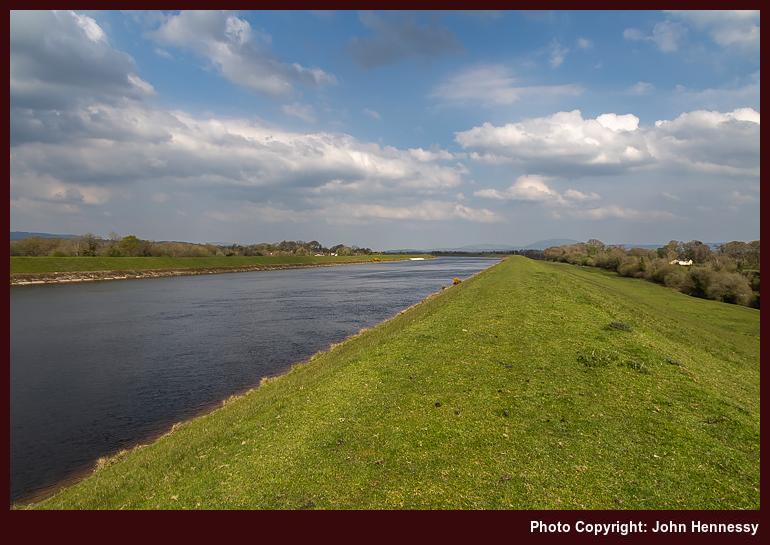
Business affairs took me beyond the city limits to West Limerick. Along with property visits and another meeting, there was an opportunity to explore Adare as well as sample the part of the Limerick Greenway between Newcastle West and Ardagh. Otherwise, there was an impromptu sortie from the city centre along the Lough Derg Way that shadowed the banks of the River Shannon until I left that trail to traipse alongside the canal conveying water to Ardnacrusha power station. Seeing that staggered me on realising that this was a project completed in the first decade of the then newly independent Irish Free State. From there, I wound my way back to the city again during an enjoyable afternoon while other business was completed on my behalf further west.
Going East for a Day
Local wandering around the city and county of Limerick more likely whetted my appetite for long explorations instead of sating it. The initial prompt had been what I could see glistening in the sunshine from my hotel room once Tuesday's drenching downpours had abated. Those sights had me checking out what was there on any maps. By Saturday, a design including a visit to the Clare Glens and an associated incursion into the Slieve Felim Hills had come together in my mind.
Handily, there was a bus service for getting me to Newport in Co. Tipperary and back again, though its infrequency timeboxed the outing. Traipsing along roads in the direction of Murroe, a place in Co. Limerick, got me to the Clare Glens, somewhere that I had not been for decades. Though compact, this is a pleasant spot and, if my recollection is sound, I had the place to myself too. The draw of the Slieve Felim Way and the Glenstal Looped Walk was too strong on a fine sunny day, so I did not dally.
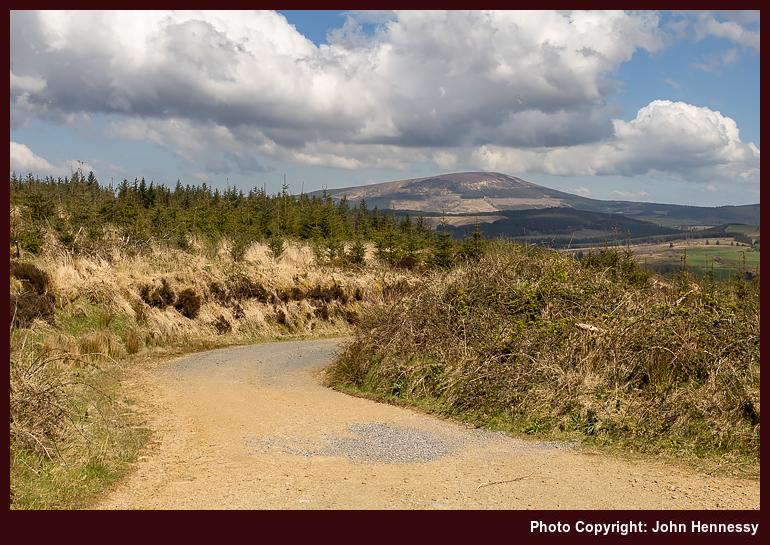
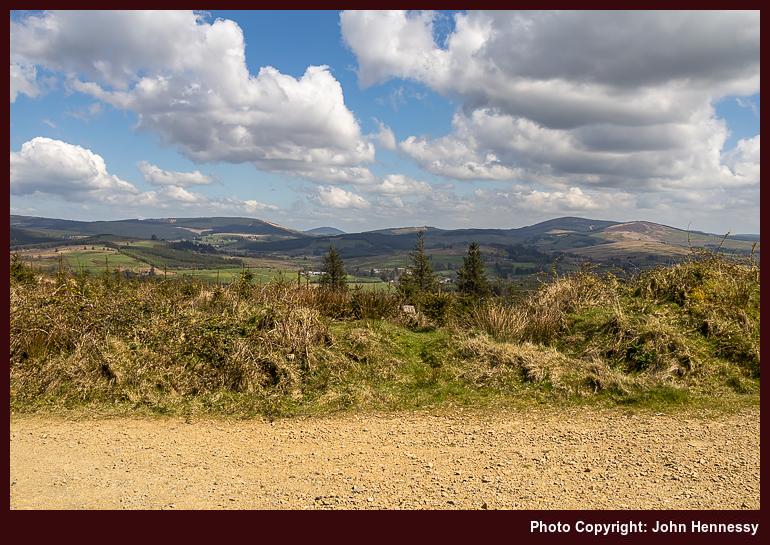
Though much of the walking was on roads and good tracks, the footwear that I was using would not have been my first choice for this kind of thing. These Merrell trail shoes were meant for better wear than longer distance traipsing, yet they were well-made too and more than coped with what I was putting their way. However, the sight of a forestry firebreak may have made me wonder about getting to a summit while going around the Glenstal Loop, only for the choice of footwear to allow me to shelve the idea, even if forestry had been curtailing the views until then.
They later opened out for me on leaving the Slieve Felim Way, in any event. Though suffering from some haze, the sights of the surrounding rolling hills was what brought me, and I was not short-changed. While hiking along forestry tracks may be limiting in some ways, this was a good extension to what, before then, was limited exposure to Irish hill country. The heat of the day was on my mind as I followed track and roadway to return to Newport for the bus back to Limerick, the last of the day and one that I certainly did not want to miss. As often happens, I had time to spare before it came. Even so, it was better to end the outing that way.
A Day Around Killarney
After the preceding day's perambulations around the Slieve Felim Hills, I embarked on a day outing to Killarney, one of Ireland's iconic spots and a place that is well known to me from many family outings. However, there is something to be said to encountering a place in your own time without the constraints of group timing or others' preferences. For example, I went for a stroll while there with my parents before a change of job, conscious of increasing impatience the longer I was away from them.
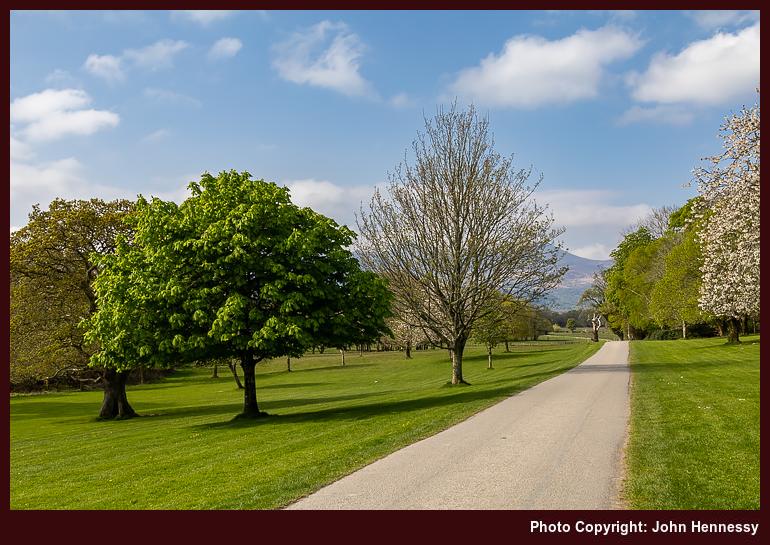
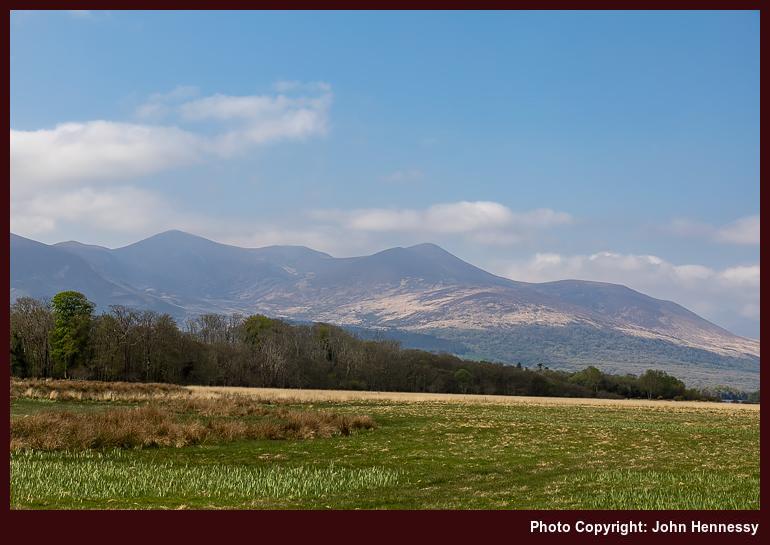
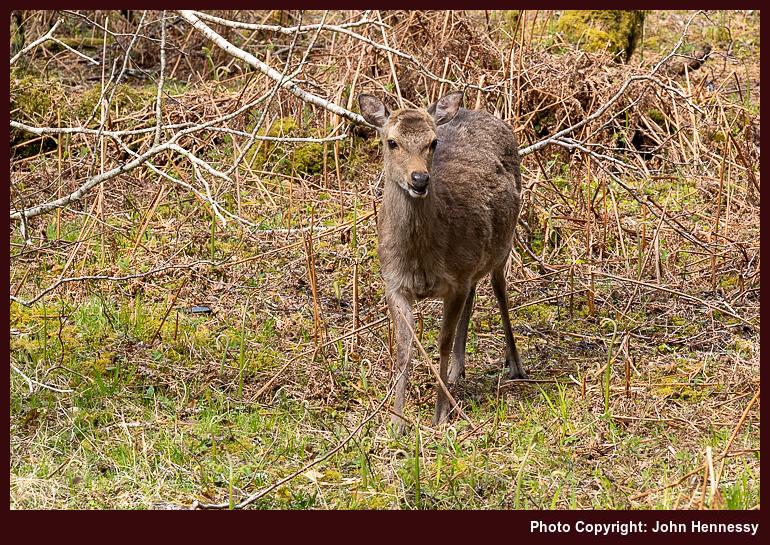
As familiar as anywhere is, you nearly always can find a corner that is new to you. Knockreer Park was one of those that I happened upon through serendipity, only in this case because I made a beeline for Killarney's cathedral before going anywhere else. My route through the place took me to Ross Castle while savouring any sights in the morning sunshine along the way.
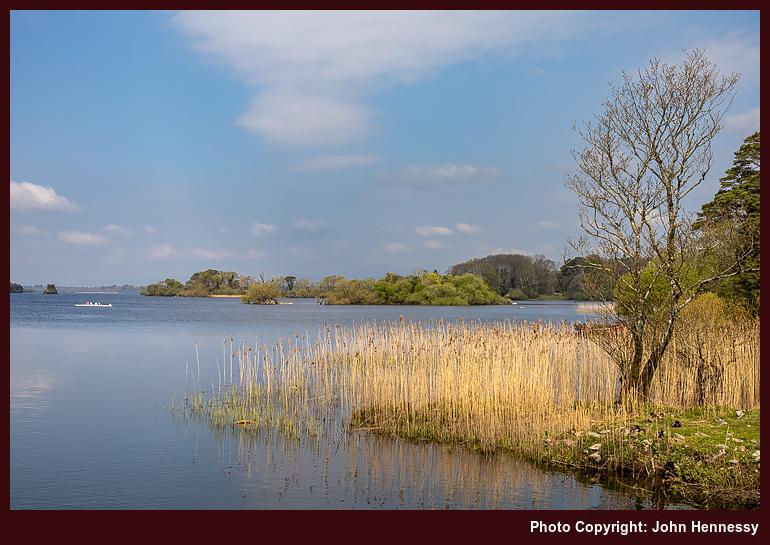
Since Ross Castle is one of Ireland's iconic antiquities, I just had to make some photos of a place that I last encountered nearly two decades before. Luckily, it stayed sunny for this because the weather forecast was for cloudy skies during the afternoon. While I was hoping that the sun would stay, the forecast sadly held true. Thus, dullness took over on the way to and through Muckross. Even so, the prospect of circling Muckross Lake was too good to leave, putting to rights a partial encounter from years before. The sights appealed to me, adding to the sadness of having clouded skies. A return would be in order; there have been a few since then.
The way to Killarney involved a ride on an express coach, yet a sense of disappointment sent me back by train, with changes in Mallow and Limerick Junction. More hill country was there to be glimpsed and checked out using a mobile mapping app. More sun was on offer, too, as I built up ideas for future escapades.
Wandering Near Lough Derg
Some might see it as an act of mockery to experience sunshine after a day that clouded over to dent emotional steadiness. However, it also offered an opportunity to put any sense of disappointment behind me. Thus, I ventured north to Killaloe to make use of what had come my way. This was a chance to earn some recompense.
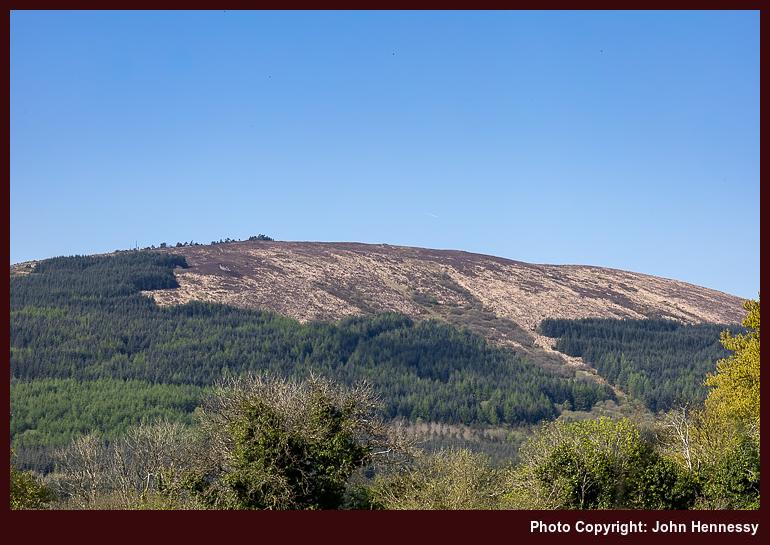
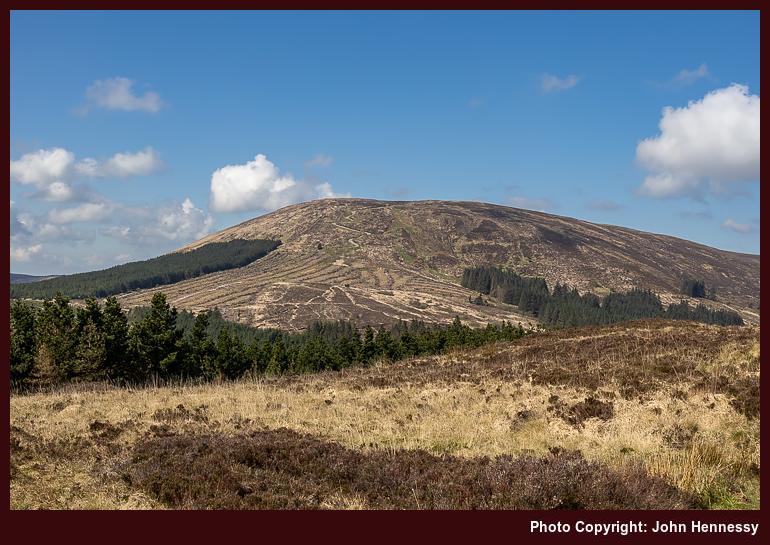
Thus, I left Killaloe by following the East Clare Way after attending to a matter. The early morning quietude applied balm to the soul as I trod along rural roads; this was much appreciated. Tarmac was left after me near Feenlea only to find some soft ground and wet patches that were not ideal for the footwear that I had. Careful footwork got around this, and I began to gain some height.
Looking left sent my gaze towards Moylussa, Clare's county top. That information was not in my mind on the day, so I left that top behind me to stand on Feenlea Mountain instead. That act was serendipitous; curiosity sent me following a trail that I saw a runner use. Below me lay the astonishing expanse of Lough Derg. That is what I recall above all else, for I never realised how large Irish lakes could be.
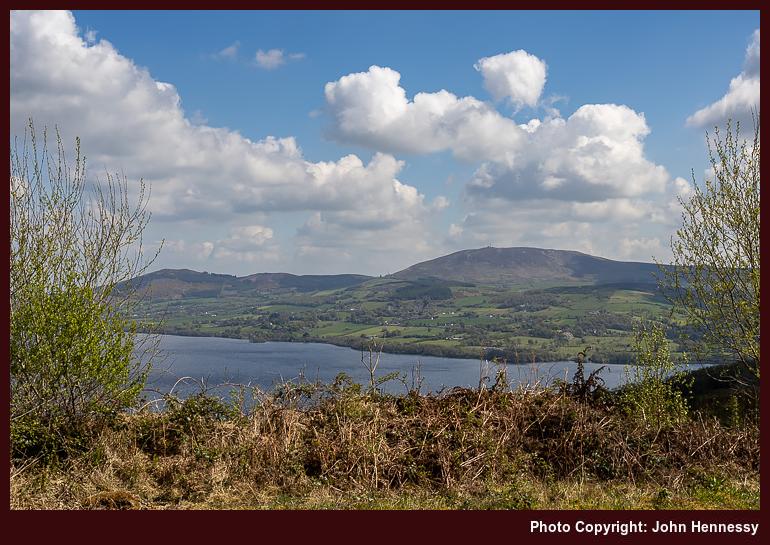
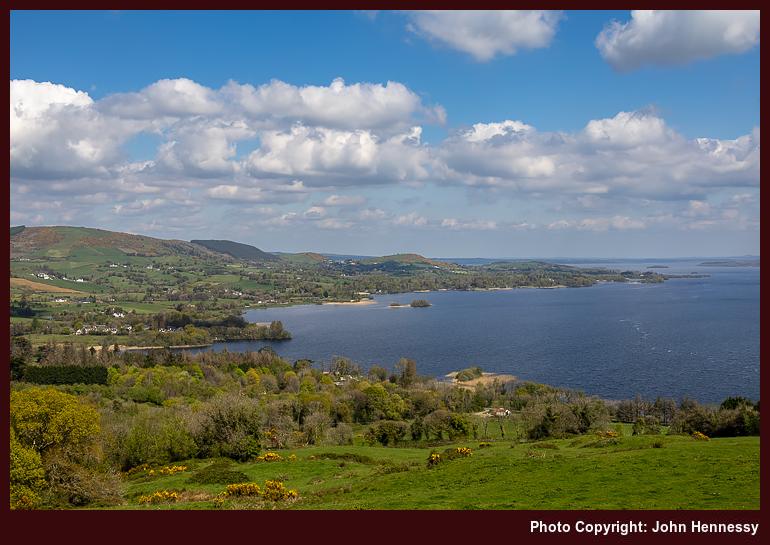
By now on the route of the Crag Wood Walk, I began my descent to the lakeside, all the while taking in the views as I went. On the Tipperary side of the lake lay the Arra Mountains and a tempting hiking prospect that would make more use of the Lough Derg Way. The skies were again filling with clouds as I went to and tarried around Rinnaman Point. However, these were not to bring any dulling of the spirit, for much satisfaction was coming my way.
Road walking was my lot on the way back to Killaloe. On the way, I encountered Béal Ború, another serendipitous discovery. More dallying resulted around this earthwork from times of antiquity; the naming connects to the Celtic king and champion against Scandinavian invaders, Brian Ború. Bus timings lured me across the Shannon from Killaloe and Clare to Ballina and Tipperary under skies that occasionally released sunshine. It struck me that many of the bridges across Ireland's longest rivers are single track affairs, needing traffic lights in some places; a few had been encountered on my travels that day.
A Bequest of Inspiration
As I went back and forth between these different destinations, I began to note other possibilities for exploration, some of which have been used since then. While the Galtee Mountains remain unlisted, the same cannot be said for the Ballyhoura Mountains, the Knockmealdown Mountains or the Comeragh Mountains. Kerry has seen multiple visits, as has West Cork, a place well outside the range of all this freestyle Eastertide wandering.
That brought me a sense of liberation that I had not experienced in my own home country. There was something special about immersing myself in nature, surrounded by the beauty of the Irish countryside. As I savoured the hills and valleys, I felt grateful for the opportunity to experience this part of the world, and I could look forward to many more adventures exploring its secrets.
Travel Arrangements and Observations
The Dublin trip involved a return flight from Manchester with Aer Lingus and the use of Dublin Express route 782 for getting between the airport and the city centre. Train travel got me between Macclesfield and Manchester Airport.
Airports were still quiet at that stage, especially compared to today. Cork Airport felt like a ghost town, and I did not dally at Shannon Airport. The latter was used on the arrival from Manchester, while the former was used on the return. Both flights were with Ryanair, with train travel getting me to and from Manchester Airport.
Bus Éireann Expressway route 51 got me from Shannon Airport to Limerick city, while Bus Éireann Expressway routes 13 and 14, and Dublin Coach route 300, got between the city and West Limerick when needed. The latter also got me to Killarney; while the services of Iarnród Éireann got me back again. Local Link bus route 391 got me to and from Newport. Bus Éireann route 345 got me from Limerick to Killaloe while Bus Éireann route 323 got me from Ballina to Limerick. Both Iarnród Éireann and Bus Éireann conveyed me from Limerick to Cork Airport.
Filling in gaps and reorganising what became unwieldy
7th November 2024 The travelogue has seen quite an amount of attention in the last few weeks. Firstly, a lot of content has been added or refreshed. Destination directories have become more informative articles, giving rise to new sections for Canada and the U.S.A. The former Alpine and Pyrenean article for Europe has been split up into its own section. Other sections have been renamed and many articles retitled.
The enabler for all this flurry of changes has been the advent of GenAI; it is now possible to automate a lot of the effort. It still needs human oversight and can be heavy work from time to time. As with human help, not every tool is as effective as one might like it to be. Getting to know such foibles is becoming essential for the world of work.
The gap filling also happened around here as well. Wherever there was a collation of websites, descriptions were added. In one case, a more narrative form was made from what was there; it is the outdoor pursuits inspiration piece that was progressed like that. In time, that may be the way that things go in other places, too. If you want to check what has happened, all the activity was in the resources section. The collations of long-distance trails and online retailers are among the beneficiaries.
While changes may have been dramatic thanks to new text processing technology, much remains unaltered. While the appearance may get attention sometime, that is not a priority for now. Trips remain human written anyway; the technology does not do all for us anyhow. You may have notes, but a machine can only do so much with them; it cannot carry over your personal touch that well or easily.
It all takes my back to university days, when a lecturer found regurgitated errors in someone else's work. Then, the advice was to use the efforts of others for inspiration, not transcription. That remains ever more relevant in the times in which we now live. We need to learn how to use the new machines to help us, and that will be a longer process with its share of slips and trips before everything gets consolidated again.


