Category: Weather
A last blast of winter?
 3rd March 2009
 Whatever my views on the meteorological months of winter might be (if I had my way, I would bring everything forward by two weeks but I digress), it has to be said that we have been having one of the colder ones with milder spells like those that we got last month and the one before becoming more like exceptions in the memory. Dumps of snow are forecast for Scotland but getting snow in early March isn't so strange and it has happened a few times in recent years. In fact, last year saw us getting a white Easter at the end of the month.
Speaking of Scotland, I actually managed to spend a bit of time up there over the weekend. In fact, Sunday saw me out among the hills around Tarbet, Arrochar and Glen Croe; my walk took me from Tarbet to Rest and Be Thankful. While I was lucky to get some spring sunshine early in the day and got to hear birdsong filling the air, there were prolonged rain showers wandering the hills too. In the afternoon, they started to come in one after another, so much so that leaving for greater shelter seemed the most sensible option when I did so.
I'll tell more about that escapade later, but the transition from snow to mildness to soaking rain to snow again is a striking one, especially when you start getting to think about what unstable snow packs can do. Snow seems to have left the Cheshire hills that I can see from my house and the forecast shows no sign of it returning to them this time around. In many ways, it has been an amazing winter and one that I'll continue to remember, at least if those late springs and early summer days deliver the weather goods appropriate to showing off their wares.
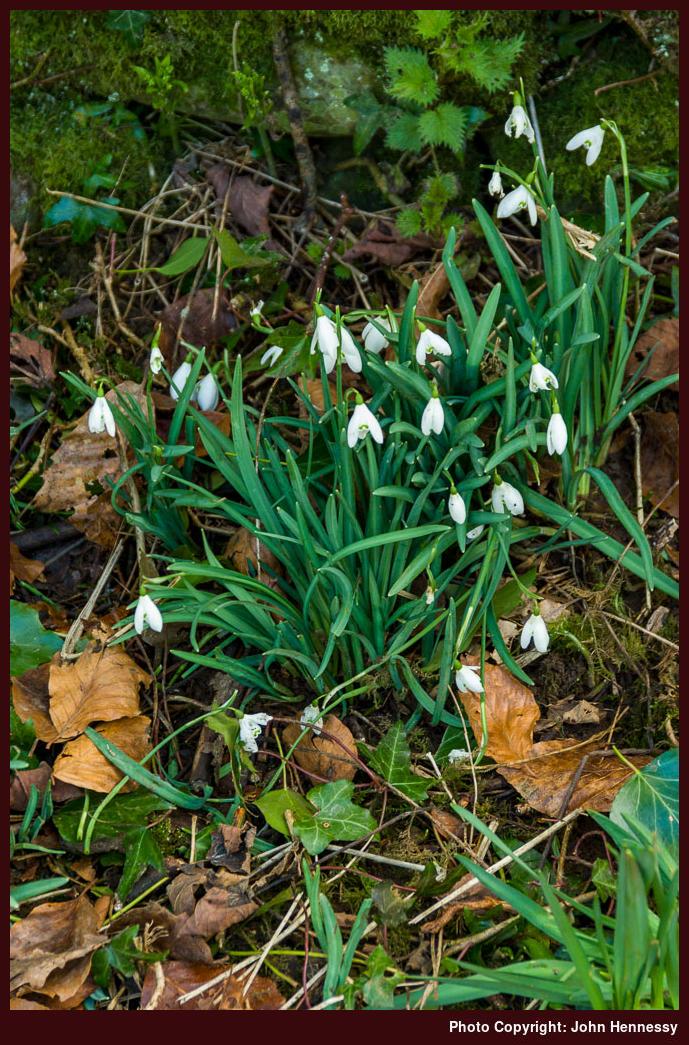
Update 2009-03-05: A dusting of snow has been granted to us but it's inconsequential in the lowlands. Peering into the hills though reveals a greater covering.
Greyness
20th February 2009 It has been a very grey week in weather terms around where I live and I could do with seeing a spot of sun and blue skies sooner rather than later. Given the times in which we live, the grey onslaught might be seen as a case of pathetic fallacy but we could all do with something to go and cheer us up. I find that I can only take so much grey weather before needing to head off where there is some sun and, though the sun has been trying to break through today, I feel the need for something more substantive. Saying that, the recent mildness, the return of birdsong and the general feeling of spring in the air has been welcome. That's not to say that the recent cold spell didn't have its bright spots, but the saying that a change is as good as a rest is what comes to mind.
As it has happened, my two most recent forays into hill country were under largely grey skies. The Cumbrian outing may have had its sunny interludes in the cold, but the mildness of the Irish escapade came with no sun at all and it took a while for the day to brighten up with my Pentax's metering showing how dark it thought everything was. Speaking of photography, the lack of sun does make it tricky to capture something in the way in which I would like to share with you. The result is that the occasional posting has appeared on here without any photos.
Part of the reasoning for that dates from over a decade ago when I was building the first incarnation of my online photo gallery. Then, all that any search for photos on the web yielded for me were grey day pictures that I didn't find appealing. The result was that I vowed that sunlit scenes were to be what went on there and I have to say that, apart from the occasional departure, the same thinking rules the roost here too and that's the way that I'd like to keep things.
That is not to say that concentrating on details found underfoot or ensconced in places where flat grey skies can be excluded will not yield anything. For instance, Torc Waterfall near Killarney in Ireland produced the goods on an otherwise damp and dreich day. The waterfall trick has worked elsewhere for me too, with one cataract allowing me to illustrate a trip report for a walk from Ardlui to Butterbridge utterly devoid of sun last November. No doubt, other details that work well in such diffused light would suffice too.
Thoughts of monochrome photography have sneaked into my mind too. A day that mightn't be one for capturing colour vistas might yield good black and white vistas. To me, the trick is to ensure that there is enough tonality to carry off the exploit and not every dull day offers that, so the monochrome route is not a panacea for rescuing otherwise gloomy efforts. In fact, I recommend a look at Craig McMaster's Elements if you want to how much better landscapes look in black and white when there is good light available. Taking colour digital images and converting them to mono like the examples that I have added below (no perfection or greatness is being claimed here) is more involved than merely clicking on the right buttons. Ideally, the photo should have been pre-visualised or planned as a black and white one rather than converting a few and seeing what happens. Of course, there's no harm having a go at that in a spare moment to see what works and what doesn't. That can only help develop your monochrome eye anyway and my impression is that there will be more misses than hits before any refinement starts to come on stream.
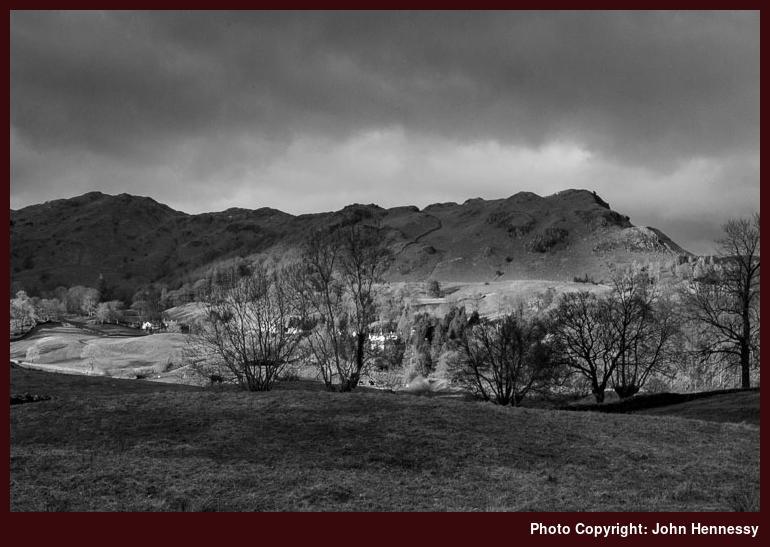
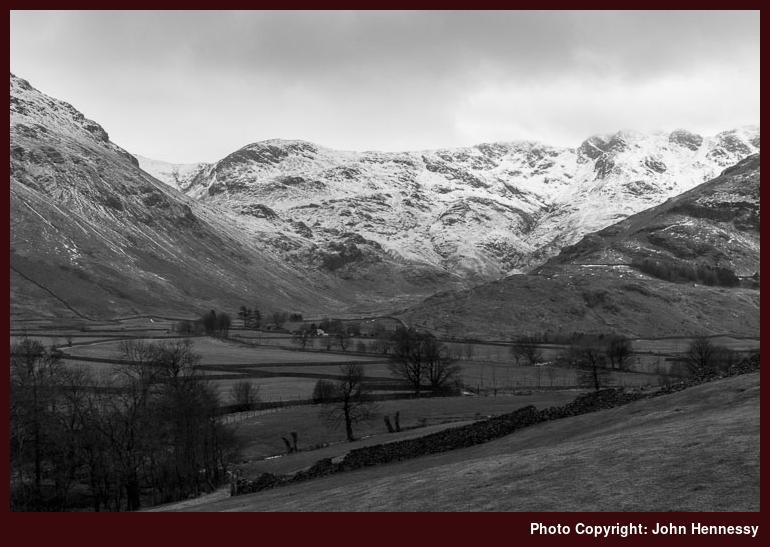
2009 seems to have got a start with long grey spells and plenty of ice and snow thrown in for good measure. That's not to say that it hasn't had its sunny interludes but the precedent of 2004 lingers in my memory. That year is one that I'll always remember as being one where sunny spells were a rarity and its summer and autumn didn't help its case, even if the deluges of 2007 and 2008 are perhaps more memorable for some, though that's not how I'll remember those (2007 was decent up until the middle of June if I recall correctly). Let's hope that 2009 brightens up and there's plenty of time for it to do the deed yet. With all the doom and gloom that surrounds us, it looks like we could do with it.
An amble down Great Langdale
16th February 2009 It's amazing how pondering ground conditions during periods of cold weather can be a harbinger for foreboding. You get to think of iced-up roads and pavements that's even before you consider how it might be at greater heights. As it turned out, there seemed to be even less snow (saying that there was no snow at all wouldn't be such an inaccurate description) lying about at lower levels on my visit to Cumbria the Saturday before last than I encountered on a previous one in December when I went exploring the Howgill Fells. However, I didn't have to look very far to find the white stuff with many a fell coated in it. Following various warnings and some fatalities, I stayed low to follow the Cumbria Way on a hike from the Old Dungeon Ghyll Hotel to Ambleside. Even though I was hopeful for some sun, grey clouds blocked out the sun for most of the time that I was on my hike; ironically, the sun had stayed out while I was awaiting a bus at Windermere.
To get to Langdale, I needed to run the gauntlet of some roadworks, but any delays proved not to be disruptive to my scheme. In fact, when I got to Old Dungeon Ghyll, I pottered a little north-east to look up along Mickleden to gaze upon those snow-covered summits. I soon turned around to the task of passing one hotel to make progress on the way towards another. Because parts of the track along which I was going to take the form of a watercourse, there were stretches of ice that commanded care and attention as I passed. Still, I was on a quiet stretch with a good few folk heading down Mickleden and others heading for the Pikes.
After getting to the New Dungeon Ghyll Hotel, a crossing of the B5453 and Great Langdale Beck took me on a journey along the other side of the valley. There were enough people around for me to wonder if I was going to get stuck in a hiking convoy, but that was to melt away to leave me some space within which I could enjoy my surroundings as I journeyed along the lower slopes of Lingmoor Fell. That took me a little higher for a while, but the terrain levelled out when I returned to the banks of the beck again. In a field near Baysbrown farm, a tractor was out muck-spreading and the loading of the spreader forced me to divert from the track that it had obstructed. It was so easily avoided that there was no point in fuming over "wilful" obstruction of a public right of way. After passing an empty campsite, I skirted Chapel Style and my surroundings took on a less rural feel until the village of Elterwater was left after me.
Once past that village, it was a case of reaching the shores of Elter Water and following them around. My first sight of the lake in question was through trees, but the woodland was soon exited to reveal a very idyllic setting. It's being accessible meant that many were out and about on often muddy paths, but their presence was no perturbation to me and I didn't begrudge their presence at all. Even in the greyness, the beauty of the spot was without question, with the Langdale Pikes and other fells forming a pleasing backdrop to the lake. Even with the gloom, the setting was sufficiently wondrous as to cause me to make a mental note of the idea of returning when the skies are clearer, should that kind of opportunity arise.
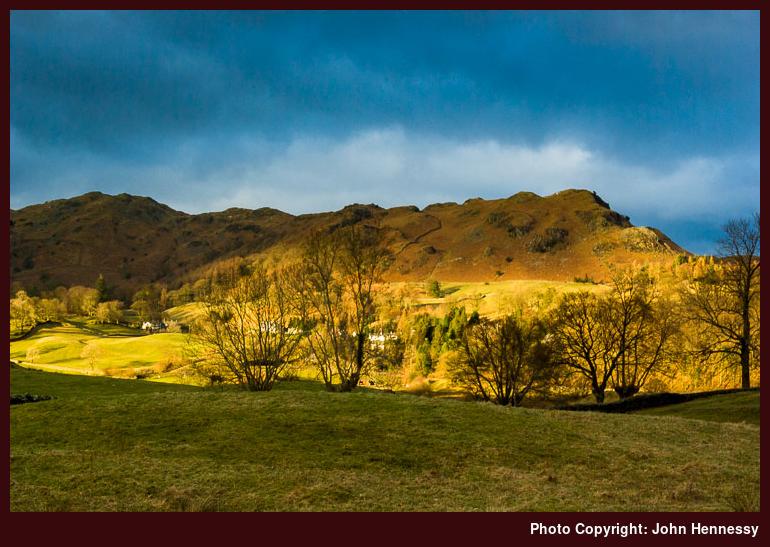
Skelwith Bridge was the next point passed though trees obscured any view of it. As it happened, I inadvertently continued a little further along the Cumbria Way than I had intended before leaving it for the day. After shadowing the Coniston road for a little while, I ventured onto it and made my way towards Skelwith Fold and Clappersgate on a mixture of minor roads and public footpaths while a spout of sunlight momentarily lit up Loughrigg Fell. From there, I made good progress along roadside footways into Ambleside to catch a bus to Windermere, from where a railway journey home. It goes without saying that the outing had been a good one, though it looks like a return is needed if I am to come away with the sort of pleasing photos that I would enjoy sharing with others. Hopefully, I can make the journey there on a quieter day too.
Travel Arrangements:
Return train journey to Windermere, 555 to Ambleside, 516 to Old Dungeon Ghyll Hotel and 599 from Ambleside to Windermere.
A good walk home on a blustery day
11th February 2009 Recent entries on this blog have wandered into areas not often frequented by my thoughts so it is high time that I got the first trip report of 2009 on here. One of the causes of those thoughts darting here, there and everywhere is the current cold spell with its numerous dumps of snow. In everyday life, snow has become avoidable but, on my first trek of the year, I didn't encounter any of the white stuff at all.
That was because I was out the day before the snow came. When it came to weather, a strong frigid south-easterly was the main encumbrance though it was possible to escape its influence in sheltered spots. That didn't stop me taking a bus journey up to the Cat and Fiddle Inn between Macclesfield and Buxton to commence a walk back to my house again. The idea had been in my head for a while and the fact that it would only take part of a day allowed time for other things afterwards has its appeal for me.
It was sufficiently breezy about the pub in question that I invested more attention in crossing the A537, a road with a foul reputation thanks to its ability to attract bikers with its many bends. The reason for that crossing was to pick up a bridleway that was more or less due south, though it does change to a more easterly direction later on in its length. In November 2004, this was the start of a very muddy hike (some may have forgotten it now but the whole year was well wet and grey and that's how I remember it) that took me to Rushton Spencer with much of the route following the Dane Valley Way and passing Three Shire Heads, Gradbach and Danebridge along the way. In fact, I met up with the Gritstone Trail as I approached the A523 for a walk into Rushton to catch a bus home.
Returning to 2009, I was going nowhere near Three Shire Heads, let alone Gradbach, Danebridge or Rushton Spencer. In fact, I wanted to pick up a path that tempted me in 2004, but thoughts of muddy feet kept me away and there is irony in the way that things turned out that way as it happened. So, I continued along the bridleway through former coal mining land until I lost sight of Shutlingsloe and Croker Hill to reach the signpost erected by the Peak and Northern Footpaths Society. Progress was set to be downhill from here as Cumberland Brook was first found and then followed. At one point, I may not have followed the path as intended but, given that it was all Open Access land anyway, I was never going to have anyone shouting at me for it. The path met a track that was to take me towards Clough House near Wildboarclough and by a delightful wood too with views of Shutlingsloe ahead of me.
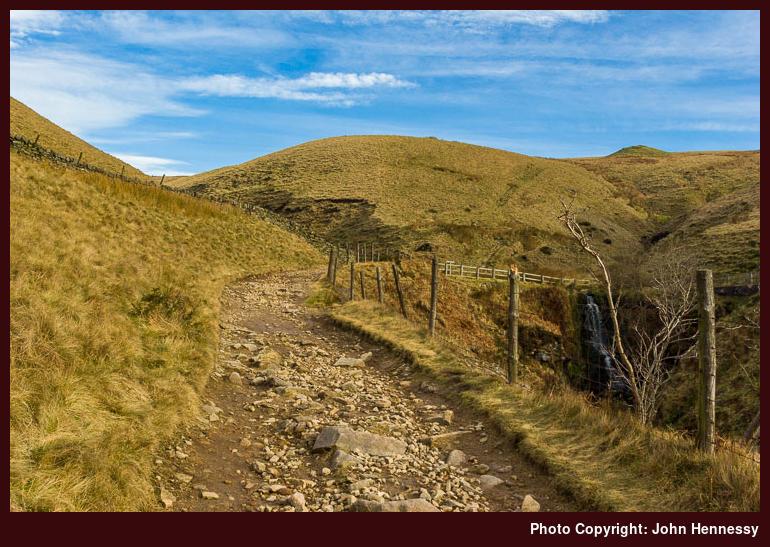
There might have been a path by Clough House but I stuck with the road rather than cutting though its yard. Another path was reached without delay and I was on my way towards Shutlingsloe itself. At this stage, I was between two minds as to go around the hill or up and over. Having walked to its summit twice before, I was minded to skirt its slopes but decided to ascend it in the end. The path rounded Banktop to reach my second island of access land after leaving the first en route to Clough House. That allowed me to pick my own more gentle way to the top of the hill and it proved to be just as well with the public footpath taking a steeper line through crags. In one sense, the gentler line might have been more manageable with the strength of the wind but it could also have been that the traditional route was less exposed to it. Returning to the strength of that wind, I and those around me were to feel it more keenly the higher that we went. I have to say that this was the strongest breeze that I have ever felt and there was one that came close when it hit near the end of a hike from Horton-in-Ribblesdale to Hawes along the Pennine Way. Even standing was difficult and movement became much more of a feat than usual. Nevertheless, I was so near the top that I continued inching my way forward; in another situation, I would reconsider what I was doing. Intriguingly, the wind was less strong on the top and standing around the trig point was no problem; it can be surprising where shelter is found.
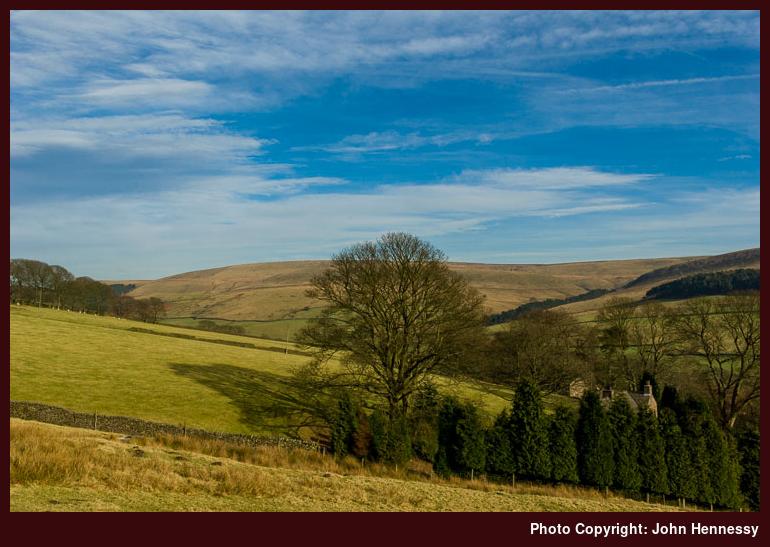
I felt the wind again on the way down along the slabbed path to Macclesfield Forest but it was no way near as intense as before. On the way into the forest, I met a gentleman who was wondering where the path along which I had come was going. I showed him where he was on his forestry visitor map and he decided on another course that kept within the forest itself; he and his young one might have been better off. Rather than dropping straight down to Trentabeck Reservoir, I chose a concessionary bridleway that took me round by Nessit Hill before dropping me on a minor road next to Ridgegate reservoir. That track was very muddy in places thanks in no small part to tree felling operations but it took nothing from my enjoyment of the walk.
From the road, I took another concessionary bridleway before making my way onto the Gritstone Trail to come out on Clarke Lane near Bottoms Reservoir. After a walk along the road through Langley, I left tarmac after me again to tramp though fields around by Macclesfield Golf Course while en route to Macclesfield Canal. Tiredness raised its profile about this time, but home was near at hand and a mixture of street negotiation and canal bank strolling returned me to my doorstep. I suppose that staying upright in that strong wind had taken its toll, as did the distance travelled together with the amount of ascent and descent that was involved. It had been a good few hours walking on a dry if cold day with the sun occasionally breaking through the cloudy sky. 2009 had started well.
Travel Arrangements:
Bus service 58 between Macclesfield and the Cat and Fiddle Inn.
Stark warnings
9th February 2009 While out on a trot from Langdale to Ambleside on Saturday, I spotted a stark notice on a gate. It was on a path leading towards the Langdale Pikes and issuing a strong message that ice axe and crampons were needed above 300 metres in height; I was staying low with plenty of hillside bereft of snow while the white stuff made itself plain to see at higher altitudes. Of course, there have been fatalities on the "Pikes" so the strong wording was not without good cause. It was also a reminder of similar unfortunate outcomes in Wales and Scotland. I can't say that I have heard of anything like this from Ireland, but something tells that full winter conditions must be blanketing those hills too.
The trouble with official warnings is that we have seen so many that could be termed an overreaction that heretical thoughts begin to percolate into your consciousness not long after you have seen the warnings. There are those who issue shrill warnings without they being truly needed, acting in a manner akin to the shepherd boy who cried "Wolf!" in the Aesop's fable. This time around, I am inclined to think that the "wolf" is real and have got to moderating my usual questioning. This is for a number of reasons. First, the warnings were coming from mountain rescue folk, and they didn't overreact to events around the time of the OMM in Cumbria when a deluge came from the heavens and caused raging roads to turn into rivers. The other chastening observation supporting that suspension is that there have been those serious accidents and fatalities.
Another factor in all of this is that we have been spoilt with the milder winters of late. Apart from the shorter days, the occasional spell of snow and ice or a storm, winter walking became perhaps no less accessible than at any other time of year. In contrast, this winter is a sharp reminder that what we have enjoyed of late isn't always the case and preparedness for winter walking can be another matter entirely. The whiteness is attractive, but there's a certain "here be dragons" element lurking too, particularly with inexperienced folk being drawn out to enjoy the prettiness. That could be the reason behind the advice given by the head of the Lake District National Park last weekend, particularly with the school half-term holidays and their bringing more folk with many perhaps without the requisite equipment, knowledge, skills and experience (the LDNP is between a rock and a hard place: in these trying times, they need the visitors, yet safety remains vital too).
Speaking of experience, assessment of conditions is a big part of it, and any disparity between those on high and those in the lowlands makes it tricky unless you have some experience of being up high in the first place. For instance, snow coverings among the hill country lining the Cheshire-Derbyshire boundary are measured in feet while those on the Cheshire plain are inches in thickness if they lie at all. Increasing the height differential can only exacerbate that sort of difference and entrap the unwary. Saying that, it doesn't take much to realise that any whitened hills look very different to the green valley bottoms with their icy patches due to paths having turned into stream beds; that was very typical of the Langdale that I encountered on Saturday. Mountains and hills do make their own weather, and it seems that winter conditions bring that into sharp relief.
The warnings and the fatalities can make one feel that they are on the outside of a different world, looking into it. They certainly challenge any perception of readiness for winter conditions and set you to thinking, particularly about those who have been left behind by those deaths. That certainly is the case for me, but barriers should be overcome carefully rather than allowed to stop you in your tracks. Even so, the mountains won't melt away overnight, even if the snow does.
Update 2009-02-10: It now appears that winter conditions have gripped some of Ireland's hills too. In fact, the Irish public service broadcaster RTÉ has a report on two men lost on Lugnaquila, Wicklow's highest mountain with a height of above 3000 feet, after dropping their map in foggy conditions. They have been out all night and mountain rescue teams are searching for them, but there is a glimmer of good news: mobile phone contact has been maintained throughout. Let's hope it all ends well.


