Sometimes normality is just an illusion
 27th October 2024
 In the autumn of 2021, one could be forgiven for believing that the pandemic was beyond everyone. In Europe, most had two doses of the vaccine, so the climax may have been past us. However, there was once more variant at the end of the year that added more caution, at least for a while. Additional vaccinations were performed, and many still caught the infection. Thankfully, the symptoms were milder and this episode became part of the way out. This corresponded with a thought that I had before the full onslaught reached us.
Twice from Buxton to Macclesfield
Near the end of September, I walked from Buxton to Macclesfield during what now looks like an interlude between two waves of infection. The route took me from Burbage onto Goyt's Moss before I went down by Berry Clough to reach a lane leading to Goyt Valley. That was not my destination, so I instead headed for Shining Tor via Deep Clough and Stake Clough, and no sighting of Goytsclough Quarry, hidden in the tree cover. From Shining Tor, I made my descent to Lamaload Reservoir and then went from there back to Macclesfield.
With new restrictions in place, I again set to wandering in more confidence, which may look odd to some. Thus, a reprise of the September amble happened on the last Sunday before Christmas. Until Lamaload Reservoir or even Rainow, both itineraries were alike. A stoppage on photographic recording obscures the end of the September tramp, but a new camera may have helped with that the second time around, for it tells me that I joined the Gritstone Trail as if to make for Tegg's Nose Country Park, though I suspect that the place was avoided in favour of going via Back Eddisbury Lane and Buxton Road in declining light.
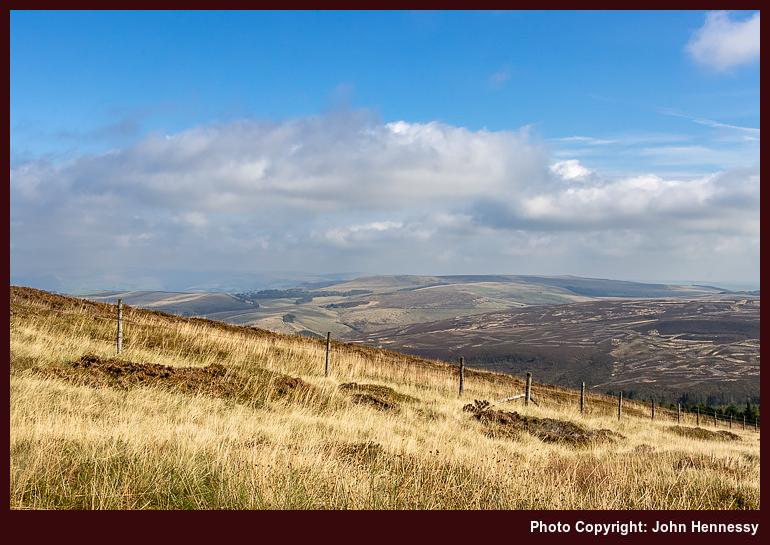
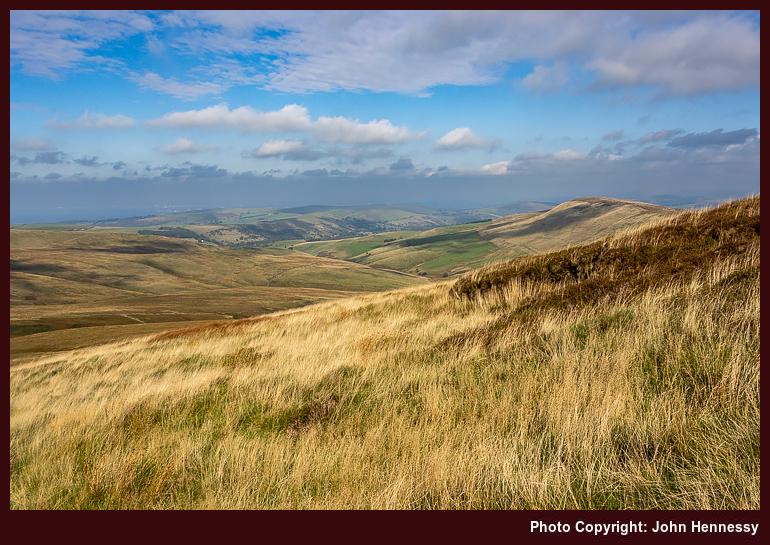
The overriding memory that I have of the September hike is one of greyness, and how busy things were around Derbyshire Bridge. The latter remains, while the former is disproved by the photos that I have. There was a bright start and end to the stroll, especially on the way out from Burbage and then again from Gout's Clough onward; sometimes, your memory plays tricks on you. Otherwise, there was a lot of quite rambling, exactly what I needed at the time.
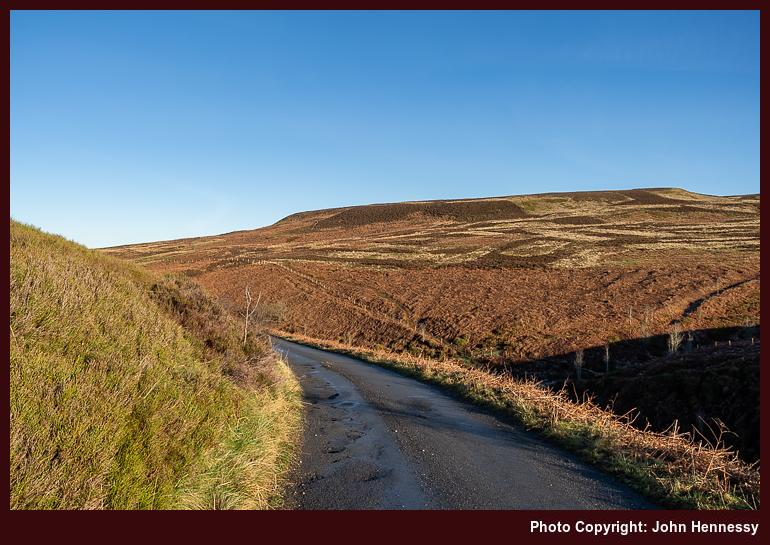
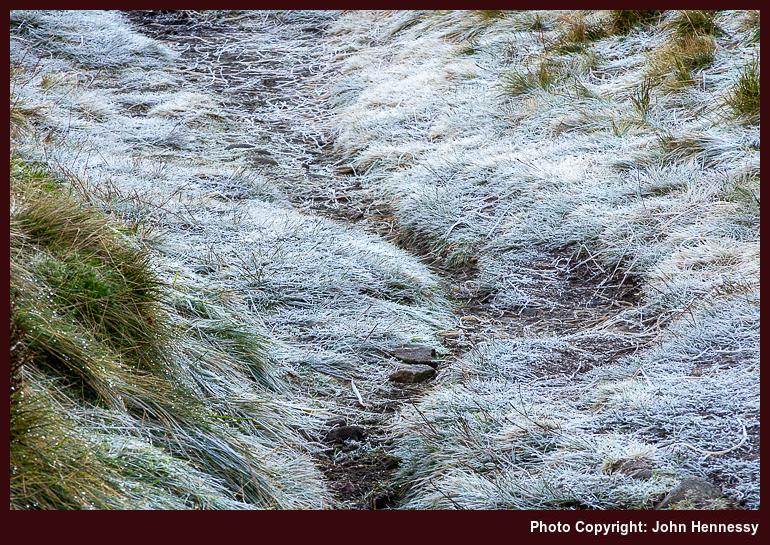
Aside from added restrictions that were nothing like what was in place at the start of 2021, the other thing in the background of the December outing was the presence of fog on the Cheshire plain. This affected flights in and out of Manchester Airport too, though there were not as many of those at the time. One thing that was unaffected was my strolling on higher ground; the bank of cloud lay further west. Thus, I got a fill of much-needed quietude in the winding down of the year. The added crispness gifted by a preceding overnight frost was another blessing that comes with a spell of December sunshine, even if low sun makes for longer shadows. Nothing could take from out in the hills anyway.
The Long Way Home from Poynton
While some risked infection by celebrating on New Year's Eve, I instead opted for an elongated trot behind Poynton to Macclesfield that started in daylight and ended in darkness. Both places are not that far apart, but I added quite an elbow to the route by passing Lyme Park without entering it before continuing around by Jenkin Chapel. In declining light, I shadowed Cat's Tor to rendezvous with the trail leading down to Lamaload Reservoir. From there, I ventured towards Vale Royal in the dark, equipped with a working head torch and knowledge of where I was going. Once I passed Hordern Farm, I was bound for Buxton Road and the last stretch to lit-up surroundings and home.
A fuller list of landmarks goes like this: Poynton train station, Poynton Pool, Prince's Wood, Higher Poynton, Middlewood Way, Macclesfield Canal, Platt Wood, West Parkgate, Dale Top, Sponds Hill, Bakestonedale Road, B5470, Bank Lane, Jenkin Chapel, Howlersknowl, Thursbitch, Lamaload Reservoir, Valeroyal, Gulshaw Hollow and Buxton Road. Most farm names have been omitted from the list for the sake of added brevity, but it might remain sensible when compared with a map.
The canal was attracting others, as were the paths near Poynton, yet things grew steadily quieter the further along I went. This became a day laden with solitary wandering, which was just as well at the time. Some of it recalls an evening when I went from Poynton to Lyme Park, only to discover that I had arrived near closing time. That had taken me by surprise after previous experiences, so I wonder if pandemic reductions in staffing had anything to do with an earlier end of day for the place.
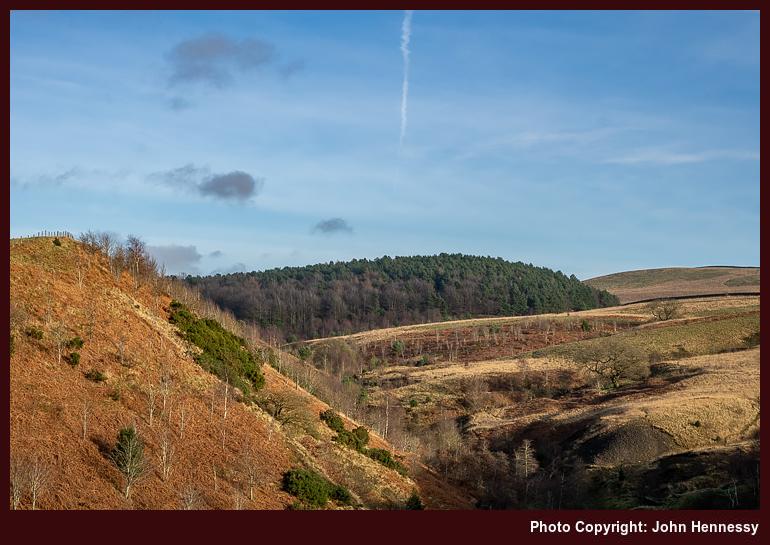
On the way towards Sponds, the skies opened to allow better photographic results from a new camera. A chapel, seemingly opened for the time of year, was passed as I shadowed the boundaries of Lyme Park. My hope was to spot The Cage, a folly atop a hill there, from my route. That got fulfilled, though I was a little too far away for photographic purposes, and there was a certain haze in the air too. Nevertheless, there were other pleasing sights to behold, and I was not left unsated.
Beyond Sponds Hill, the journey began to follow deserted paths in lesser frequented places, particularly after leaving the Gritstone Trail. The surroundings recalled a stroll from October 2007, when I needed respite after something I was doing went against me. Some people were around Jenkin Chapel and there was no throng. After that, it was unbothered wandering into the night, part of a pattern that emerged that autumn. Much of the ground was familiar to me from daylight ambling, and there was a certain release from being out in the nighttime air.
Even so, I was conscious of my use of a head torch near where people lived and worked, and did no dallying. A gate that was not friendly to cross drew my ire because of barbed, yet nothing was ripped or shredded; it became more of a challenge than an obstruction. It reminded me of a nuisance barking dog near a public footpath that appeared during a lockdown and since appears to have disappeared without a trace. It might that any tension caused by increased usage of local paths has ebbed now that everyone has more freedom in choosing where they want to go.
The day and night had brought an element of adventure, while overseas travel remained mostly off limits. Once past a bolus of infection, minds could turn to wider roaming in 2022. Mine was among them: getting to Ireland, staying away from home again, reaching Scotland, and visiting Yorkshire and Cumbria all came to pass that year. In some places, people came across as being more friendly. Having stability helped as well; it is easier to rebuild confidence if you are the only one making the changes.
Travel Arrangements
Bus service 58 from Macclesfield to Buxton on two occasions. Train from Macclesfield to Poynton on New Year's Eve.
Seeking oases of calm in a time of unsettling change
26th October 2024 At doing something similar for three hikes starting from Hayfield, there is every reason not to repeat that again. The variation in routes and the different seasons within which they were followed all made the narrative long and tricky to tell. Sometimes, though, the residual commonality is what prevents the giving of three different accounts.
Solitary Ambling Under Grey Autumnal Skies
On 2021's August Bank Holiday weekend, the walk from Miller's Dale to Castleton on that Saturday was not the only excursion. Whatever caused me to embark on another that Sunday is unclear to me now; the passage of time has fogged my recollection of that. Nevertheless, one can think of possibilities: retracing steps along the Midshires Way from nearly twenty years before and fitting in a visit to Combs Reservoir after seeing it from passing trains for too long. Either of these would work, perhaps in consort.
The quietude of Buxton, though, has not been lost to memory; few were around under grey autumnal skies. This was a blissful situation in the middle of a pandemic, and it helped that I chose an unpopular way to go as well. While tempted by Corbar Woods, I continued along the A5004 until I could leave that after me for the Roman road shadowing Combs Moss.

Views of what surrounded me were as plentiful as sunshine was scarce. The above photo may lead one to think otherwise, but any outbreak of sunshine was fleeting and ephemeral. The lure of Corbar Wood also applied to Combs Moss. However, I also left this for another time to continue towards White Hall Centre, before which I turned off the track for a public footpath in the direction of Combs. That left the course of the Midshires Way, which, if followed, would have led me into the Goyt Valley all those years ago.
My new direction took me downhill, with views of the edge of Combs Moss that would have been more of a delight if I had sunshine for making photos of it. Any sightings of Hoo Moor were declining behind me as I passed various farms around Allstone Lee to reach a lane near Rye Flat Farm.
Once on tarmac again, I passed a quiet Combs before leaving the lane for a path taking me under the railway from which I had been viewing the reservoir on evening returns from Buxton. Staying close to the shoreline of Combs Reservoir, I continued on my way to Tunstead Milton. No boats were out on the water as I passed; the deserted atmosphere of the day was persisting, though some were passing my way at times.
The rest of the way to Whaley Bridge has become unmemorable after the passage of time, though I left the course of Chapel Road; a busy thoroughfare is not me choice of route for hiking. Here then are a few guesses. Following Milton Lane to Hilltop sounds more likely than using a footpath to go by Woodside Farm, as does leaving the lane near Horwich Farm in order to go via Throstledale.
By then, clouds were breaking to allow more sunshine as I came to the end of my stroll in Whaley Bridge. There were more people around there than other places where I had been that day. Nevertheless, the pervading stilly atmosphere continued to prevail. This had been a quiet outing in quiet places that had to commend it for stilling one's spirit.
Joining Places Together Under September Sunshine
The lures of Corbar Woods, Corbar Hill and Combs Moss drew me back to Buxton again. Whenever I had gone on quick sorties to Buxton, my strolling often took me to Buxton Country Park and Grinlow Tower once I had got away from the delights of Spring Gardens or the area around the Slopes. Never had I gone near Corbar Woods or Corbar Hill, though the former also gets managed by Buxton Civic Association. It simply had not entered my awareness until that Sunday saunter from Buxton to Whaley Bridge during the preceding Bank Holiday weekend.


This time around, I sought to address that non-visitation on what was a brighter day. Finding my way into Corbar Woods was the first task. Once that happened, there was the steady ascent through the trees in a small but pleasant space. Beyond that lay pasture, before crossing a wall led me onto moorland. An escarpment lay before me and I scaled that using a frequently used path to reach where a cross had been installed on the top. Pottering around there allowed to savour the panoramic views of the town and what lay around it.
Once on access land, at least partly owned by the University of Derby, I began to make my way towards Combs Moss, passing near Moss House Farm. If Buxton had been peopled, the moor was next to deserted. Only a few souls were wandering these parts while I was there. Distant views were obscured somewhat by haze as I followed an informal path around by Flint Clough and Black Edge, where a trig point could be seen catching the sunlight with its whiteness.
This was a journey along the moor's eastern edge, so there were sightings of the effect of quarrying on the landscape around Dove Holes. The A6 below there too, and there was not that much to please a seeker of the picturesque. Passing Hob Tor and Short Edge had me wondering quite what the fascination was in staying so close to the edge with there being a steep drop. At times on the way to the fort atop Castle Naze, I kept in from the drop, even if it meant travelling over rougher ground than what the path had levelled.
After visiting the fort, thoughts turned to making a descent. The path marked on the map did not thrill me, so I tried going another way. Getting down worked well, but my problem was getting on to the lane. Getting on and off access land is not always easy, finding the entrance can be tricky, as I would find later in the day. Scaling an unfriendly gate was what it took in the end; the use of barbed wire looked peevish in the circumstances, for the access land reached up to the road.
Some bumbling around preceded my choosing a path for the descent to Combs; the reconnaissance probably was needed, for there were a few options that curtailed tarmac travel. One would have taken me towards Chapel-en-le-Frith's train station, which itself is quite an uphill schlep from the town, before turning towards Combs. Another would have avoided farm buildings altogether, though memory cannot pick between the options at this point of remove.

There was no dallying as I passed Combs, since I wanted to follow the western shoreline of Combs Reservoir in the hazy sunshine. Sailing vessels were out on the water this time around. If there were more in the vicinity then, that is largely lost to me now. If so, their presence cannot have been that much of an intrusion.

This time around, I was not bound for Whaley Bridge. It is not clear if continuing to Chinley and New Mills was an intentional decision taken before setting out, or something that fell into place during the ramble. Either way, I made my way from Tunstead Milton to Eccles Pike, more likely via Sparkbottom and Woodside Farm. Once on Eccles Road, yet another lane of many, I sought the way onto more access land. Someone had been knocking fences around, a perhaps questionable if understandable act that made entry easier.

Leaving Eccles Pike and the access land around it, I followed a right of way down to another road. Familiar hills like South Head lay before me as I made my descent. Reaching Chinley would need my going over the A6; thankfully, a road did that for me, avoiding a crossing of the busy thoroughfare itself. If I had wanted to shorten my walk there, going by train would have been the only option; there was no Sunday bus service.
In the event, it became a refreshment stop, since there was a shop open and a green park nearby. More uphill travel was ahead of me, so a rest break was needed before that. Crossing over the railway took me onto Old Hill Road, where I spotted a Royal Mail van doing Sunday deliveries, a striking thing when you are more accustomed to their normal six-day delivery.

As the ascent got my heart going, there was a route choice ahead. Did I stick with the Old Hill Road in the form of a track, or use another one? The alternative was what I chose; the possibility of easterly views was what decided me. It was hardly busy, yet others were out using it too. Once the gradients slackened, I could peer in the direction of Kinder Scout and what lay about it. Kinder Reservoir could be glimpsed too, and I wondered if I could spot Hayfield as well.

Evening was approaching by this time, and I decided against a descent to Hayfield in favour of one to Birch Vale. That got me nearer to New Mills and onto the Sett Valley Trail, where I had not trod since my first encounter with Kinder Reservoir the most of twenty years before. Given the time of day and the need for some to walk their dog, the uptick in human usage came as no surprise. The converted railway alignment also meant easier work for my legs, and I dawdled at times too.
There was an illusion of everlasting summer that September evening, as there so often is. Even so, the lengthening hours of night encouraged me to reach the bus stop for my journey home after a satisfying day on foot. In many ways, the route connected places that I had known apart from each other. It was good to join the lot together.
Quiet Saturday Strolling Over Combs Moor
After two Sunday strolls, we now come to a Saturday one. Quite apart from the opportunity of a day with less haze, it is difficult to say what inspired this departure to and from Whaley Bridge. One thing is certain: this was no reprise of the first hike; there are too many differences for that.


The way out of Whaley Bridge is among those. The exact details may be lost to me now, but it did lead me south to Long Lane, which I used to round Ladder Hill with views over Combs Reservoir and towards Chapel-en-le-Frith. This was not a close encounter with that reservoir but part of a more direct route to Combs. Much of the way more likely was road walking; that would change.
Though much of the way from Combs to Combs Moss is no longer memorable, it is plausible that it avoided tarmac tramping for much of that. The final approach is beyond question, though: there was an ascent of the path that I rejected while en route from Buxton to New Mills. It was not as fearsome as I considered it to be on that occasion.


Thankfully, the rest of the way to Buxton is easier to relate. This went along Combs Edge and continued south and west to show me a different side to the moor. There were views back towards Combs Reservoir as much as what lay on the other side of the Goyt Valley. Though the sun came and went, there were ample photographic opportunities with any gritstone outcrops that I passed. Navigation on an informal path was simple, too, which was just as well on this access land.


Relaxing progress in a place with few if any about was my lot, and I relished it all. In time, I would shadow the outbound route from Buxton that I took on the way to Whaley Bridge at the end of August. The way off the moor would reverse the way taken while going from Buxton to New Mills. Some familiarity was beginning to help me as I passed Moss House Farm on the way to Corbar Hill. This was one lasting halt before the descent into the busier confines of Buxton. These were not so comfortable, yet I rushed nothing before catching a bus back to Macclesfield after a satisfying day with much respite from the world's affairs.
Travel Arrangements
Bus service 58 got me to Buxton for the start of the first hike. The remarkable part of the return is the rail replacement bus from Stockport and how few were using face coverings. Between Whaley Bridge and Stockport, I could have travelled by either train or bus, more likely the latter, even if I am not fully sure of that.
Bus service 58 again did the honours for getting me to Buxton for the second ramble. The way home from New Mills is less clear. Was some of it by bus or all of it by train? The former seems more likely, and that would have got me to Stockport for an onward connection. For the last trot, bus service 60 got me to Whaley Bridge, while bus service 58 returned home from Buxton.
Better fitting boots would have helped as I plodded through some Derbyshire Dales
25th October 2024 "Freedom Day" probably sounded like a great idea to someone at the time. It was supposed to arrive in June 2021, only for an upsurge in infections to be caused by the delayed UEFA Euro 2020 Championship. Looking into any pubs that I passed back then, I could see no sign of social distancing as the punters watched the football games on TV. It did not help that England got as far as the final, either. Still, an important game meant empty trails for evening rambles, as I found that Sunday evening.
If I had hoped for a more phased opening up, I was to be disappointed. Such was the focus on summer holidaying in both 2020 and 2021 that I wonder if political populism overrode public health. Any daydreams about reaching the Isle of Man or the Channel Islands were scotched, and reaching Ireland felt more of a long shot. What was needed were baby steps, and everyone likely would make the same ones at the same time.
Even with two doses of the vaccine, "Freedom Day" did not feel like that for me. Add in a heatwave and a computer upgrade project, and you get a situation where outdoor activity was not on the menu. Hauling computers up and down stairs in a terrace cottage became sweaty work in any case (my workbench was downstairs for these things). Even taking a stroll late in the evening was no guarantor of coolness; overnight sleep was challenging at best. All in all, the three-week break from work in July became a homecation mainly devoted to indoor activities.
By the end of August, something must have been stirring me, for the Summer Bank Holiday weekend saw me embark on nearby outdoor excursions. Both took me to Derbyshire, one through the Derbyshire Dales and another over Combs Moss. The latter became a hub for various wanderings that will be related. The amble through the Derbyshire Dales will do for this account.
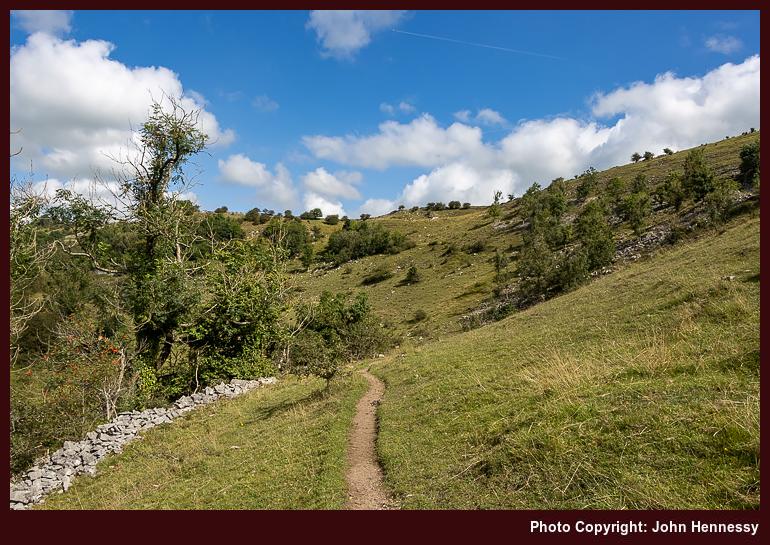
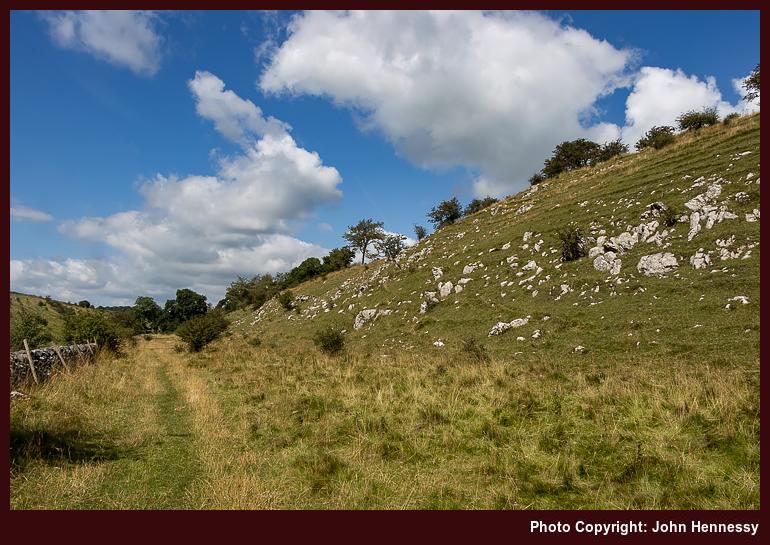
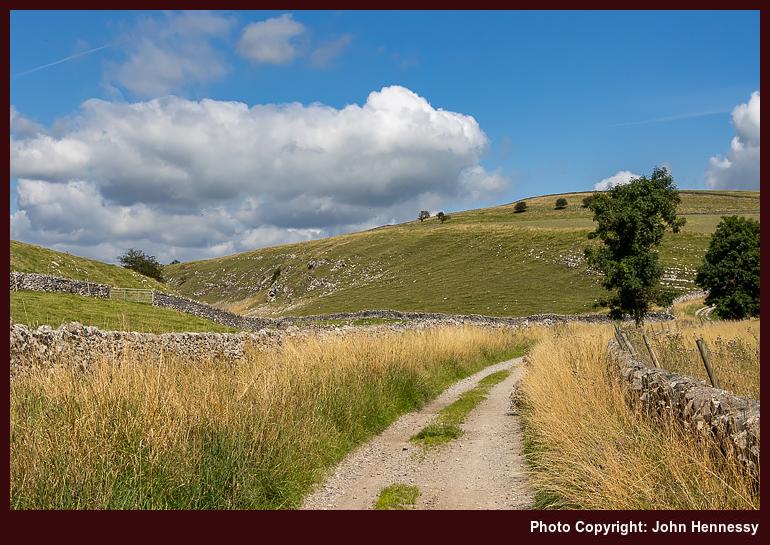
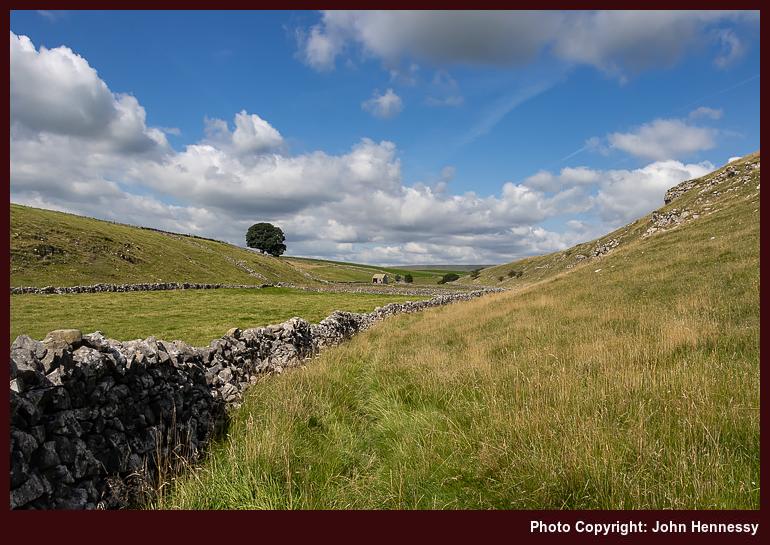
While the route of the Limestone would likely have conveyed me the whole way, I fancied going into Monk's Dale instead. Thus, that is where I headed after arriving in Miller's Dale. Descending to the floor of the dale took some route finding in the woodland, for I followed a little of the Limestone Way at the start. Once down there, there was little to do but go in a general north-westerly or northerly direction, as directed by the steep sides of the narrow valley and any watercourse going along it.
Aside from simple navigation, I also got the place largely to myself. Straggly late summer vegetation may have intruded on the meadows, but the limestone outcrops could not fail to delight. This remained my lot as I continued through Peter Dale, Hay Dale and Dam Dale. Others passed me from time to time, yet this was a confidence building measure for any future return to normal life, that some may have assumed was already well in place.
Aside from dale-trotting, there was another reason for my going this way, and it dated from nearly twenty years before. Then, I was walking from Buxton to Castleton. Around Peak Forest, I lost my way somewhat; OS map sheets OL1 and OL24 do not overlap very well, adding to the confusion. In hindsight, I may not have helped matters by going through Peak Forest itself instead of sticking more closely to the route of the Limestone Way, which was already there back then. This is not a recently instated long-distance trail like so many others.
Thus, I needed to get to the Limestone Way from Dam Dale without messing things up again. With a modern mapping app on a mobile phone, that was a bit easier. Those paper mapping overlaps are an issue no longer, so I could cross the A623 with added confidence to get across fields to Old Dam Lane to continue east without any muddle. Then, I could avoid getting near Bradwell and walking on lanes around quarries to keep things more picturesque.
Another matter was more plain to me, though. The previous Easter, the sole on one of my long-suffering Meindl Burma boots detached from the upper while on a ramble around such locations as Langley and Higher Sutton on the Monday of Holy Week. The uppers looked well-worn, so there was little point in resoling them, especially since they had lasted since 2009.
However, I still needed a pair of boots for mud plugging, and I was reluctant to sully others that I had; these were being kept for when overseas excursions could resume. The result was my acquisition of a pair of Berghaus leather boots that proved to be too big for me. They should have been returned for a pair of a smaller size, yet I persevered with them, possibly for too long. The adage that boots need to fit well should have driven that.
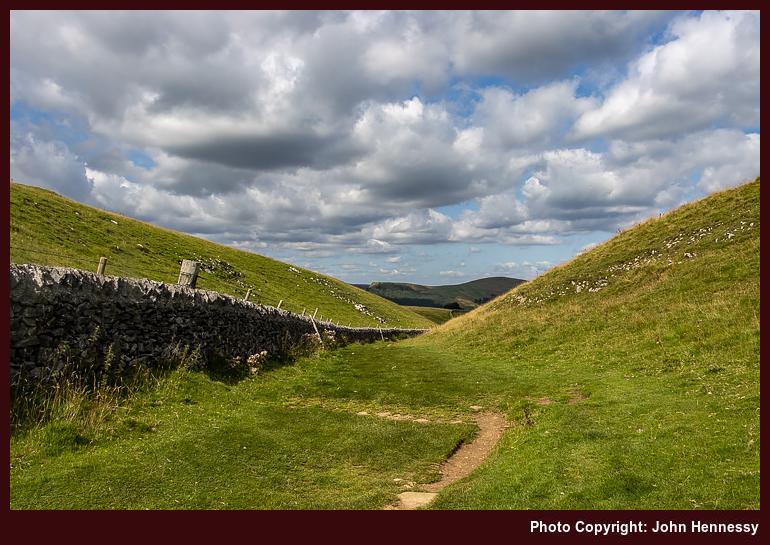
Returning to that self-powered journey to Castleton, those Berghaus boots were to take a toll when I was in busier surroundings. Before that, I threaded my way past such landmarks as The Cop, Old Moor and various disused mines. What lay ahead of me was the descent into Castleton through Cave Dale. It was then that I hurt my feet while passing someone at a health-inspired distance on rougher ground. There was no tumble, only discomfort that did not play well on steeper slopes.
Castleton is a honeypot, so groups were out and about, inadvertently challenging my comfort zone. There had been a hope of seeing and photographing Peveril Castle in sunshine, but that was foiled by cloudy obstruction of the sun. Even so, I got myself to the village and its bus stop for the way home. There surely were refreshments too, even if there were around than I felt to be comfortable.
The offending boots later found their way to a charity shop, and a pair of Scarpa boots replaced. These are better, if imperfect, fitting, but their soles are well-worn at this stage, having seen me through numerous European wanderings. The uppers remain fresh, so resoling may be a more likely outcome than replacement. My feet have healed from any insults from the use of the Berghaus items, too. All is transitioning into a useful set of memories for future reference.
Travel Arrangements
Unlike a previous trip report, public transport experiences were less memorable in a good way. The outbound journey to Miller's Dale was by bus, with a change in Buxton; bus services 58 and 65 were used. The return to Macclesfield is where memory again ails.
Since Castleton does not have a train station, departure by bus was unquestionable. Other questions emerge, though. Was it by service 272 or another one? Did I go all the way to Sheffield or alight near Hope station? From either, a return train journey would have commenced, one with a change in Manchester and another with one in Stockport. Railway engineering works were ongoing that weekend; did they impact the journey by a need to use a rail replacement bus? That seems unlikely because of a memory from the following day. Otherwise, all is blighted by a fug of uncertainty.
Sunlit journeying under a cloud of condescension
24th October 2024 "I could wait here all day", he said condescendingly. That is not a response that you need from a bus driver when buying a bus ticket using a debit card. Every other ticket machine that I encountered did not need the card to be placed on the machine like this one did. Not being a regular, I did not think of that. That driver came across as a jobsworth and was not at all helpful. It felt like I met someone who was killing time until retirement, and the experience was such that I got off the bus in Leek when someone else did. It felt better not to share space with that driver.
The payment was made on the day when it was required, so I did my part. The operator dropped the service later in the year; it is difficult to keep going if you have staff that are not customer-friendly, but there may be other reasons. Later on, another driver with the same company, albeit working a different route, came across as more anxious yet was helpful at the same time; he reminded me what to do with a debit card as you would hope. That cannot be faulted. The previous summer, I overheard a conversation involving yet another driver from the same company. The topic was how uncomfortable passengers felt about a different driver. It makes one wonder when you hear things like that.
The real disappointment is that this was a more mainstream company and now the dominant operator in Cheshire East. Their having facilities beyond those of a smaller operator made me fancy walking around Leek more often. The truth is that I have not been there since that day in June 2021, and that a previous operator regained the route under council contract after a messy transition.
Since I now have another place to put them, I normally do not share musings on public transport on here any longer. There was a time when I did so, but that has passed. Such was how I took the response at the time that it cast a shadow over the rest of the day. Hence, it needs mentioning. Thankfully, I had decided on walking all the way home, avoiding a repeat encounter; my nature is conflict averse at the best of times.
Once off the bus, I could begin to put the whole thing behind me; the day was sunny, so distractions could come my way. There was overlap with previous traipsing between Leek and Buxton the previous year, yet the public transport experience and the effort involved in collating route variations for various hikes from Hayfield was enough to put me off including this account in that narrative.
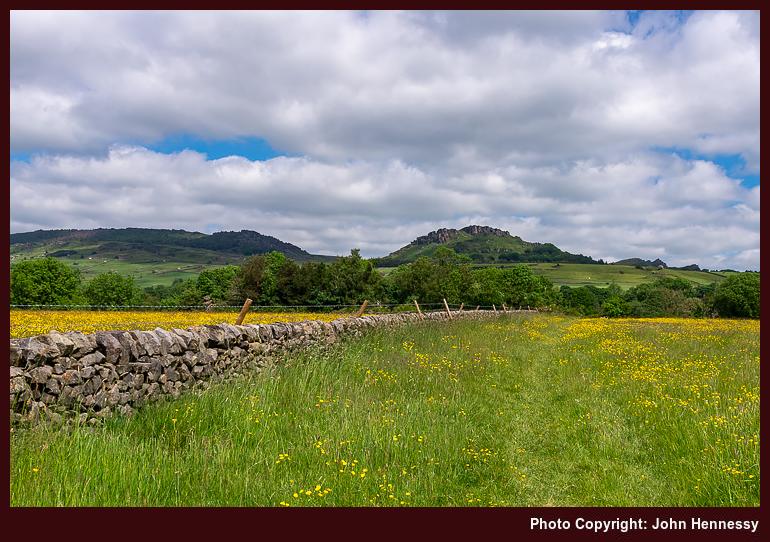
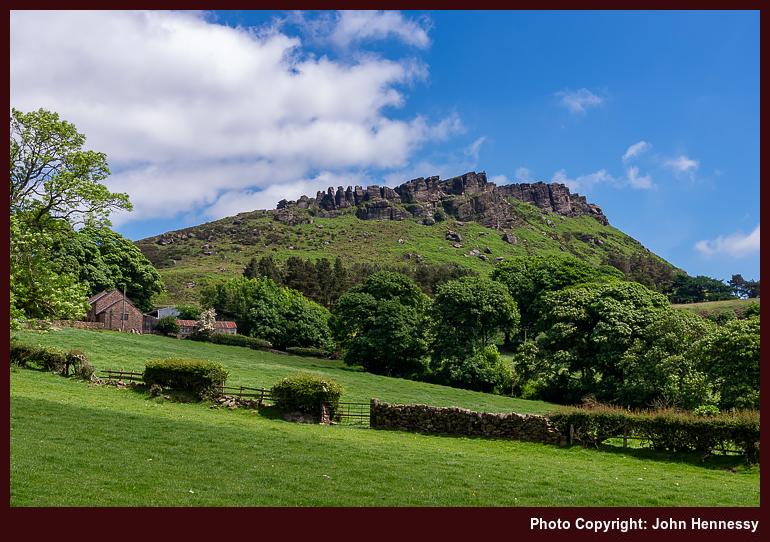
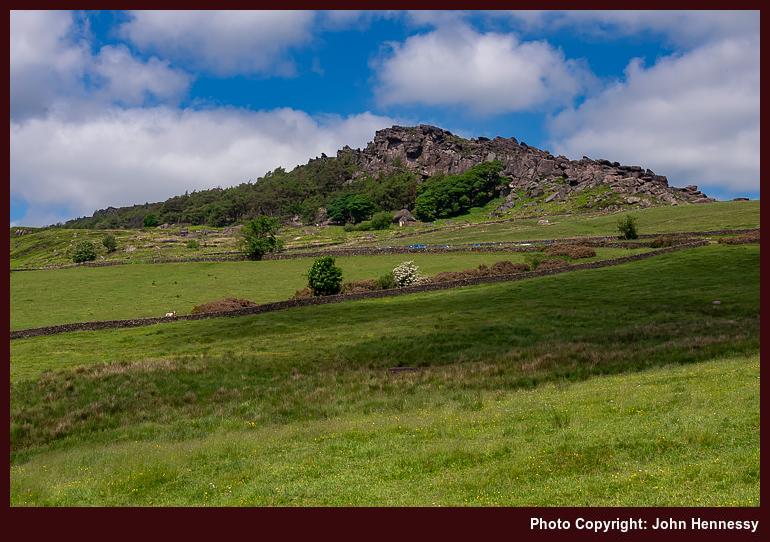
The way from Leek to the Roaches probably was a quiet affair, as it so often is, yet details of the route taken are lost to me now. Even photos are not much help, since pastoral countryside can look similar in all sorts of places. However, I did make for the Roaches without visiting Hen Cloud. There were quite a few up there, which might have deflected me as much as have being there before. Being between vaccination doses continued to keep me cautious.
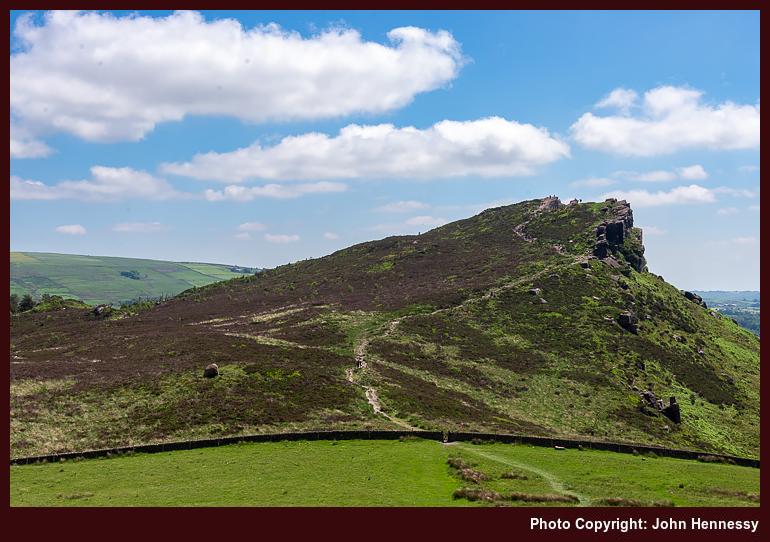
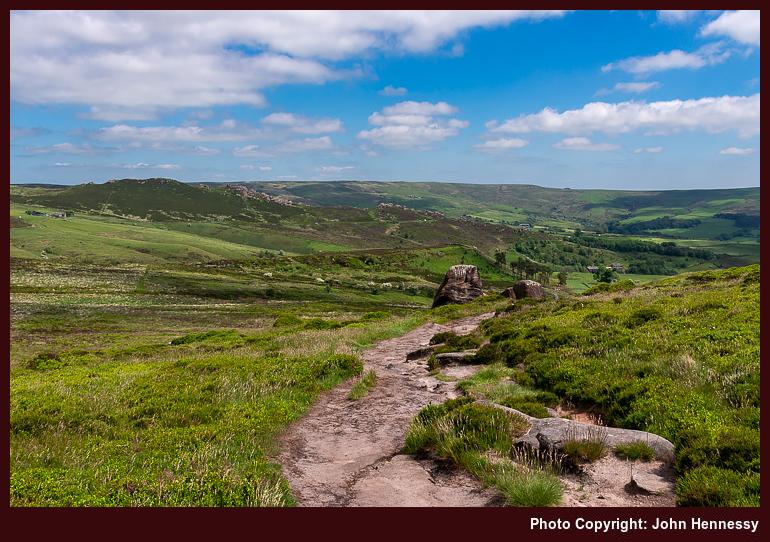
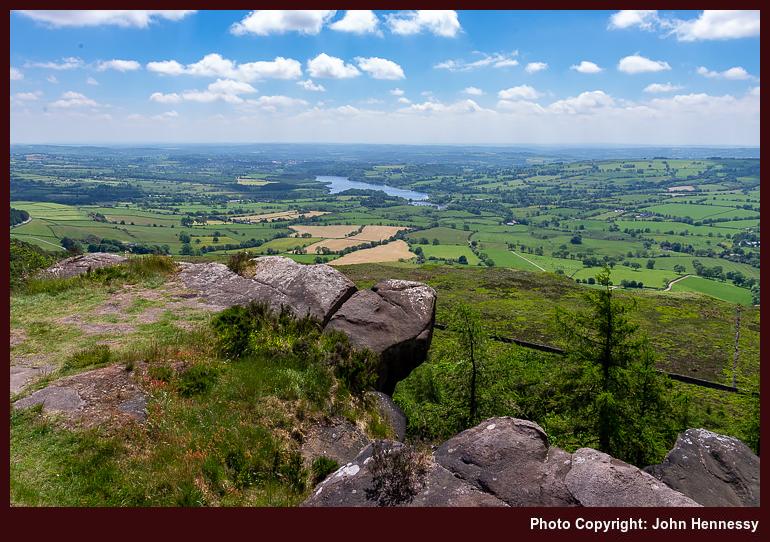
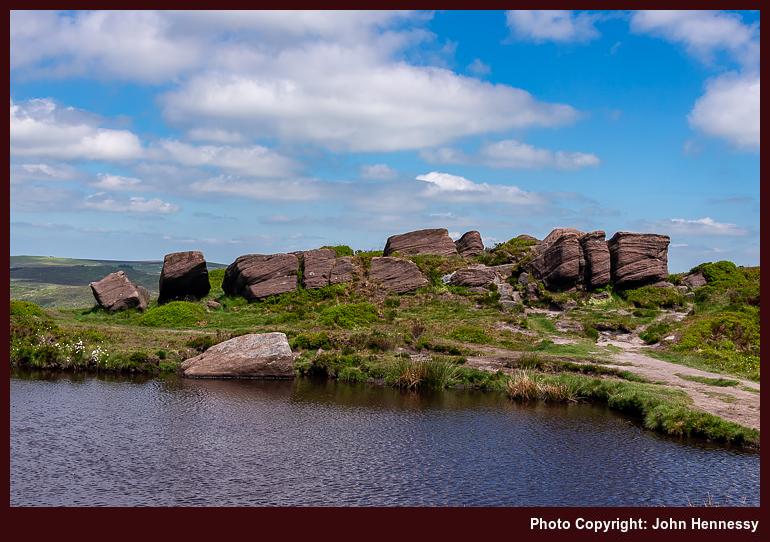
As I continued north, much was as familiar to me as it was good to see it again, especially with sunshine. Tittesworth Reservoir lay below, Ramshaw Rocks were there to the east and in the west there was Croker Hill and Shutlingsloe. While making tracks in one county, it was possible to glimpse towards two more. The day was feeling much better.
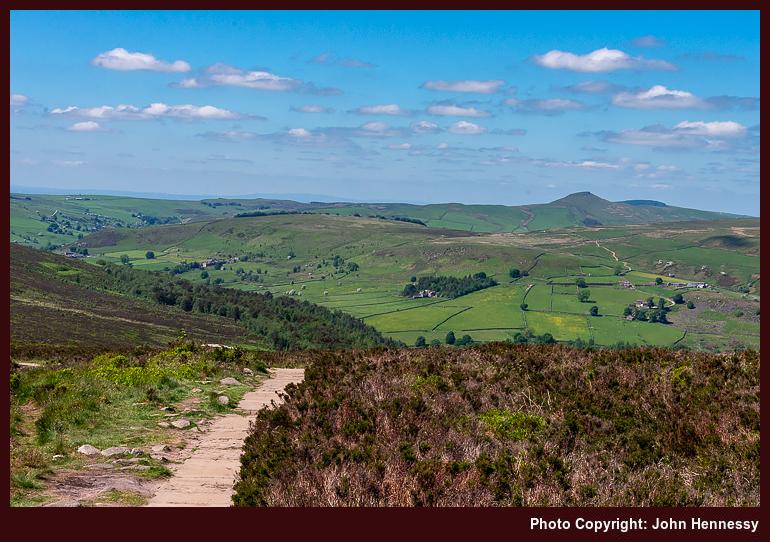
However, it was having its busier moments as well. Seeing a large group going around was a reminder that many were getting more relaxed. Restrictions were easier and the ongoing vaccination programme had gifted political benefits, ones that were not to last. After the Roaches, my wandering took me over Back Forest and near Lud's Church, which is where that large group intruded on my day somewhat; my sense is that they were staying in group accommodation (possibly the former YHA in Gradbach, now an outdoor adventure centre?) and this was part of a circular route that they were following. Nevertheless, there were ample views over Gradbach and the nascent Dane Valley that compensated as much as those towards Shutlingsloe and what was near there.
Things grew quieter around Hangingstone Farm, which was to my taste. By this stage, I was near where I had first gone on the Sunday of a Spring Bank Holiday weekend in 2009. Danebridge was the next landmark on my route and where I would cross the River Dane to re-enter Cheshire. It would have been tempting to think that I was most of the way home, yet that would have been wishful thinking.
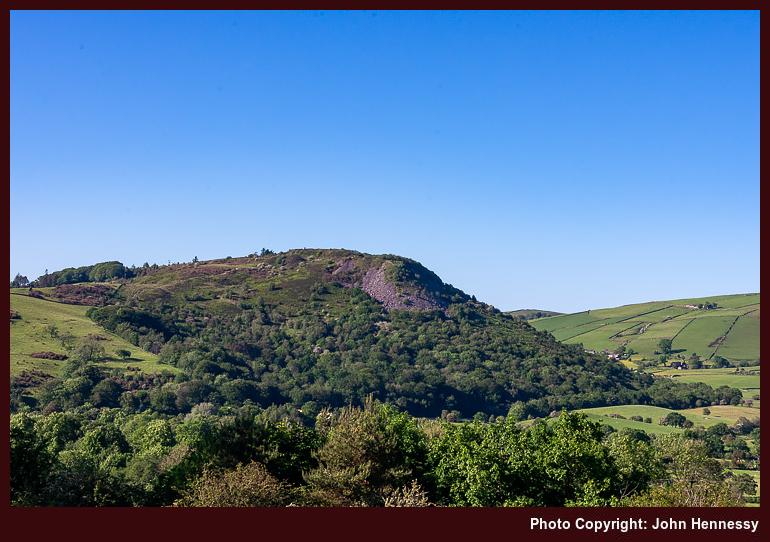
Initial impressions that the route from Danebridge had slipped from recollection now look pessimistic, for there remain some reminders. Hammerton Farm and Longgutter are made probable by my remembering that the latter was peopled with a family or families enjoying a country stay. It might have been that I needed to ask the way through there as well. Bonhomie was the general air thereabouts, a contrast to the start of the day. Eventually, I would have alighted on the lane leading me to Higher Sutton, Ridge Hill and beyond to Macclesfield. This is supported by the appearance of Tegg's Nose in my photographic records, and Shutlingsloe looms large here too.
The spirit may have been wounded, yet the day was not spoilt. That is how things feel to me now, having shared my thoughts on how it all began. Maybe that is the point of writing these accounts; the act helps to deal with any wounds and other things that may have gone awry. As I worked through this one, I was reminded of when my elderly Meindl Burma boots failed the preceding Easter. Their successors set the scene for a tale of a trot from Miller's Dale to Castleton over two months later.
Travel Arrangements
Outbound journey on bus service 109 from Macclesfield to Leek.
Seeking quiet, being cautious around others
23rd October 2024 There has been a trip report hiatus on here. The cause was my assembling a visitor guide to Canada. Even with automation and GenAI, that took quite a bit of time; in contrast, this trip report is handwritten, not machine-spewed. There were quite a few websites to process, and Canada is a very big country. It could have been that I bit off more than I should be chewing. While breaking the assemblage apart now seems sensible, I will leave that for later. The whole effort may tempt me to return to the place yet.
Thinking about the delights of Canada turns out to be vastly more exciting than thinking back to 2021, a year when the big story was the roll-out of vaccinations for everyone. Some jumped at the chance to put the pandemic behind them, while others took a more cautious approach; I was one of the latter.
Even with a single dose of the vaccine, I still took things slowly. It helped that I had other things to do, and had acclimated to the situation anyway. There was no venturing beyond the counties of Cheshire, Derbyshire and Staffordshire for me. That applied to the Spring Bank Holiday weekend at the end of May that year.
Saturday was typical of what happened in the run-up to the weekend. There may have been a good deal of sunshine that spring, yet I stayed local all the while. The most memorable thing about Easter of that year was that all Easter Eggs had been sold; there were none left in the shops when I went looking. Otherwise, things were slowly opening after the winter lockdown. That was the backdrop to an evening cycle that took me around by Gawsworth.
The next day, Sunday, was hardly any more dramatic. The sunny weather allowed for a walk from Disley back to Macclesfield that avoided Lyme Park while taking passing Lamaload Reservoir. These parts were becoming very familiar to me through passing through them so often. The real bliss was in how few were going the same way; perhaps others were going further afield, leaving me with the reassurance of solitude. After all the restrictions, it might have been the others were getting bored, and I remember moans about the behaviour of visitors to the Lake District earlier that year. My own search for added novelty got going in 2022 when I could get as far as Ireland.
Stitching together frayed memories, I now realise that a Bank Holiday amble from Monyash to Bakewell was not quite the reprise of earlier ones going between the two places. The hint was my following the Limestone Way out of Monyash. Instead of venturing into and through Lathkill Dale as I had been thinking, I avoided it. Instead, I passed One Ash Farm and descended into Cales Dale only to climb out of it again, a steep down and up for my legs.
It all shows that there is an aspect of plateau about these parts, with dales being cut into that over the passage of geological time. Staying out of those gouges for at least a while had me going around by Low Wood, a Peak District National Park property. Thus far, I got the sense that I was facing a busier day than the one before. While there were quiet moments, more were drawn out by the sunshine, like I was.
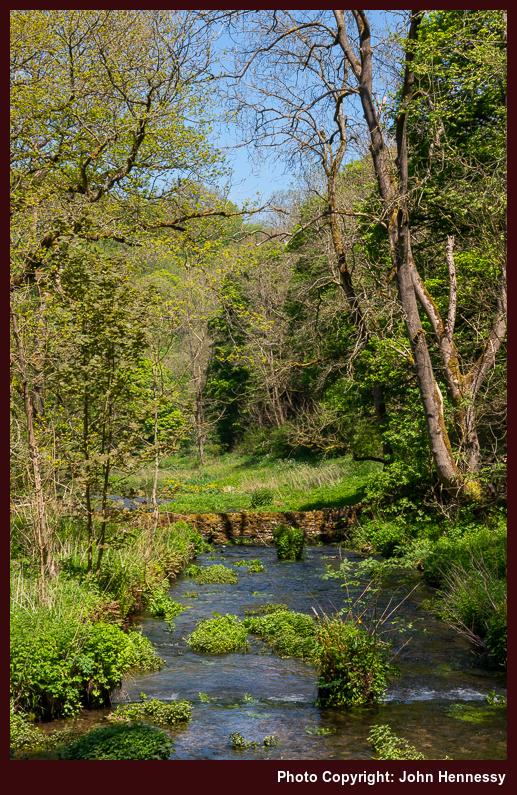
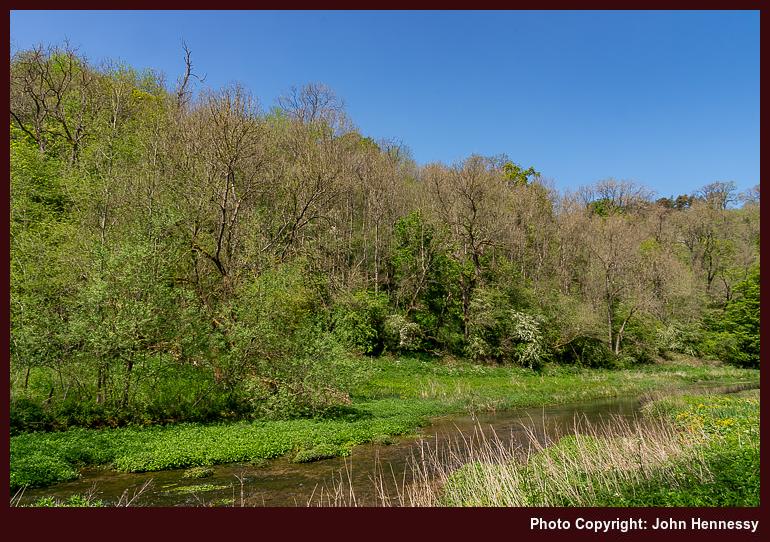
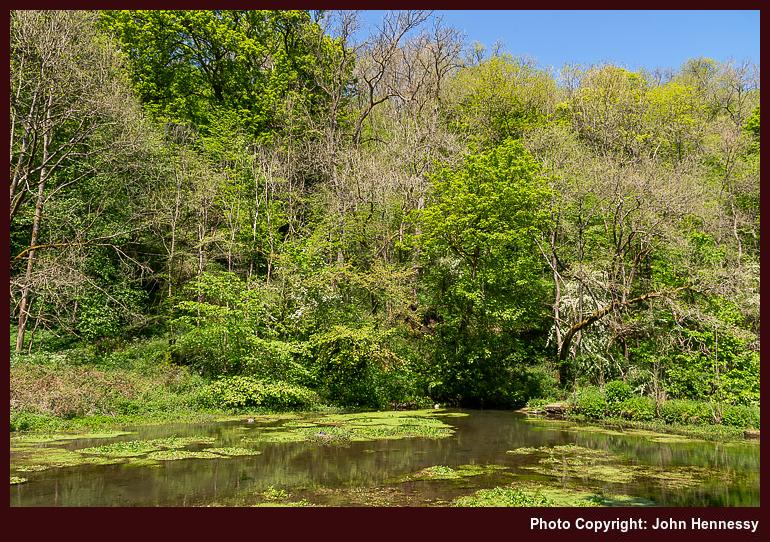
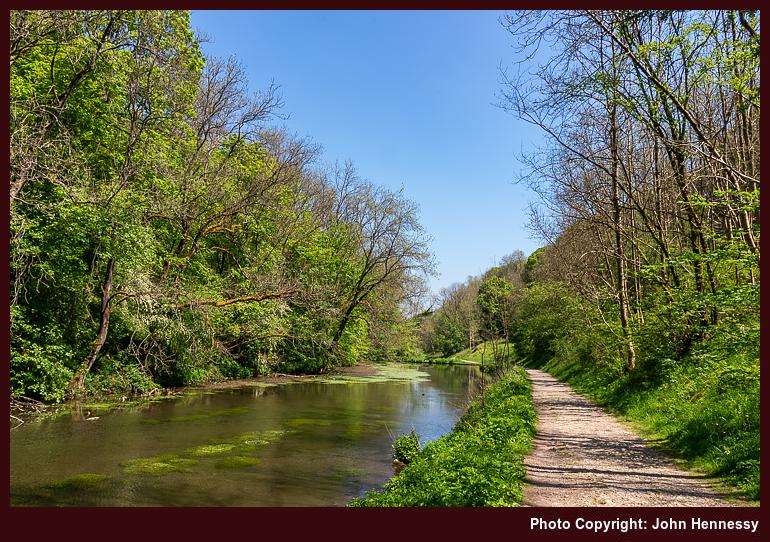
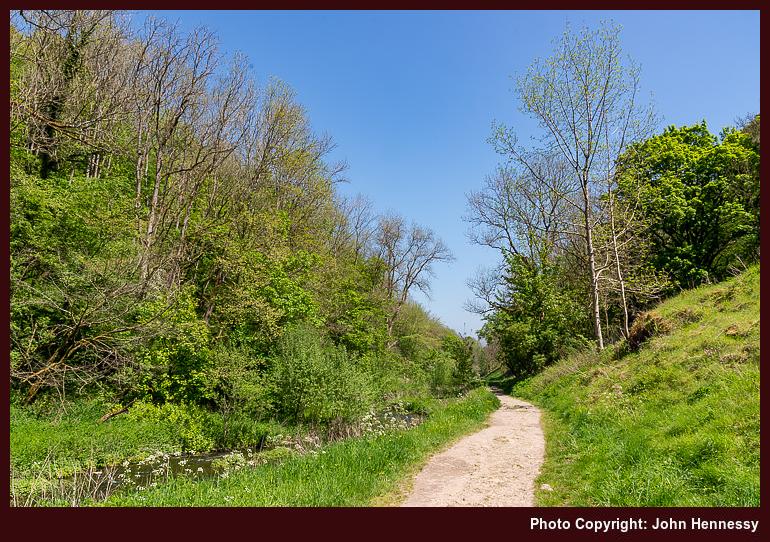
My target was the River Bradford, and it was here where I would encounter quite a few groups going the way, adding discomfiture to this single vaccinated wanderer. Nevertheless, there were ample opportunities to admire the bucolic surroundings. Even so, my designs on following the river all the day to Bradford were stymied by gatherings on its banks. To look at these, one would think that the pandemic never happened.
Instead, I left the river to go through the village of Youlgreave before continuing to Bakewell on a hazy afternoon when the warmth of the sun could be felt. Maybe the sense of summer was the cause of there being so many sunseekers along the banks of the River Bradford. Piecing together the way from Youlgreave to Bakewell is a puzzle created by the passage of time. There are hints, like the spending of time in a cemetery away from the town centre. Any hint of a crossing over the River Lathkill by means of Conksbury Bridge appears plausible yet cannot be confirmed. The recollections are as hazy as the afternoon was. One thing is clear, the mix of road and path was not one that I followed before.
The thing that is better etched into my mind was how busy Bakewell was when I got to the heart of the place. There was a wait for the bus home, and it did not feel very comfortable about the lack of any form of social distancing. It felt like the pandemic had ended for many, and they were getting back to what they did before it. This was going to grow as the year continued; this was something that I needed to learn to handle. After all, there were signs of slippage with mask wearing on the way home, even if I bore no lasting consequences.
Travel Arrangements
Getting to Disley on Sunday was by train with a change in Stockport. On Monday, there was a return journey on bus service 58, getting off in Monyash on the outbound journey and embarking from Bakewell on the way back to Macclesfield.


