Rekindling thirty year old connections
 20th August 2022
 After a break of more than three years, I finally experienced a summer getaway from my usual home turf. Rather than heading across the Atlantic as I did in 2019, I returned to the country of my birth to spend some time around Ireland's south and southwest.
There was a lot of hiking and the weather essentially obliged much as it did on my Western Isles escapade in 2008. My time around Killarney did see some clouded skies and the occasional light rain shower but there were spells of sunshine too. The rest of the time saw near-constant sunshine with associated heat that might have limited my strolling but for an inbuilt determination to keep exploring. The timing of my return was near impeccable because even hotter temperatures were to come and they might have curtailed activities a great deal.
The days around Killarney were long ones that made up for disappointments earlier in the year while they also allowed me to follow up on residual inspiration from those encounters. The first day had me traipsing through Knockreer Park to reach Ross Castle where the nearby peninsula of Ross Island used up a bit of my time. From there, I continued to Muckross Abbey and Muckross House from where I was lured into completing a circuit of Muckross Lake before returning to my accommodation again. Sunshine came and went but there were enough interludes to allow some photographic efforts on my part.
The same could be said for the hike from Kenmare to Killarney that followed part of the Kerry Way. That was inspired by an otherwise unexceptional into Killarney from a damper Tralee when I ascended Torc Mountain when it was beset with a low cloud base. The sight of a track going into the distance was enough to get me inspired and a later bus departure did nothing to stop me. The ascent to the saddle between Peakeen Mountain and Knockanaguish was near constant but the scenic rewards were plentiful. The same could be said for what lay beyond on the way by Windy Gap and a lunch stop was in order to make the most of it. There was an ascent for tiring legs for passage by Cromaglan Mountain on a rough path. Torc Mountian was the next landmark and I could not forego an ascent in clear conditions. Sunshine may have been occasional on the day but extra lighting was there so often that I could not complain and some shortcuts were taken on the return to Killarney that made me wonder at my lack of attention while passing through the Muckross estate. That might have more to do with how fatigued I felt at the time.
The next day was to be a less intensive day involving an out and back walk into the Gap of Dunloe from Beaufort Bridge with a return bus journey to lessen the walking. Skies were clouded but I persevered in hope that was not in vain. The head of the gap was reached at a good time for returning to the bus stop again but even a passing shower could not stop me from dropping into the Black Valley with lighter footwear than might have been best for what was to come. The rewards were such that I do not regret what I did for this was revisiting some countryside that I only got to see from a car bound for my two parents' home after a long driving trip. Then, there were stories from short breaks that they enjoyed in the area so my actions may have been inevitable. The Kerry Way again guided my steps for I passed Lord Brandon's Cottage and the Upper Lake in surroundings that felt quite wild. After Derrycunihy, I was set to retracing steps from the day before without the ascent of Torc Mountain. There was time for a food stop near a quiet cascade and I chanced passing Torc Waterfall too even if there were more people there than I might have expected. Passage by Muckross House and Muckross Friary was enlivened by evening sunshine and the same could be said for the rest of a hike that left me less tired than I might have expected. A visit to Tomies Wood might have ensured the shorter day that I had in mind but I was missed out on so much if I did. That and O' Sullivan's Cascade get left for another time but that is no bad thing.
The next morning saw me revisit Knockreer Park before onward travel to Cork city where I would base myself for the remainder of the trip. Travelling forced a quieter day on me before taking up things again with a day trip to Bantry that featured some time spent strolling around Whiddy Island and enjoying its views of the Beara and Sheep's Head peninsulas. Thoughts of time spent around Glengarriff and Castletown Bearhaven may inspire me for any future trips since outrageously long day driving tours did pass those. The Beara peninsula also features vantage points like the Healy Pass and there are islands like Beare and Dursey for some offshore walking too. There is much in the area and a gift of some good weather would help greatly too.
Inland wanderings in the Knockmealdown Mountains gained me wide views not only of those summits but also those of the Galtee Mountains and there might have been a glimpse of the Comeragh Mountains too. This is quiet countryside and I relished the empty hillsides around Knockshanahullion near Clogheen. Sugarloaf Hill and Knockmealdown may have been more attractive to those seeking more height but I was happy to admire them and avoid the crowds. There may have been no sighting of The Vee for me but any tree covered offered shelter from the heat and I was back in Clogheen to catch the last bus of the day to Cork. In addition to the hill wandering there was another reason for my interest in the area since my father wrote an essay on martyred priest Fr. Nicholas Sheehy who ministered in the area and was hanged in Clonmel on false charges. His remains rest in nearby Shanrahan Cemetary and there are monuments to his memory both there and in front of Clogheen parish church.
My last full day of the trip dedicated to wandering saw me spend more time around Kinsale than I expected. The cause was coastal walking between and around two old military forts. Of these, James Fort was the first and needed a circuitous amble to get there because it was across the harbour from Kinsale town. Charles Fort may have been nearer the town but did not feel that way in the afternoon heat and I was lured along the coast by a good path to extend the walk. Damien Enright's guidebook did some good service when it came to adding information and inspiration. The return to Cork may have been in warm weather but I could not be stopped from wandering an old university alma mater of mine and it has changed a bit since I was a student there. A quick rendezvous with Cobh ensued before I was content to leave things at that for the day. Blarney Castle might have been another prospect but that needs to wait.
All in all, this was a trip that allowed for so much to be done. There are some loose ends but they do not weigh on me at all. If anything, there was what felt like a sense of closure and reconnection that may open up other parts of Ireland for visits. The extra sense of connection now reduces my self-repudiation for not seeing my home country and adds to a sense of meaning in anything I read about its areas of hill country since they will not feel so alien to me now.
It was good too to again frequent parts where I had been with my parents, albeit in a different way. Going on foot really slows you down enough for a landscape to seep into you and any ambiences to become embedded in your memory. Doing the same with places in Clare, Galway, Mayo, Donegal, Down and Wicklow would build on this but no one knows what a future can bring.
Unleashed yet reassociated
19th August 2022 Every time that there has been a royal jubilee while I have lived in the U.K., I have not been in England for it. The chance of a double bank holiday weekend is enough to make me think of getting away from home for a while. 2002 saw me spending time in Edinburgh, while 2012 saw me heading to Pitlochry and Highland Perthshire. While such pageantry has never been my thing, it really is not the case these days after political events during the past ten years.
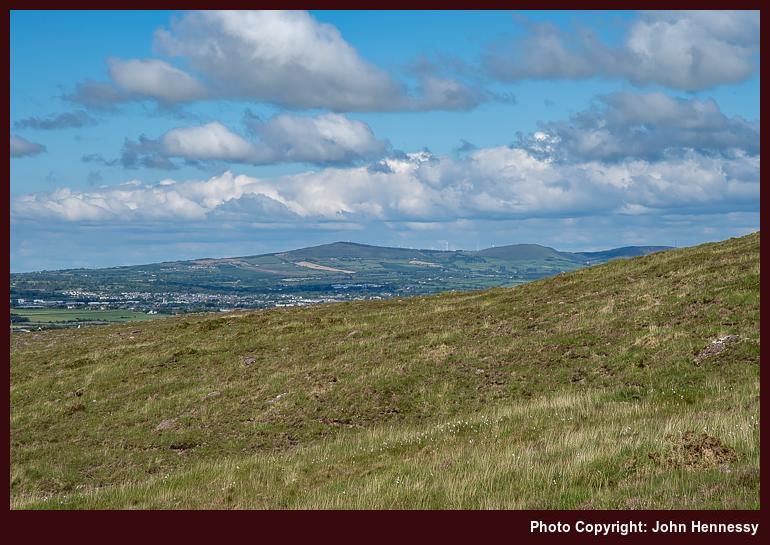
That set the scene for a real escape from Britain, so I ended up in Ireland. There was the added motivation of my needing to do a few things over there as well. My base this time around may have been Tralee, but Killarney was in my sights after a cloudy afternoon in April downed my spirits after a sunny morning. In hindsight, it was just as well that I had not stayed there as the place was thronged with bikers attending BikerFest, but that was a later discovery.
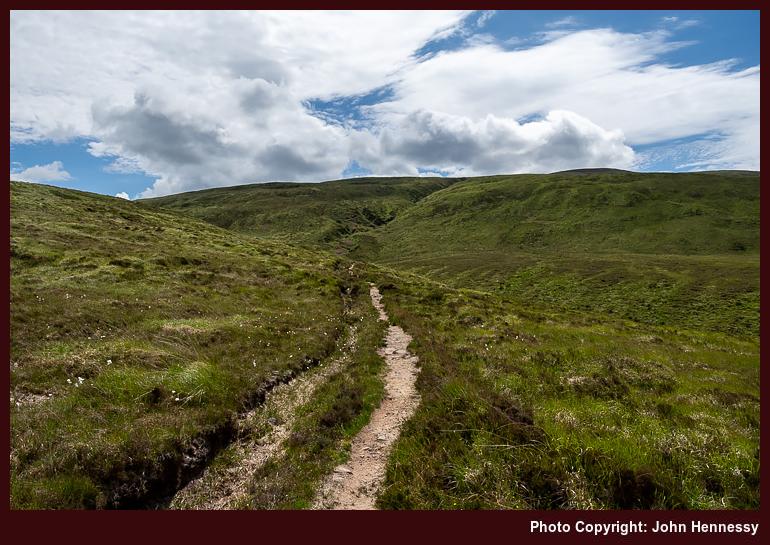
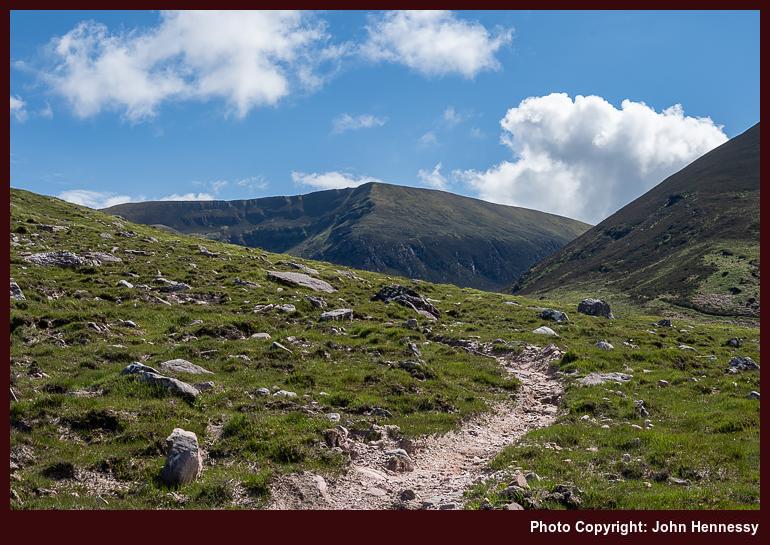
After a day spent meeting people in West Limerick, there was time for exploring newer horizons before attending to necessary matters. With the Dingle peninsula on Tralee's doorstep, that perhaps was unavoidable, and a sunny afternoon saw me lured along the Dingle Way as far as Camp before returning again by bus. Before all that, some morning sunshine brightened up the town's park, so some camera work ensued after days of sunshine struggling through heavy cloud cover. The windmill at Blennerville was another sight to savour, as I discovered that Tralee has a ship canal, even if it only sees use for leisure pursuits these days. When I finally entered hill country, I was still decided on an out and back walk, but the glorious afternoon lighting of the scenery was enough to disabuse me of such a notion. It proved not to be a move to regret.
The next day came cloudy with afternoon rain, yet I still got as far as walking along the ship canal towpath before the rain came. Business phone calls and other plotting occupied me while the weather was inclement, and the following morning needed some more of the same before the advent of afternoon sunshine drew me to Dingle. From there, I was drawn out on a circuit using parts of the Dingle Way and Siúlóid Cholmáin as I ventured as far as Ventry and back.
It made me cast my mind back to another royal occasion when my aunt and late mother ventured as far as Dingle on what was a cloudy day and the road felt as if it would keep rising forever. My brother was painting the kitchen at home, with the wedding of Charles and Diana on television. Dingle did not seem to impress my mother, but it possibly was more of a fishing port back then. The mix of coastline, sandy beaches and mountain scenery were more to her liking and I do seem to recall the mention of Inch, while I wonder what they might have made of Ventry if they had got that far.
The beach there is large with a lifeguard on duty, but my sights really were on hills like Brandon and what lay across Dingle Bay. Being able to glimpse the Skelligs in the distance was an added bonus. Mapping make-believe waylaid me on the way back to Dingle, yet I made the bus back to Tralee with minutes to spare after a glorious afternoon.
The Irish June bank holiday weekend was not to be blessed with sunny weather, so Saturday saw me embarking on a circuit near Tralee. Though still under construction, the completed part of the Tralee to Fenit Greenway got me started. Being a bit sleepy and not realising that I was crossing the busy road to Ballyheigue, Ardfert and other parts of North Kerry got nearer to a moving car than I would have liked. Thankfully, they paused to let the distracted wanderer pass.
Curiosity about building progress led me along that road to see what was happening to the Greenway before I retreated to quieter roads near silage making and golfing. Leaving those near Spa, I then followed the coast using the North Kerry Way until I reached the ship canal again. Breaks in cloud cover persisted to allow some sun before that eventually was lost. A local rowing club was out training in the canal with an observer on a bicycle that was not an aid to uninhibited strolling before the rowers really got moving. Then, it was back into Tralee where dry weather and some sunny persisted later into the afternoon. One might have considered that the weather forecast was wrong, but it sadly was not. We were facing into what might be called a "fine dirty" or "nasty" evening in rural Irish parlance.
Oddly, the wet weather was coming from the east and not the west, so it became challenging to figure out drier places to be for the last two full days of the trip. The penultimate of these took me to Killarney where I reached the top of Torc Mountain, where some low cloud cover obstructed the views and I started to consider the possibility of walking from Kenmare to Killarney along the Kerry way, but that needed to wait. The location that I reached still was an oasis of calm compared to Killarney town itself since there was a crowd of people in the place attending the aforementioned BikerFest. Muckross was similarly unaffected, even if the throaty rumble of bike engines was to be heard as their riders went towards Moll's Gap. Some seem so fascinated by the idea of filling quiet places with a racket that others like me wonder at them, since we so value the calm. Seeking that led me away from Muckross Road to reach Knockreer Park on the way to the town's train station. The rain finally caught up with me at this point, but I had snatched drier interludes from a day that did not promise much.
The following day was similarly troubled, yet I headed to Dingle, reputed as one of the wettest places in Ireland. What was to get me wet on the way to Annascaul was a fine mist. Even so, I might have been tempted to make for the Conor Pass but for the lack of any view. Thankfully, the day dried with the passage of time, but not before my imagination conjured up images of Manannan mac Lir enjoying a late lie-in on his Kerry mountain shower bed. While sunshine weakly broke through at times, the greyness prevailed while I noted that boreen walking possibly is unique to Ireland on a day when such whimsical thoughts kept entering my mind. The dry weather was lost while I awaited a bus in Annascaul, one time home to Antarctic explorer Tom Crean, but I remained glad that I had not tried walking from there to Camp. The scenery may have been more majestic, but it really needs to be seen in better weather. Such are ideas for future visits.
Embarrassments
7th July 2022 Recently, I began to look through my pipeline of trip reports that await completion, and one thought struck me. It seems that my outdoor outings are bedevilled by qualms following interactions with other people. That then means that I leave it a while for emotions to calm before writing full accounts. There is always some censoring that one can do, but it is the prospect of reliving an imperfect encounter that can hold up things, even if it should be the cathartic that moves one beyond the experience.
There are various kinds of these at work here, and the pandemic caused a few spells of awkwardness. One example was when there was a gate that was opened to me that I possibly should have helped to close, given that there was frisky livestock in that field and some overenthusiastic dogs. Fears of contracting infection overruled all of that, and also messed up the giving of directions at one point earlier this year. It also messed up interactions with others, one of whom then thought I was being standoffish and rude. When fear is used to get everyone to be careful, it takes time to move beyond it afterwards.
These things weigh on the mind of a sensitive and shy individual who does not want to have his fumbles on view to others. Getting disoriented on other people's land is one of them, and it got me shouted at by someone on a quad bike quite a few years ago. People generally are helpful, though, but a lot can be read from a tone of voice. Even there being a loud barking dog next to a public right of way can be off-putting, leading one to think that it was kept there for a reason.
Conflict is one thing that I like to avoid as much as possible, though that can be trickier with multi-user areas and misuse of rights of way. During the pandemic, many off-road bike riders began to use public footpaths, and this led to something of a stand-off this past spring. While cyclists may want access to all public rights of way, there is something very liberating to use one where you do not have to think about being knocked over by someone else. It can be the case that off-road cycling becomes a menace to other outdoor enthusiasts and takes away a lot of the relaxation and enjoyment that should be offered.
While one should be fully present out of doors, there is the possibility of lapsing into daydreaming and then walking past someone who knows you. It becomes more difficult when neither of you have met for a while, and they recognise you without your recognising them. So, when you walk past them, then they might be offended by it. Sometimes, the passage of time might mean that both of you have changed so much that there is nothing much in common any more, so a conversation may not work anyway.
At the heart of all this essentially is fear, mainly that of upsetting others. Clearly, no one gets it right all the time, so there is a need to accept what happens and to let go of any worries that arise. It not only can delay writing trip reports, but it also can forestall outings if not kept in check. Still, there is a positive energy in all of this because it can motivate one to go to quieter places so that solitude can work its restorative magic.
A Marsden project
28th May 2022 This past spring has been a busy time for walking in areas of hill country and growing boredom with what is near me in Cheshire and Derbyshire after traipsing around various places repeatedly during the constrained times of the pandemic led me to look elsewhere and Marsden caught my attention again after around fifteen years of not venturing near the place.
First up was a trot from Marsden to Hadfield that retraced steps not taken since 2002 when I was only starting hill wandering and a dull day heavily limited photographic efforts even if it brightened up near the end of the day. The reprise saw brighter sunnier weather albeit with a bracing aspect in the form of a stiff chilling easterly wind. Even so, I enjoyed my stroll along the Kirklees Way as it rounded Wessenden Moor and passed numerous reservoirs. Eventually, I passed onto the Pennine Way that conveyed me across the A635, over Black Hill and down into Longdendale. There was an intrusion in the form of an American hiker with two dogs who asked for a photo while my mouth was full of food but that passed and it was the edge above Crowden Great Brook that really held my attention.
On Holy Thursday in 2007, I headed north from Marsden to Littleborough as part of an ongoing Pennine Way project but low cloud intruded on the start of that walk so photos were limited. That made a partial reprise of that hike a possibility so I started from Todmorden on a southbound hike to capture what I had missed. Ultimately, I overdid it and arrived in Marsden in darkness so the compensation had not been gained and it took several returns to the area before photographic possibilities were largely consummated. Still, Calderdale and its nearby moors were kind to me even if their popularity slowed me down at times. From Blackstone Edge, things were much quieter but the day was moving on as I made the most of the available light. Even so, my sightings of the Castleshaw reservoirs left me in doubt as to my misremembrance enforced tardiness. More was to come in my sightings of Pule Hill and Holme Moor in very much faded light. That was to apply to Redbrook, Black Moss and Swellands reservoirs as well so thoughts of a return were forced into my mind. Eventually light failed and I decided against a steep descent on not finding the path so I went another way that got me to Wessenden Reservoir after an improvised crossing in the absence. Still, the waterfall looked appealing in the night light and it was now easy strolling back into Marsden in the quietude of the time of day. That did nothing to remediate my mixing up train times so I had a much-delayed train journey back to Macclesfield with a tight connection in Manchester that was aided by the last train to Macclesfield being late. That was just as well since there should have been another but for there being a shortage of train drivers at the time. The day had been eventful and I am not just talking about a momentary standoff with a cyclist around Calderdale either; they seem to be getting everywhere but that is another subject.
While the stage was set for several returns, the weather was not playing ball when I needed it to do just that. Still, I returned to Marsden in hope. Things looked promising as I headed out of Marden along Waters Road. My good fortune persisted as I continued along the track by Willykay Clough. Unfortunately, it was not to last and I lost out when I was wanting the cloud cover to stay away. There also was a biting wind from a northerly direction but that did nothing to keep away the numerous hill runners who were out and about. They went another way so all was quieter again but the sun was in hiding. Scrambler bikes were heard and I wondered what the point of their short rides was with their turning back at a pass to avoid being spotted. To me, it looked a little cheeky and I continued on my way on a day full of compensations. One was finding that path that I missed on the previous hike and I was glad that I had not tried it in the dark even if I had a head torch (there has been a scary moment when one did not fall to hand but all was well). The could cover had broken by this point and it have been understandable if I had been wondering at my impatience but the cold would have explained that. By the time that I got back to Marsden, many were outside enjoying what by then was feeling like a warm summer's day. For me, it was back to the train station for a more timely return home.
Even with the same midday prediction of trouble with cloud cover as the previous encounter with the area, I persisted with another Marsden to Hadfield walking idea. There were variations from where OI had gone on previous trots that the walked started similarly to its predecessor. It took a map enquiry from another walker to highlight my slow progress in adjusting to a post-COVID world and I reproached myself for being unforthcoming but I had a long way to go and an appointment with hope. There were bright spots and I made images of the Castleshaw reservoirs that advanced on what went before. The same could be said about Pule Hill and its surroundings because the aftermaths of hail showers bring their recompenses. Other places brought a bit more photographic joy too and a bit of National Trust work made the way to the A635 much easier. Beyond that, navigation and bog trotting became more challenging so getting to Black Hill was slow work. Once there, I did not delay and started the descent to Longdendale by a gentler moorland route that left me with a longer walk to Hadfield and its train station. Even so, the gentle quietude of what is now a heavily industrialised valley laden with reservoirs and pylons prevailed and other walkers shared words with me. Daylight was in short supply as I neared Hadfield but it held long enough for me not to need a head torch. The day had been long and tiring but there was a lot to savour.
Eventually, there was resolution and near-complete closure. The last Friday of April came free and the weather remained sunny all day so another attempt was made. In many ways, this was a reprise of the third Marsden trip of the year, albeit with many deviations. It also saw me take my time in many ways. The route took me away from Waters Road and around by March Haigh Reservoir before I retraced old steps. Heat haze may have affected views over the Castleshaw reservoirs but what I go was as good as I needed it to be so I was sated. Brun Clough Reservoir saw a visit and I got over the wire fence to rejoin the Pennine Way because my patience did not extend to finding the stile and I often wonder how entry points to access land get so rationed. That made no impact on my mood as I attended to my photographic objectives. Various reservoirs were ticked off a list that also included Wessenden Reservoir and I crossed some rough ground using my access rights so as to avoid retracing steps. There even was an ascent of Pule Hill so this was a day that was working for me and the evening light was attractive as I returned to Marsden to start my train journey back to Macclesfield. it was now time to look to other places because the moors around Marsden may have seen times when things did not work out for me but they also kept me engaged in so many other ways as well.
Faster?
21st February 2022 Recently, I noticed that this website felt a bit sluggish so I moved it to a new server in a lift and shift operation. This was another act in a spurt of website tinkering that is ongoing. Alternatives to WordPress and Drupal are being tried so I am examining Hugo and Django along with any other tools that come my way.
Of these, Hugo has been used in a few of my websites this year and my public transport website was one of them. While its overhaul did mean moving to a static website, automated building along with added speed and security were among the advantages of making the change. This route is a technical one but I am largely happy with the changeover and have used the same approach for other websites as well.
While other websites are being overhauled, any changes to this website will happen organically. Its use of WordPress, TextPattern, Bootstrap and other technologies will remain. Where there is a need to change things, Django offers other possibilities so they could get assessed as well. Otherwise, the main priority of sharing experiences and inspirations remains so these will appear as they come my way.


