Going to Gower
 25th December 2011
 July turned out to be a month when I was away for four weekends in a row and I decided that the same would apply to the fifth one to make a clean sweep. As it happened, August became a quiet month for hill wandering even if I had a few days off from work at the end of it. Then, a busy working life meant that any taking of the fine weather that was around for much of it took the form of local cycles with a call to Alderley Edge and Hare Hill featuring on one of the Saturdays. That has planted in my mind the idea of a walk taking in both of these for when I only have a few hours to spare.
On that last weekend in July, I headed to Gower via the Heart of Wales railway. That in itself has me mulling over the prospects for multi-day trips due to the travel practicalities involved; the train service is limited to just a few services each way every day. Stations such as Cynghordy and Sugar Loaf seem to offer easy access to the countryside round about there. Former spa towns such as Llandrindod Wells, Llangammarch Wells and Llanwrtyd Wells all are near stations on the line while Builth Wells is a little further away and may be better accessed using a Trawscambria bus from Newtown on the Cambrian Coast line. Though the appearance of the countryside wasn't helped by the cloudy skies that lay overhead as I passed through it, thoughts of exploring hilly parts that are new to me sounds appealing. After all, the Elan valley is not so far away from Llandrindodd Wells either. All of these trip ideas need more work to make them happen but it's great to have the possibilities regardless of this.
Swansea had the sun trying to break though the cloud cover without a great deal of success when I arrived and that was set to continue until I left too. While I have no doubts as to the scenic attractiveness of the Gower coastline, it was being afflicted by a lot of haze when I got to Rhossili. That may have limited whatever could be done with a camera, but I still enjoyed my potter around there anyway.
First, I walked out towards Worm's Head, a famous spot featured in many a photo that graced the pages of magazines such as Outdoor Photography. Being owned by the National Trust meant that I wasn't the only one heading that way though the crowds petered out the further along I went. The tide was in so I more than contented myself with seeing the rocky formations from the mainland. In any event, I am not so sure that crossing a tidal causeway sounds too appealing me even if there's a coastguard station nearby. That tells its own story so I think it best to stay on the mainland anyway.
My next steps took me south along the rocky coastline for little while before I turned inland again to negotiate a few public rights of way to return to Rhossili again. Having a little time on my hands before I needed to make my way back to my base for the night, I fitted in a climb to the top of The Beacon on Rhossili Down where moorland was to be found. Any designs on a circular walk were put on hold in the interests of time but this was a good introduction. The need to gain a little height also meant that I'd found a quieter corner of Rhossili too. In fact, making a full a circular walk over and around Rhossili Down sounds like a perfect excuse for returning to that part of the world.
Apart from Rhossili, there are places in the Gower that sound as if they are worth visiting too. A trot from Oxwich to Port-Eynon to Rhossili sounds promising and a visit to Mumbles could be interesting too although it looks very built up on the map. Apparently accommodation can be tricky to organise on the Gower during the busy season so a little forethought might be in order. Getting weather that works wonders for the appearance of the coastline would help too. Sunshine may have been in short supply while I was there but the excursion really opened up ideas for me so I am not complaining.
Travel Arrangements:
Outbound train from Macclesfield to Swansea with changes at Stockport and Shrewsbury, the latter being for the train going down the Heart of Wales line. Return bus journey on X18 between Swansea and Rhossili. Return train trip from Swansea to Crewe via the Heart of Wales line and having a change in Shrewsbury. Bus service 38 from Crewe to Macclesfield.
Surveying castles and coastline on either side of the Menai Strait
24th December 2011 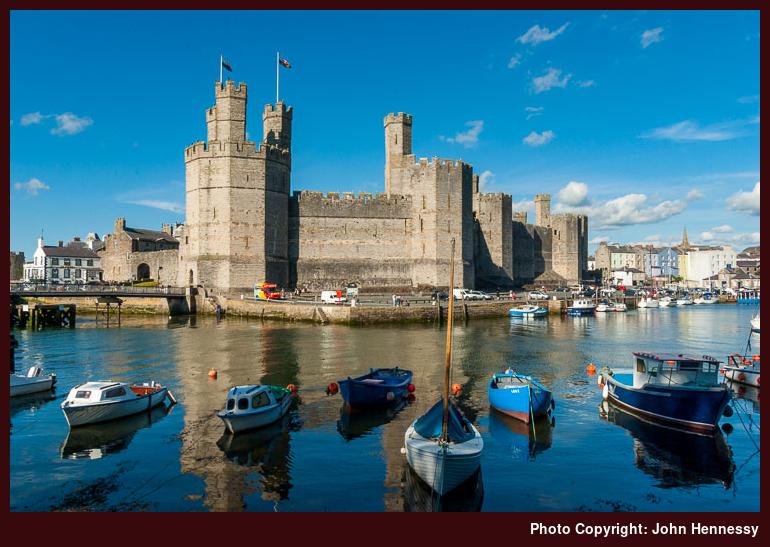
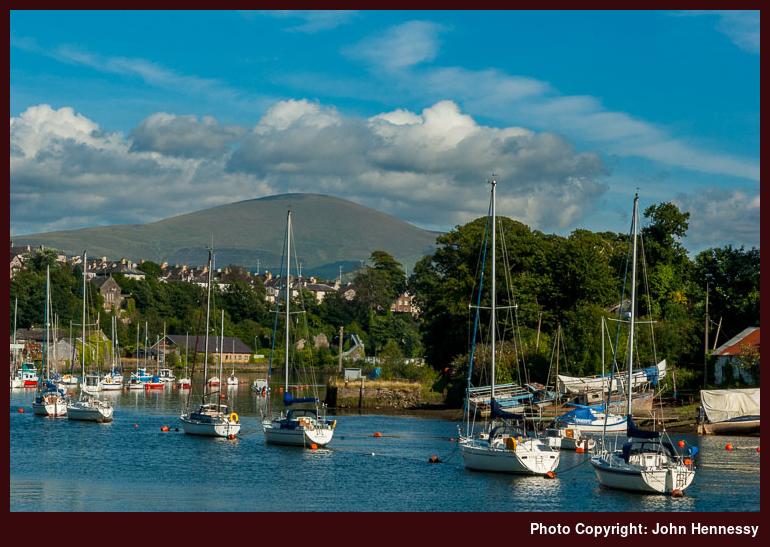
The third weekend in July brought plenty of bright sunshine. It was enough to get heading to north-west Wales, albeit with a later start that got delayed further thanks to a problem on the West Coast Mainline around its Trent valley section. Nevertheless, my plan to revisit Caernarfon after an absence for quite a few years was far from stymied. Then, I based myself there for a weekend that took in some of the countryside around Llanberis and some of that surrounding Beddgelert. Both took the form of reconnaissance trips and I do recall enjoying the latter more than the former. Maybe it had something to do with my poking around slate mine workings near Llanberis instead of seeing less scarred parts. While I cannot be certain of that being how that weekend's trip there went, such can be the format of first visits that you end up looking at the wrong side first. Since then, I have explored the more appealing sides of the hills surrounding Llanberis and neglected those around Beddgelert. It's amazing what turns things can take and would be no bad idea to return to Beddgelert again.
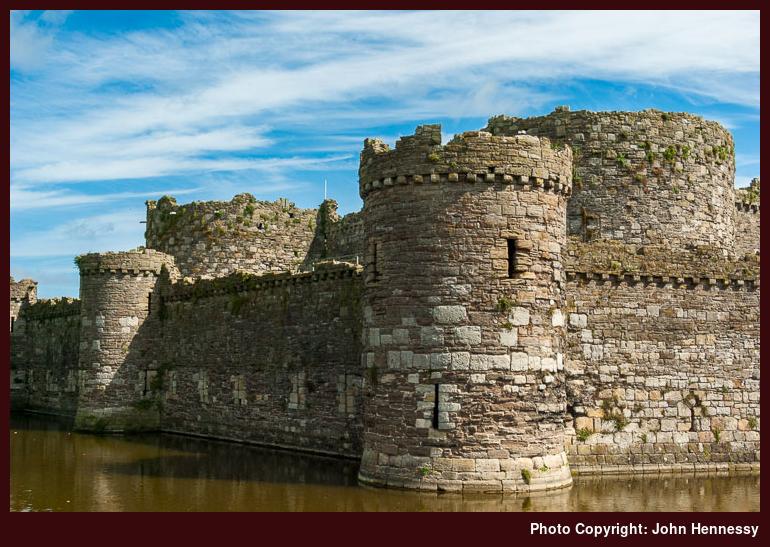
The next morning saw me head to Anglesey to gain a flavour of its coastal path after spending a night in Bangor. My starting point was Beaumaris so I took advantage of the morning sunshine for making some photos of its castle, one of the famed antiquities of North Wales. With possibilities well-used, I left after me those planning on spending more time around there to continue north-westwards along the coastal path, all the while looking across towards the hills of Snowdonia.
The path first crossed fields before taking me along a roadside footway. All at this point felt like light work and Beaumaris and its attendant day trippers seemed a world away. However, the course of the Isle of Anglesey Coastal Path eventually drew me onto a stony beach and passage along there was both slower and required much more effort. At the time, it seemed more like drudgery and I welcomed the brief return to tarmac when it finally came. In fact, there was one more beach crossing before I finally was on the minor road headed for Trwyn Penmon, Penmon Point in English.
With only a few cars passing the way, this road walking wasn't lacking in pleasure. The remains of Penmon's ruined priory looked modest though there was a nearby dovecote too. Also, I was tempted to explore a path leading away from the road but left it in favour of ensuring my making a bus back from the end of my walk. As it happened, I would have had the time but preferred to be surer than sorry.
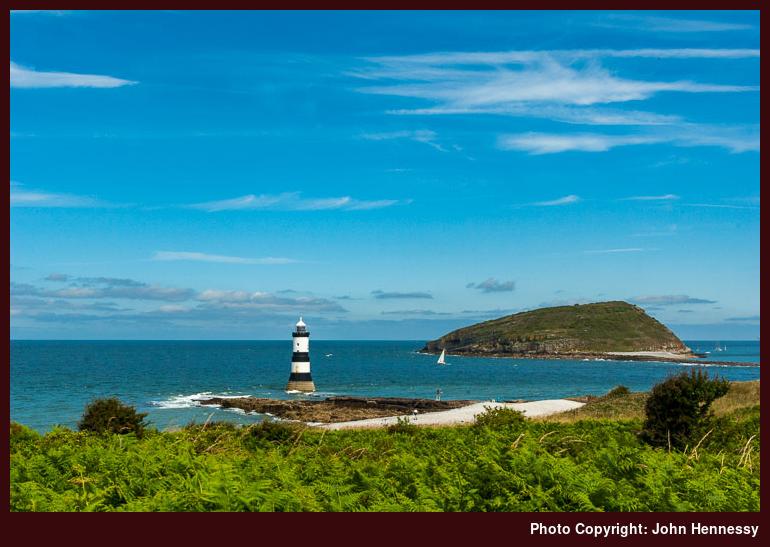
A man was out collecting tolls from any passing cars because this was private land. Penmon Point would be a lure and there were a good few folk about when I got there. Before then, there was more peaceful road walking. When I got there, I was to find that the public convenience marked on my O.S. map wasn't as publicly available as I had hoped it to be; it was for patrons of the café only. Another feature of the café was that it seemed best set up for sit down customers and not those who wanted any sort of take away service. Even picking an ice cream from the freezer and taking it to the till for payment wasn't encouraged. With a journey ahead of me, I kept going, and the place lost a customer, unlike its counterpart near the Calf Sound on the Isle of Man.
From Penmon Point, I had some earth underfoot and not tarmac. That more usual state of affairs was more amenable to me as good progress was made under blue skies and strong sunshine. Though not far from the sea, the warmth of the day was unmissable too. Glan-yr-Afon was where I was going to take my leave of the coastal path and a search and rescue helicopter was to be seen as I weaved my way there. Sirens could be heard too so it appeared that a rescue was ongoing though I learnt no more about it since then.
Dropping into Glan-yr-Afon, I picked up a right of way that was leading to the right and towards Llandona. Due to bus connections, I was wondering if ending my walk would be practical and it was in Glan-yr-Afon that I finally decided that it was. Going through inland fields instead of coastal ones was a departure, yet the hills of Snowdonia and the sea that came between them and me both returned to my line of sight. The heat of the day was more noticeable at this point as well and especially so when I returned to tarmac again.
The last stretch of the hike took me through Llandona's common land. It was unusual to again glimpse heathery moorland after all the travel through pasture. While another time might have seen me explore a little of it, this wasn't to be one of them. On the last stretch of the way into Llandona, I saw a bus turning while on its way to Beaumaris, and this was the one that would return to take me to Menai Bridge. While awaiting its return, I pottered about the village to if it had a shop but, finding it with none, I returned to the bus stop again. The wait there was the cause of reddening my hands due to the strength of the sun, but another would-be passenger joined me, providing reassurance if I needed it.
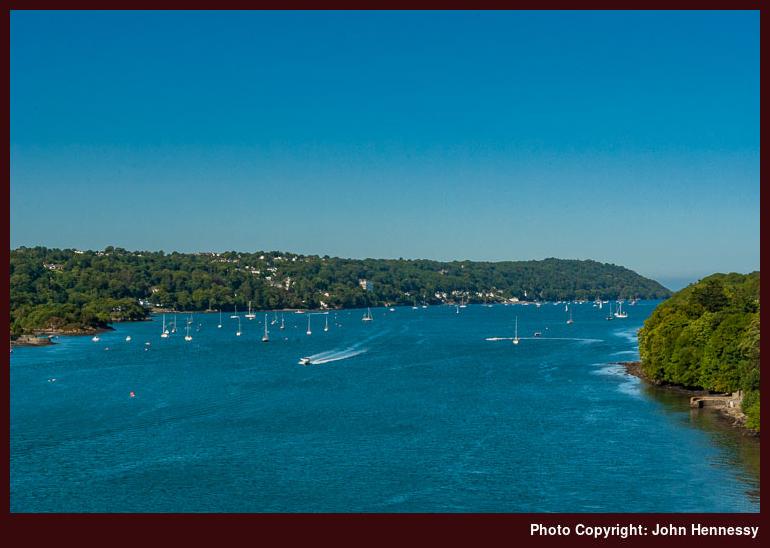
My initial intentions might have been to go all the way from Llandona to Bangor but visions of the azure waters of the Menai Strait had me get off at Menai Bridge instead. There followed a short but slightly unsettling trot over the bridge after which the village got its name. Before leaving for the bridge, there was a chance to top up on refreshments that was very welcome. The bridge crossing allowed for a photography session of sorts and the whole venture usefully tied in with a convenient passing bus to Bangor's train station.
The weekend had been one of many contrasts and I suppose that it shows that a few little visits pulled together can become a satisfying whole. That is not to say that I haven't left without an excuse to return sometime because I'd like to see the hills of Snowdonia from Anglesey in pleasing evening light. There's only so much that can be done with light from earlier in the day and I have the efforts of others. That they turned so superb makes the lure of making my own images all the stronger.
Travel Arrangements:
Train journey from Macclesfield to Bangor with changes at Stoke-on-Trent, Crewe and Chester. Bus services: 5 between Bangor and Caernarfon; 58 from Bangor to Beaumaris; 58 from Llandona to Menai Bridge; 44A from Menai Bridge to Bangor. Train from Bangor to Macclesfield.
More coastal walking on the Isle of Man
22nd December 2011 The change of plans that affected the previous weekend gained something of a silver lining: some extra time away from work. The result of that was another weekend on the Isle of Man to follow the one over twelve months before. In fact, it was near enough to the second anniversary of my first-ever excursion to the island. The rain-soaked reception that I then received did nothing to deter me.
As Raad ny Foillan occupied me for much of the 2010 Mayday Bank Holiday Weekend, it was to do the same for this visit too. However, it was another section of the long-distance path was to take me south from Port Erin towards the island's answer to Land's End before continuing to Port St. Mary and then to Castletown. Though the walking was less strenuous this time around, the coast that I followed had its own drama too, and I escaped with just a light shower and what otherwise was an unsettled weekend, as I discovered on a stroll out to Marine Drive from Douglas the evening before.
In contrast, both to the previous evening and to the last time that I was there, I was to find Port Erin enjoying blue skies and sunshine the following morning. While not exactly rushing about, I set off, shortening the distance to Port St. Mary. Knowing that I could shorten the walk wherever I saw fit meant that I could amble about Port Erin's Lifeboat Station and develop more of a feeling for the route of the Isle of Man Coastal Path.
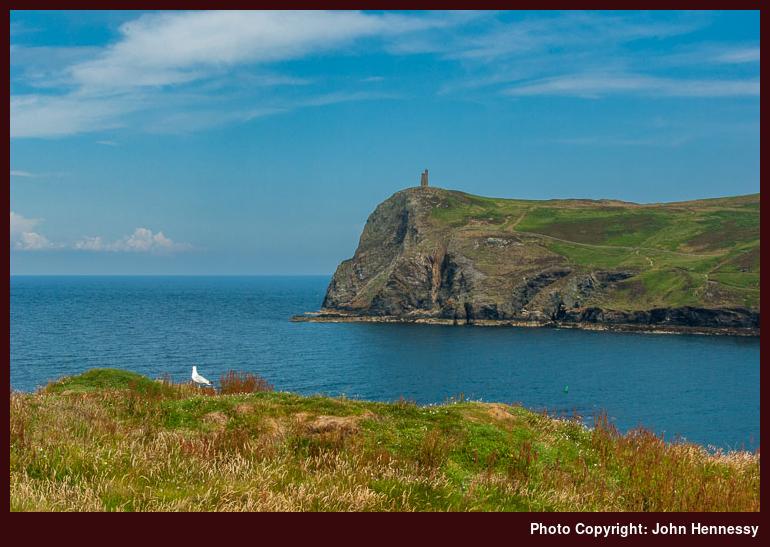
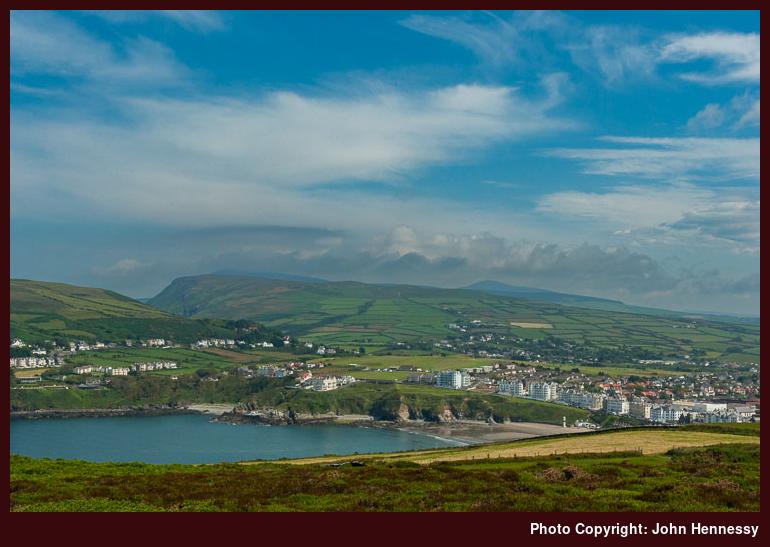
With those bearings established, I picked up the line of the coastal path to start gaining some height behind the Marine Biological Station. The energetic expenditure was rewarded by widening views of what surrounds Port Erin Bay, including both Brada Head and Port St. Erin itself. My new vantage points were granting me another perspective of the start of my walk from Port Erin to Peel more than a year before.
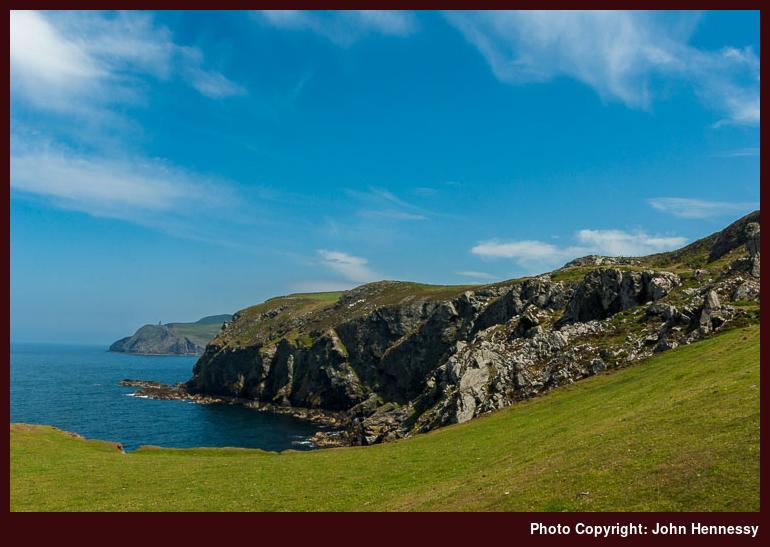
That northbound hike had me feeling very exposed near steep drops into the Irish Sea at various points along its length, but that wasn't the general feel of its southbound counterpart. That's not to say that the coastline didn't have its rugged parts when it did. In fact, when lured inland away from the route of the coastal path, I retraced my steps whenever I did so. That meant that no chance of seeing coastal drama got missed and one such occasion was just north of Aldrick and the time spent more well worth the time taken.
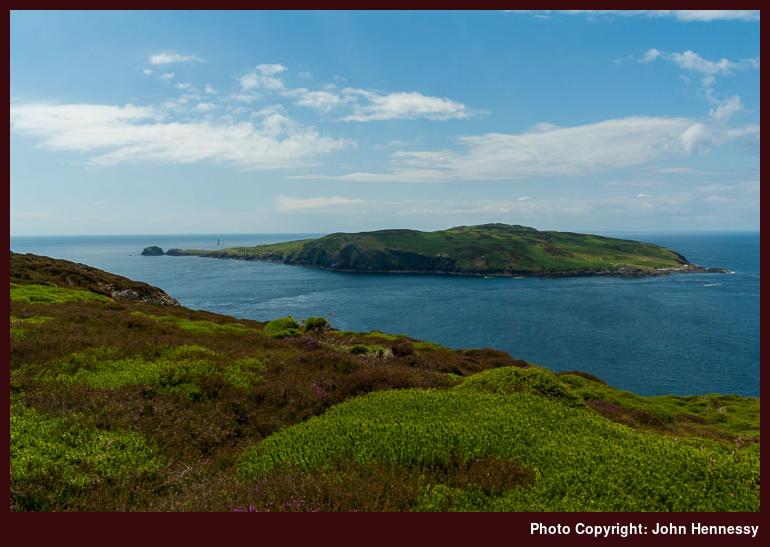
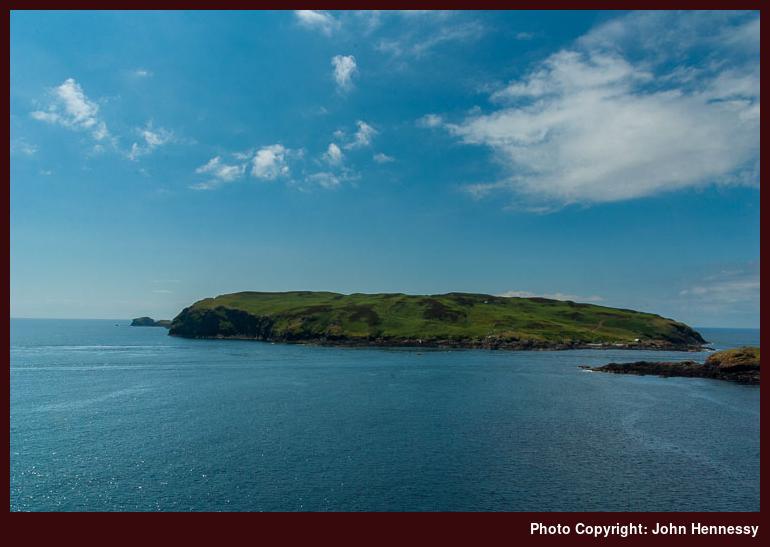
Approaching the Calf Sound meant that I was back sharing the sights with more folk again and for the first time since I left Douglas as well. Port Erin was quiet and I leaving it, as was the coastal trail south from there. There were other folk out enjoying the scenery like myself and following the coastal path too, but everyone had plenty of space. Having to walk a little further from an easy vantage point that well accessible by car. Being able to take in the sights from a café provided even more of a lure.
After getting an ice cream at the café myself, I found a quiet corner with a bench where I could enjoy it. All that was needed was a little along Raad ny Foillan in the direction of Port St. Mary. It never seems to amaze me how easy it can be to lose any vestige of crowding.
After the rest stop, I set off to go around Spanish Head (a name that reminds me of Spanish Point in County Clare in Ireland while having a very different character) and Bay Slacka. To ensure that nothing got overlooked, there was some toing and froing of the kind that I enjoyed more recently in the hills near Church Stretton in Shropshire. Rushing just didn't seem to be on the agenda.
After leaving the wilder countryside that is under the care of the Manx National Trust, it was time to make for Port St. Mary, where a decision was to be made. Before reaching any conclusions, there was a need to revisit to a public convenience to retrieve one of my walking poles. There was a shower of rain too, the only one that found me on the day, that had me playing with ending my walk in Port St. Mary instead of continuing to Castletown. The shower faded and I chose the latter course.
Gansey Point was passed on the way towards the main road between Port St. Mary and my eventual destination. Due to geography, I needed to use a footway beside that road for a little while. Making good progress meant that it wasn't long before I left it for a single track lane south to Pooilavaaish with views of hills behind me and to my right.
The road's end meant that a track took me through a farmyard, and passing a quarry meant that I was following a right of way through fields. Any sheep that I passed didn't seem to be too perturbed by my presence, and careful attention to my map meant that no foolishness manifested itself.
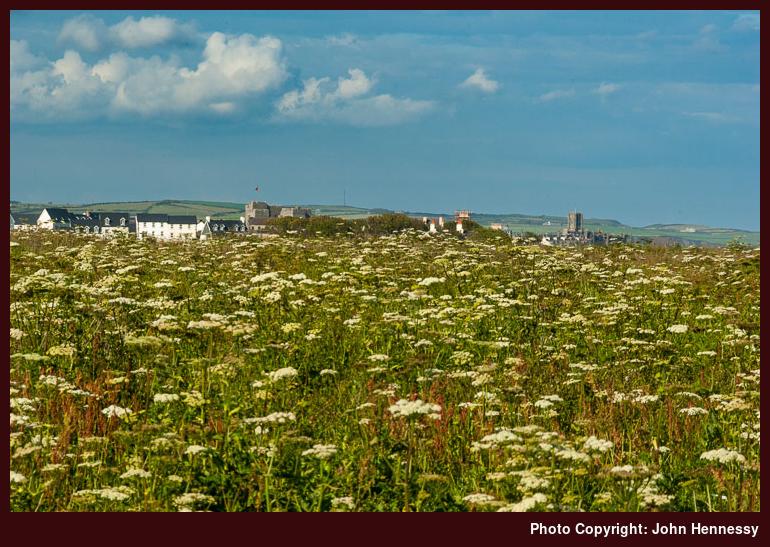
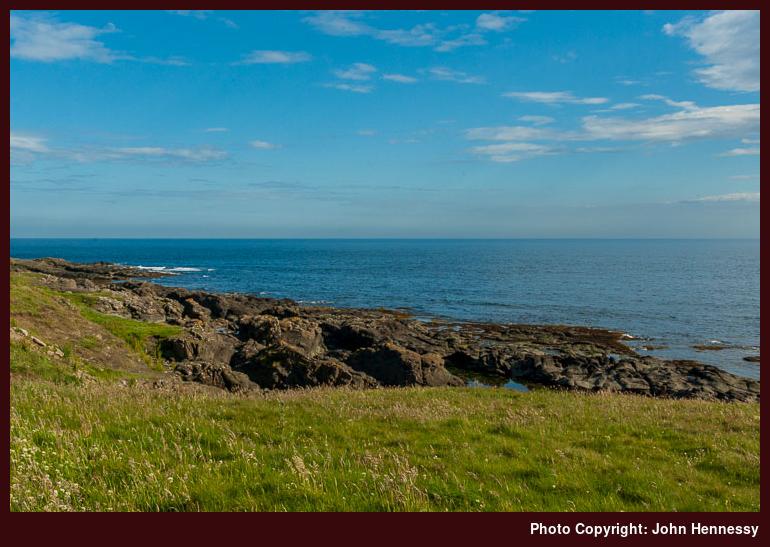
In time, I was to find myself no longer on the coastal side of a wall and in fields. There now were views of Castletown, my destination for the day, along with sights of the effects of coastal erosion. From then on, I also was beginning to encounter more people again, with a trail biking group among them; though I had misgivings seeing motorbikes going over rocky coastline, I decided on keeping my views to myself since it looked like a big organised party. Dispelling what remained of the peaceful ambiance of the evening didn't seem sensible when it might be an occasional event anyway.
Once past the trail bikers, I was back on tarmac again and steadily nearing Castletown. As I did so, I met with a father and son wondering if the way I had come was a quiet way to Port St. Mary. Since they were on bicycles and I had crossed stiles, I put them going along the main road for the sake of ease for themselves.
My entry into Castletown was accompanied by cloudy skies, putting paid to any ambitions of close up photos of Castle Rushen and its surroundings. That needs to be an excuse for a return, and they always come in handy. After all, Castletown is a pretty spot and I have more of the Isle of Man to see.
Travel Arrangements:
Return train journey between Macclesfield and Liverpool, with a change at Stockport on the outbound leg and at Manchester on the return. A return ferry crossing took me from Liverpool to Douglas on the Isle of Man. Bus service 1 from Douglas to Port Erin and bus service 11 from Castletown to Douglas.
A wintry day spent in Shropshire
18th December 2011 It is a little difficult to take photos in the middle of a wintry shower of sleet, so what you find accompanying this trip report are photos from the drier interludes. In fact, eastern Cheshire was beset by such things, with Macclesfield and Wilmslow bearing the brunt of the showers as they ran in from the Cheshire Gap as if on a conveyor belt on a Friday morning more than a week ago. As if to demonstrate that weather is remarkably local, Crewe was enjoying sunshine and blue skies.
On leaving home, I might have been forgiven for thinking that I was taking leave of my senses to head out with all that was tumbling from the sky. As if that weren't enough, the western and northern parts of Britain had been battered by a ferocious storm just the day before. Scotland still was picking up the pieces after that when I embarked on a walk among Shropshire's hills.
It wasn't all that inspiring when I arrived in Church Stretton because a rain shower was in progress. Nevertheless, I resisted the temptation to catch the next train back home and waited out the shower. Maybe the price of the return train ticket had something to do with it, but I also glimpsed sunnier weather as my train passed through Shropshire, so hopes remained far from extinguished.
With the air drying, I made my way to Carding Mill Valley. The sun was being left to light the hillsides too, always a bonus. For a Friday, I was surprised by the number of people out and about. Nowhere was overrun, but I might have expected less about in a part of the world that doesn't come that high on the list of places on anyone's wish list. Saying that, it is good that there are folk who can overlook such things.
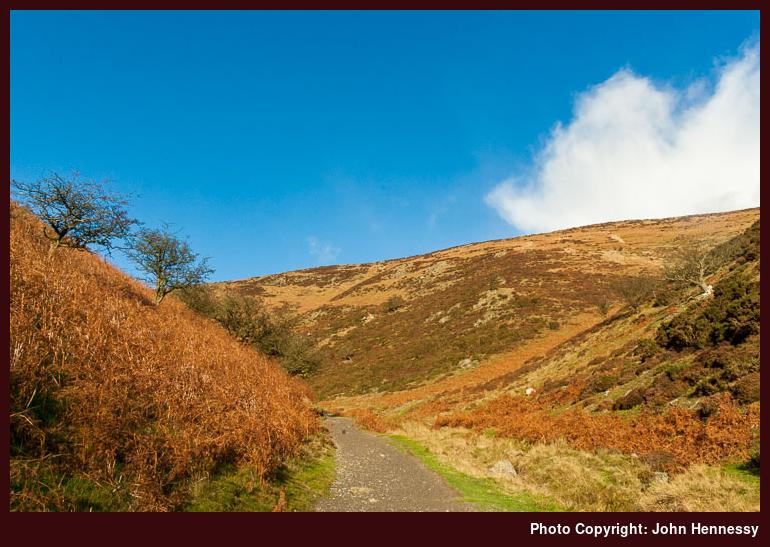
There is a wilder feel to what lies beyond the National Trust hut in Carding Mill Valley, and tarmac can be left behind for a well-surfaced gravel path. Shropshire's hills may not be high, but they have steep sides, and Mott's Road soon started to gain height at such a rate that taking it steady and enjoying the surroundings made much sense. A pair of mountain bikers passed the way too, and they stopped a fair few times on their ascent, so it wasn't just me.
As I reached the stop, the skies began to close in as another shower approached. Having got some satisfaction from the day already, this brought no disappointment; it just was a matter of wearing waterproofs to counter the dampness and enough layers to keep warm. Keeping moving helped with the latter point too as I headed south-west along part of the Shropshire Way.
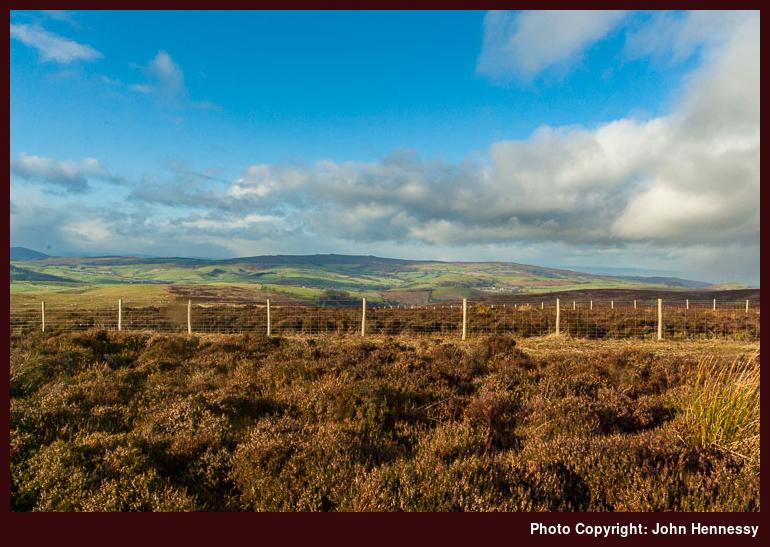
The skies cleared again as I approached Pole Bank following a road crossing. This was the second time that I had designs on Shropshire's highest point, with a lapse of concentration in the navigation department having caused me to abandon the venture when I last tried it. Now that I look back on that first-ever visit to Church Stretton's hill country on a Sunday in December a few years back, I am staggered to think that it happened at all; my error must have involved going straight at a junction when a turn to the right would have been the intended line.
My time on the top of Pole Bank was enjoying clear skies stayed with plenty of sunlight to go around. Though there were photographic stops, they were brief because it was a day for keeping moving. What turned out not to be brief instead was the drier interlude. It allowed me to amble about a fair bit while exploring where the lines of rights of way actually were after leaving the road reached on descending from Pole Bank. There was deliberate retracing of steps to see the set-up of paths across the hills, and there was no one to disturb in so doing. Even the horses and sheep that were out on the hillside hardly took any notice.
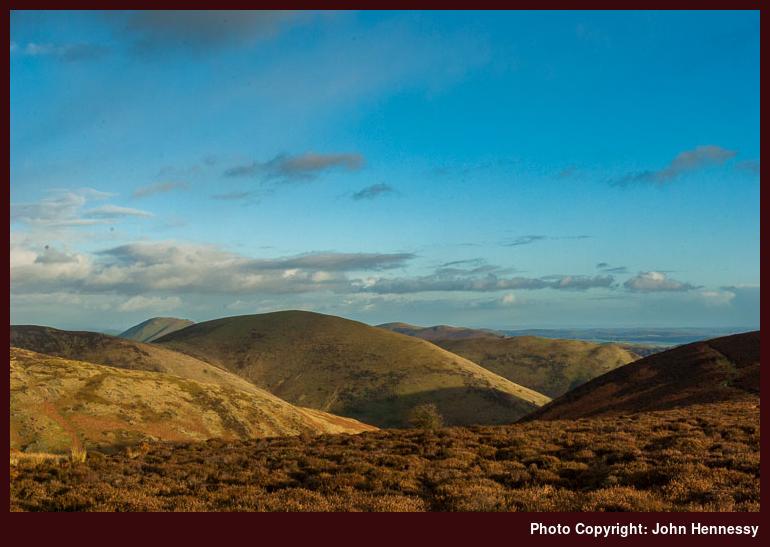
Eventually, I decided on a more direct course to Little Stretton, albeit with a little circuit around Round Hill. What surprised me was the way that the path took me by a number of different valleys; there were Ashes Hollow, Callow Hollow and Small Batch. It is as if this is hill country in miniature, and it is none the worse for that. Because another shower came my way, photography stopped after the first of those valleys, but there's enough there to justify a return visit sometime when days are again longer. The sun was getting ever lower in the sky anyway.
Height loss was hardly gradual on the way down to Little Stretton, and it must have knocked some of the stuffing out of my legs because they felt a little weary as I shortened the road back to Church Stretton. During the descent, the shower stopped, and the latter stages underfoot became muddy too, a not unexpected situation at this time of year. After stripping off my overtrousers, I took a little time to look around Little Stretton, with its timber-framed church especially catching my eye. Methinks it would be worth returning again to have more of a look around the place.
It was road walking that conveyed me from one Stretton to another, and there was no sign of the sun at all; low hills still can hide it even if clouds don't. The sky retained a blue tinge though as I coaxed myself along the roadside footway by not irregularly inspecting progress. Once in Church Stretton, I played with the idea of catching a bus to Shrewsbury until I noticed that the one for Ludlow was around twenty minutes late. Scotching the idea, I stocked up on some provisions and returned to the train station to await a train home after a good little day out in compact and decent hill country.
Travel Arrangements:
Return train journey with a change at Stockport on the outbound leg and at Shrewsbury and Wolverhampton on the return one.
It would be a pity to see them go
14th December 2011 A recent poke around the SYHA website revealed some sad news: hostel closures. In total, there have been 46 but 5 of them are facing closure. There's Canisbay near John O'Groats in Caithness, Arden near Loch Lomond and three in the Scottish Borders. These are Broadmeadows, Kirk Yetholm and Melrose. The latter losses will leave the network looking very bare between Scotland's central belt and its border with England.
A weekend in early July had me staying in both Kirk Yetholm and Melrose. Both seemed well used though neither was completely full. Both are near long distance trails so that should explain their locations. St. Cuthbert's Way goes by both of these and that's how I chose them as places to stay. Kirk Yetholm also is the northern end of the Pennine Way and both the Southern Upland Way and and the Borders Abbeys Way pass Melrose. That makes both of these a big loss for long distance walkers who now need to make alternative arrangements unless others take them over and run as independent or affiliate hostels. After all, Melrose also is useful for cyclists.
In the article on the SYHA website announcing the news, the reason given is one that will be eerily familiar to those who have witnessed YHA closure announcements. Yes, the cost of refurbishment has been mentioned in concert with the standards expected by hostellers these days. The upgrades to Oban and Lochranza are mentioned and I can vouch for the one on Arran being a good job. However, it sounds like it took a dedicated husband and wife team to make it happen.
The announcement has me pondering the future of youth hostel associations and it's a line of thought that may spawn another entry on here regarding the subject yet. There are those who consider that youth hostels are on borrowed time. At Kirk Yetholm, I met a grandmother taking her grandchildren hostelling before she felt it was too late to do so. That Kirk Yetholm now is facing closure makes here views sound prophetic.


