Category: Outdoor Activities
Little snatches
 26th February 2013
 While I must admit a certain partiality to books of the dead tree variety and it's the presentation that often makes them an alluring acquisition. Of course, that's why they are made that way in the first place: books of pleasant appearance get taken into a customer's hands in a bookshop, become read a little and leave with their new custodian following payment. If lapses into temptation happen faster than your rate of reading, then a collection of unread volumes may build. Not being a book antiquarian, I tend to think this not a good use of money even if the outcome befalls me from time to time. Taking my time over reading means that I never got along with two week loan periods from libraries because I always seemed to find other distractions for one reason or another.
The trick naturally is to make some time for reading. Doing it before settling down for the night is what many do and it ends up in so many television and movie dramas too. There was a time when I did that but it has been a habit that I lost. Now, I am more likely to use a book to shorten a long journey but that means bringing one with me in the first place and that has been a weakness in the past.
Computer technology has been the cause of elbowing its way into time that I may have had for watching television or reading books and magazines. Ironically, it also has solved the problem of not having a book with me when I fancied a spot of reading. The rise of tablet computers was something that I resisted until last summer saw me acquire a Nexus 7 from Google. Within the last few months, I have gotten to adding books to it from the Google Play and Amazon Kindle stores.
This started with Ben Goldacre's Bad Pharma, perhaps a more serious polemical tome, and then moved to something more in keeping with the subject of this place. It was Robert Macfarlane's The Old Ways. This isn't the first of this author's books that has come in my possession since I also have a paperback edition of Mountains of the Mind on a shelf that got plucked from its roost to sit on the desk in front of me as I set to writing these words. While getting around to reading books the first time around has been an issue for me, it now feels as if I should re-read this one to see how it compares with what followed it. Currently, I am in the middle of the second member of the loose trilogy, The Wild Places and I first read through Macfarlane's first book over a Christmas and New Year stretch in Ireland the most of a decade ago now. The passage of time shows up the power of a memory so it'd be good to see what it says again.
In essence, The Old Ways is a series of essays with the ghosts of Edward Thomas and Nan Shepherd featuring in an attempt to thread them together. The resultant sense of connection is not so strong and some have wondered at whether it was a necessary thing to try. The immersive tales of personal journeys draw you along though and make you feel that Macfarlane is good company for a long journey; you can escape your immediate surroundings and virtually join him on his various journeys over land, by sea and over sea. If he is trying to attach a sense of history to the various trails that he has followed, then he has succeeded. However, I am unconvinced as to whether it does so as an attempt to understand the mindset of Edward Thomas before penning a brief biography of the doomed poet. Maybe it's best to have the sense that paths go in all sorts of directions and that it is difficult to reconciled them into a meaningful whole. That could be another lesson.
Not having read The Wild Places before The Old Ways might have produced the sense of approaching the former from an unintentional angle. The latter's series of stories is borrowed by its successor and maybe more successfully too. Going through a series of landscapes like moor, forest and river valley creates a sequences that allows even disparate tales and experiences to sit together far better than it might suggest. The sense of history turns up too as do those who have in past times written of those places less influenced by human activity. Still, apparent wildness can result from inhumanity and the Scottish Clearances have become a byword for that (the Irish farming folk of the nineteenth made sure that the same fate wasn't as easy to meet out to them, so much so that the British parliament acting to finance their buying of land and thus ensuring a more peopled countryside in much of the island). Plenty of immersive experiences draw me along and they work better in short sessions too, an attribute that works well for The Old Ways too. Maybe it might be good for ensuring a re-reading of Mountains of the Mind to replenish the memories of reading that the first time around.
After those, there's Simon Armitage's Walking Home too. This follows the Pennine Way and a suitably evocative passage recalling waking up in a YHA hostel got that onto my list too. Covers may begin the selling process of a book but it's the writing that matters. With the advance of eBooks, it's the presentation of paper books that is going to matter if we are to continue to have them; you almost are going to have be convinced of the need for a long term sale in some way. The electronic ones are great for portability but they are no so good for holding the hand and dipping in and out of random pages or of seeing how long chapters are, a sort of sneaky peek at your progress. Still, they're getting me not to forget some reading so long as I manage to organise a WiFi connection for the gadget. A spot of curiosity has seen me locate Nan Shepherd's The Living Mountain so who knows what could accompany me next? It would be even better if they came on a journey into hill country as well.
A trot through the Goyt Valley
24th February 2013 Having glimpsed it from a walk in January of last year, thoughts of strolling along the length of the Goyt valley took until early in last October to become reality. Though the day itself had plenty of sun, the soggy summer meant that there were plenty of muddy stretches to be encountered. After all, the head of the valley is a watershed and they hardly ever are dry places to be going even when a drier year comes our way.
My walk started from the Cat and Fiddle Inn and the sunshine had thrown a confusion of decisions my way before I even left Macclesfield at all. First, there was the prospect of retracing my steps along the Gritstone Trail between Bollington and Disley. Though it was a wrench at the time, that prospect happily got used up at the end of the next month. There also was another possibility that involved travelling along paths and tracks that I sampled before: going from the Cat and Fiddle Inn back home again via Shutlingsloe and Macclesfield Forest. The weather aborted that round of indecision with advancing clouds from the south and so I journeyed towards Whaley Bridge. There is another round of retracing of steps in the form of going to Whaley Bridge via Shining Tor, Windgather Rocks and Kettleshulme and that happily was left for another time as was going towards Rainow via Lamaload Reservoir. With the number of excuses for going around those parts, it makes me wonder why I cannot summon the zeal to do so more often than I do; maybe the cares of life weigh on me more than they should and that gaining a little perspective may be in order.
As with a number of those previous trots, I walked by the side of the A537 until I met with a path towards either Shining Tor or the Goyt Valley depending on your itinerary and I have embarked on both at different times. As it happened on that Sunday in October, I made as if for the latter but with a different twist to what I did on one of those previous outings.
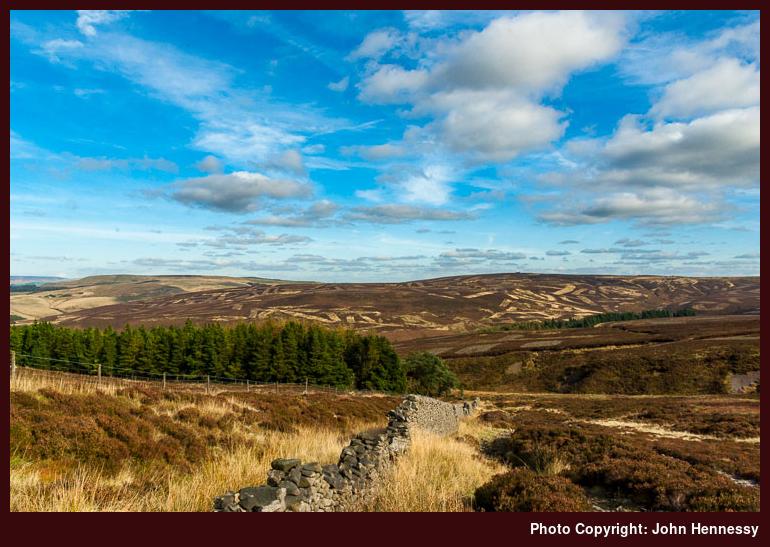
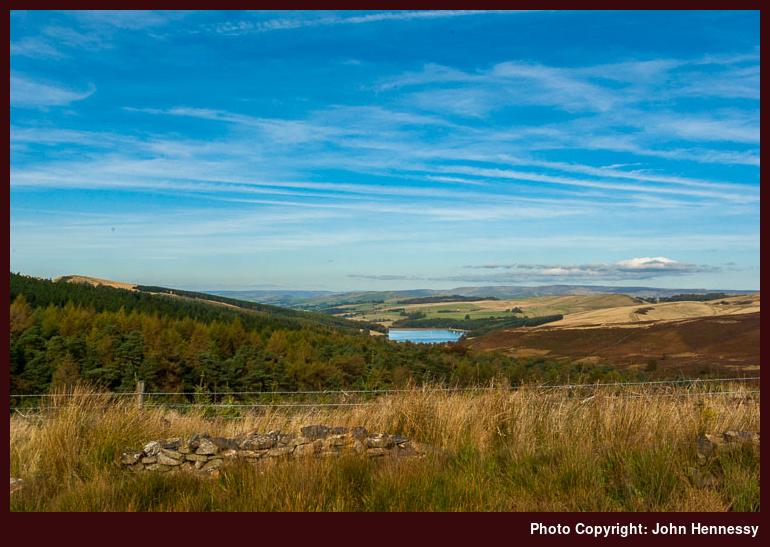
That twist was to involve taking a right turn before any of those left turns that I took on those prior explorations. Doing so meant my descent down a slope that became increasingly muddy as I grew ever nearer to Stake Clough and continued in that vein all the way to Deep Clough. It didn't stop others doing the same as me, though they did thin out over time. For those who braved the ground conditions, there were ample rewards in the form of views east towards Burbage Edge and north up the Goyt Valley towards Errwood Reservoir and beyond that again.
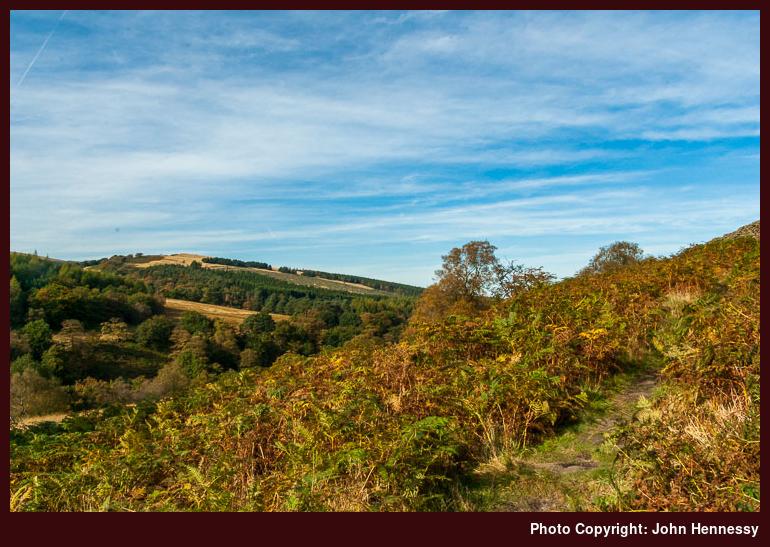
Once past the wood surrounding Goytsclough Quarry, it was time to drop onto tarmac again. That dalliance didn't last long, though I might have been tempted to go up the road for a footpath going across Goyt's Moss. Instead, I chose to drop down to a nearby footbridge and follow a less formal path instead. It, too, had its quieter interludes and granted me views towards the woods on the side of Hoo Moor and of Errwood Reservoir itself too. Naturally, the going remained muddy though I was less surprised by this than others who I met coming against me; one gentleman was wearing trail shoes and I gathered from the few words that we shared that he'd have come more prepared if he'd realised what was ahead of him.
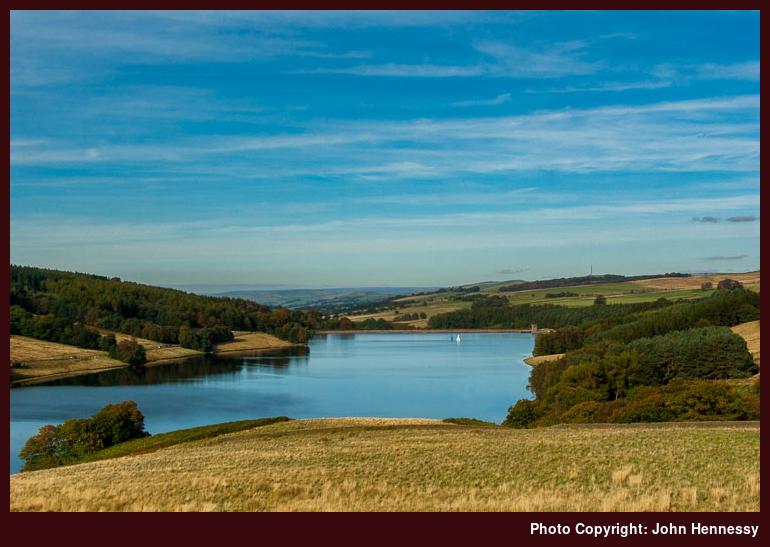
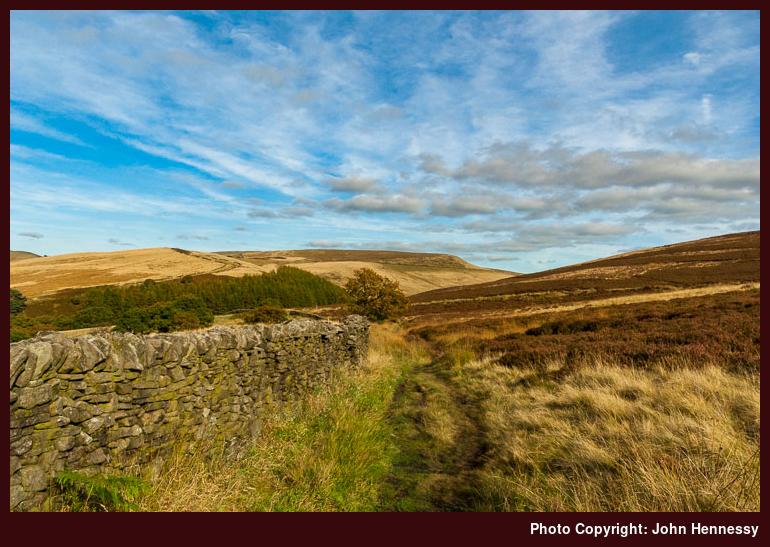
Over time, the cloud cover was progressing on its northbound journey just as I was. Sounder ground was my lot as I rounded the reservoir to meet a track that was better again. Maybe that is how some were deceived into going further than perhaps they ought to have done. My course took me along the lower slopes of Wild Moor and involved a dogleg around by a bridge over Wildmoorstone Brook. Around there, there was a minor profusion of right of way signs luring me into seemingly isolated countryside that felt as if moorland extended in all directions. It's amazing how less tame corners exist surrounded by man-made intrusions like roads and reservoirs.
With a course set in my mind, I left those other itineraries for another time to join a right of way for the rest of the journey to the dam of Errwood Reservoir. Though I was going along its side, tree cover meant that it wasn't in sight all the time either. Advancing cloud cover was overtaking me by now too, though that didn't perturb me unduly. Any pleasing photos from that dam would need another day and provide a useful excuse to come and visit these parts again.
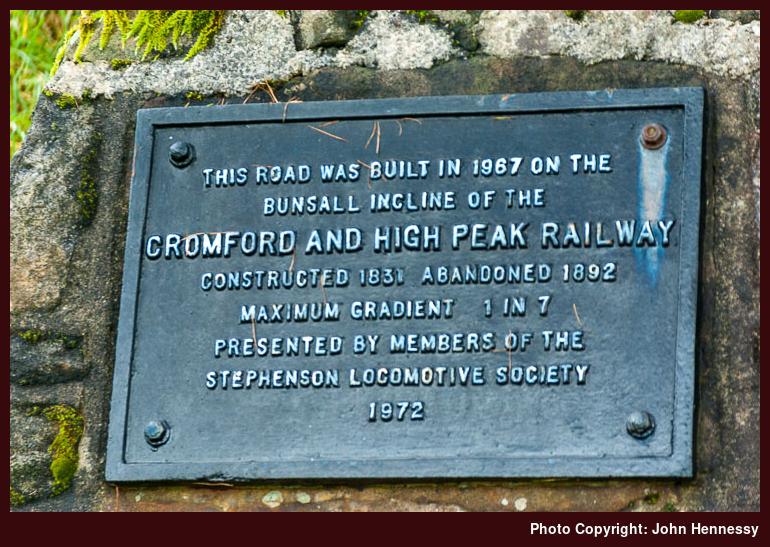
The going along that public footpath wasn't anywhere near as muddy as it was further up the valley and conditions underfoot were set to become even more solid when I met the road going down to the reservoir dam. This had a former life as part of the original course of the High Peak railway from Cromford to Whaley Bridge that took an uncompromising line around Buxton and down the Goyt Valley. The remains of the old alignments are still in place to be seen near Buxton and I have been passing some of them without realising their significance. They date from a time early in railway history with a mixture of horsepower and stationary steam engines were the way of things until self-propelled steam locomotives overtook both.
One across the dam of one reservoir, it was time to meet up with another: Fernilee. My crossing of Errwood's dam meant that I had declined to stick with the old route of the High Peak Railway to follow a track through woodland beneath Hoo Moor. The last time that I had been along here, I had been following the Midshires Way from Buxton to Whaley Bridge on a showery summer day. That got a little complex and needed map reading in the rain, not a good combination when you only have a paper map and no map case. That the sun emerged from clouds every time a shower came upon me was a perplexing experience that cut down on any photographic efforts.
Not being in the mood for a navigation test, I stuck with a low-level path right by the shore of Fernilee Reservoir. There wasn't much scope for photography either because of the overcast skies, but there can be another time for that activity. However, lunch was still a possibility and I stopped at a useful bench for that. Folk were out and about with a loud child noising on the opposite bank, leaving me to wonder why some folk feel the need to shatter peaceful silence. There was irritation or rancour in my mind cause by this since there was plenty of space for all of us.
These reservoirs provide drinking water for the town of Stockport, a surprise to see that one of them (Errwood) hosts a boating club. More in tune with its use, Fernilee hosts no such antics and I suppose that water treatment plants take care of the differences even if signs around the likes of Trentabeck Reservoir near Macclesfield have signs on their banks advising against messing up a water supply. After the foot of Fernilee Reservoir, there was one more dam to be crossed before embarking on a gentle walk by the River Goyt.
Dropping down from the dam, I left the course of the old railway to pass more industrial workings before emerging into quiet fields once again. There was a sense that the day was darkening noticeably at this stage as I picked my way from field to field and across stretches of woodland too. The last of these was Shallcross Wood and it was around here where my OS OL24 should have been followed by my OL1, if I had not neglected to bring the latter with me. However, the A5004 was near at hand anyway and a little stretch of following my nose was enough to get me on there at Horwich End.
The rest of my trot was by the A5004 as it took me into the heart of Whaley Bridge. The timing of that last half mile meant that any designs on catching the next train to Stockport were extinguished; legs only can be pushed to go so fast at times and this was one of those. By the train station, folk were waiting at the nearby shelter for the next bus towards the same destination, and onto Manchester Airport in some cases, so my walk happily finished there. However, the Goyt Valley cannot be ticked off as if on a list, so there could be more exploring to do around there yet.
Travel Arrangements:
Bus service 58 from Macclesfield to Cat & Fiddle Inn. Bus service 199 from Whaley Bridge to Stockport and train from Stockport to Macclesfield again.
Along the Saddle of Kerridge and around by Tegg’s Nose
19th January 2013 The last Saturday of September came up sunny and weariness had forestalled my trotting elsewhere. Teesdale had lain in my mind for a while but I never could summon the energy for a Saturday morning getaway. The previous weekend saw me head to a retail park on the outskirts of Macclesfield for a bit of computer component shopping by using the Macclesfield Canal for part of the way there. The ambience and sights of that stroll still remain with me. Maybe it got me to sample the Saddle of Kerridge the very next Saturday.
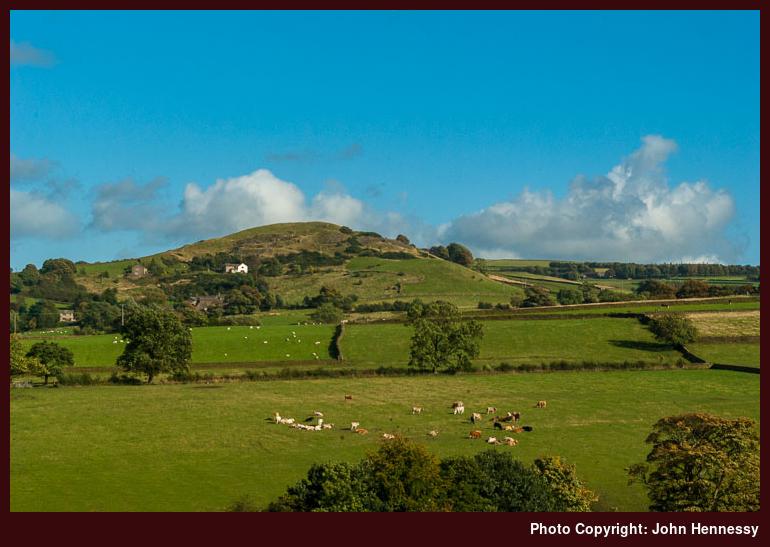
It may have been later in the afternoon than it should have been by the time that I got myself over to Bollington to start my way along Ingersley Vale. There may have been a number of public footpaths luring me away from the tarmac but I stuck to my planned course of making for the Gritstone Trail and following up to the White Nancy Monument as I had done several times before. The sun was out so there were more than enough excuses for stopping on the way up. Clouds were packing the northern skies but it stayed away from where the sun was going, never a bad thing.
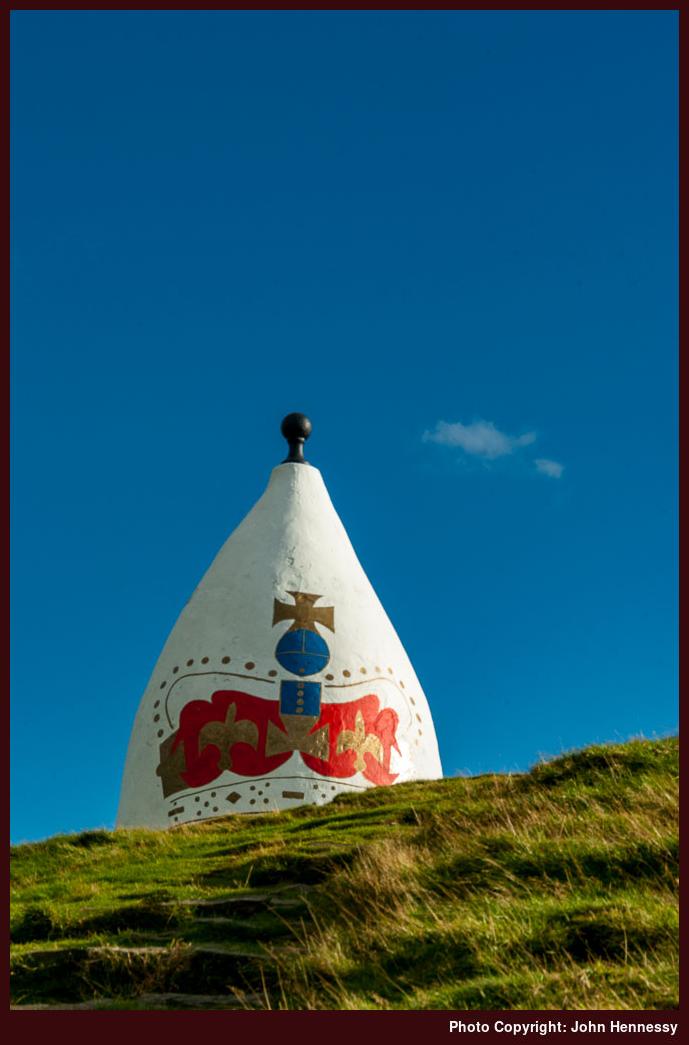
On my final approach to the White Nancy, I spotted that it had been decorated with royal arms to celebrate the Diamond Jubilee of Queen Elizabeth's reign and the Olympic rings were added to the other side. The double decoration highlighted quite what a year 2012 had been and why so many will have good memories from then even if economic conditions could have been better.
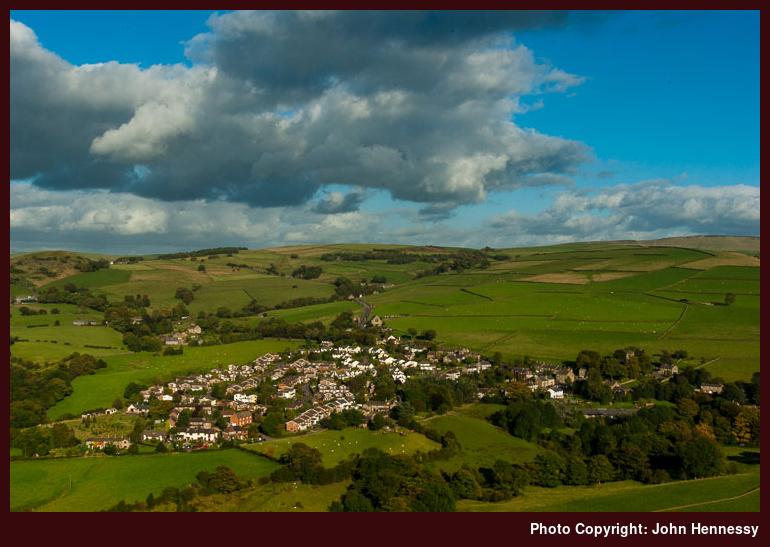
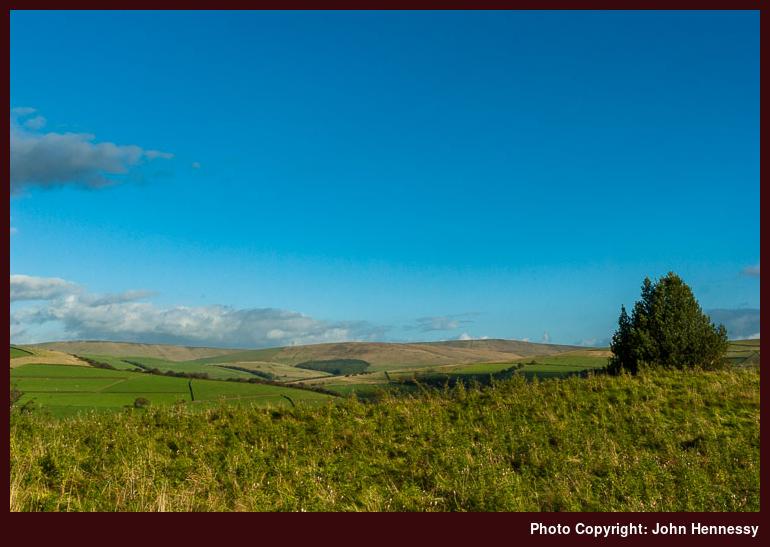
Like I did in April 2011, I continued along the Saddle of Kerridge with the still active quarry to my right. Being at the weekend, this was all quiet, so views in the opposite direction were there to be enjoyed in peace. They were of the hills surrounding Rainow and I kept going towards the trig point at the top of Kerridge Hill, a course that took me away from the Gritstone Trail and gained me more panoramic vistas to survey.
Next, I lost height to reach the B5470 that links Macclesfield to Rainow, Kettleshulme, Whaley Bridge and Chapel-en-le-Frith. While I could have followed that road to make my way home, I decided that it was too early in the day to do so and made for Calrofod Lane. There was some dalliance with a footpath going by Marsh Farm, but the farmyard seemed busy to me so I returned to the road instead; having grown up on a farm, I don't possess a burning wish to stroll through the farmyards of others when I am out in the countryside.
From Calrofod Lane, it was onto Cliff Lane and then up to the A537 between Macclesfield and Buxton. Once across the latter, I was away from tarmac again and skirt a Forestry Commission wood on a path leading to another stretch of the Gritstone Trail. The sun was starting to drop in the sky by this stage to make all shadows ever longer and even got stuck behind cloud cover too to make them disappear again at times. That was no perturbation as I made my way to Tegg's Nose and that hill even became lit up for a while too.
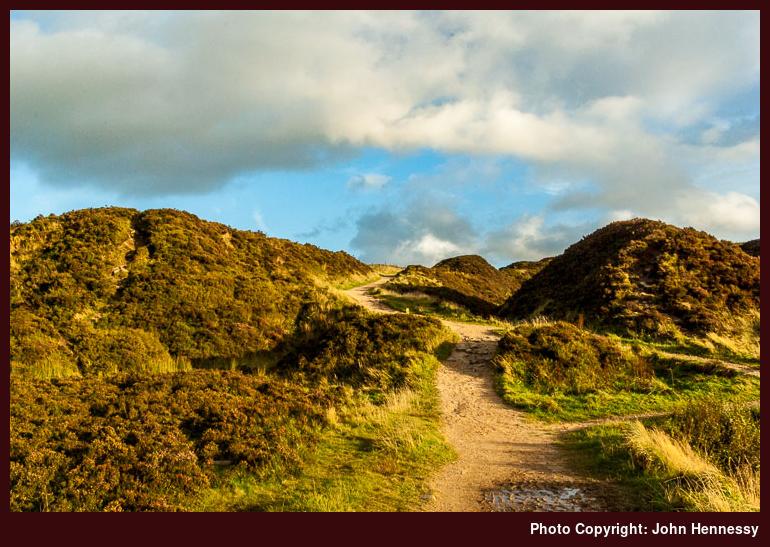
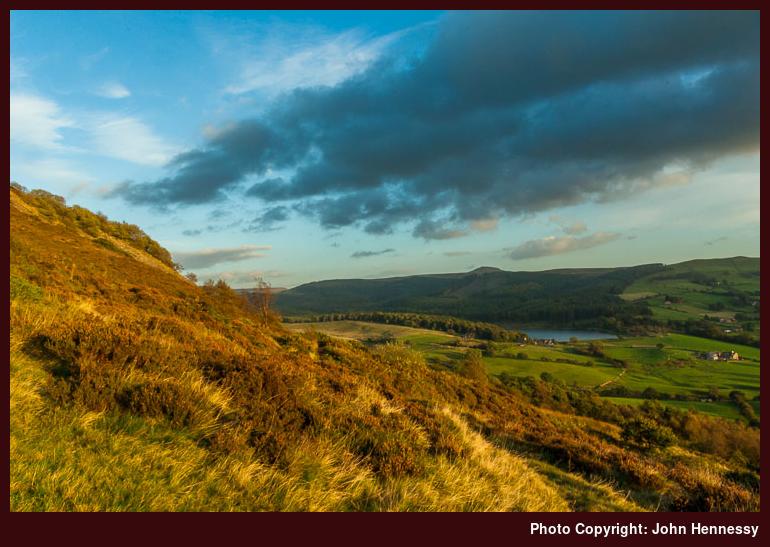
Once there, a chance to gaze towards Shutlingsloe was afforded to me again. However, it wasn't to be a chance to reprise photos like ones that I made previously, yet another useful excuse for another visit should the opportunity present itself. Retracing my steps from the car park, I rejoined the Gritstone Trail and followed it until I was dropped between Teggsnose and Bottoms reservoirs. Before. There was plenty of higher level tramping that on another day would have gained even more pleasing photos; it was no hardship to content oneself with the views, though. There was a procession by the remains of quarry works with old machinery and information boards offering deviations from just walking continuously. The latter even highlighted the health risks of inhaling dust during stone cutting and dressing, a world away from the peaceful recreation that the place now offers.
By those reservoirs, I took leave of the Gritstone Trail to drop into the village of Langley. Light was declining well by now, but that didn't deter me from escaping road walking to follow a well trodden public footpath by Birch Knoll and The Hollins. It is well known to me too, so the risk was a calculated one and I was a little surprised to hear the sound of golf balls being struck as I crossed a golf course. Beyond there, it was a short trot along a street before I dropped onto the towpath of the Macclesfield Canal as the day well into the throes of dusk if not nightfall. Going the rest of the way home took place along streets with lights on overhead, so everything was timed well.
One thought that kept recurring in my mind throughout the afternoon and early evening was how infrequent my incursions into Macclesfield's hill country can be. After all, I should be visiting Shutlingsloe more often than once every few years; a few times a year sounds more like it. Part of the reason may be how much there is to savour in the hills separating Macclesfield from Buxton. After all, 2012 became a year when I enjoyed many walks that didn't take me so far from home so it all can't be the allure of hill or coastal countryside that lies further afield. Still, redoubling of efforts sounds not a bad thing to go doing.
Travel Arrangements:
Bus service 10 from Macclesfield to Bollington.
Sometimes, others can walk further than you’d expect…
12th January 2013 Most of the time, my ambles take me away from crowds. However, there have been occasions when I happened on a honey pot that has attracted all and sundry. One place where I felt a little hemmed in by others would be a surprising one: the path from Ribblehead up to the top of Whernside on a Saturday in July 2006. My itinerary was taking me to Dentdale and eventually to Sedbergh and that took me through much quieter parts. Then, there was the time around Tarn Hows, but the paths were wide enough to accommodate everyone there on a sunny Spring Bank Holiday in May. Mostly, it hasn't taken that long to leave those out for a gentle amble behind me.
However, I also have found that it can take a while on a walk before you can feel as if your space is less restricted too. For instance, a hike from Burnsall to Ilkley needed to pass Appletreewick before things grew quieter again and that almost was how it felt from then on even if I passed the crowd-magnet that is Bolton Abbey. What may have helped then was my trotting along a broad valley with farmland about me for much of the way.
Something similar but far more concentrated happened on a walk on the first Saturday of last September from Thorpe to Hartington that followed the course of the River Dove for much of the way. It began quietly enough at a bus stop on the outskirts of Thorpe and the village proved a quiet spot with tempting paths leading here and there from it. One could have taken me from the public convenience to the banks of the Dove via Lin Dale but I had another plan in my head so I stuck with the road for Ilam until I met with a footpath to the right just before St. Mary's Bridge.
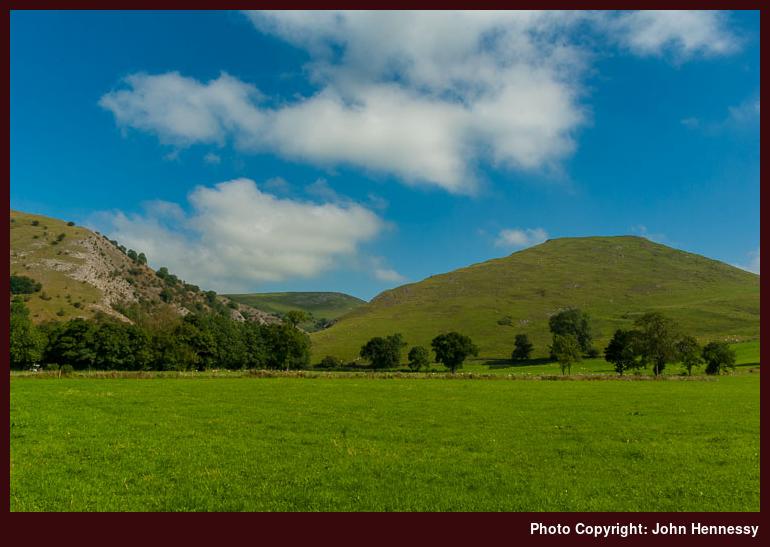
That proved itself a quiet course with few folk from the car park that I passed just a little earlier making any use of it. Having a tarmac road on the Staffordshire side of the dale must have kept them away from the crossing of fields. Without the sense of holding up anyone, I could soak up the views about me. That was just as well since Thorpe Cloud looked good in the morning sunshine. It only was later that the day would become the sort of scorcher about which so many fantasise when they dream of summer.
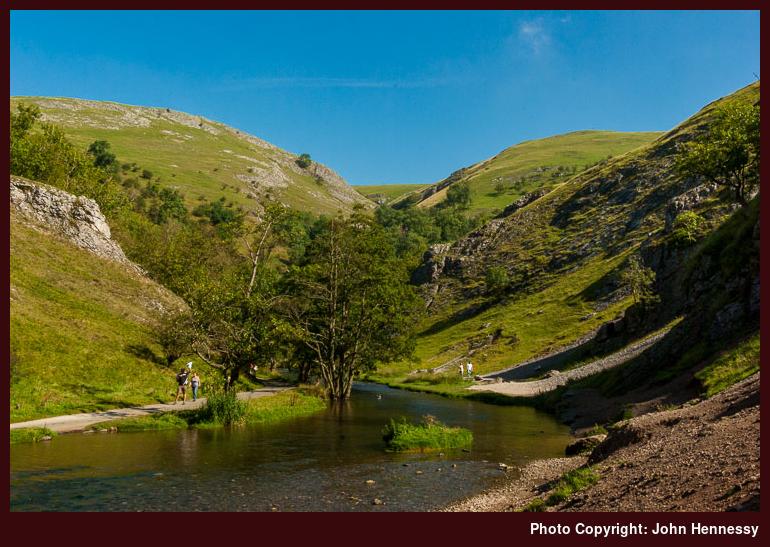
Others may have realised that this was ahead and it may have lured many out of doors to snatch a semblance of the summer dream that never came to pass. It was when I entered Dovedale that I realised just how many were so doing. Most remained on the opposite of the river, though some were coaxing young children along the rough track along the floor of Thorpe Cloud on my side. In fact, I was wondering if I was going the right way, even if I was. Another thought is whether the summer rains have washed away what would have been a more passable one, but that's not a question that I am able to answer.
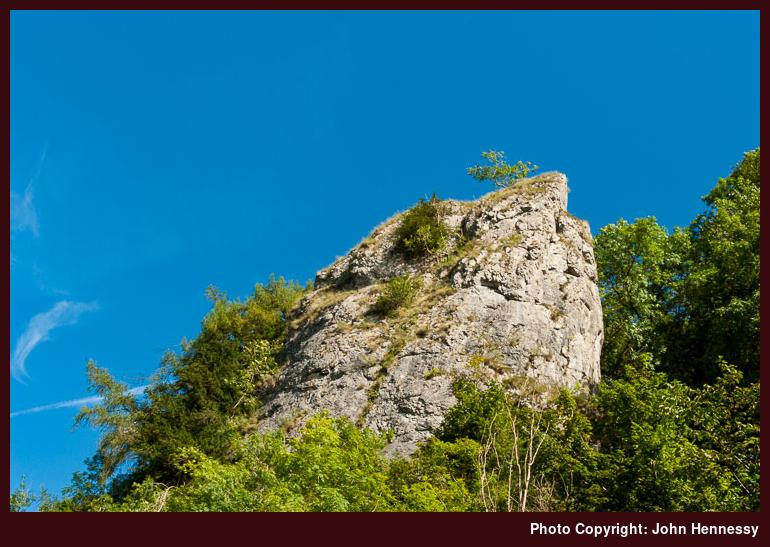
The steeping stones beneath the outcrop of Dovedale Castle were busy with many families milling about. Many of them stayed just there but more were set to keep going as I was to discover. Even the incline leading to Lover's Leap did nothing to stop them and that kind of thing usually stymies many. It probably was the littering of the slopes above the river with many rocky outcrops like Tissington Spires that was the cause of luring them further in the sunshine.
As it happened, the bridge over the Dove near Ilam Rock was conveying its share of folk across to my side of the river too. With so many about, it was easy to feel that you couldn't stop for very long or your place in the elongated stream of folk would have been lost. That limited my photographic exploits until I again met up with quieter parts beyond Milldale.
Roadside walking usually isn't the best sort, but the amazing drop-off in the number going my way made it a more relaxing endeavour. There was little traffic along the road anyway and the availability of a footway meant that there would have been no perturbation if there had been any.
Soon enough, I was back trotting through fields again. These felt unkempt with the hangover of leggy weeds from the summertime that made for more of a rustic scene than earlier. This was peaceful, normal working countryside with no chocolate box sensibility about it, even if the land still was National Trust property. All it took to find an undisturbed lunching spot was a little climb uphill and a flattish limestone perch. As I took my lunch, all that passed the way was a mere trickle of folk and that was going to be how it was from there to Hartington too.
Getting to Wolfscote Dale didn't take too long either. Crossings such as Coldeaton Bridge became a useful check on progress and I was sheltered by tree cover too. The full force of the sun also was blunted by cloud cover and the restrictions on photographic endeavour didn't trouble me after what I already had anyway. Things continued like that when I finally did go through Wolfscote Dale and the passage of time from last May was apparent in those leggy eruptions of growth that appeared over the summer. This isn't a part of the world that sees a lawnmower being used and it's all the better for that too.
By the time that I reached Beresford Dale, I had passed through three other dales: Dovedale, Milldale and Wolfscote Dale. The crossing from Beresford Lane into the latter had been repaired since my last visit when I daringly crossed the bridge with no railing at one side and signs deterring me from doing so. There were folk around too but we weren't in each other's way and I went over the bridge to continue on mine. Beresford Dale proved narrow and another crossing over the Dove was needed before I left it after me for the day.
By the time that I left Morson Wood, the clouds had released the sun again and I couldn't but feel its full power as I crossed fields around Pennilow. The heat sapped my enthusiasm for continuing and I was glad that Hartington was near at hand. The final ascent, not a major one though, took me across the track near Crossland Sides and the heat seared the approach into my memory even if it only was a short hope into Harrington and its marketplace.
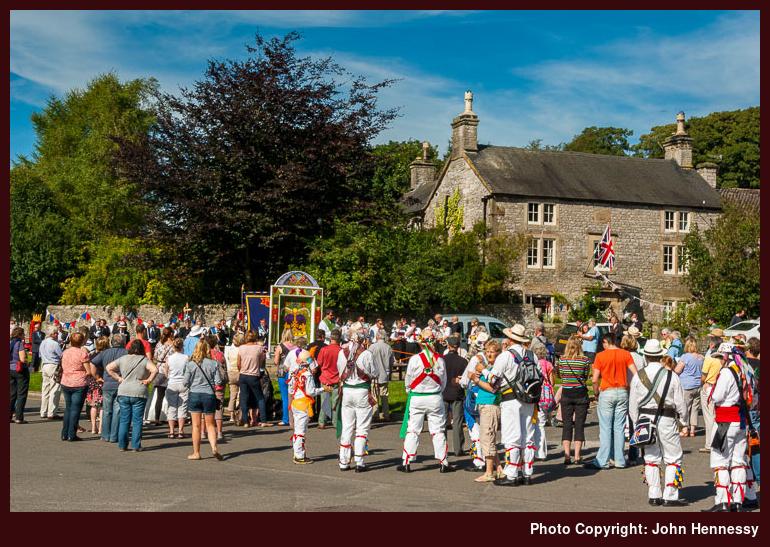
If it wasn't for the heat, I might have been more tempted to continue from Hartington to Longnor or Crowdicote given that it still was early afternoon when I had arrived at what became the end of my walk for that day. While awaiting the next bus to Buxton, I witnessed a well dressing ceremony for the first-ever time. The local vicar presided (wearing sunglasses too!) so there were prayers and hymns and there was a bit of pageantry too in the form of a parade comprised of men in suits with banners (called the Oddfellows for some reason); I have no idea how they bore their attire given the heat of the day. Morris dancers were in attendance too, as were a brass band for the provision of musical accompaniment to the singing. Quite why there was a bearded bloke dressed as a witch is something I still don't know, but there were plenty of folk around the event and Hartington was big enough to more than accommodate them all with someone sorting out any passing traffic too.
All of this was over by the time the bus arrived so I had partaken of a varied day: from well frequented dales to quieter ones to sun-scorched higher pasture and a well dressing service. Seeing Dove Dale at a quieter time would be no bad idea, so that might be one for an off-season weekday with a tweak to the route too. Many of the walks in the vicinity seem to be short so it might be a matter of stitching together a few to concoct something that is a little less obvious to most. A few have crossed my gaze while surveying a map during the writing of these words. Making a little to do some route constructions would be no bad idea given what is to be found around this part of Derbyshire and Staffordshire.
Travel Arrangements:
Bus service 108 from Macclesfield to Ashbourne and bus service 442 from there to Thorpe for the start of the walk. From Hartington, I used bus service 442 to Buxton and bus service 58 from there to Macclesfield.
Back to Pembrokeshire
2nd January 2013 When I first visited Pembrokeshire on the first weekend in June 2006, I had no idea that it would take more than six years to get back there again. Then, I only had been a month blogging, and the terseness of the description of my weekend down there reflects this. Nowadays, my description of the ups and downs encountered between Newgale and St. David's would merit more than a little mention, though perusing the photos from that sunny summer weekend do keep my memories of how steep the drops and rises were very much alive. Similarly, the article that inspired me to go on that first trip still hasn't faded from my mind's eye either, and I might just go looking through past issues of TGO to revisit it again.
Though I only had a long weekend, I got in more than just one stretch of Pembrokeshire's coastline and its national trail. Sunday saw me take in a circular walk around Marloes, with even more rugged cliffs to be savoured. Monday may have been when I went home again, but that didn't preclude a little nibble of what lay around Newport, both the coastline and the Mynydd Preseli hills. It was but a short stop while on route to Ceredigion, but it was memorable nonetheless.
My route home saw me continue to Aberystwyth by bus before going by rail the rest of the way. That had me playing with going to see more of Pembrokeshire by reversing the route to make more again of another possible weekend stay that never came to pass. It might have been the way that I'd have gone last August, but it never entered my mind. Time's passage and my looking for a quick getaway might have had something to do with it.
Like the last time, Haverfordwest became my base and I played with different walking options with practicalities like public transport and weather governing which would be my eventual choice. Only for clouds approaching from that direction according to the weather forecast, I might have taken in the south coast between Manorbier and Bosherston. If there had been time to spend at the former's castle and the latter's lily ponds, it would have been a double bonus, but they'll need to await another visit. The Preseli Hills were another option, but I came to the conclusion that they were an escapade too far for what was a flying visit. That left the west and north-west with my looking at options around St. David's with there being a summer shuttle bus in operation. My eyes even started to follow the coastline up as far as Strumble Head, even though the distance from St. David's is no short undertaking.
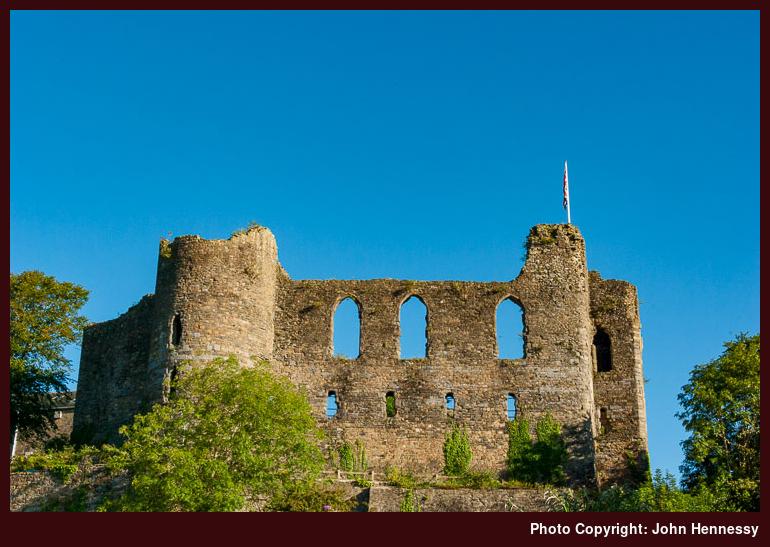
While all the above threw up appealing options, I decided to trim my cloth to my measure to settle on a hike from Strumble Head to Fishguard, and it rewarded me copiously too. Of course, it helped that Sunday morning came sunny after a Saturday with plenty of wet moments. Though its situation is imperfect, Haverfordwest's castle ruins still caught my eye and became a target for photographic capture before breakfast and before my departure for Fishguard. To my mind, the photo above could have been taken in May or June, such is the green colour of the surrounding foliage. Maybe the wetness of the year we got meant that the onset of autumn became delayed.
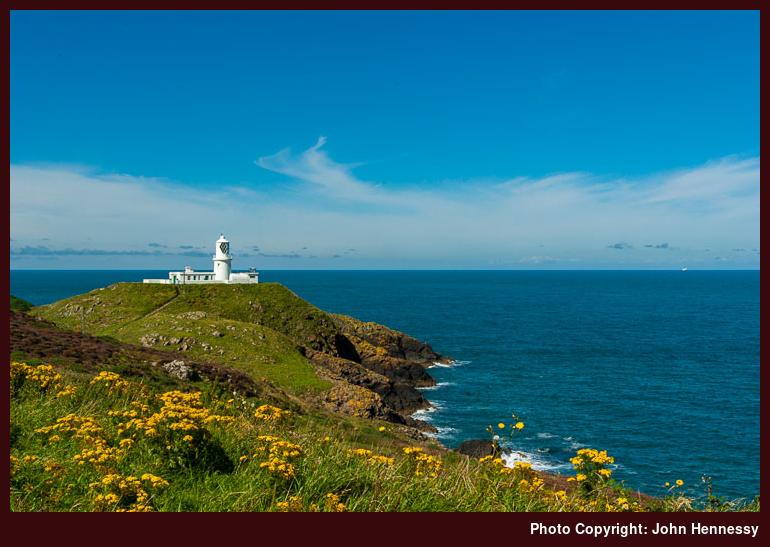
After a little wait, a busy Strumble Shuttle bus conveyed me and others to Strumble Head while others may have gone the whole way to St. David's, a journey of around two hours along narrow country lanes. This would make good use of a day with suspect weather, but it was that of the glorious variety that I was lucky enough to have. There may have been a white cloud approaching in the distant, but its leisurely approach meant that it was no spoilsport while I was around Strumble Head, though it did end the sunny spell early in the afternoon.
Strumble Head's lighthouse is on an island called Ynys Meicel and there is a footbridge across to it. However, this was locked so no one could ramble about the spot. Even so, I went down to the bridge for a look and took in the sight of the narrow channel that it crossed while a dog started barking; apparently, he took exception to the walking poles attached to my rucksack or so his owner said. Leaving that ostensibly odd situation after me, I decided to make my way south along Carreg Onnen Bay before starting in earnest for Fishguard.
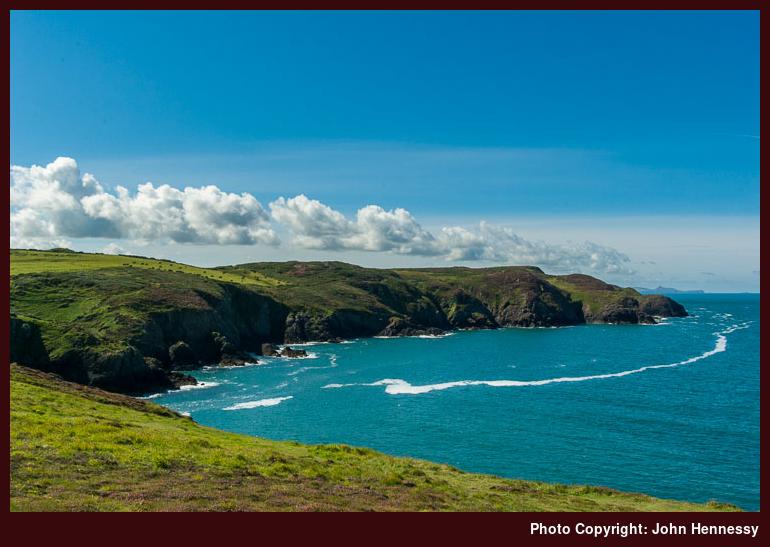
As I looked to the south, I fancied that I could discern Carn Llidi near St. David's in the distance. There still is nothing that would convince me otherwise, unless another visit were to see me proven wrong. As I went south along the joint rote of the Pembrokeshire Coastal Path and the Welsh Coast Path, I lost sight of the more distance view, but there was more than enough to keep me busy in the sunshine. The path was narrow enough and others had the same idea as me, some going slower than others. Going south opens up views of the islands of Carreg Onnen and Ynys Onnen, along with keeping that of Ynys Meicel. Those of the coastline by which I was passing were attractive too with their sea-eroded wild ruggedness, and there was no trepidation intruding on the proceedings as I did so.
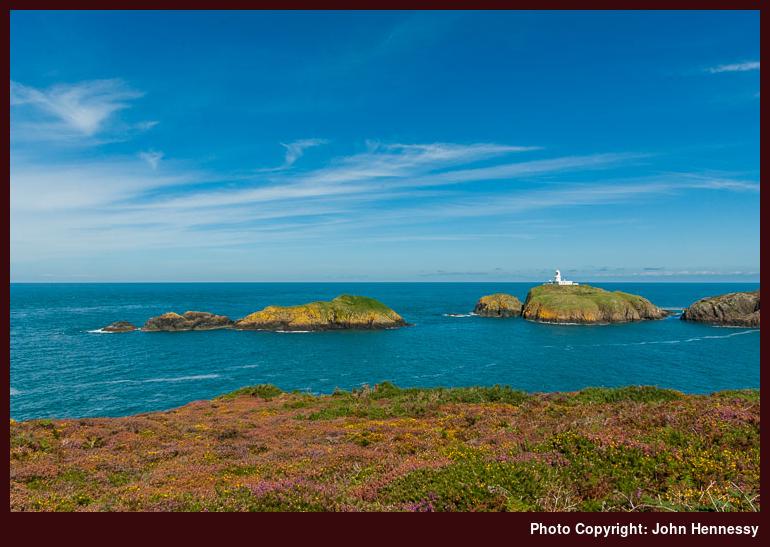
Because I was planning to go in the other direction, I eventually had to find a southern turning point, despite how glorious it felt. A piece of higher ground in access land near Carn Melyn did the job for me. It allowed one last panoramic view of what lay around before I retraced my steps. By the time that I reached Strumble Head's car park again, there had been a change that couldn't be missed. The approaching bank of white cloud had come much closer and was encroaching on the sun's space, too.
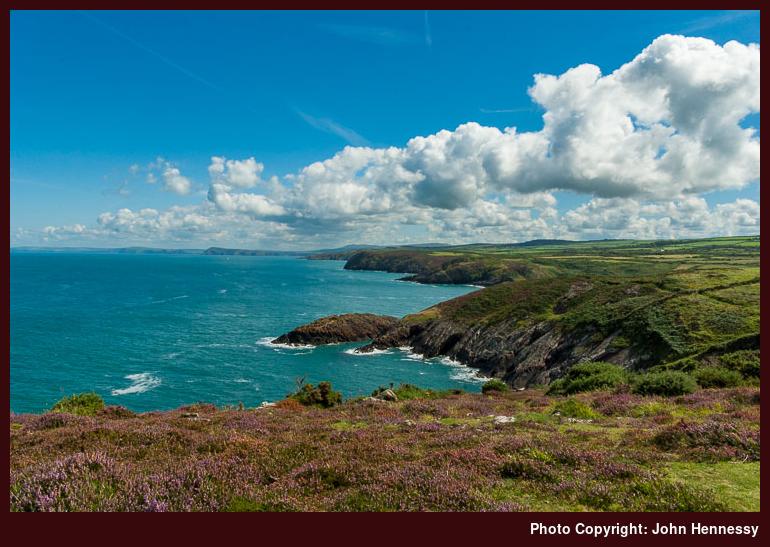
Before there was any more in the way of change, I set to shortening the distance to Fishguard. Given how expansive the eastward views were from there, I stopped for a bit of lunch near Carreg Gybi. Hurrying on ahead of the cloud might seem tempting to me now as I write this, but it had no bearing after what I had got from the day by then. As I was stopped, the sights of the likes of Dinas Head and Cemaes Head were within my line of sight, albeit in the far distance.
To reach those far-off places from my location would have taken several days of walking, so I was happy to enjoy the views and leave it at that. After all, there was plenty of this coastline to pass before I ended up in Fishguard again. Ups and downs lay ahead, yet they were nothing like what I met between Newgale and St. David's. There were to be twists and turns too because of the indented coastline, but I hadn't cut myself short on time and was happy to ease myself along. Each inlet was a marker of progress and there were many, many of which with names. Watercourses and muddy stretches were passed too, and the civilised world felt further than being a kilometre from a public road would suggest.
There were human intrusions aside from other walkers too. For instance, there was the house near Penryhn and the Carreg Goffa Monument commemorating the ill-fated French landing at Carregwastad Point; rough seas, drunkenness and a wily Welshwoman saw off that foreign invasion. The drop into Cwm Felin and the subsequent rise to sweep around Aber Felin may give clues as to why the landing happened there.
Beyond that site of that historical intrigue, the distance to my destination very clearly was receding. The access land of Ciliau Moor lay in surroundings that felt well isolated, even if I were to pass barking dogs just afterwards; they were on the other side of a hedge, thankfully. As my southward turning was approached, I met up with a local man going in the opposite direction who told me about a miniature Giant's Causeway around Anglas Bay that he found for the first time when he got a little lost while out on a then recent walk, though I never did confirm this for myself; my (southern) Irish accent had given me away as it always does.
Once past Crincoed Point, the breakwater of the Stena ferry harbour was growing in view. Earlier, I had seen the same ship coming and going from there, so it would have been much busier than the quiet desolation that I found on my own passing. Before reaching that lower ground, the coastal path was to take me onto tarmac again for the first time since Strumble Head. It would be tempting to think that navigation from there would be a simple matter but, if anything, it was more complex than following the coastal path while away from conurbations. The intricacy was greater than what the map could show, so it was up to signage to point out secluded pathways that dropped me from one road to another, taking me near a hotel at one point. Once over the footbridge across the railway, matters became simpler again. Passing the ferry terminal, I made for the tourist information centre to see what food might be served. However, I instead found my way to a useful public convenience and ended up at the local Tesco. My next stop was a seat in a nearby park to partake of an ice cream before going further.
The final stretch of my wandering made use of the coastal tarmacked walkway around Penyraber. It's a pleasant place to be strolling even without the sun, and seeing Fishguard's older and more sheltered harbour full of pleasure-craft made me wonder what the sight would be like if clouds hadn't filled the sky as it had. There was a bus to be caught for Haverfordwest and that was playing on my mind too, so I didn't dally. In fact, I timed things just right and had a little wait before it came. When en route, another matter of timing was brought to my attention: there was a rain shower around Wolf's Castle and hills to its west, so my hiking had stopped before the rain to get a dry day's walking. The next day came even wetter, so thinking about the blue skies and sunshine was at odds with the soaking I got on the way to Haverfordwest's train station. That won't stop me pondering a return, though.
Travel Arrangements:
Return train journey from Macclesfield to Haverfordwest, changing at Stockport on each way. Return journey on bus service 412 between Haverfordwest and Fishguard. Single journey on Strumble Shuttle (bus service 404) as far as Strumble Head.


