Category: Europe
Journeys Through Time and Terrain: A Clogheen and Knockmealdown Exploration
 28th December 2024
 During his later years, my father took an interest in the story of Fr. Nicholas Sheehy, a Roman Catholic priest who was martyred in Clonmel. Though he came from West Limerick, he ministered in south Tipperary and became parish priest at Clogheen. It was in the nearby Shanrahan graveyard where his remains were laid to rest following his execution.
That may explain in part how my second day from Cork took me to Clogheen. Another reason is that the Knockmealdown Mountains are similarly near at hand, thus making both motivations work in tandem. Thus, I made for the local church on my arrival in Clogheen where I surveyed a monument that was constructed in front of it.

That was not all, for I set off for the graveyard where the remains were interred. For part of the way, I was following segments of the Blackwater Way and the Clogheen Loop, only to leave them for my quest. A footway continued all the way by the side of a quiet regional road and no further than the graveyard itself; there is little doubt regarding the reason for such an urban feature in the midst of a portion of Irish countryside.
Once there, I lingered a while and made some photos when the sunshine was blocked by any clouds. As well as the historical aspect, there is a scenic side to the location too, reminding me of the other lure that drew me this way. My historical respects made, I followed a quiet byroad to the trail that I left behind me earlier. Some ascent lay ahead of me.


As I gained height, the views expanded all around me. To the north lay the expanse of the Galtee Mountains, whose shapely whalebacks captured my attention. These hulks may lie on the northern side of the valley, beset by heat haze, yet that took nothing from the way they looked, even if that haze challenged photography. The added height, compared to where I was located, could not be discounted, as I trod by more anonymous looking hummocks.
A boreen carried me a long way into the Knockmealdown range, with only a solitary tractor passing that way. All was deserted, not that I was complaining as I left the tarmac for a track leading towards Knockclugga, my only summit of the day. Though Knockshanahulion was not so far away, I decided against going that way in favour of following the trail downhill. Consciousness of time and the heat of the day might have something to do with this, yet it leaves open the prospect of a return sometime.


What lay before me also might have something to do with my decision-making. Knockmealdown, the highest hill in the range, lay before me and looked more shapely than the eminence that I had been traipsing. Views opened up in front of me and around me as I continued my trek, some of them leading south towards County Waterford. The trail shadowed forestry as it continued east, with a few ups and downs to exercise the limbs. In time, the growing heat of the day would catch me a little.


In time, I would reach the side of the R668, the road from Clogheen to Lismore that passes a noted viewpoint called The Vee. Though this was a spot favoured by my parents, I decided against following the road around that way in favour of the more peaceful trail in the direction of Bay Lough. As I did so, I marvelled at the direct trail up the steep western slope of Sugarloaf Hill. The audacity and heedlessness of the thing only gets stopped down when you realise that there is an inflection offering respite part of the way up. Otherwise, the sanity of the routing would need questioning.
After Bay Lough, the trail entered mercifully wooded shade at the expense of any views. Later on, I did see if I could glimpse The Vee by a moderate deviation, only to conclude that this was fruitless. The forestry cover put paid to that, and I wanted to catch the last bus of the day back to Cork. As ever, one needed to avoid getting marooned.

Trails were abundant and should have a use if a return came to pass. Names like the Avondhu Way and the Blackwater Way suggested proximity to the county of Cork, while the East Munster Way is more inclusive in its title; some of my rambling that day took me into the county of Waterford. My way back to Clogheen returned me to the R668 and brought me across the River Duag. Handily, I had a wait for the bus to come, and it may have been delayed.
When I boarded, I was told to use the lower saloon of a double-deck vehicle, a disappointment given the scenery through which it was going. Later on, a dishevelled character came downstairs with signs of having hit his head off something. That may have been the reason for the instruction. The same person was to find that he had embarked on a return trip from Cork instead of reaching his intended destination, which caused a difficulty for the driver. This was not a discussion in which I was involving myself, and I slipped away quietly; there was someone else to back up that driver.
None of this intruded greatly on what had been a superb day out. A later conversation with fellow residents at my hotel expressed surprise at what I did in the heat, especially when the location is quite a way inland. The increase in heat was nothing like the record-breaking temperatures that beset many in the UK only weeks earlier, yet the warming trend continued for the rest of that week.
Island Allure: A Day Trip from Cork to Whiddy Island via Bantry
27th December 2024 My first day excursion from Cork city took me as far as Bantry, drawn by a well known photo of Bantry Bay taken from Bantry House. The bus ride down there took me past such places as Bandon, Dunmanway and Drimoleague. The scenery was pastoral and pleasant, rather than having the drama of what you might find in Kerry. There was a very clear possibility of anticlimax after my time in Killarney.
Once in Bantry, I spotted a passenger ferry serving Whiddy Island, in the process sacrificing any designs on spending time around Bantry House. In any case, the position of the sun in the sky that afternoon may have foiled those photographic ambitions somewhat. The island trip offered more opportunities for viewing Bantry Bay and its surroundings, so that seemed a better bet on what was becoming a warm sunny day when heat haze could have attenuated photographic horizons, though these photos may not show much evidence of that.
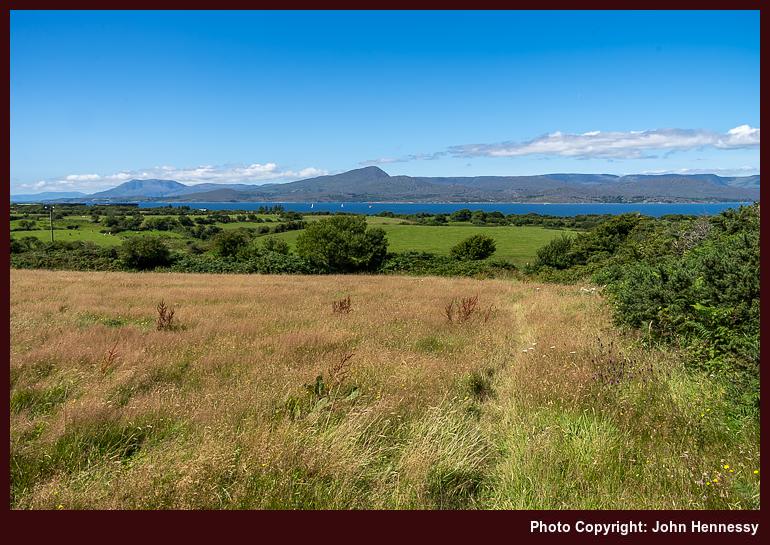
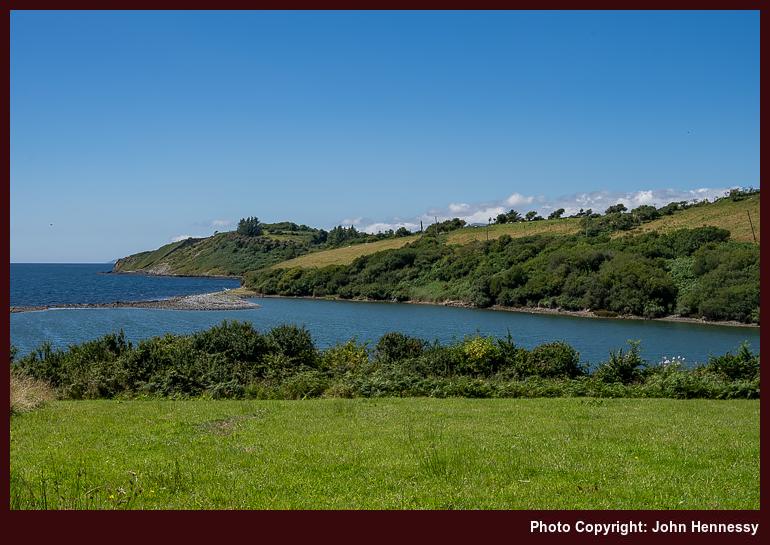
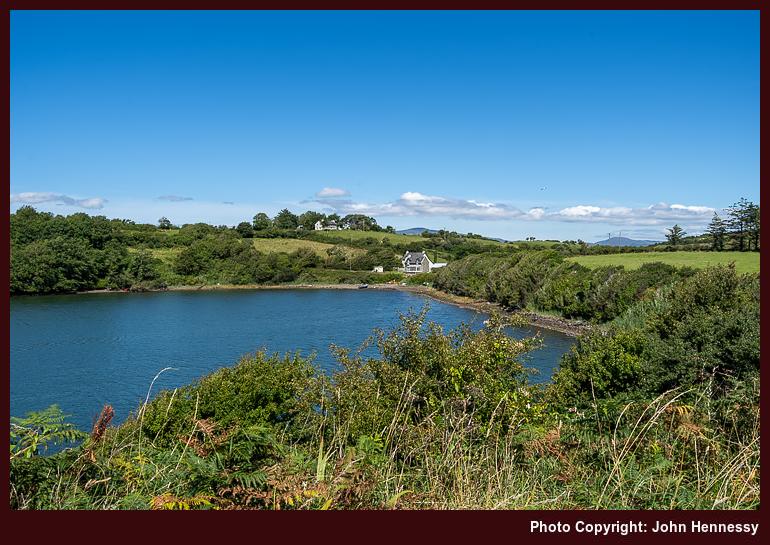
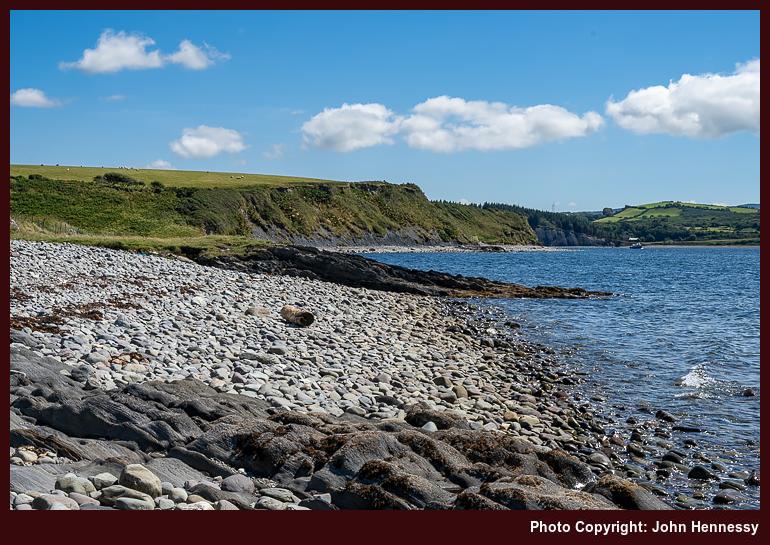
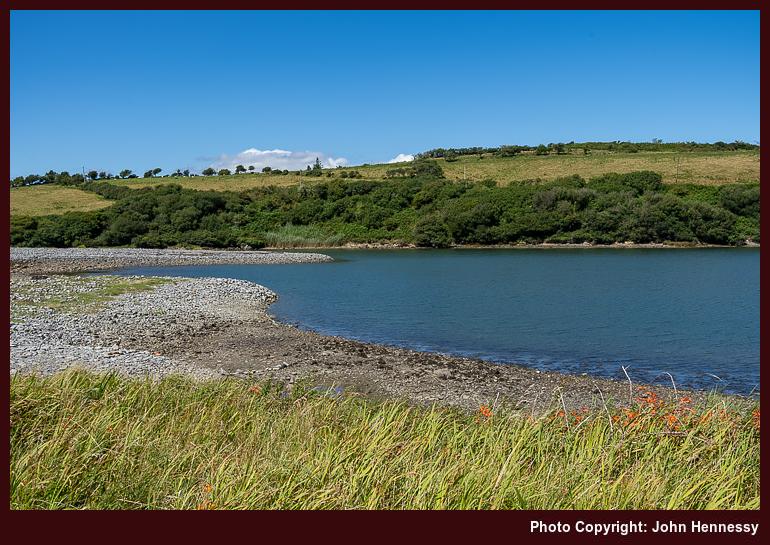
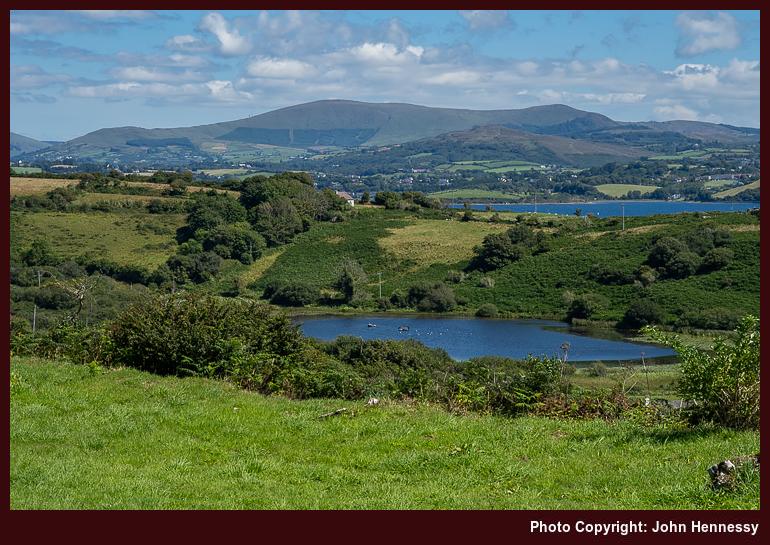
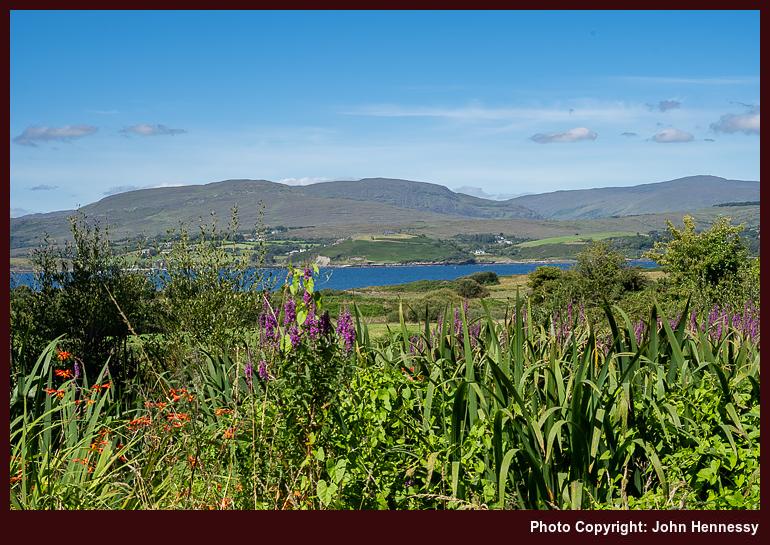
My circuit on the island took me around by Kilmore Lakes and the southwestern coastline before I continued towards the Oil Storage Terminal, a place known to many Irish for a fire there in 1979 and not the best sited given the surrounding scenery. Still, picking the right part of the island to be was a way of excluding the more industrial intrusion from your view. Thus, I continued for the north coast on my way back to the quay. As I plied that way, a woman asked me about dogs that were barking; they intruded on her sense of safety more than on mine.
Whether by serendipity or design, I remained on the island instead of using an earlier ferry departure. That allowed for more exploring, especially around the northeast of the island. Any untrodden part of the looped walk may have been traipsed too before a return to the mainland.
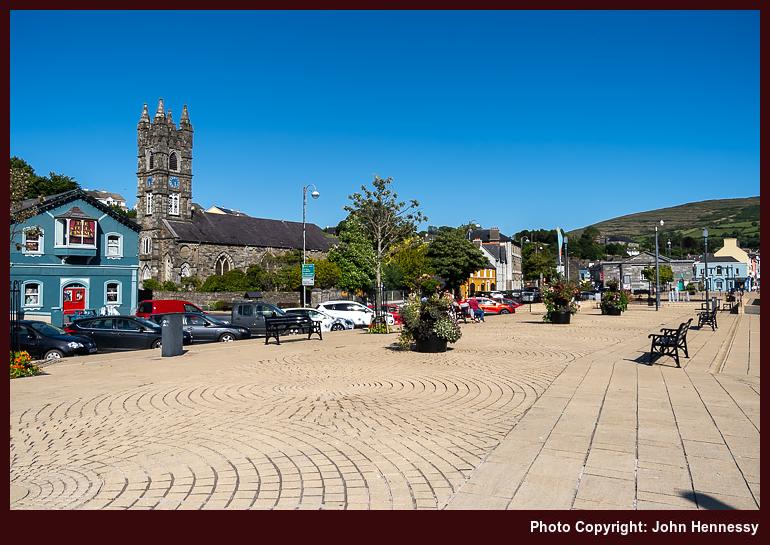
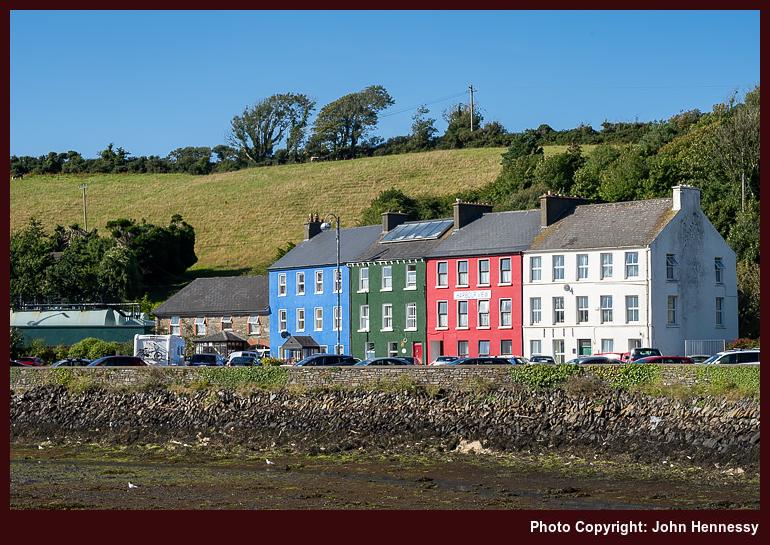
While Whiddy Island took up most of my time, there was enough for a brief call to the grounds of Bantry House. That was enough for me to note the prices; they cost enough to make one need to stay a while to get the most value for money. Thus, I circled back to Bantry while making use of a portion of the route of the Sheep's Head Way. On replenishing myself with some refreshments, I set about awaiting the bus back to Cork. It was as well that I did not trust the Transport for Ireland departures app too much, or I could have missed the bus, marooning myself until the next morning. Bus Éireann sent an older vehicle with no tracking, which did not help with providing information that anyone could use.
Once on the bus, it was time for a relaxing journey back to Cork, not that it ended my West Cork explorations, even if it took the most of two years to return to these parts. This summer saw to that with walking trips to the Mizen, Sheep's Head and Beara peninsulas. There also is Drimoleague if I fancied a more inland excursion. The hills may be lower than what you find in Kerry, yet there is scenery there to be savoured all the same.
Three days of discovery from Cork City: Excursions to West Cork, South Tipperary and Waterford
26th December 2024 After Killarney had given so much, Cork had a hard act to follow. My reasoning for splitting my August 2022 between two places was to curtail accommodation costs; even in the midst of a tourism recovery, Killarney still got busy and very expensive at the weekends. The scheme also allowed me to see parts of Ireland beyond Kerry.
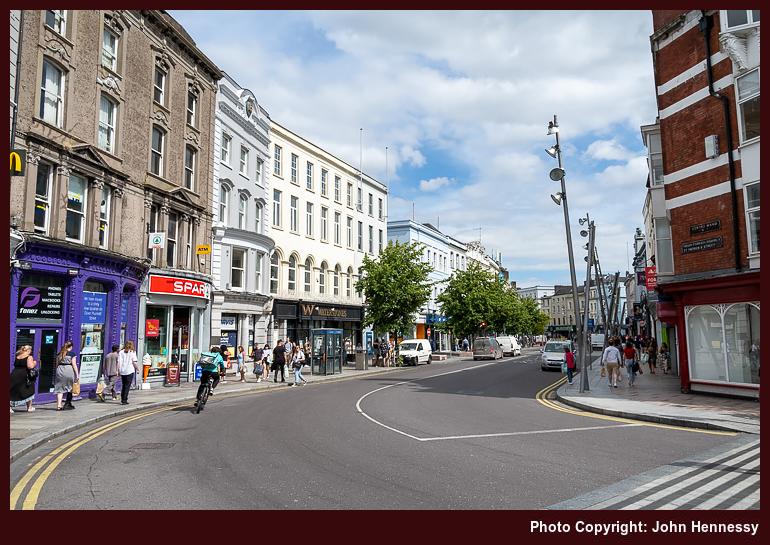
The contrasts between Cork and Killarney were more than apparent on this trip. Now that I have a place in the former, they resonate more intensely. Killarney has mountains and lakes on its doorstep, while Cork feels a bit further away from such delights. It is true that it has some coastline in its favour and greenways that follow that around Cork Harbour, as industrialised as that can feel in places. In summary, added effort is needed to get going to other spaces, especially when you have to travel from the suburbs to the city centre first.
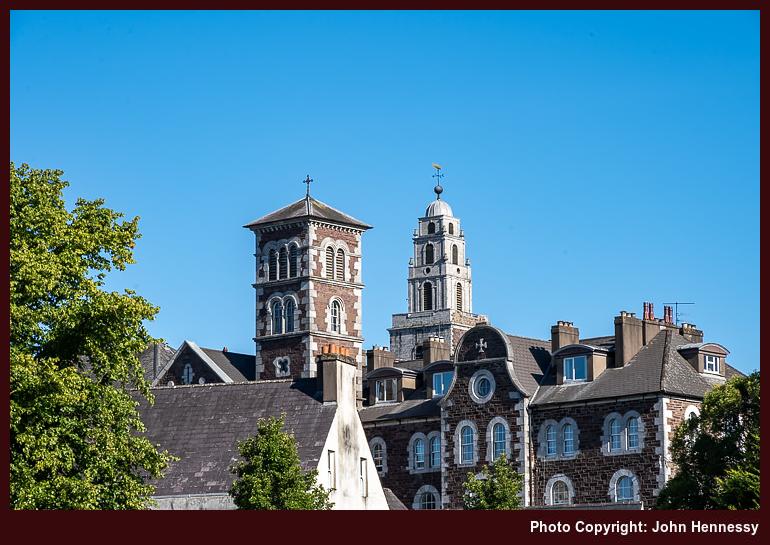
With a city centre hotel base, that was less of an issue, so I got going to numerous places away from Cork city during my August 2022 sojourn. Such was the lure out from the city that even nearby Blarney Castle had to await a trip to Cork during February of this year before I ventured there. Cobh and Kinsale did better than this, and Bantry and Whiddy Island became the representatives of West Cork, a place of which I saw more during last summer. Venturing even further afield, I got as far as Clogheen and the Knockmealdown Mountains in south Tipperary.
Much like my treatment of the Killarney portion of this Irish escapade, I have given each full day its own trip report. That means that there is one each for the day around Bantry and Whiddy Island, another for the hike around Clogheen and the Knockmealdown Mountains, and the last full day spent traipsing around the Corkonian hinterland. Only recently did I get to realise that all this rambling in 2024 set the scene for much of what I had savoured in Ireland.
Once any gaps were filled this year, it let to a kind of inactive funk from which I am starting to emerge. Further Irish explorations could need new ideas. Meanwhile, a spot of brain hacking is in order to set me going again. Ironically, a few disappointing days could be what it takes to reignite motivation for me. We human beings can work in some very odd ways.
Travel Arrangements
Starting from Killarney, the Expressway service 40 conveyed me to Cork, from where I could embark on other day trips. Return journeys on Bus Éireann services 236, 245 and 226 facilitated trips to Bantry, Clogheen and Kinsale, respectively. A local passenger ferry got me between Bantry and Whiddy island, while a return journey on an Irish Rail commuter service got me to Cobh for a brief evening visit.
The return to Macclesfield from Cork used a few modes of travel and an overnight stay in Manchester city centre; the latter avoided some of the heat that was building and helped when a flight got delayed. A rail journey got me from Cork to Heuston Station in Dublin, from where a journey on a Dublin Express coach carried me to Dublin Airport for a Ryanair flight to Manchester. The latter was heavily delayed yet a train journey got me from Manchester airport to Manchester Piccadilly station. After spending the night in Manchester (finding the hotel took a little time, even if it were near to the train station), rail services conveyed me to Macclesfield to finish what I had made into a two-day journey.
Adding ideas from The Hike Life books
23rd December 2024 It happens in the last quarter of every year: a whole slew of appealing books with appealing presentation and photography appears in bookshops in the run-up to Christmas. Last year, this included one called The Hike Life by Rozanna Purcell, and a copy found its way into my possession. As award-winning as it is, that needs to be consulted for hiking ideas around Ireland, now that I need them.
The story has not ended there, for another one appeared this year with a similar title: The Hike Life: 50 More to Explore. Now that I have somewhere to base myself in the country that easier to reach without a car and perhaps easier to maintain too, my brother got the idea of sending a copy of this year's book among other things.
Apparently, there is an outdoor enthusiast community underneath this effort too, yet it is the combination of appealing photography and route descriptions that closes the sale for this package. If there is any criticism about the format, it might be the lack of maps and any advice regarding the use of public transport. The latter is tricky in a book anyway, since the details change all the while, so it works best with a magazine setting. The former still would make route appraisals a lot easier.
Nevertheless, there is a lot of useful advice at the start of the book that gets repeated from last year's volume; these books clearly do not depend on each other. Maybe that is just as well, since the target audience may be those who normally do not frequent Ireland's wilder places. Nevertheless, the second book does refer to walks in the first where appropriate.
What needs to happen next is to make a list of the hikes and get out maps or a mapping app (more likely web based for this, though I am a heavy user of mobile apps too) and get pencilling in some ideas. Given the attractive package of the source material at a time when there is no Irish walking magazine, it is a pleasure to have something like this to hand. The first book is not to hand right now because it does not live where I am writing these words, yet that needs to be plundered too.
Expansion
21st December 2024 One activity that I have ongoing at the moment is an expansion of what has been the Cork city album in my online photo gallery. The cause of this is the increase in time around the place since 2022. Then, I spent part of an Irish break based in the city, though, in reality, I was travelling around back then. That took me to nearby Kinsale and Cobh as part of a single day's explorations.
2024 has seen a major upsurge in the amount of time that I spent in the place. Thus, it is now time to include nearby spots like Blarney, Fota, Cobh and Crosshaven. Ballincollig Regional Park could cause that area to get represented, too. Thus far, the scenes do not look so dramatic, but there are more to come, so things could build out from where they are at the time of writing.
The West Cork album is another that could grow after the visits there during the last few years. Each of the main Atlantic peninsulas have seen my footfall this year, and there are reasons to return, like following the Beara Way from Castletownbere as far as Adrigole. The scenery has the drama to draw me back after a muddy, soggy hike from Adrigole to Glengarriff. Staying overnight in the latter when there is a glorious summer evening could be a special experience that cannot be overlooked. Other places like Kinsale or Drimoleague could lure me their way just yet. There are new photos to be added, and more may come for future escapades in the area.
While the Kerry album is large as things stand, there are more vistas to add to it. Repeat visits to Killarney increase the supply, as does explorations of the Dingle Peninsula in May and June 2022. Such is the quality of the county's scenery, that it is virtually impossible not to get something from a visit to the place, especially when the weather is on your side.
The counties of Clare, Tipperary and Waterford could feature in a new and single album. The photos are there, and they show often overlooked gems in the Irish landscape, like what lies around Lough Derg and the Knockmealdown Mountains. All this is a far cry from things were when I began this online enterprise. For a long time, the Irish albums were the poor relation of their Scottish, English and even Welsh counterparts. That appears to be changing, so long as time is found to make the required additions.


