Category: Places Explored
A baptism
 23rd August 2020
 It may seem an odd thing to do in the middle of a pandemic but, once I regained trust in home delivery, I have been replenishing or reinforcing my collection of hiking gear. Some items have lasted until now and need replacing while new needs also get identified along the way.
One of those new needs was having a smaller daypack than my somewhat worn 35 litre Lowe Alpine Walkabout 35. The reasoning was my not wanting to be so conspicuous on public transport during the times in which we are living. Usually, my Osprey Atmos 50 might have been out and about on many day trips too but I fancied something much smaller than that again.
In fact, I have stripped back what I carried to the bare minimum and none of my hiking trips have gone any further than Kinder Scout this year in any case. That may explain why I have navigated using the OS smartphone app in so many places when I knew so much of where I was going anyway. Even with staying close to home, the messaging about public transport usage remained with me so I even resorted to using a shopping bag in case any questions got asked. That worked until it amused a fellow hiker so it was time to get something more auspicious and it also helped that everything was opening up more and more by that point.
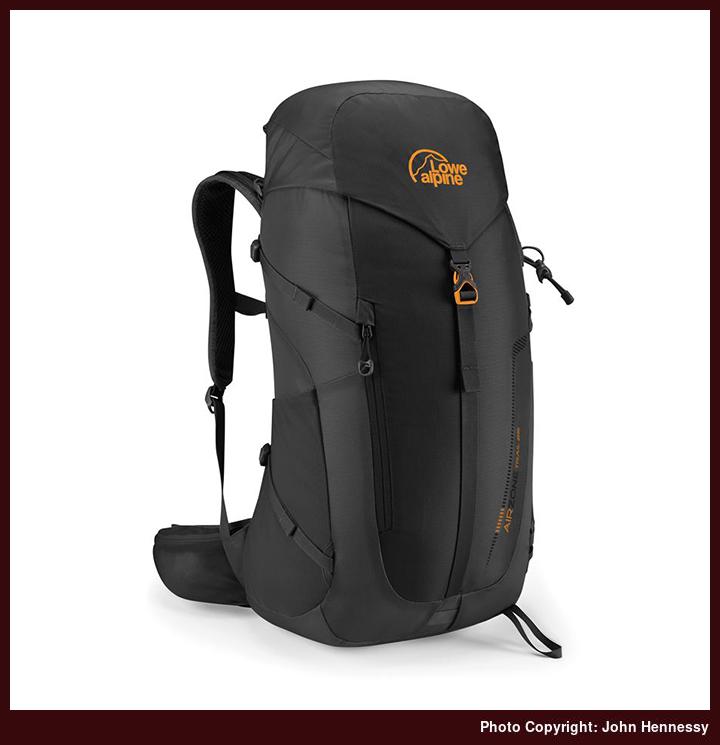
The result was the acquisition of a Lowe Alpine AirZone Trail 25 daypack. It had not come to my notice at the time that the item's maker had gained an association with fellow outdoor gear purveyor Rab and that was less obvious that the number in the pack's name because it was the 25 litre capacity that better suited my needs.
The pack's profile is long and narrow but it accommodates necessary items like waterproof clothing, camera equipment, folded walking poles, water bottles and maps. The last of these fits into an exterior pocket while anything else that I need goes into trouser, shirt and jacket pockets anyway. In short, it swallows so much that I wonder how I managed to need bigger packs anyway but I suppose that anyone can fill whatever they have to hand.
While the exterior of the pack does share its feel with waterproof clothing, it was not something that I intended to test quite as soon as I did. That happened on a walk from Whaley Bridge back to my house while a long hefty shower soaked me near Windgather Rocks. Nothing inside got wet so I was left to dry out as I sauntered over Cat's Tor and Shining Tor. The sun even came out to heat up the day as I passed Lamaload Reservoir and stayed that way as I went around by Rainow.
Rain performance has not been tested since then but the pack continues to see use and there was a reprise of the route a few days later in better weather so any irritation caused by not passing the way is well absolved by now. Now that I understand how people manage with smaller pack sizes, the AirZone Trail 25 could see ever more use yet.
Virtually goes it
22nd August 2020 Many events are becoming virtual these days. My first notice of the ongoing trend was with business conferences in my line of business but it has not stopped there. As it happens, the pandemic means that large gatherings of people are not the wisest right now so this is perhaps less of a surprise. That last point had me questioning the sense of even delaying events like the Photography Show for six months but even that is going virtual next month as well. This is a trend that applies to both business and lesiure.
After all, Wanderlust have a YouTube channel with recordings of a few of these collected. Some are recordings of live events from before the start of the current pandemic but others like Incredible Iceland or Uncover Guyana are entirely virtual affairs. In fact, I got to join the two events that I have mentioned and would not have got to them if in-person attendance was a must because they often have been held in London.
That last point has not gone unnoticed by organisers either. Regardless of the professional or leisure character of the subjects being covered, attendances are higher with more joining from different parts of the world. The ongoing pandemic may be keeping us apart in some ways but it is bringing us together in others.
There also is the matter of travelling virtually as well. This year, I might have hoped to get to Colorado but that became totally unrealisable and that reality even applies to the matter of getting to and from Ireland too. Normally, I should have gone to my home country at least twice by now and there should be two more before the year is out. 2021 looks more feasible now and it is hard to say how that might go at this stage. Given that, it is little wonder that services like Trek Ireland are turning up for those of us restricted to armchair explorations.
In my case, those home-based global explorations have cause me to survey Backpacker's Get Out More TV on their own YouTube channel. It is true that these feature a lot of product placement as well as segments from outdoor retailers but keeping our attention on a hiking film possibly demands a lot of patience anyway. Still, they do show something of the areas that each episode showcases so that probably will be enough to get me watching more than the first three episodes that I have seen so far.
Traipsing through two countries and three counties
28th June 2020 The start of a new year is often a time for reflection on what has gone before, as much as pondering the prospects of a year to come. In this, 2018 was no different, and I was in the middle of a career break as well, so the thinking turned to my next career moves and the choices that I arrived at in January 2018 continue to pervade more than two years later.
In fact, they affected the start of this year with another work break that allowed the taking of stock in light of then seemingly pervasive threats. Throughout this, I also got to wonder about future transatlantic excursions as a form of distraction. Many do love planning, but you need to be without an intrusive global event to make it happen. So all those dreams from January and February of this year are placed on hold.
Thankfully, it was only my own speed of inquiry and assessment that forestalled any overseas travel dreams in 2018. Other plans could be made to happen in a piecemeal if imperfect manner. What I needed to do is get over the residual stresses caused by what needed doing during 2016. At least, I did not have a global pandemic back, and I count myself very fortunate for that.
Returning to 2018 though, it was not as if all the required introspection ruled out day trips, quite like the activities or the weather of the first two months of this year. In fact, a few of those took me to Wales and the principality had not seen my making trips there for quite a while if I recall correctly. The sequence of Welsh outings actually began before Christmas 2017 when I embarked on a trip through the western end of the Brecon Beacons National Park. That took me through Abergavenny and Brecon as far as Neath before I continued my way home. In time, the possibility of exploring another quiet part of Wales may come to something.
My first Welsh excursion of 2018 actually took me to Cardiff, a city that I have long neglected, and the outing was repeated in part on the Spring Bank Holiday of 2019. Then, there may have been a Spice Girls reunion concert, yet what intruded on my ambling more were groups of cyclists going along multi-use trails. Sunshine pervaded on both visits, but thoughts of basing myself in Cardiff for a few days to explore the countryside within its vicinity retain their appeal. While I might do some cycling of my own too, I do intend to leave better space for walkers, especially around the delightful Bute Park and along the banks of the River Taff.
So far, what I am talking about is a spot of reconnaissance that may lead to future trips and there is one other excursion in January 2018 that deserves a mention before the main trip report, and it leads easily into it. That took me from Macclesfield to Aberystwyth via Shrewsbury and Llangurig. Not only did that take me past Pumlumon Fawr by bus, but the stopover at Llangurig also allowed some muddy walking along part of the Wye Valley Walk. What I really was exploring though were the logistics of getting near Pumlumon Fawr for an ascent of one of the highest hills in mid-Wales. That left me with the framework for a scheme that either would use Aberystwyth as a base or involve a bivvy on the side of the hill, depending on how brave I feel.
The Wye and Severn rivers both rise on Pumlumon Fawr, yet that was not where my Welsh wandering took me next. It may have featured the same River Wye, but this was a circular ramble, with Monmouth at its starting and ending points. In truth, I also fancy a visit to Tintern Abbey, but remains outstanding too, and the idea for the Monmouth excursion lay in my mind for quite a while before it happened.
Calling the route a circular one does much to hide its actual complexity, with some of that arising from serendipity. At my arrival in Monmouth, all that was yet unknown as I passed through it heart, with older buildings like those of its church and its independent school adding interest along the way. The school's students were going hither and thither in their boisterous ways and, fancying an air of greater peace, I left them to those to reach the River Wye.
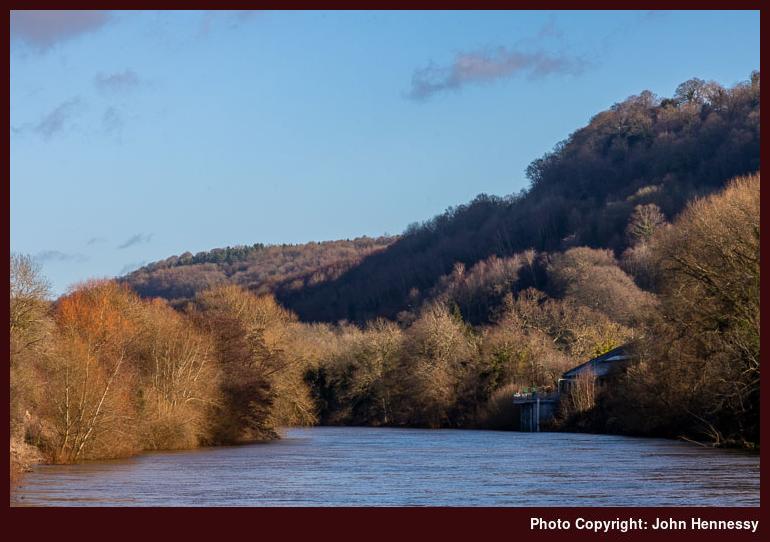
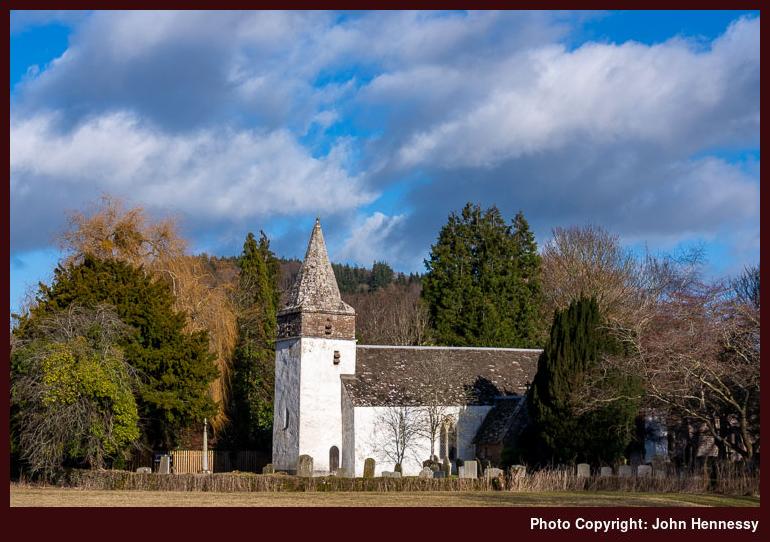
There, I met up with the Wye Valley Walk that was to convey me along the Welsh side of the river; Offa's Dyke Path also passed hereabouts, but that was not part of my designs since I was bound for Symonds Yat. With the hubbub of the A40 in the background, I relished the sunny morning as much as I could. Apart perhaps from the likes of St. Peter's Church near Dixton, those early stages were not to be peppered with so much in the way of human construction.
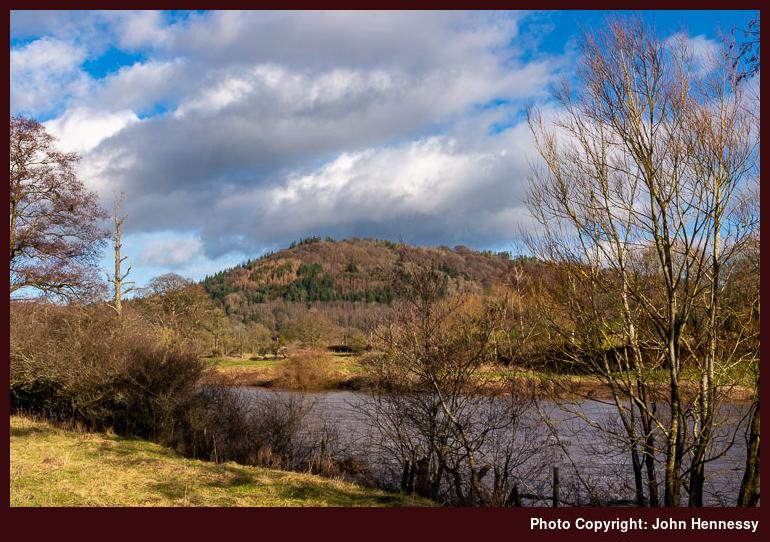
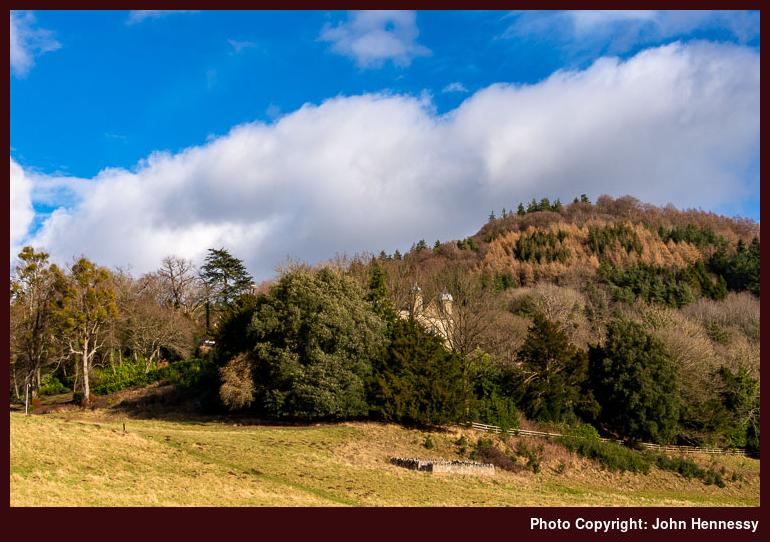
Forested hills lay to my right and in front of me as I went, and it was around these that I was to spend much of my time. Some were to be more easily named than others, but that did not detain my thinking as I reached the point where the river parted from the busy motorised thoroughfare. Beyond Wyastone Leys, my surrounding were to become much quieter and much now forested.
The forested route may have limited opportunities for photography, but I was soon enough at The Biblins where I would cross the Wye and encounter a greater human presence. Some were walking and others cycling, but there was enough room for all of us, and I still recall having the place to myself at times.
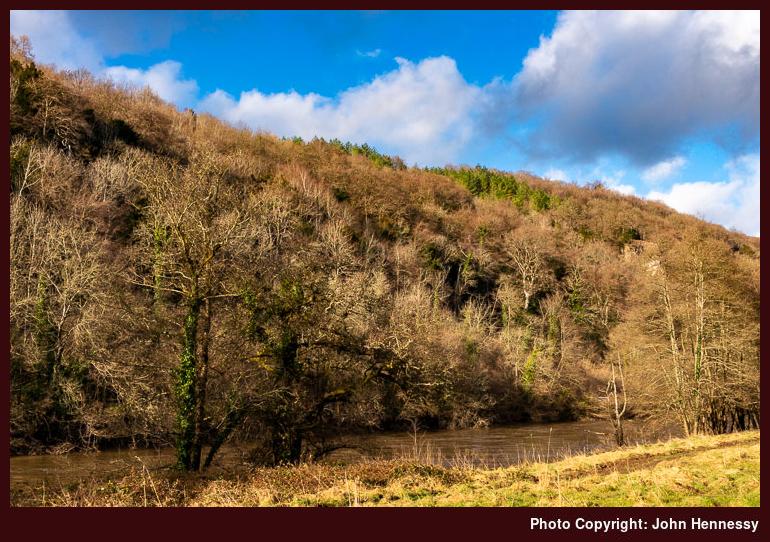
It was afternoon by the time that I reached the eastern part of Symonds Yat. Not only had the trail led me onto tarmac, but I had crossed into England and was in Herefordshire. The road and any traffic that was passing along it was left behind to round Huntsham Hill and return through Elliot's Wood. What became clear was how late in the afternoon it was getting, so I was anxious to keep going and photographic efforts stopped.
After reaching a road again, I then left it to go through Mailscot Wood and into both Gloucestershire and part of the Forest of Dean. With the road to Christchurch never far away, I was lured along a trail nearly as far as Hillersland before I turned in the direction of the River Wye again. That felt longer than was ideal given how late it was in the shortness of a January day.
Soon enough, though, I was back on the route of the Wye Valley Walk and heading towards Monmouth again. However, I decided against crossing the river until I reached the Wye Bridge in Monmouth, so following Route 423 of the National Cycle Network. By now I was back in Wales and soon enough reached a section of the railway that once connected Monmouth and Symonds Yat. That made navigation less of a concern as the hours of daylight faded.
Eventually, the gloaming would turn into full darkness and torch-lit walking along tarmac returned me to Monmouth, where I had plenty of time to find the bus terminus that I had not used on my arrival. Tintern was passed in darkness on the way home, but that fact did nothing to spoil the satisfying day out. In fact, it remains a useful excuse for returning to a delightful part of Wales.
Travel Arrangements
Train journey from Macclesfield to Hereford with a change at Stockport, followed by bus travel from Hereford to Monmouth using service 36. Bus journey from Monmouth to Chepstow using service 69 followed by train travel from there back to Macclesfield with a change in Birmingham New Street.
Spending a day going from Bamford to Hathersage via Stanage Edge
7th June 2020 Not only does this trip report the last of a trilogy describing three different visits to the Peak District during the autumn of 2017, but it also is the last one from that year that still needed writing. 2018 is next and 2019 follows, though my hill wandering appears to have stopped mid-year for a number of reasons that I can recall readily at this moment. Still, these were different times compared to what we are going through at the moment, so it is good to be transported. Hopefully, we can enjoy more like them again sooner rather than later. Old memories are most useful, but the collection always needs augmenting.
After days spent around the Great Ridge and Ladybower Reservoir, another idea prompted me to devote one to the countryside around Stanage Edge, and that is what this trip report describes. It was a return after a break extending back to the early years of the century, there were several day trips to this part of the world, and they brought home to me how hard it can be to find a marked right of way on pathless ground. There are times when general direction of travel is all you need, so map and compass work without so much regard for legality is then the way to proceed.
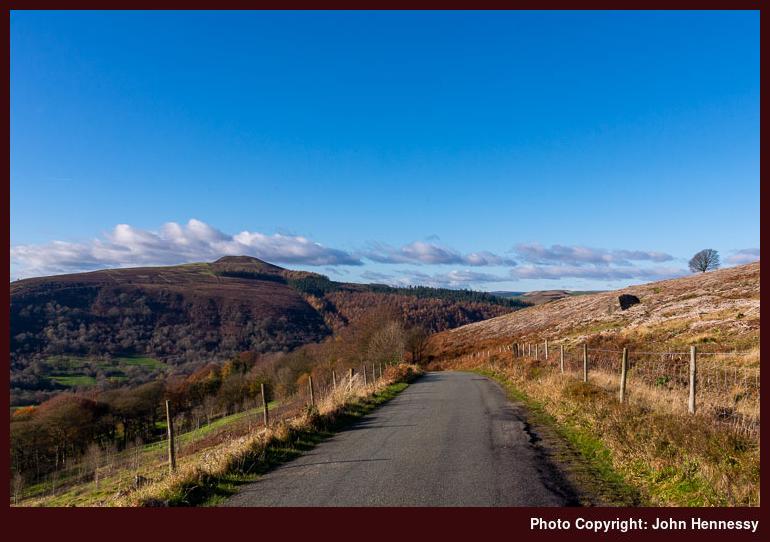
That meant there was an experiment ahead of me on arriving in Bamford, though I picked my way along lanes at the start. Designs on going up a bridleway through Bamford Clough were dashed by signs indicating excavations as part of maintenance works on the electricity supply network. Others were more courageous (or foolhardy, depending on what lay ahead of them) while I stuck with tarmac tramping for a little longer before I found an alternative footpath leading me from Ashopton Road to New Road, thus achieving a not dissimilar outcome. Doing so might have granted me less restricted views of my surroundings, though, and one of those appears above.
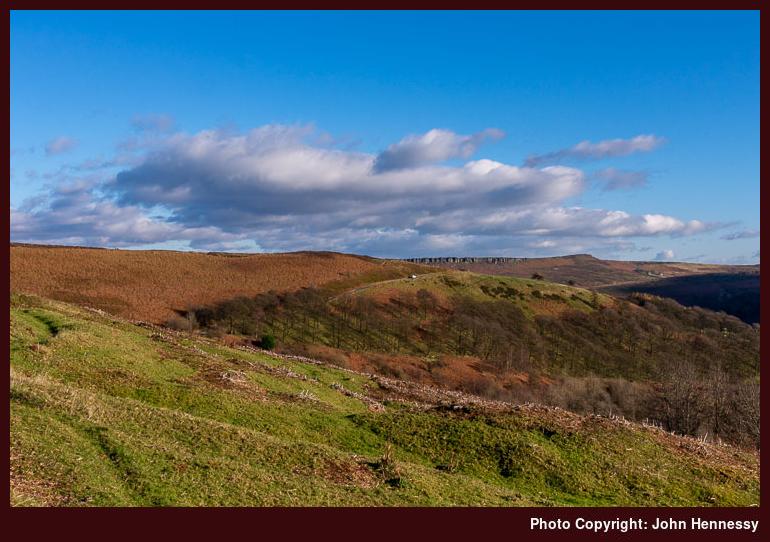
Eventually, I found the desired path that would lead me away from New Road and into the wilder emptier countryside that I planned to revisit after such a long absence, especially since it was to grant me ample amounts of the solitude that I so needed at the time. It also was bringing some challenging route finding that I wanted to use for testing GPS navigation on a fine crisp clear sunny day, albeit one with a stiff chilling wind to give the endeavour more of a wintry feel.
Going through abandoned quarry works that nature was reclaiming proved a little too intricate for dependence on a GPS receiver, but added map consultation and backtracking to salve any qualms at lack of route adherence were sufficient to achieve the required combination of peace of mind and onward progress.
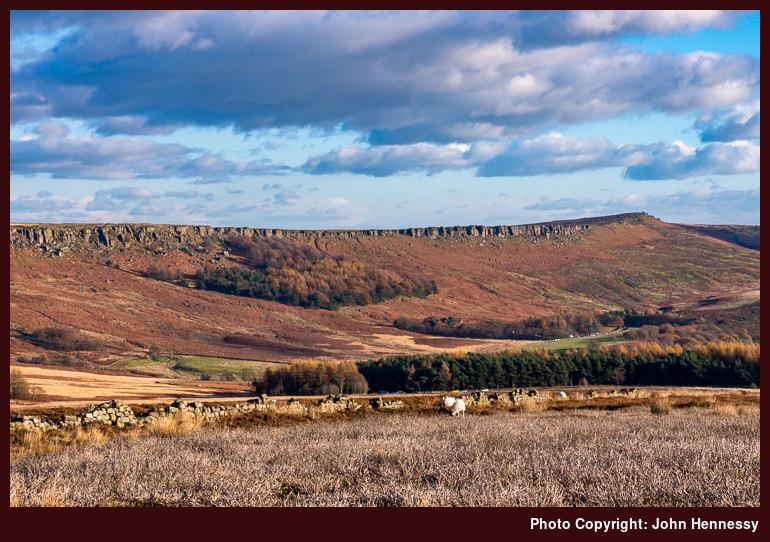
Eventually, it was time to cross pathless moorland, with some useful features like walls being so broken down that their visibility and usefulness get diminished. That though sends my mind back to a laden with memories of unguided cross-country tramping in failing light that eventually landed me in Bamford after scaring me more than a little. That day, banks of heather started to look like walls, so that is why their appearance on an OS map may not give you the handrails that you need. This was no saunter for those who depend on human landmarks for way finding guidance.
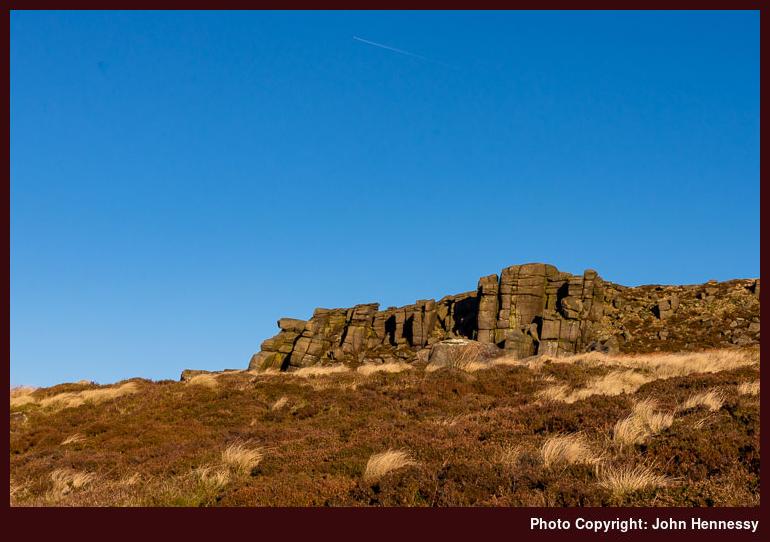
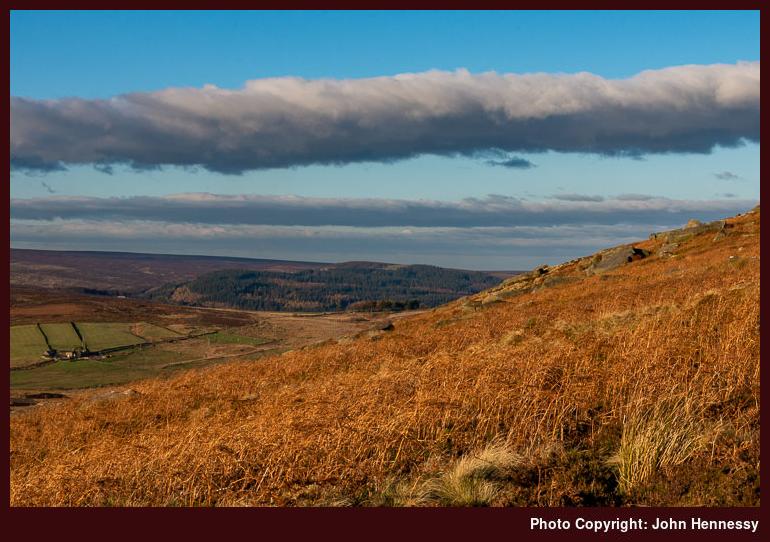
Such mirages were not to present themselves as I used the GPS to find the right line on the ground as I continued towards Stanage Edge over ground that at times had the consistency of a soggy bog. Neither waist-high rushes together, or dead bracken were to drive me from my course as I made my way from Bamford Moor to Moscar Moor and then onto Stanage End. The chill of the way was inescapable, so headgear and gloves were pressed into service, along with the warm fleece that I was wearing.
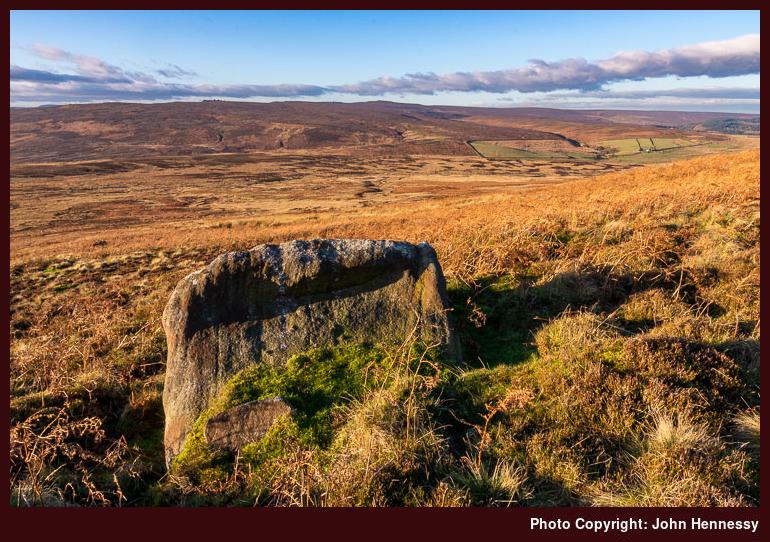
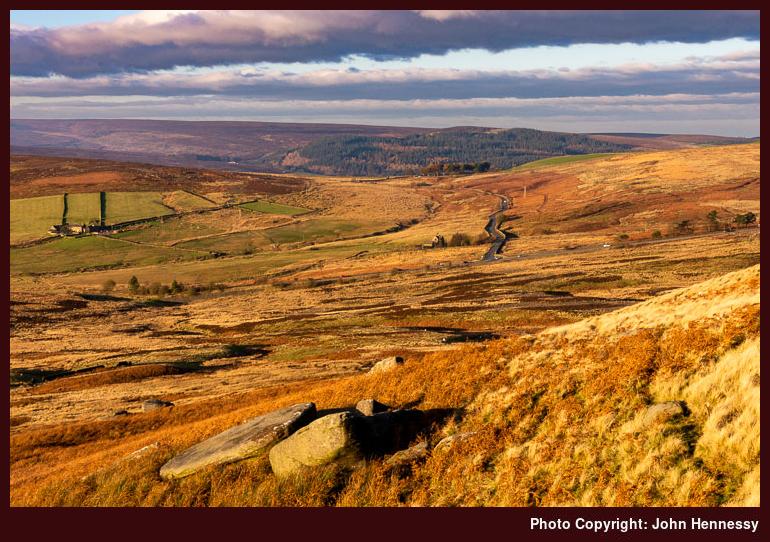
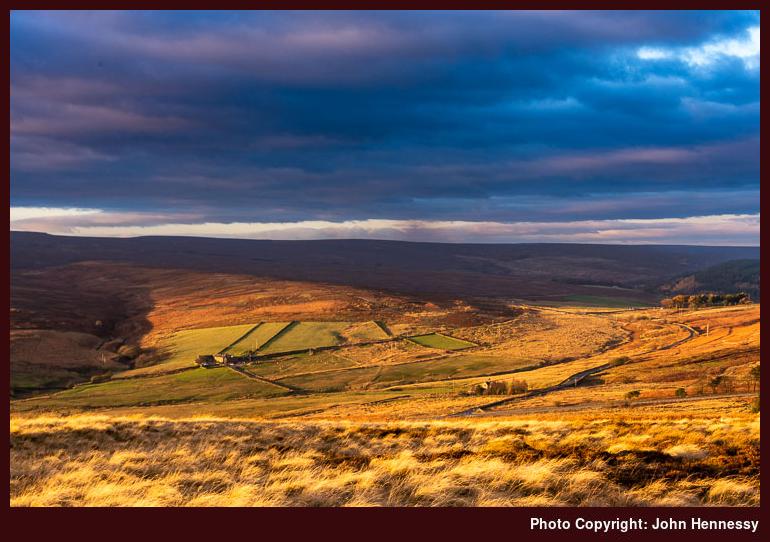
Though offering plenty of solitary hiking, the endeavour brought a time penalty since it was clear that it was nearer the end of the hours of daylight than was ideal. While the supposed proximity of the urban outskirts of Sheffield offered a possible alternative, I stuck with a return to Hathersage that took me past High Neb and along Stanage Edge itself. Light was declining all the while as I traipsed the trail, with some parts being boggier than others. None did anything to take away from the satisfaction of the stroll.
As the day approached the onset of its gloaming, I left Stanage Edge and the route of the Sheffield County Walk, to drop onto a byway that would lead me towards Dennis Knoll. As I did so, climbers were coming away from crags where they had spent time on what was a sunny day, one that lured out many an outdoors enthusiast. It was as if I were in the midst of other outdoor lovers at either end of my walk.
After Dennis Knoll, I resolved to stay on the lane descending all the way into Hathersage as some insurance against the looming loss of daylight with its attendant need for use of a head torch to light one's way. There are times when things need to be kept simple, though it was only on the outskirts of Hathersage itself that I recall losing all daylight. Finding my way through the village after recovering from a minor route deviation, I was at its train station in plenty of time before the next train to Manchester, so I was repeating what had happened in Bamford the previous Sunday when I missed a train by mere minutes. A two-hour wait was avoided (a new timetable halved service frequency) so I could begin my journey home after a satisfying day laden with good memories.
Travel Arrangements
Outbound train journey from Macclesfield to Bamford followed by a return journey from Hathersage to Macclesfield with both having changes of train at Manchester.
Pondering time’s passing
6th June 2020 Earlier this year, I spent a stretch of time perusing guidebooks while pondering and plotting a summertime North Atlantic escapade. U.S. states like Montana, Wyoming, Washington, Oregon and Colorado all came within the scope of this armchair knowledge gathering. Of the lot, it was going to be Colorado that was getting my nod for a July 2020 excursion with Denver and Boulder offering themselves as likely basis. Of course, the arrival of a global pandemic has eliminated the possibility of any such thinking becoming reality for this year but ideas remain live in spite of this so another year may offer and I now need to wait for that.
Another guidebook for Colorado may await and there are others for California and Ontario too but guidebook reading has been parked for now even if continue to get through a backlog of travel magazines. After all, there now is plenty of time to get back to it again. In the meantime, I have returned to other nature and travel books. The planet's northern reaches have become part of this with Malachy Tallack's 60 Degrees North and Gavin Francis' True North having been completed and I am now in the middle of Peter Davidson's The Idea of North before going on to Barry Lopez's Horizon. The time feels right for reading these since guidebook reading for me involving website address gathering and I just want something engrossing that will help to relax me in these testing times.
In parallel, outdoor reading in local parks during the now departed spell of warm sunny weather saw me complete Edward Thomas' Icknield Way before making a start on his In Pursuit of Spring. The first of these documented a journey on foot trying to retrace the route of the eponymous long distance thoroughfare while the second describes a journey by bicycle from London to the Quantock Hills in Somerset. If anything, the latter happens to be the more readable of the two and I intend to get it completed even if warm sunny weather does not return to us all that soon.
The reason for the title has nothing to do with the forestalling of trips away by current necessary travel restrictions though. It was caused by my listening to a program hosted by Don Letts on BBC Radio 6 Music last Sunday night in an effort to curtail restlessness at bedtime last Sunday night. What occurred to me then was the passage of recent decades and the way that I have not caught up in some ways.
This matter brings up the subject of music and that is not customary for this blog. It reminds me of how the 1960's felt to me in previous decades. During my childhood, it was a mere 20 years before and figures like Paul McCartney, Mick Jagger and David Bowie were active as part of what felt to me like an afterglow of that decade. This was before the revival of interest in music from the same decade during the 1990's when it was just 30 years before. Now that the last decade of the last century itself is pushing on for being 30 years ago and it was the decade when I began to find my feet in life, the 1960's feel even more distance and that realisation gave me something of a shock when it hit me.
An upshot of all this is the added need to collect new experiences as restrictions are lifted. Such is our current situation that I will not be in the vanguard of wider travel and that especially is the case given my dependence on public transport. Nevertheless, those expanded horizons discussed at the start of this entry again begin to loom larger after other places nearer to hand are revisited before them. These will be in Britain first before other European destinations around Scandinavia or in the Alps get tested first. There may be a need to do these in a new way, not only because of our changed world but also because of my changed perspective. More time may allow me to further develop what that might mean.


