Category: Places Explored
A year when an unwanted adventure arrived
 31st December 2020
 We live in a time when all sorts of activities are being sold as adventures. Even a day hike falls into scope for this yet I do not need such branding to make me take advantage of such a possibility. A day with good weather spent in the midst of hill country or along a scenic coastline will do the job for me equally as well. In fact, it has been sufficient sufficient for longer than I care to recall.
2020 has been full of those in spite of the threat that it brought our way. They may have been near home for much of the time so it is just as well that I can walk into nearby hills from the front door of my own house. Long circuits taking in Shining Tor, Cheshire's county top, along with Croker Hill, Bosley Reservoir and a host of other nearby landmarks saw me begin a summer of longer walks.
Some took me back home from a starting point reached by public transport. These included such places as Buxton, Knutsford, Disley and Whaley Bridge with the second entry on that list being the longest of the lot. The weather was mainly fair too apart from the occasional wetting.
Getting a little braver took me a little further afield. For instance, there were tow long hikes between Leek and Buxton, something that lay in my ideas shelf for far too long. Day trips to Church Stretton in Shropshire and Llandudno in Conway became the limits of my perambulations for the year before a cold weather walk from Hayfield to Chapel-en-le-Frith bookended things and an autumn of lockdown, less enticing weather and an indoor learning project became my lot.
Still, good memories got made in spite of the pandemic and these even included visits to Sheffield that I am not enthused about doing at the timing of writing these words. The hills may have been smaller but the wandering got me away from humanity even if more found their local countryside this year than ever before.
While 2021 lies ahead of us, it is difficult to plan ahead right now. There has been an upsurge in the number of cases of COVID that needs to abate and it does feel that vaccination cannot happen fast enough. This may may the darkest hour before a new dawn but I plan to get to a brighter future before making too many plans.
Of course, we still can dream. This time last year, I was pondering which part of the U.S. to visit during the summer months. After reading about the states of Washington, Oregon, Wyoming , Montana, Colorado, I settled on the last of these and that remains on the ideas shelf. The Azores are found on there as is the possibility of Madeira and locations nearer home appeal too.
Webinars from Wanderlust as well as the Adventure Travel Festival all fuelled my imagination though dreams of round the world motorcycle or walking trips remain out of the question. It remains good to hear the stories of other explorers' exploits though and they help to brighten what has been a dark time for many of us.
My book reading continues in much the same vein as I sit out the necessary period of time that is needed for things to settle again. Patience is much required by those of us able to stay safe while we think of those not in such a fortunate position. Adventures can take their toll and this one certainly has so we only can await the prospect of happier ones should they come out way.
Subscriptions and home deliveries
10th October 2020 This has been an exceptionally tough year for retail and hospitality businesses and it is not over yet. In fact, it looks as if the start of 2021 may be no better. My line of business differs from these so I am one of the lucky ones in many respects since I have been able to work throughout the whole episode. Even then, I have not been immune from the added tension of the times in which we find ourselves.
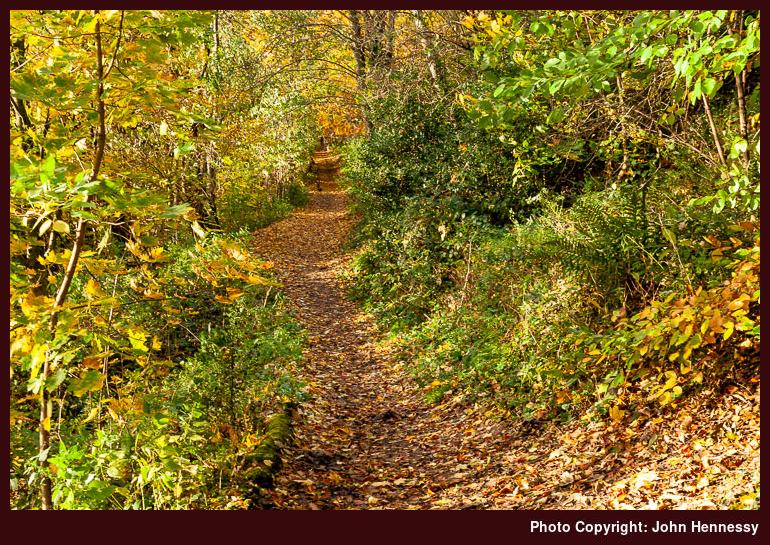
That also means that I am not doing many of the things that I normally would be doing. International travel needs to wait as does staying away from home. The fact that town centres got too busy for my sense of personal safety has had its own effects so I avoid them as much as possible. One consequence is that I now subscribe to every magazine that I read aside from ones that I can get delivered whenever their content appeals to me. Going to a bookshop to see what new books are out is postponed because going online does much of that for me. Even with hand sanitiser usage, you never know what you could spread by touching books in shops.
Given all this, I still fancy getting out and about in some hill country when circumstances allow. There is a walk from Hayfield to Chapel-en-le-Frith that I fancy reprising in brighter weather and with warmer clothing, should the day be chilly as we can expect over the next few months. That would allow visits to the tops of Mount Famine and South Head together with a repeat encounter with Brown Knoll. The latter has planted in my mind the possibility of going from Hayfield to Castleton that could take in Rushup Edge along the route. With the way that things are at the moment, that probably needs to wait, but ideas are needed for better times.
Speaking of idea collection, I have been catching up on unread issues of Scottish Island Explorer. In one sense, they have been planting in my thoughts the prospect of a long-overdue return to the Western Isles and Arran together with other unvisited islands along Scotland's western seaboard call too. After those, there are the nation's Northern Isles that have been on my radar only for other destinations to draw me to them instead. It is good to stock up with hope in the knowledge that some challenging months lie ahead, and my ongoing reading may add more to these.
A frosty February day spent around Rothbury
26th September 2020 Photographic equipment errors can blight subsequent results. For instance, this summer saw me using a camera at a different ISO setting to what was intended and I did not notice it for weeks. Given that the setting was 320 rather than the desired 400 and I have often mulled over the idea of using 200, it was not a calamity given that I create raw image files anyway.
What reminds me of the above is that a more obvious mishap beset the photos made on the trip described in this report. That time, I somehow knocked the camera into the wrong daylight balance setting. All the images came out far too red but creating raw image files allowed for a rescue in Adobe Photoshop Lightroom. Being able to bulk copy the new settings was a real bonus so I could ameliorate any annoyance in the act and leave the lesson on file for future reference.
Given I finally had got to Rothbury after having designs on such a trip for what seemed light an age, the easy fix to those photos probably was just as well. Just like the North York Moors that were featured in an earlier post, this too was a long way to travel for a day trip, though that never stopped me getting to other parts of Northumberland since they are afflicted by the same disadvantage.
Rothbury was reached later in the same week as an icy encounter with Roseberry Topping. The chance of a bright day added to the required motivation input even after an outdoors escapade earlier in the week, especially since an early morning start was needed. It also was good timing for travel by double-decker bus for the last part of the inbound journey.
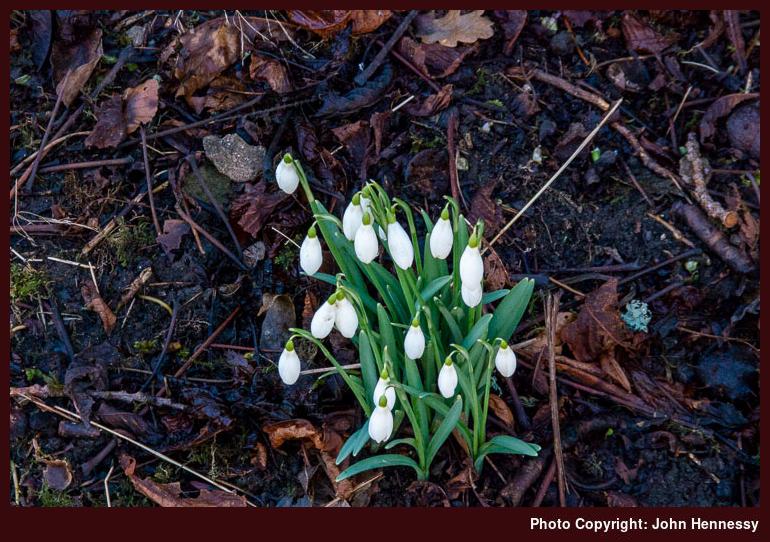
Though Newcastle was dull while I was passing through the city, Rothbury was bright and sunny with clear blue skies overhead when I arrived there. My intended walking target was Simonside so I soon left by way of St. Oswald’s Way to make the most of the time that I had. The day may have been laden with wintery crispness but I was to pass a harbinger of spring once I passed Whitton: snowdrops.
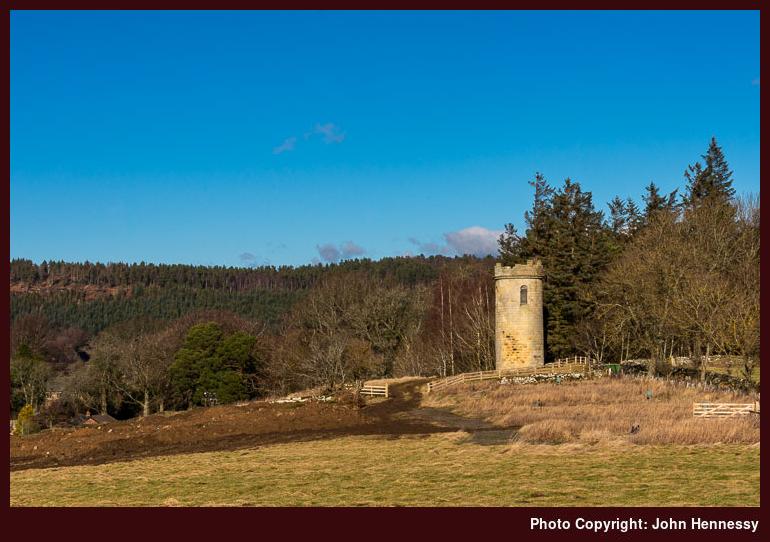
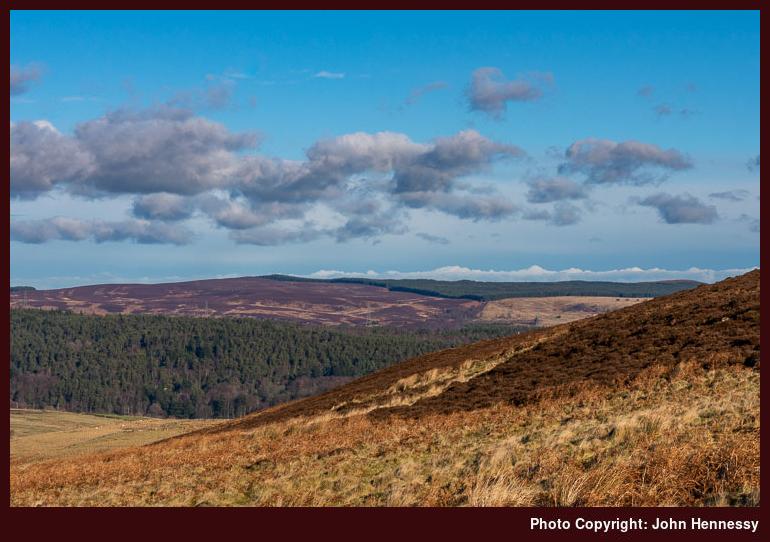
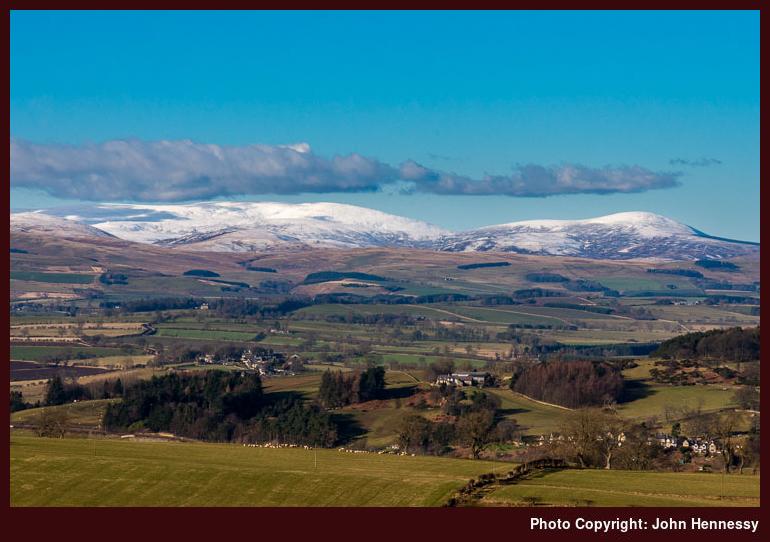
After passing Sharpe's Folly on my way towards Hillhead Road, the surrounding views opened as I followed the track with height being gained as I did so. Though looking to my left brought my eyes towards pleasing sights, it was what lay to my right that captivated my attention at various points throughout the day. The white-topped summits of the Cheviots not only acted as a reminder of winter but also contrasted against the otherwise green landscape bedecked with some brown patches.
The track was left to reach Whittondean and going beyond that took me onto open moorland. Handily given that I was crossing soggy bogland, the path was paved. All the age of my map was plain to see so it was just as well that I had the OS Maps app on my phone for adding the extra details. Quite why I had not got around to buying a newer paper map is lost to me but it would have added the route of St. Oswald's Way for one thing.
At that time, thoughts of depending on a phone app given the vagaries of signal and battery life felt imprudently trusting. Still, it all held together on the day and even showed another public footpath over Simonside that itself came in being after 2005, the publication date of my Explorer map. Since then, I have chosen phones with lengthy battery life and they came into their own during this year's travails when they allowed me to leave paper maps at home for various local day hikes where I largely know the lie of the land anyway. Still, I am mindful that the phone is doing the locating so I need not lose that ability for myself in case I ever need it again. After all, devices are not that infallible.
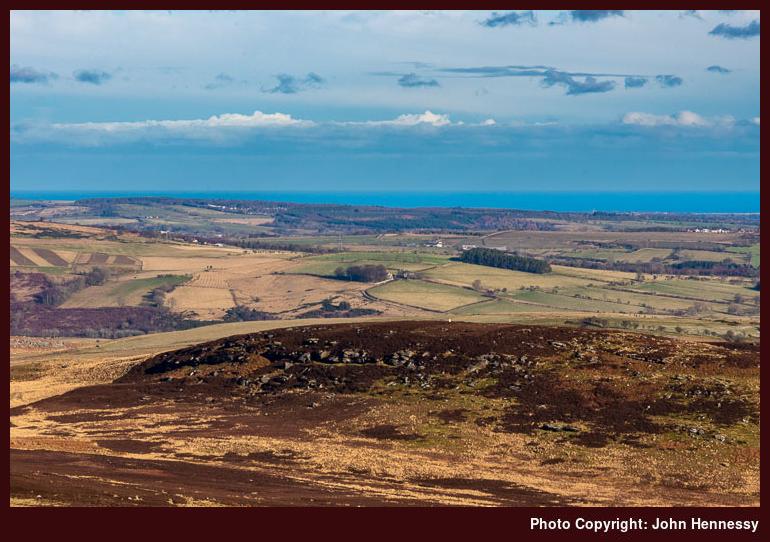
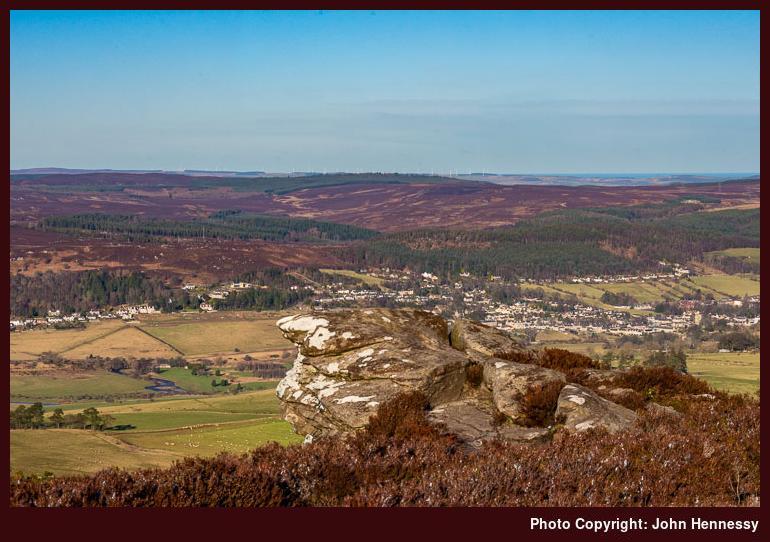
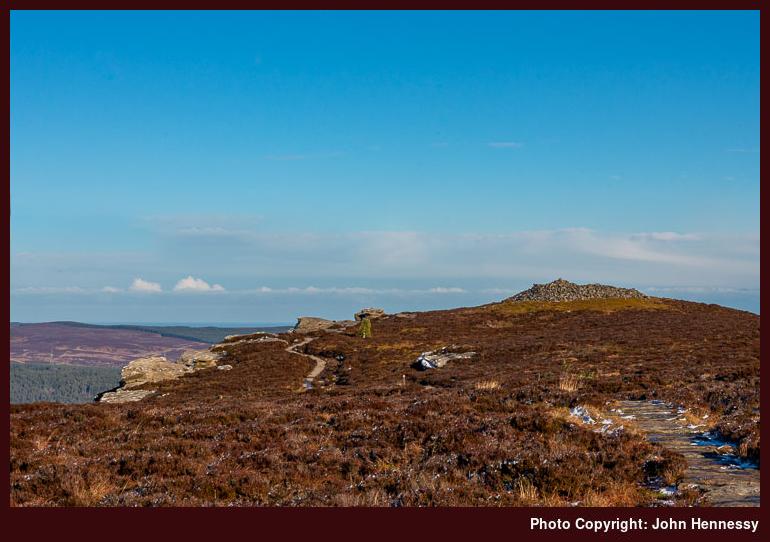
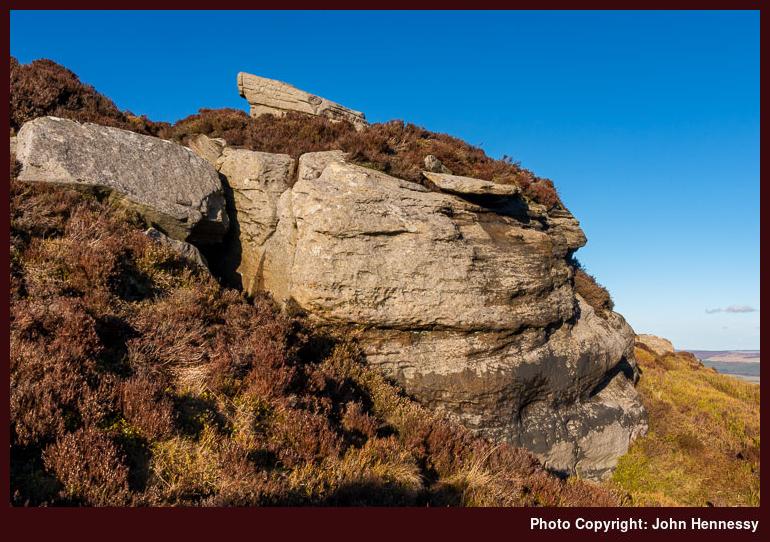
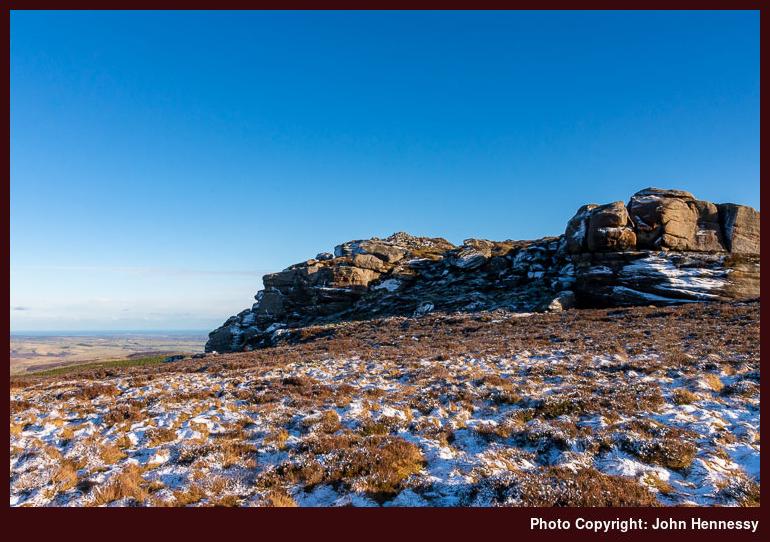
A relatively timely arrival at the eastern end of the Simonside ridge added a certain complacency about route timing that soon got dispelled by the false summits that I met along the way. The whole section may have been around three kilometres in length, but the afternoon passed as I pottered from east to west, especially given the arresting views that lay all around me. Winter whitening of various sections and the presence of icy patches added to the need to concentrate on what was at hand. That really applied to the steep western descent from the actual summit itself.
By then, it was late afternoon and I needed to catch a bus at a certain time too. Even with this and with others going the way, I was not going to rush, but any coated patches were left after me soon enough along with any gathering of humanity. Then, it was a matter of descending through forestry to Great Tosson, an act greatly aided by the use of walking poles to speed things though there was ample time to survey the surrounding scenery as well.
From Great Tosson, there was a road descent to Newtown, after which a byway returned me to the banks of the River Coquet. Once across to the other side, I was bound for the bridleway taking me back to Rothbury again. That the sun continued to lower in the sky caused no concern given the progress that I was making. A lost time had been made up again without the need for rushing; it was all a matter of maintaining a steady if unhurried pace while relishing what lay about me.
In fact, there was enough time before my bus came to visit a shop for some provisions and a new map of the area. After that, my journey home began and I could wonder about returning to Coquetdale. Though current circumstances may delay that, I still have spied a possible route taking in Cartington Hill and the Cragside Estate. Having an excuse to revisit a place never is a bad thing to have.
Travel Arrangements
Return train journey between Macclesfield and Newcastle extended by a return bus journey on route X14 between Newcastle and Rothbury.
Lazy loading
5th September 2020 It may be autumn now and the nights really are drawing in on us, but I still have walking ideas. They are fairly local, which is useful given the times in which we find ourselves. For instance, I have another idea for a walk between Whaley Bridge and Macclesfield: this one would go via the Goyt Valley instead of Taxal Edge where the previous ones went.
There is another, and that brings me to recent wanderings. One of those took me from Leek to Buxton via Ramshaw Rocks. Since the day became dull, I would like to go back to those rocky outcrops again to come away with better photos. Such a route could be varied according to available hours of daylight, if so needed.
Other rambles did better with sunshine. One took me around hills near Church Stretton in Shropshire, while another gained me my only exposure to sea air of the year so far. That was around the Great Orme near Llandudno in Wales, and it rounded off an extended bank holiday weekend that also featured the aforementioned Shropshire and Staffordshire/Derbyshire hikes. All were good for my emotional well-being during what has been a very tough year for all of us. It may be that I am starting to regain my footing after all that has happened.
As a dark patch continues to lift, I also got in some website tinkering, and that explains the title of this post. Some may not have heard of the term, yet many will have encountered the behaviour: a web page that does not load all at once, but only when a visitor scrolls down far enough to need the outstanding sections. That is called lazy loading, and I decided to try it out with the images on this blog. If it is too much of an acquired taste or is too distracting, just let me know and I will make adjustments. Otherwise, the tinkering and the toddling will continue. Technology continues on its inexorable itinerary, pandemic or no pandemic.
Same month, two consecutive years, two very different seasons
28th August 2020 During July, I read Barry Lopez's Horizon and its prose has the same elegance and attention to description that I enjoyed when reading Arctic Dreams, one of his earlier works. The main reason that I mention summer 2020 reading here is that it mentions the explorer Captain James Cook and this trip report includes two different excursions into countryside that he would have known well. After all, he had his upbringing in Great Ayton that was the start and end point for two very distinct walks.
It was not so much the routes that differed but the weather and ground conditions. The first encounter was on a wintry Wednesday in 2018 while the second was on a summer-like Saturday with many more about since it also was during a school midterm break. In fact, the weather drew many to travel by train to Whitby and it was a mild if greyer day spent there that took me past Roseberry Topping and Great Ayton in the first place.
Preceding Reconnaissance
The North York Moors have lain beyond the extent of north of England hill wandering for a long time before I made an actual incursion. Part of this is because getting to the North York Moors is a little awkward from where I live, especially for a day trip. For one thing, train travel takes quite a while and that especially applies to the Esk Valley railway line, scenic though it is. After all, it takes a few hours to get from Middlesbrough to Whitby and service frequency is of the order of number of trains per day rather than number of trains per day. As it happens, bus travel from Leeds can work just as well so that probably is saying something.
Given that, it perhaps is unsurprising that I undertook a reconnaissance visit before undertaking anything more intensive. That was how I got to go to Whitby on the Wednesday before Christmas 2017 and looking back at photos made then surprises me for I was a lot luckier with sunny spells than I then had supposed.
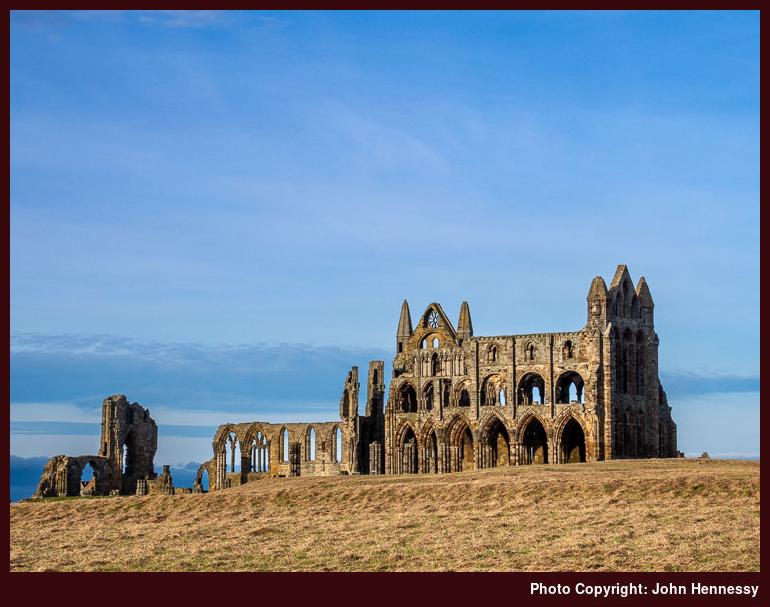
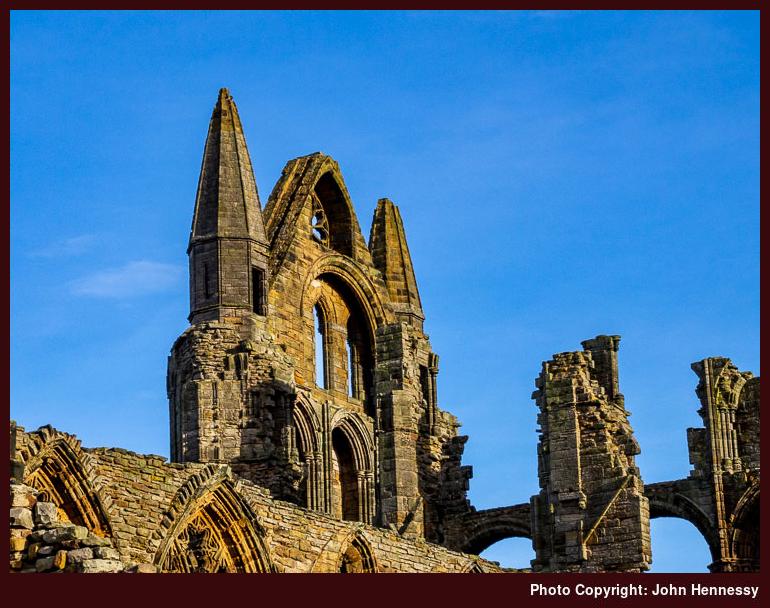
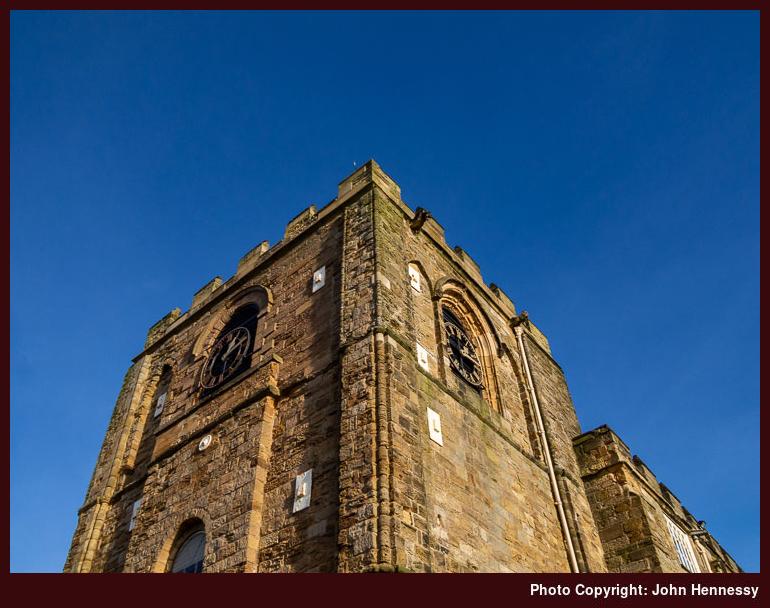
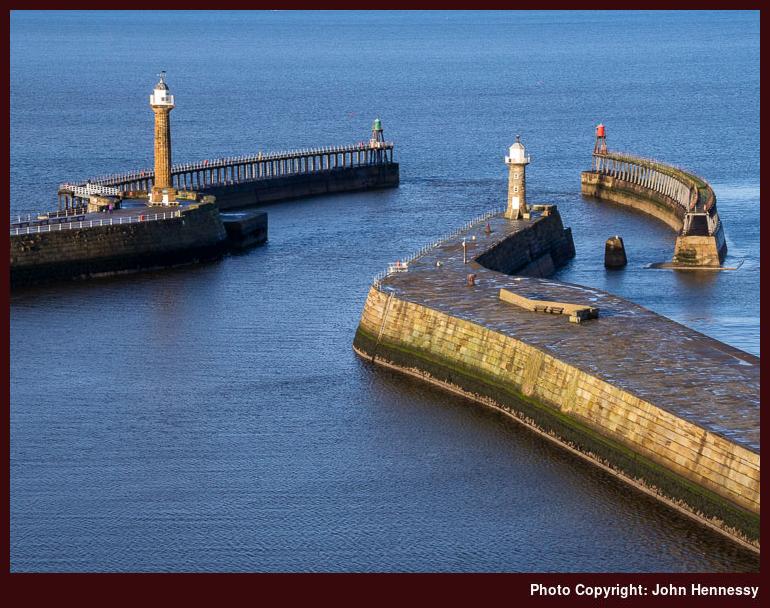
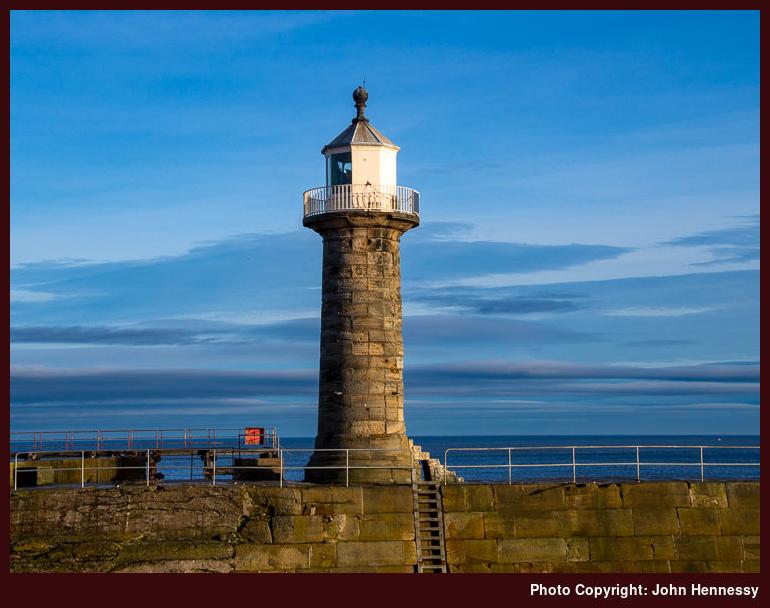
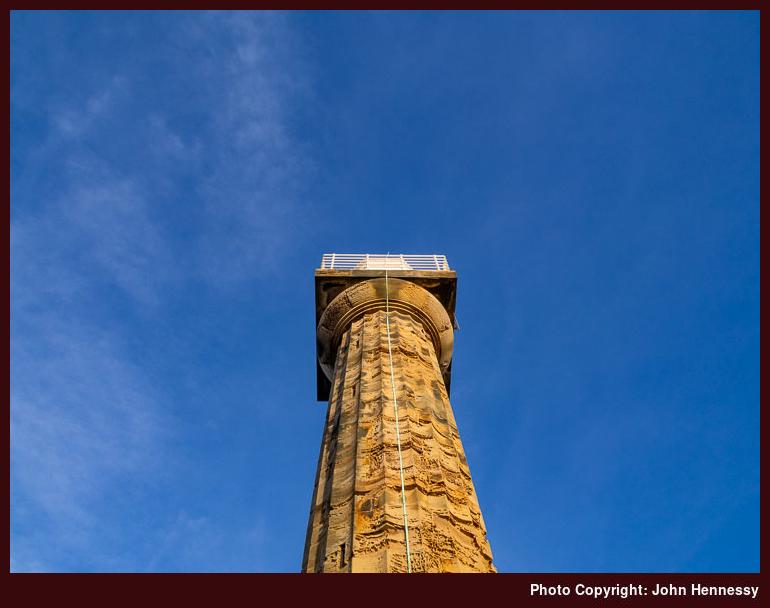
When I reached Whitby after savouring the scenery along the way from Middlesbrough, I naturally got to potter about the place to get a closer look at the ruins of its abbey and anything else that caught my eye while I was there. There even was a bit of coastal walking and a chance to dip my footwear in the incoming waves of the North Sea.
Not wanting to await the next train to Middlesbrough, I caught a bus to Leeds from where I started my train journey home again. Sitting in the top deck of that double-decker meant that I spent more time looking at what lay about me on the way than progressing with any reading material that I brought with me. After all, I was getting to see places where I had not been and that was the point of my outing. It duly achieved its purpose and the possibility of a walking incursion into the North York Moors became all the more real.
True Winter
That I only got to glimpse Roseberry Topping in reality during my 2017 reconnaissance trip might make you think that I may not have known of the hill for very long, but that is not the case at all. After all, the photographic craftsmanship of Joe Cornish is something that I have appreciated for nearly two decades and this has been one of his favourite subjects. More recently, I got to know that it is a local hill for world-class mountaineer Alan Hinkes.
It also is low in stature and near a train station once you get there, so that made visiting it on a day trip more realisable than other parts of the North York Moors. That made it a plausible option when I desired a short afternoon stroll even when cold weather was forecast. It also helped that I could add to the route, thus gaining a wider appreciation of the area.
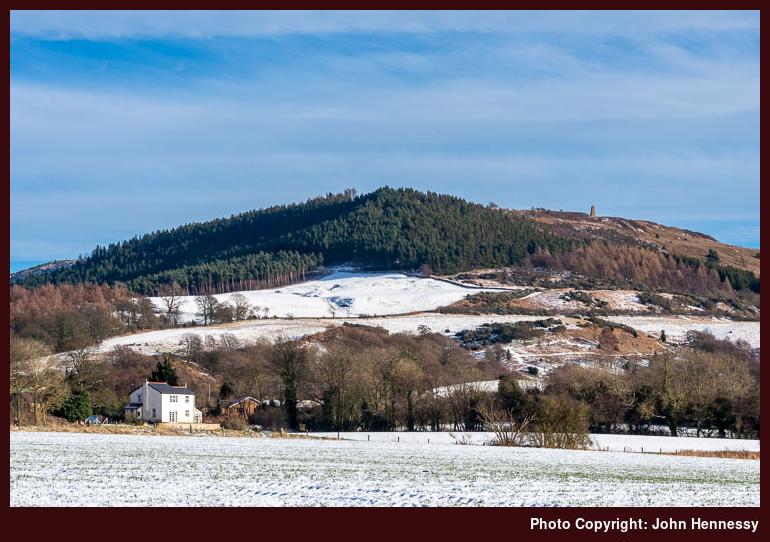
On arrival at Great Ayton by bus, I was greeted by bright sunshine and the frigid forecast proved to be correct with a thin coating of snow and many icy patches that required extra care as I went. The village looked well in the sun as I left it to go via the train station to Great Ayton Moor accompanied by views of the Captain Cook Monument on Easby Moor. The folly of thinking that going by bus would give me more time was exposed by the arrival of a train from Middlesbrough as I passed on the bridge over the station. It was only later when I needed to await a bus after missing a train that any wisdom such be extracted from the approach.
Nevertheless, I continued along Dikes Lane before leaving it for a public footpath near Gribdale Terrace. It may have been how icy the road had been that encouraged such a choice, especially with my going uphill. In time, I would meet with the Cleveland Way for the next part of my hike.
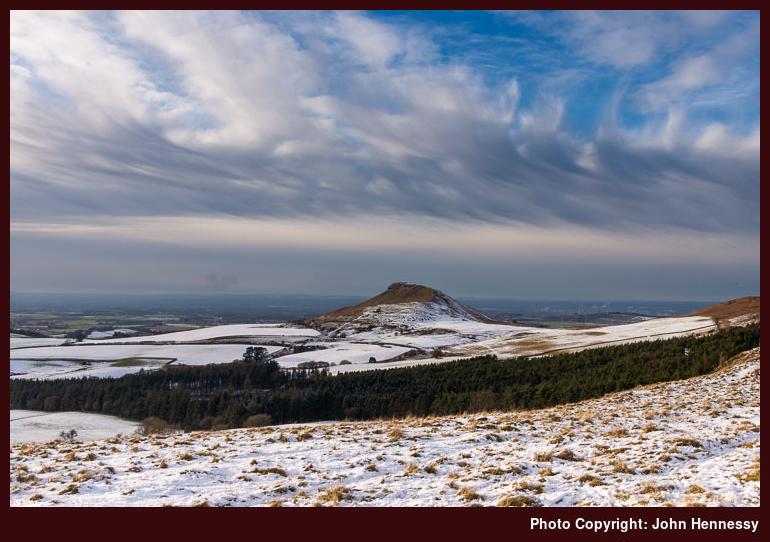
That was to lead me over Great Ayton Moor and Newton Moor while previously clear blue skies became filled with cloud cover. There were few others about so I enjoyed more solitary strolling with views opening up around me to include Roseberry Topping itself. The Cleveland Way does include the aforementioned hill as a side trip on its way from Helmsley to Filey and that decided the route I would take to reach its summit.
First, I needed to drop down carefully off Newton Moor after passing Slacks Wood. As I did so, I debated the good sense of proceeding with the ascent given the conditions. Looking at the photos since then though, I realise that I missed a trick because not all sides of Roseberry Topping were coated with snow so I could have gone with an alternative route to that which I took. This might have saved reproaches against my stubbornness and coming off a different way might have appeal if I had not scared myself on the way up.
The way down was testing with the prospect of a long slide down steep slopes not appealing to me given the chance of injury. There was a short controlled slide but that only restored confidence rather than causing the feared outcome. It all slowed progress in declining light and I sensibly put aside the possibility of missing a train in preference to risking a more serious slip.
Thankfully, the steepest descent was behind me quickly enough, though I retain a few lessons about looking for a less snow-coated route, having better traction equipment and even leaving a possibility for another time. They were being stored as I continued down to Aireyholme Farm where I met with a tarmac track back to Dikes Lane again. Though I missed the train by a matter of minutes, it was better not to rush and I returned to Great Ayton to await a bus instead. Then, my journey home began.
More like Summer
It was partly a desire to capture a photo of Roseberry Topping in sunnier weather that drew me back to the North York Moors and a February day that felt more like summer offered just that. Added enthusiasm came from the suspension of a Northern Rail strike that meant that no Saturday services had been operated by the company for many months. The train service restoration had the effect of encouraging me to embark on numerous trips to Yorkshire during the spring of 2019.
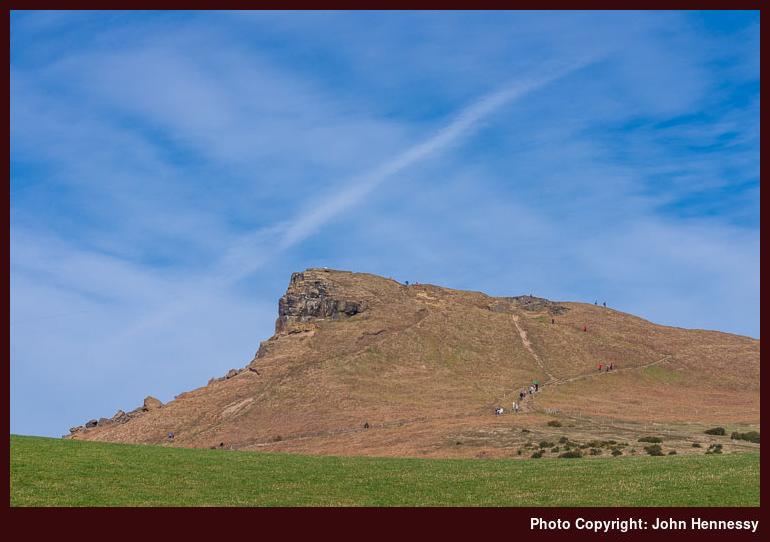
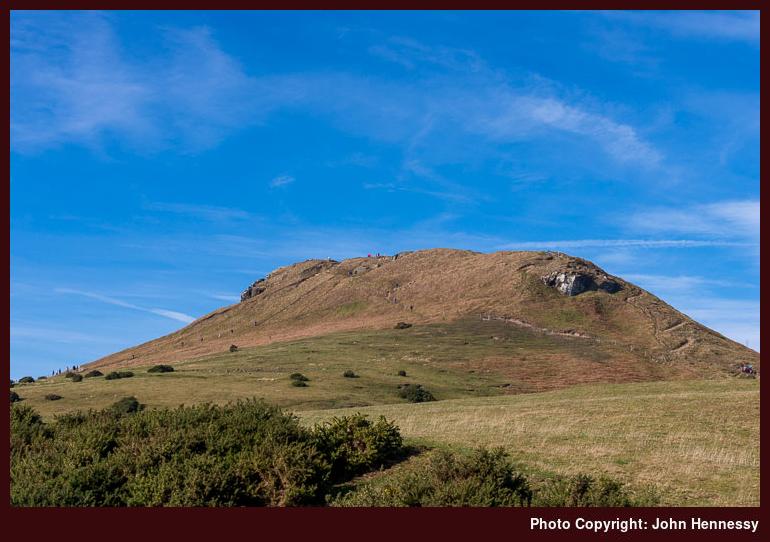
My previous encounter had happened on a wintry Wednesday so it was very quiet with plenty of solitary walking. It was not just the unseasonably mild weather that added company the second time around for this a Saturday during the spring school midterm break too. That almost guaranteed that Roseberry would have plenty of people around, as might be spotted in the photos by careful observers.
The first part of my way up there was quieter though and was a reprise of my previous descent route via Aireyholme Farm. With all of those who were around Roseberry Topping, my call to the summit involved little in the way of delay with some leaving me pass since they were slower than I was. In any event, I was seeking quieter surroundings and it did not take long to find them.
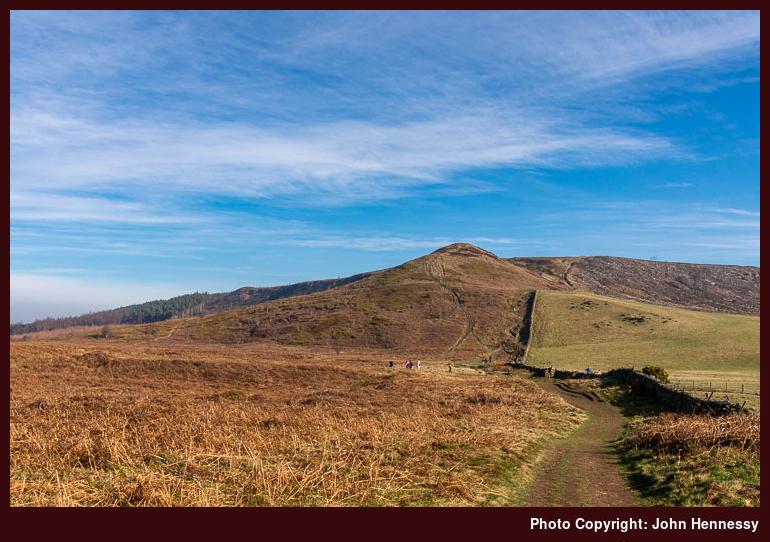
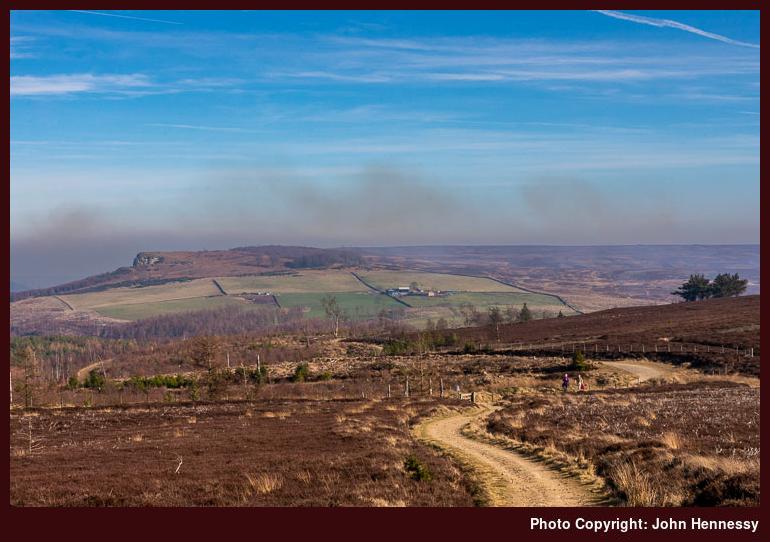
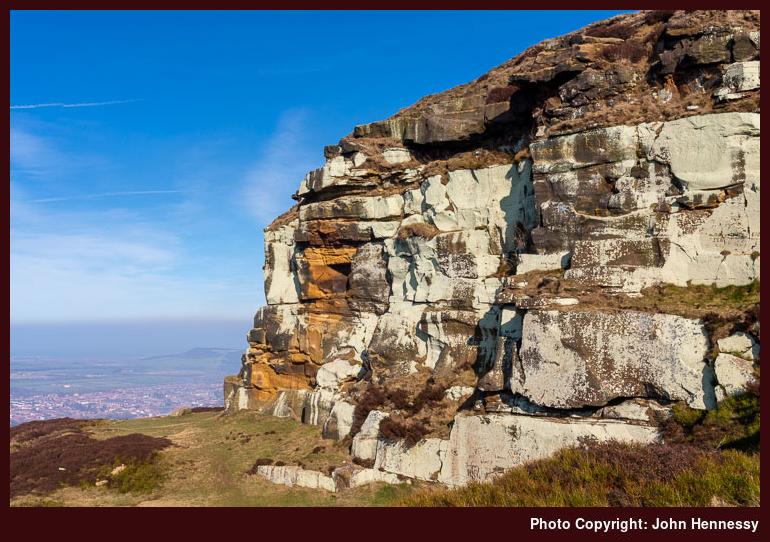
All I needed to do was to go following the Cleveland Way as far as Highcliff Nab. That journey carried me over Newton Moor, Hutton Moor and Black Nab along the way. As I crossed near Hutton Lowcross Woods, the landscape took on something of a desolate quality to my eyes for some reason. The variety of landscapes encountered on the day made sure that I would dwell on such an impression.
The final part of the journey to Highcliff Nab was a simple out and back affair that involved spending a little time around the crag. That said, it did not detain me and others were stationed there already so I started on the next part of my hike. That took me across Codhill Heights and Kildale Moor where I met with a tarmac lane. Then, I doubled back to meet with a path that went across Great Ayton Moor. As I got closer to the car park near Cockshaw Hill, I encountered more people again and there was a certain recognition of where I was since I was going past places that I first saw on my previous visit to the area.
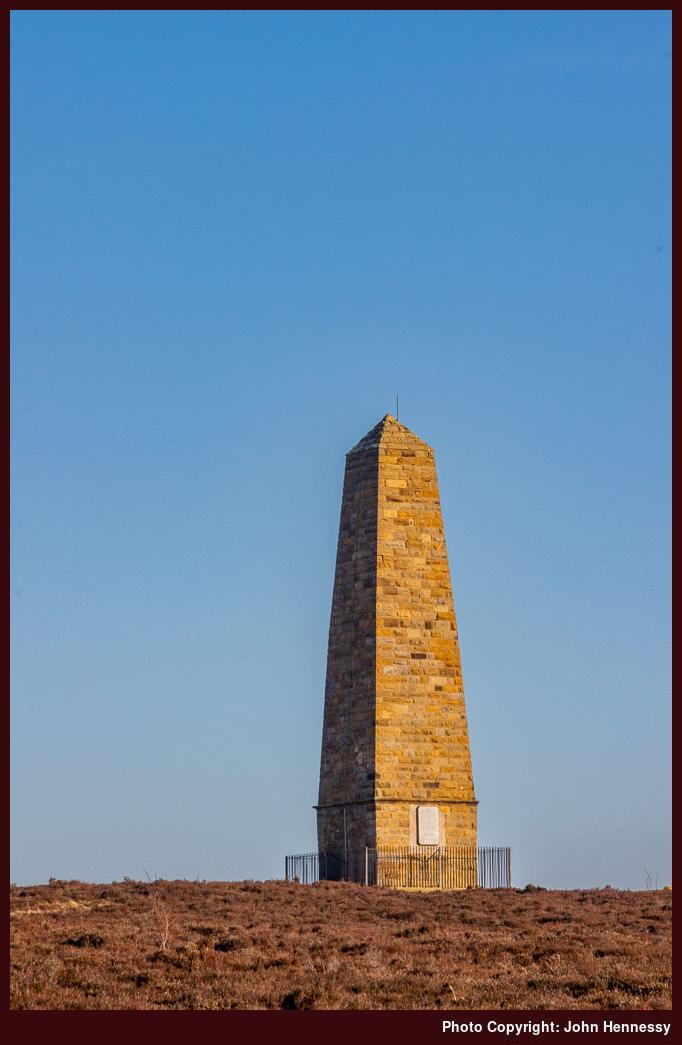
Reaching Captain Cook's monument was an attraction for quite a few visitors so I needed to share the trail over Cockshaw Hill and Great Ayton Moor to reach the obelisk on Easby Moor. There were still quite interludes though since it was by then later afternoon. After spending some of my own time up there, I continued down to Great Ayton's train station and gained more solitude along the way. The path down through Ayton Banks Wood was gentle at first but later became steep enough that I resorted to holding on to tree trunks in an effort to steady my nerves. That was behind me soon enough so I trotted along a bridleway and a byway to reach the Dikes Lane and the train station again after a good day of hill wandering. Even so, the possibilities of this area are far from being exhausted and other halts on the Esk Valley Railway may offer additional departure points for future explorations on foot.
Travel Arrangements
Getting to and from Whitby involved an outbound train journey with changes at Manchester and Middlesbrough, while the way back made use of the Coastliner bus service to get from Whitby to York from where I continued back to Macclesfield with a change in Manchester. The first trip to Great Ayton needed a return train journey between Macclesfield and Middlesbrough with a change in Manchester and bus connections were used to get between there and Great Ayton. With changes in Manchester and Middlesbrough, the second journey to Great Ayton was an all-rail affair unlike its predecessors.


