Category: Cumbria
An eighth birthday
 5th May 2014
 This bank holiday weekend is being a quiet affair for me. With a cold to weather, it certainly has not been one for grand designs and the weather has not been sunny all the while either. Saturday was sunny around Macclesfield though and I got out for a local evening walk around by Prestbury. This time of year has much to offer, even to those not going at full power,
Yesterday saw me head to Alderley Edge for a walk around by Hare Hill. I may have followed the route in an anticlockwise direction instead of the intended clockwise one, but I was not along in doing so, and I left the best for the return section from Hare Hill. It really is very pleasant with a multitude of bluebells putting on a pretty display. A cantankerous Jack Russell terrier slightly spoilt things by giving me a nip around my left ankle, but that will fade in the fullness of time. A stop at the Wizard Tearooms for a bacon barm and a pot of tea made amends, and I chose a more off-road course back to the village to catch my bus home.
This blog is entering its ninth year and things have changed over the years. When I started it, hill wandering was something for which I had more time than I do today. Nevertheless, I still enjoy getting out and about, and there are trip reports to file. My last hill outing was near Llangollen in January, so it's well after time for another. If only life events offered a clearance, who knows where my mind may roam.
Currently, I am catching up with unread issues of The Great Outdoors and Outdoor Photography, so the shelf of ideas could get to see more on there. There are places like the Yorkshire Dales where I have not been for a while, and Cumbria's Lake District calls too. Summoning the energy to devise a scheme or more ahead of some alluring weather could produce results, so there are rewards for any display of courage regarding an immediate future. Life is for living, after all.
A circuit by the River Wye
9th February 2014 One thing that strikes me about Britain is how you find the same river names turning up in different places. Those that come to mind include the Ouse, the Derwent and the Wye. There is every possibility that some have come upon this post looking for the Wye that rises near Pumlumon in Wales between ducking and diving across the border between Wales and England before reaching the Severn estuary near Chepstow. As it happens, I quite fancy spending some time near Tintern and such places, but that has yet to happen. Pumlumon, where the Welsh Wye rises, has remained untouched by my footfall too, so that's another possibility.
Derbyshire's Wye and Preceding Occasions Spent Beside It
What this piece features instead is another River Wye, the Derbyshire one that rises near Axe Edge before dropping into Buxton and winding its way towards Bakewell before then going on to join with the River Trent. It is a river that I have been near more often than I had realised. The reason behind that discovery is that all my visits to Buxton have put be not far from its course without my realising it. There have been a fair few of those since my cycling there on a Saturday in August 2000. That was the first and only time that I did so and the steepness of the route followed by the A537 not only convinced me not to return the same way that even but also triggered the start of my hill wanderings and ensure that buses have been used since then.
Speaking of buses, further forays have been facilitated by them and one January day spent going further than Buxton to stop at Miller's Dale, Tideswell and Bakewell. It was a sort of poking around the Derbyshire Dales that a guidebook had inspired. Getting home from Bakewell even might have involved more bus journeys, with one taking me as far as Chesterfield before another got me to Sheffield, where trains took over travel duties. There must have been a change in Stockport, though I scarcely can recall it now. Well, it was more than a decade ago and many things have gone through my mind since then.
My first real walk on the Monsal Trail was on an overcast Easter Monday in 2001 when I embarked on an out and back journey from Monsal Head. When I initially tried to recall memories of the walk, it worked better for the outbound trot, and I was unsure whether I returned on foot or not. However, I now reckon that I must have retraced my steps on foot as well. With these things, you need to be careful that later memories are not getting mixed with earlier ones.
A Saturday during July 2001 again saw me following the Monsal Trail with a then new camera, a Canon EOS 300 film SLR, and with a lot of sunshine around too. The starting point was Miller's Dale and I remember the diversions that took me around by places like Cressbrook and how narrow the river valley got in places. Since then, former railway tunnels have been reopened, so the whole trail becomes a very reasonable cycling excursion for anyone. It was a delight to see the Monsal Viaduct with sunshine upon it, though it's best to remember that photographing the dale from Monsal Head is best done in the morning with the sun in the east. Otherwise, lens flare and undesirable exposures will stymie your efforts. From Monsal Head, I did not follow the trail all the way into Bakewell, but instead deviated to visit Ashford-in-the-Water before continuing to my destination. It was a good walk and that remains worth repeating.
Tideswell saw me visit again in December 2005 before I continued towards Litton and a descent into Cressbrook Dale to reach Monsal Dale. There again was a diversion towards Ashford-in-the-Water on the way to Bakewell. It remains a memorable day despite greasy ground conditions. A passing fellow walker tumbled to soil white woollen gloves, so my use of walking poles was far from daft. Apart from saving knees from wear and tear, they also steady you and stop most if not all accidents caused by slips.
Another Encounter
Last year, I was reminded of how long I had left Derbyshire without so much attention, and I redoubled my efforts. Thinking through those memories, some faded, again makes me keen to explore old haunts and reinforce those memories with new ones. That was partly why I got myself over to Bakewell on the penultimate Saturday in April of last year. Apart from the prospect of some sunshine, the need for some me time following a recent life event was another motivator.
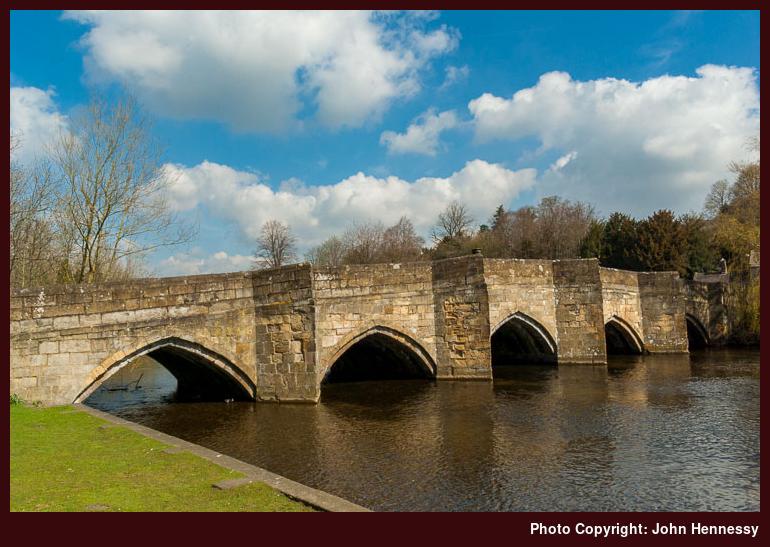
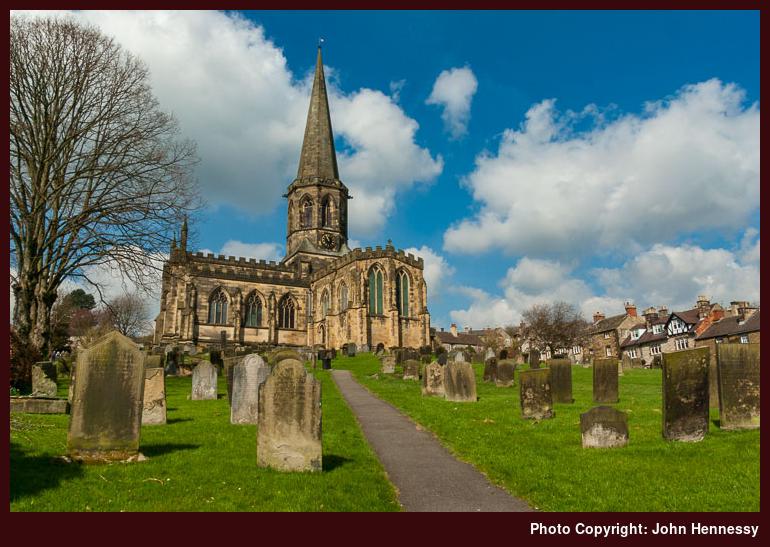
What resulted was a circuit from Bakewell that took in Ashford-in-the-Water and Monsal Dale. Before leaving Bakewell, though, the presence of sunshine allowed me some photo opportunities that I never had to the same extent before. For instance, I only ever got near Bakewell's main bridge over the Wye in declining light, so that needed addressing. Then, there was the churchyard that I only remember visiting under overcast skies. With a day ahead of me that allowed plenty of time for walking, I was not to overlook chances like these.
Not far from Bakewell's parish church, I found a useful public footpath for getting to Ashford. The sun ducked behind clouds while I was crossing fields, but it was not as if I were being deprived. One thing about the Derbyshire Dales is that once you are above the dales themselves, the countryside is largely level up there like a plateau and the photos end up needing panoramic compositions unless interesting skies are what you get over you. Along with many fields, roads such as Standedge Road and Crowhill Lane were crossed too, with navigation across a tilled field after one of these feeling uncertain until I reached the next one along. Bumbling around in someone else's field is not my idea of a walking, especially with sharp words ringing in my ears, as happened one December Saturday afternoon around Sedbergh. None of that rancour spoiled this day though, and I followed the lane until I saw a path down by a mast that dropped me onto the A6 near Ashford-in-the-Water. The descent was steep yet steady and plenty of views of the lie of the land below me occupied the mind while navigation was steadied by a useful wall. These types of things get called handrails and are invaluable.
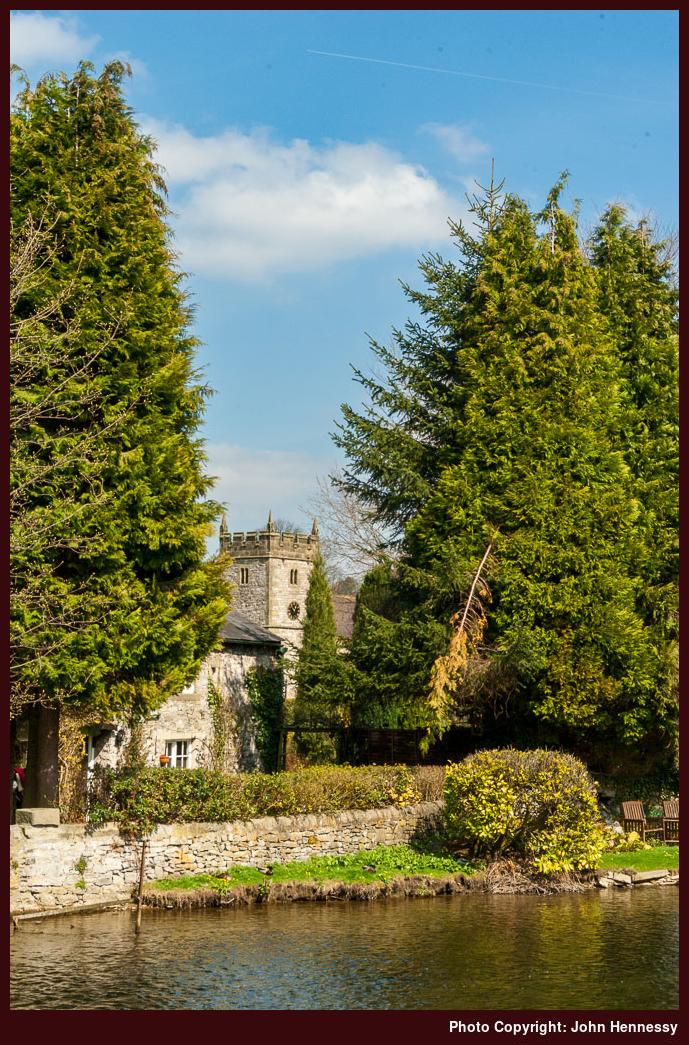
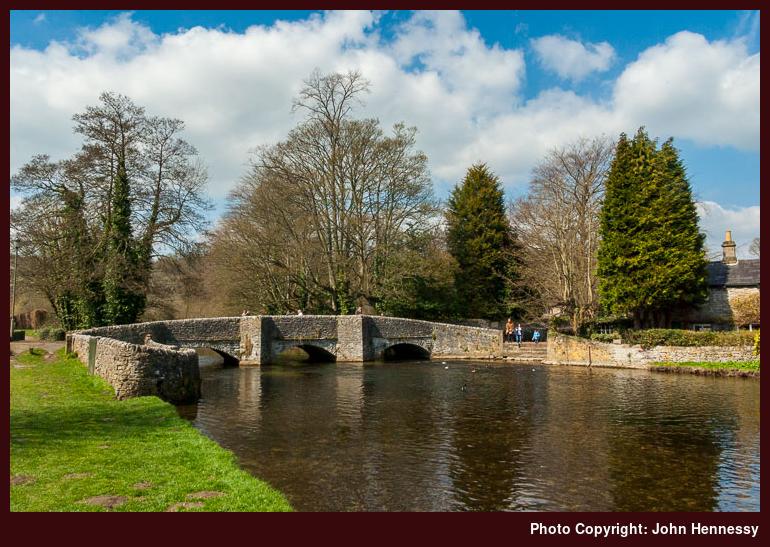
Getting across the A6 was less tricky than it might have been, and I got to spend some time around Ashford. As luck would have it, the sun was playing hide and seek on me with the clouds, so I needed to wait before I had the light needed for the sort of photos that I had in mind. Thus, I was delayed around Ashford's church and chose a lunching spot near the Sheepwash bridge, a packhorse structure where lambs were pinned in at one side (the left of the picture) and ewes driven across to wash their wool before shearing began. These days, the Wye is more likely to have trout than sheep in its waters. Its older use would generate an amount of commotion anyway, and I wonder how modern minds would have perceived such a practice, with all its guile and herdsmanship. Photography and strolling appears to be its main uses now as it is closed to motorised traffic. When I was making the most of the midday sun, folk were ambling about and that may not be to everyone's taste, so the early morning light that falls on the bridge from the east causes anyone making use of that to have little or no human intrusion in their compositions.
From Ashford, it was back across the A6 again to make my way towards Monsal Dale. There were two choices: a lower level path to Lees Bottom that strayed not far from the A6, and a less direct course around by Sheldon and Deep Dale. Because I did not fancy being beside road traffic any more than was needed, I went for the Sheldon route. A range of reasons could explain why this part of my walk was busier than that from Bakewell to Ashford. Even going uphill did nothing to dissuade some. Was it down to the time of day or the location? That is a question that I cannot answer, but there was no grumpiness with there being plenty of space to share on the way towards Sheldon.
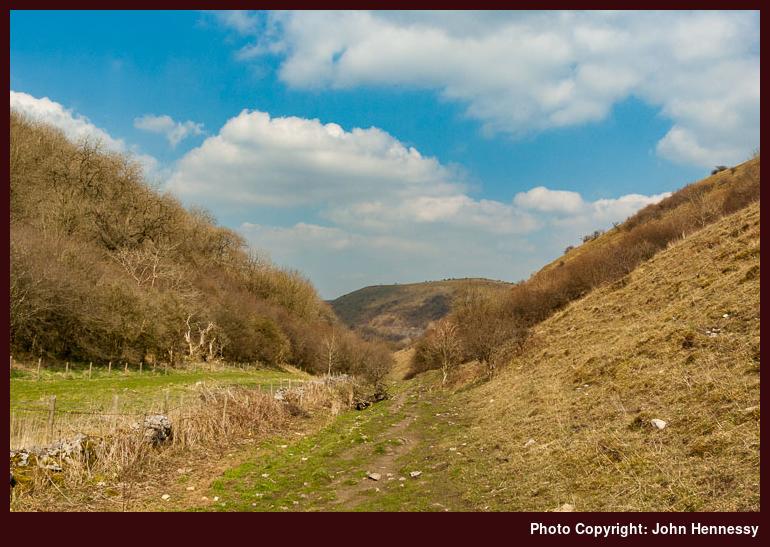
While passing through Sheldon, I was on the lookout for a public footpath that would lead me towards Deepdale. It looked as if I had found it, but something about its aspect left me getting cold feet. Lack of waymarks and a missing stile certainly did not help and visions of blundering in fields returned me to the road again. Others were more brave than me and I left them to go their way while I trod Johnson Lane with views of Magpie Mine to my left.
After turning right onto a busier road, I found my way to the unmetalled byway of Wheal Lane that led towards the path through Deep Dale. This is managed as a nature reserve for the preservation of its wild flower habitat by an organisation who I never encountered before: Plantlife. The clouds that had filled the sky as I journeyed around by Sheldon were breaking, and I began to hope again for seeing Monsal Dale in good light after giving up on the idea. In the event, I need not have worried, for cloud cover steadily dissolved over the remainder of the day.
That lower level path from Ashford-in-the-Water was crossed again, and some folk needed directions from me and I hope they sent them the way that they wanted. Before crossing the A6 at Lees Bottom, I stopped at a useful public convenience. This was without running water by design, a strange thing to many, and hand sanitiser was available instead of the soap and water that most of us would seek. That I wasn't the only one thrown by this became obvious when someone else needed the results of my perception.
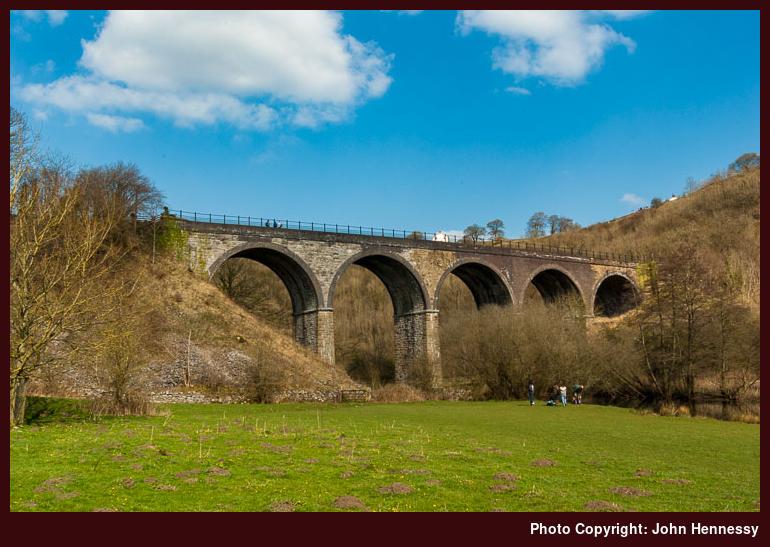
Once on the other side of the A6, the path into Monsal Dale beckoned, and I remained concerned about a rogue cloud blocking the sun for the final landmark that I had in mind for a photo: Monsal Viaduct. The bank of clouds had broken, but some shenanigans were going on over my head that kept me on my toes. Thankfully, nothing ruinous was to come of it, and I remained keen to get to my objective. What became clear was that it was not that far away from the A6, even if you feel that you are nowhere near it when at Monsal Head. Sometimes, it takes a walk for that sort of thing to become clear, and I also noted a useful bus stop for a future incursion around here.
First, though, I needed to get through woodland before being released into pasture not far beyond a weir that I also visited. This was a path that was well visited, and I had to share the views, which hardly was surprising given how well Monsal Dale is known and how near roads it is. Quite what John Ruskin would have made of all the visitors is a question that I cannot answer, but there was plenty of clearance was the making of photos. That meant that the valley remained peaceful and alluring of a sunny day near the end of April.
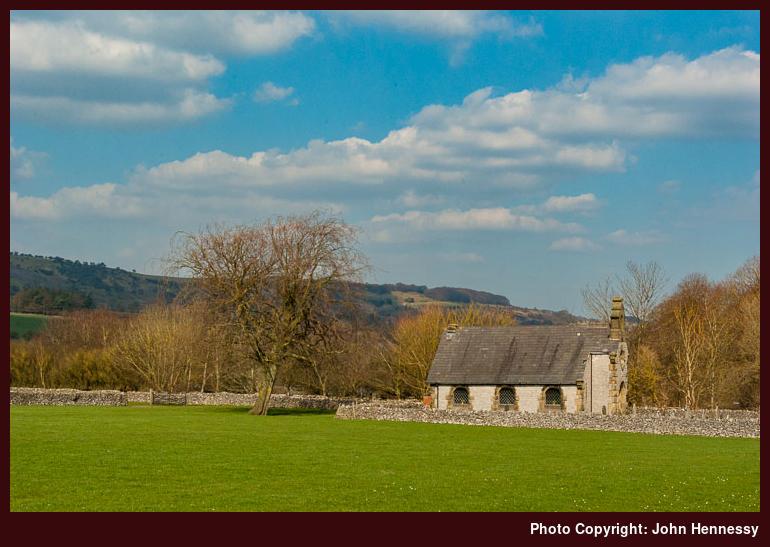
The recently reopened Headstone Tunnel was a tempting walking prospect, but my not wanting to waste sunshine was enough to keep me out of there. Instead, I retraced old steps to get up to the hotel above me. A delightful sight lay below me, and it was one that needed a morning outing to make the best of the scene with a camera. There by the roadside, I dallied a while and partook of an ice cream before continuing by road to Little Longstone before crossing a field to rejoin the former railway line again. This route may not be anywhere as necessary as it was on my first trots around here, but it usefully remains extant anyway.
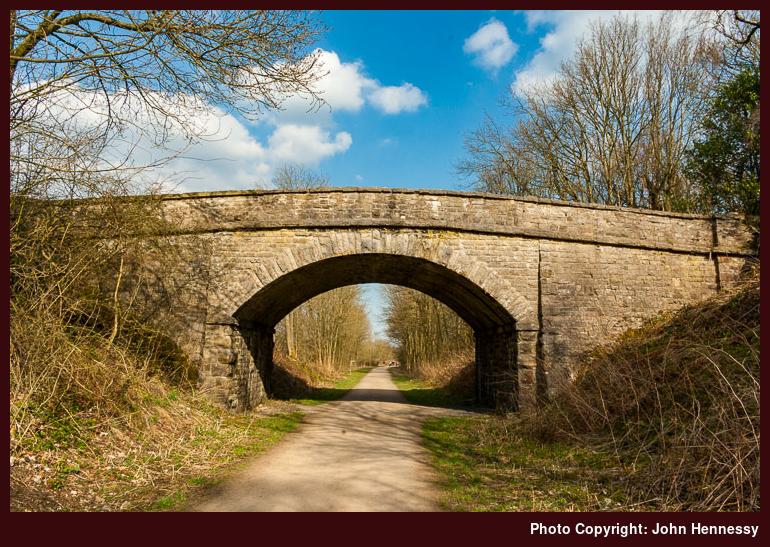
Once up on the trail, the number of cyclists using the amenity had greatly increased from what it was before, and I had every intention of following it all the way back to Bakewell. That resolve remained until I passed what formerly was Great Longstone station, but something beset me that never happened on the trail before: it began to feel like a slog. Looking back now, this almost feels like a lack of gratitude, given the steady sunshine that I was being bequeathed at the time. Maybe, I thought I should have been going faster given the good surface and there was concern that the same hardcore surface wasn't so friendly on my feet too. Also, familiarity might have bred contempt, so it might be an idea to follow it by bicycle in the future, and that sounds a delightful idea now as I write these words.
Eventually, I decided to leave the Monsal Trail for another bridleway near Toll Bar House. It was better than getting grumpy, and the green lane appeared to offer a more direct route into Bakewell too. Even with a hummock ahead of me, the new surroundings kept me interested and steady progress saw its results with Bakewell coming into view below me. Eventually, I was deposited not fat from the town centre and made for a waiting bus to start my journey home. That was a busy double-decker and, given the day, there could be no surprise at that. Clearly, others had good taste in weather and countryside, so I hope they enjoyed their day out like I did.
Travel Arrangements:
Bus service 58 from Macclesfield to Buxton and bus service 177 from the latter to Bakewell. Bus service 218 from Bakewell to Sheffield and travel by train from there back home with a change in Stockport.
The North
22nd January 2014 Having been tempted by a recommendation from Simon Armitage (Yorkshire poet and author of Walking Home) on the cover of the hardback edition in a bookshop, I got a digital copy of Paul Morley's The North and set to making my way through it. Anyone seeking something with a linear narrative will not find it here yet it lets one on a lot of the spirit of northern England in its own inimitable way. The mixture of memoir, digressions and side notes takes some acclimatisation and I found the sense of repetition in the book's early stages a little frustrating in that it felt as if not much progress was being made. Maybe that was because of the description of a young mind's developing consciousness and sense of place and belonging to there. Later on, things grew more linear when it came to telling of how Morley worked out his place in the world and what trade was to allow him to pay his way in it.
Interspersed between these, there is a reverse chronology of notable events in the north of England, especially when those relating to the development of the place and those who come from there. These include politics, industry and the better known folk associated with these. The interjections complemented any explorations of the conceptualisation of what it meant to be northern English and how the north of England came to be how it is in the main text.
Because I read the book in fits and starts before longer journeys allowed me to spend more time with it and grow accustomed to its eccentricities, a few months elapsed before I finished it during that trip to Edinburgh a few weeks ago. The non-linearity of the narrative meant that that it took some work before I got used to it and the fact that I was reading it on my Nexus 7 made me wish for hardback so that I could see more progress (one came into my possession later so I can dip in and out of it during free moments at home). However, it was the electronic gadget that ensured that the book was with me when I could make time to read it, a common failing of mine when it comes to paper editions of books. Apparently, the inspiration for the book's structure came from The Life and Opinions of Tristram Shandy, Gentleman and it was the familiarity of many of the places described within its pages that drew me along while filling me in on a lot of details that I otherwise would have missed. For one thing, I never realised how fluid the Cheshire-Lancashire county boundary has been over the centuries and there was but a single lesson found in those pages.
After the effort of working through The North, it's time for a more leisurely read and Ramble On by Sinclair McKay is just that. The story of how recreational walking became what it is for so many of us today may be somewhat familiar to me but there always are other insights and these are to be found here too. Still, I am tempted to sample Tristram Shandy to see just how contorted its narrative is and test how it inspired the flow of The North. For now though, that can wait because it is best to take things easy while life's events allow you to do so.
2012, before an advancing life storm
31st December 2013 For various reasons, this summary of my walking during 2012 is arriving twelve months late. That's mainly because I was not in the right frame of mind for writing it this time last year. The subsequent year has been life changing yet wandering through countryside not only did not stop but its restorative effects never were more needed. Before that though, things felt more steady and here is how things went.
January saw me staying local with a three counties stride (Cheshire, Derbyshire & Staffordshire) between the Cat and Fiddle Inn and Buxton that took in the Three Shire Heads bridge. It was having extra time on the day that allowed that to happen, even if I arrived at Grinlow Tower, or Solomon's Temple, too late in the day for much in the way of photography. Even now, I have yet to be there on an occasion when the conditions allowed for the sort of photographs that I like to savour, and there were two visits during 2013. Some things take time to happen, so patience is a prerequisite.
There no such constraints when I walked from Alnmouth train station to Embleton by way of Northumberland's pleasing North Sea coastline and the remains of Dunstanburgh Castle, now under the care of English Heritage. What I got to experience was the sort of crisp sunny day that adds so much to a walk. That was much more than a previous walk in the same area more than six years before.
March was a quiet month on the walking front because of heavy work commitments, and April was hardly any better, even if I was not working as hard. Even so, I did to walk up Nab Head near Bollington as an addition to a cycle that circled around by Pott Shrigley. Even with a heavy cold towards its end, May worked out much better with an evening spent around Tatton Park and other spots in Knutsford. The next day saw me get as far as Waterhouses in Staffordshire to fulfil an often aborted scheme: following the Manifold Trail from there to Hulme End. When that turned out to take less time than expected, I extended the walk to take in both Wolfscote Dale and Biggin Dale to finish up in Hartington. That was another design fulfilled on a day when sunshine eventually beat cloud cover to deliver its delights to anyone out and about. Later in May, I returned to Northumberland to visit Alnwick and Warkworth to see their castles. The day was hot, so it was best to limit exertions, and a previous heavy cold made that all the better as a plan. There were enough sights to savour anyway and, with views along the Aln and the Coquet available so easily, there was little need to rush along anyway.
The extended public holiday weekend at the start of June, the bank holiday was moved from its usual place at the end of May, offered an opportunity for a getaway and I struck lucky in Scotland's Eastern Highlands. Having based myself in Pitlochry, I took in the shores of Loch Ericht and sampled a little of the scenic drama of Glen Tilt. Sun was in short supply at times, and it limited what I could do when capturing a view of Blair Castle. Even that was better than the wetting that anyone attending the Diamond Jubilee Events in London, when rain that was very typical of the year pervaded. Just like a previous trip to Pitlochry nearly six years earlier, my walks were mere tasters, and I was more than happy with that at the time, unlike that preceding visit that left me yearning for more.
Having had it in my head for a while, I finally got to do an evening walk from Wilmslow to home after work during June, mostly using the route of the Bollin Valley Way except for where bank erosion necessitated an untidy diversion. It should have been a matter of reversing a previous walk along the route done of a winter afternoon whose timing mostly is lost to memory unless digital photos offer some resuscitation.
Even with 2012's reputation for wet weather, I still got some other pickings from its summer, and limitations on sunshine were a marked feature of otherwise dry weather walks. Looking on the positive side, it may have been better than walking in sultry heat. One outing in such conditions happened in July with a visit to Sedbergh, from where I walked as far as The Calf in the Howgill Fells. That out and back trek definitely was satisfying and left me open to more like it. That I tasted my best fish and chip supper added to the appeal. Maybe I should go there again, and there's more of Cumbria and Yorkshire to be explored or revisited as well.
August saw me head to Wales twice. First, it was to the Gower where I walked over Rhossili Common before picking up the coastal path from Rhossili to Port-Eynon by way of Worm's Head. The walk was glorious, even with cloud cover advancing from the west all the while. Also, I'd like to revisit the portion near Port-Eynon because it looked very primeval, and I was passing it with the object of catching a bus on my mind. As it happened, roads around the Gower were chaotic and the bus that I was making nearly was two hours late as a result. Still, I got back to Swansea for the night before light failed, and electrical rainstorms made landfall.
The Summer Bank Holiday weekend allowed time for a trip to Pembrokeshire, again revisiting somewhere not sampled since 2006. Only the Sunday of the weekend offered much in the way of dry weather, and there even were showers in the evening time. Before then, I got in a walk from Strumble Head all the way to Fishguard under ever cloudier skies. The day started well, so I saw Strumble Head at its best and very nearly got lured south-west instead of following the planned eastbound course. It was completed in dry weather, so there were no complaints, especially with the drenching that came the next day.
The second weekend of September granted us a glimpse of how the summer of 2012 might have been, and I popped over the county boundary into Derbyshire for a stroll by the River Dove that took me from Thorpe to Hartington. The southern end of Dovedale was mobbed with families and I couldn't get into my stride as I would have liked, but things were so much quieter north of Milldale that there was no such concern. What took over as I neared Hartington was how hot the day felt in the afternoon sun after I had emerged from Wolfscote Dale. Any thoughts of an extension as far as Longnor or Crowdicote were set aside in favour of returning home. Quite how those wearing suits during the well dressing ceremony stuck their attire in the heat is beyond me. Maybe I am more warm-blooded than some...
September ended with another sunny interlude, and that drew me along the Saddle of Kerridge and onto Tegg's Nose before I turned for home in the fading light. Ambitions for a trip to Teesdale in County Durham were frustrated by fatigue, so the more local yomp was what was needed. Indeed, it made me ask why I didn't head out among nearby hills more often than I did. Local walking has set that to rights, though a Teesdale incursion has yet to happen.
The first Sunday in October allowed a trot along the Goyt Valley that had lain in my mind for a while. On the day, so many walking possibilities came to mind that I had difficulty choosing between them. There was walking home from the Cat and Fiddle Inn to take in Shutlingsloe along the way. Trotting along the Gritstone Way between Bollington and Disley was another, though a late start put paid to that option; it was to serve me well later. The sight of clouds advancing from the south decided me at the Cat and Fiddle Inn, so I headed for the Goyt Valley, and it wasn't a bad choice at all. The ground conditions were well soggy after all the rain that had fallen during the preceding six months, and that was expected. Autumn and winter walks bring with them encounters with mud, so that was no irritation, and I had sunshine as far as the dam of Errwood Reservoir. Cloud took over then and the shore of Fernilee Reservoir was shadowed under overcast skies. Since I quite fancy retracing these steps with some sun, that is another excuse for a return sometime. When Whaley Bridge was reached, there was no dissatisfaction, and it had been great to clear my mind.
November saw me make two trips to Tatton Park near Knutsford after some photos of autumn colour. The first of these involved some foolish conduct on my part and what I got for my pains was a ripped jacket, soggy feet and clouding skies that thwarted my hopes. The second outing set things to rights and all was unperturbed again. It was in that spirit that I made use of a possibility left unused the month before: following the Gritstone Trail from Bollington to Disley with a visit to Lyme Park. The morning was glorious and clouds left the sun alone until I had got as far as Sponds Hill. Much was savoured before them, and it was my first sighting of sunlit Derbyshire hills from there. It was with satisfaction that I dropped into Lyme Park and ambled unhurried from there into Disley. There was one final trot before November was done: along the Macclesfield to Congleton along the banks of the local canal. The section between the Bosley locks and Buglawton was a delight, even under cloudy skies and with declining light. Though I repeated the trek in the opposite direction, it remains worth revisiting.
December brought more fraught prospects and Christmas week was a difficult one for our family. Worries about my parents' health pervaded, and there were much needed short walks taken for head clearance. One of these took me over to Tatton Park again and the winter sunlight did nothing to disappoint, if only I wasn't feeling so raw inside. 2013 then looked a tall order, yet I made it through the year. At the point, 2014 looks less foreboding, and it will be taken one day at a time. Life is not for grand designs right now, but smaller ones will do just fine. Hopefully, your 2014 will bring you good things, while I am happy to await what it brings me.
Revisiting the Howgill Fells
11th November 2012 Compared to the Lake District, this part of Cumbria has seen me nowhere near as often. In fact, my visits to Sedbergh can be counted using the fingers on one hand with two left unused by the calculation. The first time was at the end of a walk from Ribblehead train station that skirted the side of Whernside before dropping down to pick up the Dales Way that took me past Dent on a hot day in July. That afternoon was a quiet one with a football match involving the English national team drawing folk into whatever pubs are to be found there. The passing of the last bus of the day before my arrival meant a taxi to Kirkby Stephen that showed me more of a flavour of the peaceful countryside that is typical of the area.
My second visit was a snowy affair and took me up the slopes to venture onto the foothills of the Howgills themselves rather than skirting them as before. That white covering may have limited my movements as much as the limited extent of the December daylight. It made up for that in the bright sunshine with the vistas that lay about me and the Lakeland fells glistened too in the distance. It was a fabulous from atop the modest top of Winder before I descended from there to follow an indirect course that had me confounded at one point (I could have done without shouted insolent directions from a quad bike rider on a nearby road, though).
My incursion last July was set to disturb no one and it started with sunshine and blue skies, albeit ones littered with clouds too. It wasn't set to stay that way though and cloud had completed its takeover of the sky by the time that I really was up among the tops and later photographic efforts got stymied by that obstruction of the sun. However, that's not to say that there weren't advantages to what happened. July's sunshine can be warm so that change in fortunes made for cooler walking, never a bad thing.
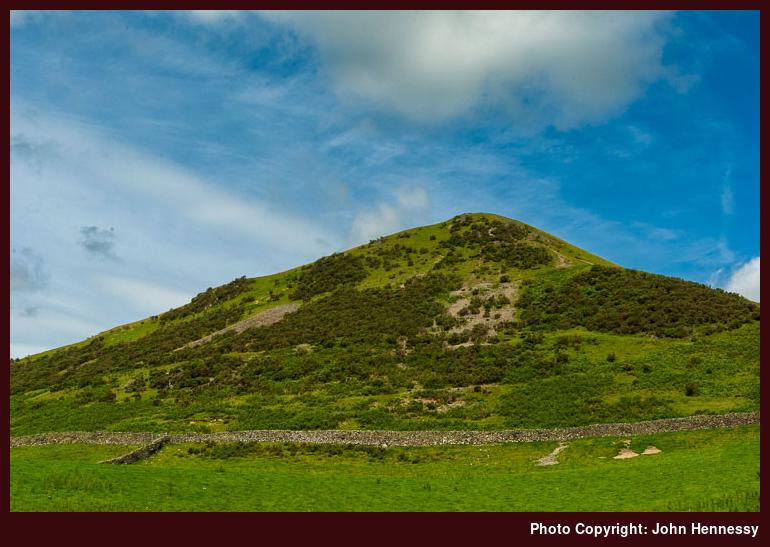
That was in the future as I made my way out of Sedbergh even if clouds got in the sun's way at one point as I did so. Picking my way along the dead-end road, I noticed the signs at various junctions highlighting the way to the fells. These seemed handmade affairs, so the locals must have had lost folk going around their patch instead of where they should have been heading. At the end of the road, it was time to take a footpath towards Settlebeck Gill with Winder to my left. A little height had been gained but more was to come, and the views opened out as I did so.
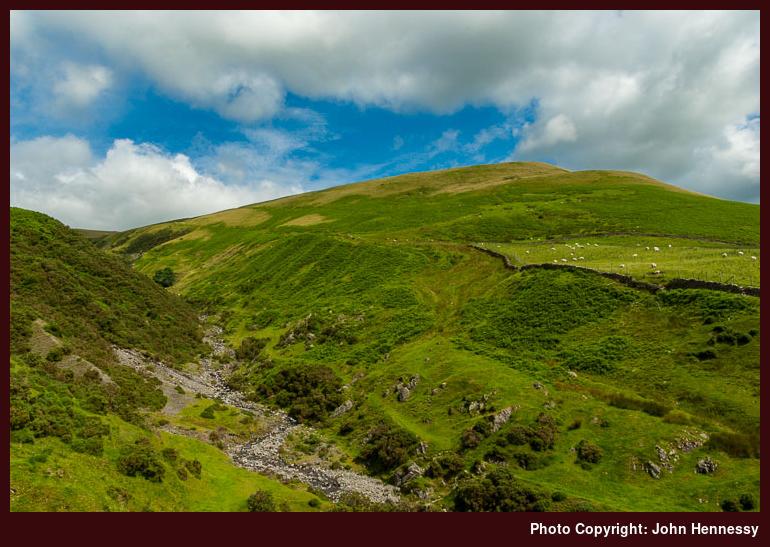
The right of way ended at the wall separating Sedbergh's commonage from other parts. This now is Open Access land so it didn’t matter that the way to the saddle between Winder and Arant Haw wasn't a right of way. That didn't mean that I wasn't using a well trodden path though and it even was distinct when I last used it. The, it was covered well with snow, so the surroundings looked so different this time around as I gained height: green instead of white. The going was steep though and plenty of stops were afforded to take advantage of the sunshine for some photography. After all, there was the steep cutting made by Settlebeck Gill between Crook Hill and the aforementioned Winder.
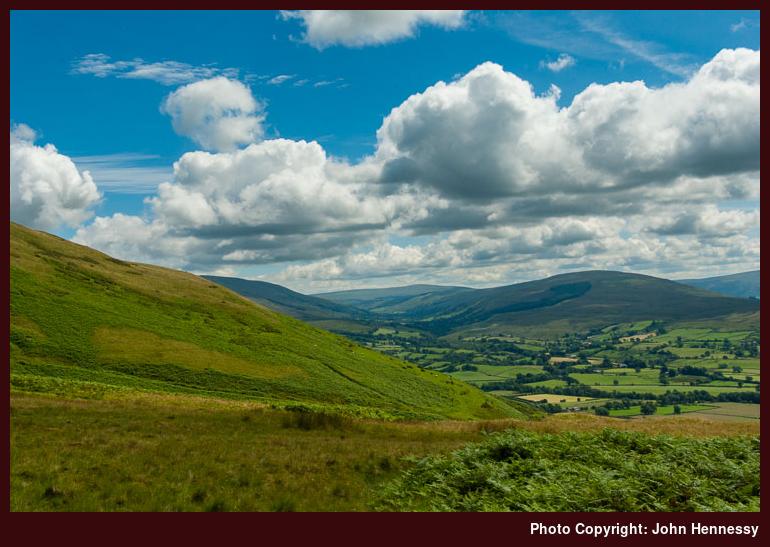
Hills other than the Howgill Fells were on show too. Whernside, one of Yorkshire's Three Peaks, cannot be overlooked, although its southern position makes it tricky for midday photographic exploits. Therefore, I contented myself with views towards the Garsdale hills and not too shabby did they look either. It's been a while since I have been that way so it might be an idea to make a return at some stage again.
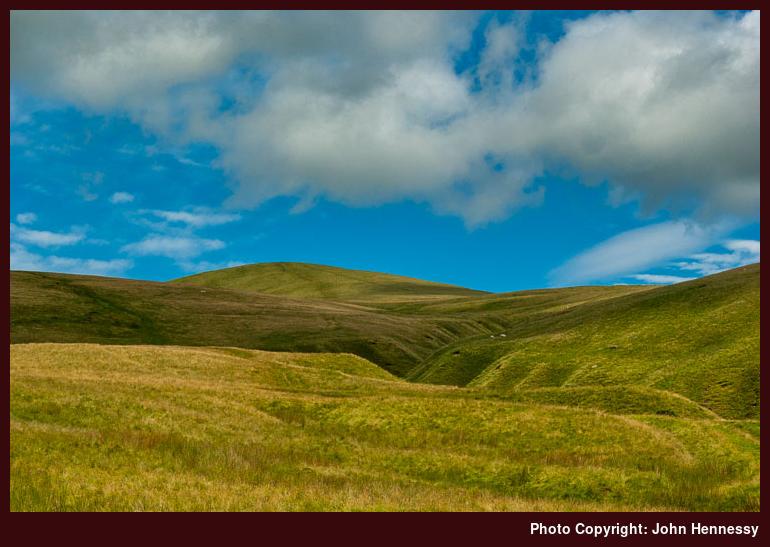
The Howgill Fells may not be as high as some, but that's not to say that they aren't steep sided. Anyone starting out from Sedbergh will discover that for themselves. However, that gradient does level off once you get up so far and, on my path, the going got a bit boggy when it did so too. Given how much rain had fallen since April, that came as no surprise to me. As I left the banks of the gill, Arant Haw came into view and I noticed something else too: a sheet of cloud approaching from the west that just kept going. Before that made its impact known, I spotted another sight that had a certain wonder about it: a spring burst forth to fill a pool and start a steam on its downward trajectory. This must be how some rivers rise.
By the time that I reached the saddle between Winder and Arant Haw, the day had become a cloudy one and that was how it was set to stay. While I might have liked some sun for more pleasing photos of more central Howgill Fells, capturing the sorts of scenes that I have glimpsed from trains before then, that was not to be. Undeterred, my walk continued and I deviated from the right of way to go over the top of Arant Haw, a sloping flat-topped affair. It was only then that I started to encounter any other fell wanderers after a silent solitary ascent from Sedbergh. Still, there weren't so many about and that was how it was set to be.
Leaving Arant Haw returned me to the bridleway again and saw me losing of that height I had gained. The ascent had been noticeable but far from overwhelming, but leaving Rowantree Grains, the saddle before Calders, involved a rather steeper ascent to the top of my next hill. Taking things steady was all that was needed and I found folk lunching atop Calders so I didn't delay, just to leave them in peace. My target anyway was The Calf and I was happy not be so far away from there.
Usefully, it was a matter of tackling relative undulations to get to the Calf. The gradients encountered while skirting Bram Rigg Top didn't prove to be at all taxing and there was another saddle to be crossed before the trig point marking the top of The Calf was reached. That may have meant loss of height and subsequent regain, but this was minor compared with some that you'd find; for instance, the central Brecon Beacons come to my mind here.
Folk must reach The Calf from starting points other than Sedbergh because I found more here than anywhere else on my trot. Subsequent perusals of issues of TGO have revealed one or two of these and they might have future uses. It still felt odd to find more folk away from habitation than near it, though.
As tempting as it might have been to continue walking deeper into the Howgill Fells from there, I decided to turn around at the Calf in the interests of making sure that it wasn't a rush back to Sedbergh to be in time for a bus back to Oxenholme train station. The fact that I found myself with ample time meant I could fit in some deviations from the outbound route. The first of these took me around some tarns on the top of the Calf before crossing some tussocky boggy ground to reach the saddle separating it from Bram Rigg Top.
On reaching the saddle, I stopped for some lunch before deciding to find the top of Bram Rigg Top. That wasn't so easy how flat-topped the hill is but I returned to the bridleway again after believing that I found it. The sun gamely battle with the cloud cover to brighten my surroundings and I stopped to see what I could do with what was on offer. My efforts now look more like record shots, so this could be an excuse to return.
Once the sun had given up on its efforts, I continued to a now quieter Calders before descending it again. My next passing point was Arant Haw, though I chose to stay on the bridleway skirting its side rather than going over its top again. More height loss followed, and shaggy horses came into sight. Though the lack of other folk might lead one to think otherwise, these creatures were far from being spooked by any passing stranger, even a journeying Irishman. Better lighting could have had me making more of them with a photo but I left my efforts to rest with a record shot.
Another deviation followed in the return to the top of Winder where its hill identification plaque awaited me. Another soul was about too but passed on before I was reaching the top to get in five hills in a single day. After looking around me for a little while, I retraced my steps to pick up a bridleway that lead to Lockbank Farm though I was descending the slopes of Winder itself. Steep ground wasn't to be escaped though and overcaution with time caused a premature descent that made it steeper than it should have been. While folk were in the farmyard below me, I negotiated the last steep section that took me back on the right of way again without any complaint from there; my knees were similarly understanding too for a change and they aren't always thus. It was an unplanned use of my right to roam in these parts.
With folk tending sheep in the farmyard through which the right of way passes, I decided not to disturb them and followed a path east along a wall instead. This returned me to that public footpath that I had used earlier to get to the Open Access land. On reaching the road end, I noticed that hens were out and about with a cockerel with them too. Speeding cars clearly don't go this way.
My return to Sedbergh was well before when my bus was to run so I could linger awhile. That extra time was used for ablutions and a little shopping for essentials. There were quite a few folk about the place too, more than I had encountered on previous visits if my memory isn't fooling me. Cafés were open too and it seemed set to be more of a lively evening in the town; hotel rooms were available and I would have been tempted but for my course being set. There was a chippy too and it was doing good business. The smell of its wares was enough to get me finding out why, as unhealthy as this kind of eating is. While I am no foodie, the batter that encased the fish was the best tasting that I'd ever found and the chips weren't bad either. More time on the hill would have been healthier than this indulgence, but the good might have been undone by any rushing. Sometimes, it's best to keep things relaxing.
For those photos that are to my tastes, a return to the Howgill Fells probably is in order. Since my day up there, that later bus which came in so handy no longer runs, so a hotel stay would not only make the trip more feasible but also allow me to spend a little more time in the area. The summer of 2012 also saw a good bus service linking Sedbergh with Dent train station on the Settle to Carlisle railway line. That might offer possibilities if it were to make a return next year. Before plotting any return to this corner of the Yorkshire Dales National Park though, I'll have a look at what the available travel options might be; they surprised me in 2012 and may do so again.
Travel Arrangements
Return train journey from Macclesfield to Oxenholme; outbound journey took me by Kidsgrove and Crewe while changes were at Preston and Manchester on the way home. Bus service 564 between Oxenholme and Sedbergh.


