Category: Long Distance Trails
Pembrokeshire photos added
 12th December 2006
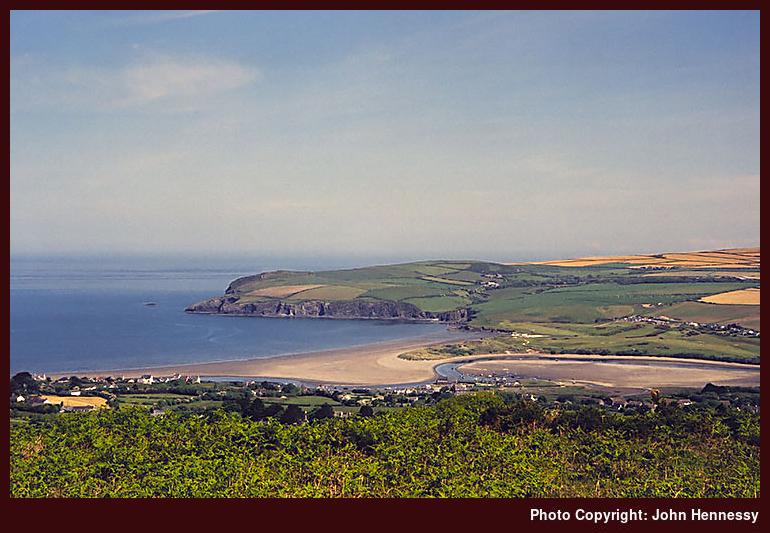
 It may have been six months since I spent some time there, but a selection of the photos that I made while out walking in Pembrokeshire have finally made it onto the web. There is now a new album to go with the trip report that was shared on here already. It was a glorious weekend visit so I hope the photos reflect the majesty of what I managed to sample while down there.
Exploring the Pennine Way
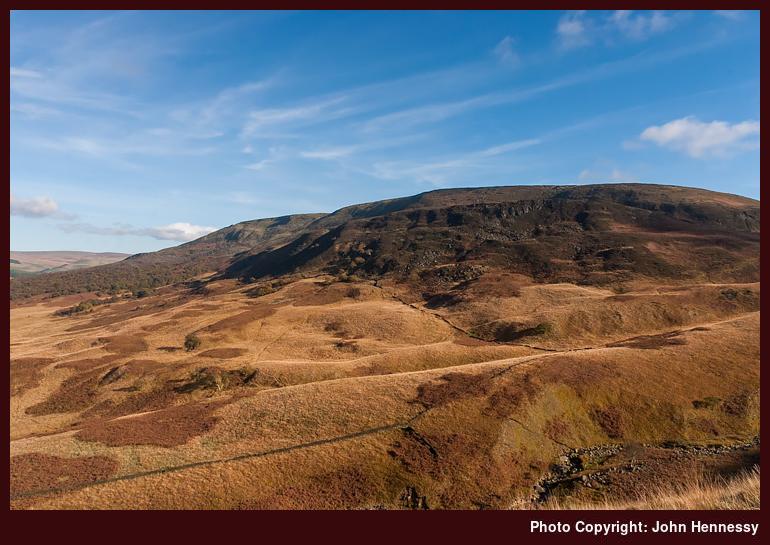
3rd November 2006 Last Sunday was not the first occasion that I walked along part of the Pennine Way; I already been along different sections at different times and in no particular order. Given that its southern terminus is at Edale in Derbyshire, not that far from where I live in Cheshire, my acquaintance with the long distance trail should come as little surprise. Last Sunday took me from Torside reservoir towards the Snake Pass but a sunny Saturday in September 2005 saw me journey along the Way as part of a walk from Edale to Glossop. Before that, I journeyed from Marsden in Yorkshire to Hadfield in Derbyshire, taking in another part of the way on a day that started out glum and ended up glorious.
While all that means that I trotted along most of the way between Marsden and Edale, there are other short sections on which I have been as well. For instance, in July 2002, I walked from Hebden (near Grassington in the Yorkshire Dales) to Malham via the Dales Way, Mastiles Lane, other paths and, of course, the Pennine Way. That meant that section between Malham Tarn and Malham has been visited by my boots. Another short Yorkshire section that has received attention from my boots is that around Pen-y-Ghent in Ribblesdale: the Way goes right over this member of Yorkshire's three peaks (not ideal for tired legs at the end of the day, then).
Reviewing this uncoordinated series of visits has got me thinking: what about a concerted effort? I am not talking about doing it all (or the parts that I have yet to encounter) in one hit but planning to complete it in sections rather than the hotchpotch approach that I have taken to date. For instance, I have been looking a hill day staring in Marsden and heading to Littleborough, Todmorden or Hebden Bridge, depending on how fit I feel and the length of the day. Another thought is to have a look at the northernmost sections around Bellingham and Kirk Yetholm, its northern terminus. Both are reasonably accessible with regular bus services. Then there is everything in between; Terry Marsh's Pennine Way (published by Dalesman) and a good deal of travel planning will help to make inroads on that front. This venture would take me into areas where I have to encounter and some that where my encounters have been so fleeting that they may as well not have happened at all. Alfred Wainwright (of Pictorial Guides to the Lakeland Fells fame) may not have liked this long distance trail but the idea of completing it all or just seeing more of it seems an appealing prospect to me.
A Pennine Way Stroll
1st November 2006 Last Sunday, I did get out to enjoy the unseasonably mild sunny day that was on offer. My journey by bus and train (bizarrely, the first train service to Manchester from Macclesfield on Sundays is 11:26: a fact that must have filled up the 09:05 Arriva 130 service that I used) took me to Hadfield in Derbyshire, where my walk started.
From Hadfield train station, I proceeded along the somewhat disfigured Longdendale valley to pick up the Pennine Way. Flooding what must have been a pleasant dale to create a series of reservoirs might be forgivable these days, but setting a line of pylons marching along it seems a contemptible notion. In the days when electric coal trains plied the now defunct train line, they might have thought that few would have noticed, especially given the presence of the busy A628. Now that the line terminates rather untidily at Hadfield, the former railway now forms the Longdendale Trail, part of the Transpennine Trail. Even with the apparent diminution of the place, the old rail-bed is used by many walkers, cyclists and horse riders who must be able to see past the blights littering the landscape. While photography is a tricky proposition with the wires and the pylons, I have to say that I can see the attractions too.
Once I picked up the Pennine Way, I headed more or less south from then on. The path climbs up beside Torside Clough before swinging west to Bleaklow before turning south again to follow Hern Clough and Devil's Dyke. However, along the way, I made an unintentional diversion, but it was nothing that a sight of the Wain Stones couldn't fix. This really is featureless moorland country and a GPS would make a useful safeguard, especially when clag comes down. When I got back on track, the stone waymark posts of the Pennine Way served a very useful purpose, particularly around Bleaklow Head and when hopping over and back across Hern Clough (the proofing of my boots was well tested).
I continued along the Pennine Way until it met the Doctor's Gate footpath that took me to Glossop before the light had faded too much. This right of way is classed as a bridleway, but I cannot see anyone cycling along it for a lot of its length, and I suspect that the same may apply to horse riding. In some places, attention is needed due to landslips, particularly on the section right next to Shelf Brook, though there is a section high up the valley that makes one think. Nevertheless, none of this stopped me reaching the pleasant town of Glossop and its train station, where a waiting train conveyed a tired but satisfied Irishman to Manchester Piccadilly for his train back to Macclesfield and home.
Postscript: Winter has arrived...
After a period of very mild weather, a spell of winter chill has arrived on cue for the first day of November (Irish primary schools used to teach that this was the first day of winter; I am not sure what happens these days). This is the type of weather that makes me look for my Karrimor Polartec gloves and think about making use of my excellent North Face Nuptse down jacket; the latter was purchased from Blacks earlier this year ahead of a business trip to Lund in Sweden. October had its share of wet weather but cheered up at its close with weather that wouldn't disgrace a summer day. Now, we have a seasonal cold dry spell to return us to reality, but the walking continues: I was wondering what to do at the weekend. The days may be shorter, but walks can still be done even with the change from summer time to winter time last weekend, a sharp shock if ever there was one.
Northumberland revisited
2nd October 2006 On Saturday, I got to revisit Northumberland and expand my knowledge of the county. The start was early but I did get to Newcastle-upon-Tyne by 10:40 and travelled north to Berwick-upon-Tweed aboard a rail replacement coach that very nearly got me there in time to catch the 12:00 bus to Wooler. Along the way, I caught glimpses of Bamburgh castle and Holy Island in the distance. I had plans to catch a bus back to Belford and walk to Bamburgh, and maybe beyond, before catching a bus back to Newcastle.
However, the call of the Cheviots proved too strong and I ended up in Wooler by 13:50 (a bit late, I know) after spending a little time taking in a little of what Berwick has to offer. In the glorious sunshine, everywhere looked fantastic but I had to choose between coast and hill and it was a difficult choice. After spending a few hours of exploring a section of St. Cuthbert's Way, I continued to Alnwick where I only spent minutes before continuing back to Newcastle on a bus that took me round by Alnmouth (where I had been in January), Warkworth (home to an enticing castle) and Amble before it made its way to Morpeth and its final destination. From there, it was the railway that returned me home after a worthwhile day that had its share of tight transport connections, especially on the way home.
Following my ramble, my ideas and plans for exploring Northumberland have firmed up a little more. For the Northumberland National Park, there are a number of gateways with reasonable public transport options: Haltwhistle, Hexham, Bellingham, Rothbury, Wooler, Kelso and Kirk Yetholm. Now that I have been to Wooler, I can continue my explorations at leisure (all going well). St. Cuthbert's Way, mentioned earlier, passes through the Cheviots on its way from Melrose in the Scottish Borders, before heading across Northumberland to its destination on Holy Island. The route reflects that taken by St. Cuthbert himself through his life. Alnwick, while home to historic Alnwick castle (home of the Duke of Northumberland), is also sited in hill country of its own and worthy a little more attention. Northumberland's coast remains an attraction with places like Amble, Warkworth and others worth revisiting. In addition, I have recently learned that a long-distance footpath following this coast and there is a good supply of cycle trails as well. With the land near the coast is reasonably flat as well, which makes cycling a viable option.
A weekend visit to Moffat
10th September 2006 I am back home after taking advantage of the fine weather by taking myself off to Moffat in Dumfries and Galloway to take in some of the walking missed by the hordes passing north on their way to the Highlands; they do not know what they are missing, even if the hills show themselves to all and sundry proceeding along the West Coast mainline and the A74(M). The Southern Upland Way is a major walking attraction around here, but there are many hills to explore as well. They may not be high like the Munros, but the rough country does demand some preparation and respect.
My previous encounter with the place was last June when I based myself in Lockerbie. That time, I got in the section of the Southern Upland Way between Moffat and Ettrick Head, but the day remained cloudy until my return to Lockerbie for the night. This time, I walked the Southern Upland Way from St. Mary's Loch back to Moffat, also covering the ground that I explored on my previous visit. I had designs on more walking, but the after effects of a 20-mile stroll and a heavy pack returned me to my senses.
To get to and from Moffat, I travelled by train between Macclesfield and Dumfries (well, apart from a rail replacement bus service between Manchester and Stockport: they were working on the line yet again). On Friday evening, a taxi got me to Moffat and I left the 114 bus to do the honours on the return. There was a bus on the Friday, but a 60-minute wait would have been in order. Mind you, if I had been more patient, I might have avoided a bizarre taxi conversion laden with strange coincidences.
Over the weekend, I stayed at the Balmoral Hotel, which offered exactly what I needed. The only fly in the ointment was the locals talking loudly among each other out on the street until 02:00 in the morning. And no, I have no idea what was going on. It never endangered my plans, though.
A useful Saturday only service (Houston's 130) got me to St. Mary's Loch and would have been a useful fallback if I decided not to walk all the way back to Moffat. Both St. Mary's Loch and nearby Loch of the Lowes looked so magnificent that I could have spent the whole day on their shores but I had other walking on my mind and it really did take some willpower to get going. Most of the Way followed paths and tracks through the hills, but a five-mile road walk was endured in the middle, a minor complaint given what else was on offer. As regards terrain, the only tricky section was around between Craigmichen Scar and Ettrick Head where the effect of landslips is obvious to all. The sight of sheep grazing on steep slopes littered with them was nigh on unbelievable; it looked like reckless behaviour. Recent land movements have resulted in the redirection of the Way around here (be warned if following the OS map) but I suspect that a more permanent route will have to go up and over West Knowe some day, a potentially tiring but safer diversion.


