Good weather for frogs
 10th March 2008
 Without doubt, I have shared similar sentiments on this blog before but I'll share them again: it never seems to amaze me how a honey pot walking location can blind you to other equally attractive places. On this occasion, it is again the delights of Lochaber and Skye that come to mind because, two weekends ago, I was enjoying a hike among the Arrochar hills in Scotland. Since then, I have pored over maps and the quality of the hill country really makes me wonder why I never explored the area before. A peek at any map will reveal a goodly number of useful paths and tracks through some accessible and fine countryside. Some offer ways to the summits of Munros and Corbetts and this presents me with the idea of ascending a top or two; I have yet to stand atop a Munro and this part of Argyll may well change that.
Returning to the subject of hill tracks, it was an inspection of ScotWays' very useful Scottish Hill Tracks that set me up with some ideas for a trip, as it has for many of my explorations of Scotland's wilder places. The old rights of way in these parts seem to offer opportunities for shorter days, a useful thing if you don't have the whole day to spare. One such idea was a circular walk from Arrochar through Glen Loin before following Allt Coiregrogain up to Bealach a' Mhaim and dropping down towards Arrochar between Ben Arthur (The Cobbler) and Beinn Narnain. The book describes it the other way around but I had my reasons for doing in reverse if my plans were to come to pass.
The forecast was for showers but I had my waterproofs with me and remained hopeful for some sunny spells so that I could avail of momentary glimpses of the surrounding scenery at its most resplendent. I suppose that I could have gone for hill country in the Scottish Borders instead because of a drier forecast, but the idea of an earlier start was to override the idea. At 08:00, a Scottish Citylink coach dropped me outside the hotel in Tarbet, and I couldn't resist pottering down to the shore of Loch Lomond before continuing on my way to Arrochar. I thought that I was in for two miles of road walking but the idea of checking on train times revealed the possibility of following a good Forestry Commission path around the slopes of Cruach Tarbeirt instead. The first shower of the day came on me while I was on this track but it soon departed to leave very reasonable views across Loch Long towards The Cobbler and its ilk.
Within an hour, I had made my way into Glen Loin, a somewhat industrialised spectacle. For one thing, conifer forestry is very much in evidence there, but what really attenuates the appeal is the presence of two processions of pylons through it. Conditions underfoot were sodden and the going would have been on the challenging side were it not for the presence of a good track, even if a spot of puddle dodging was in order. The reason was dodging those puddles was actually more nature consciousness than trying to avoid getting one's feet wet. I was being greeted with sights and sounds that were new to me and on a scale beyond my wildest imaginings...
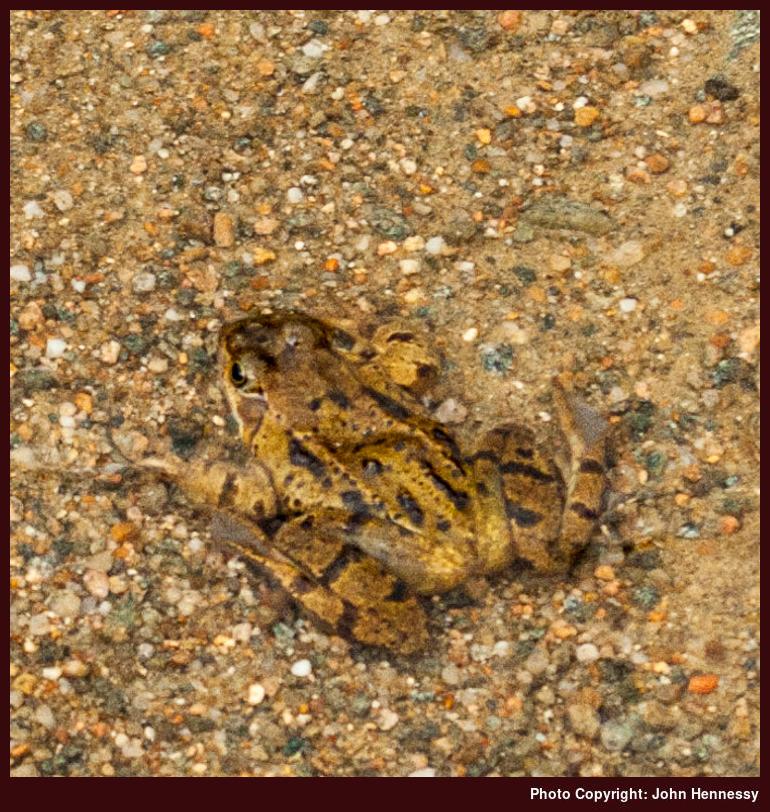
The various pools and puddles were playing precarious host to a precious cargo: frog spawn. The sight is enough to make you shudder to think what devastation an errant boot or tyre might do to the frog population and the idea of pools drying out is no better. Being on the cusp of springtime, it was time for the creatures to do what comes naturally and they were everywhere, both on and off the track. Having one's reverie interrupted by the primordial cacophony of bullfrog croaking is certainly an experience that I will not forget and it just shows that you don't need to watch BBC television to encounter life of the cold-blooded variety.
That spot of wildlife watching shortened the journey up Glen Loin and I crossed Inveruglas Water near Coriegrogan to pick the reservoir track between Loch Sloy and Inveruglas. It was about this time that the dry morning interlude, that I had been enjoying, came to an end and a shower dumped its wares upon all that were out in it. Some had headier heights, like Ben Vane, but my sighting of the reduction in visibility on high might have made me reconsider my plans in the absence of the time factor that already had made me go for a lower level circuit than that which was originally in mind.
The shower soon passed, and my gear was working well in the conditions that were experienced. The sun made an appearance to dry things a little and the hills were resplendent with a sprinkling of the white stuff having happened on or near the tops. I followed Allt Coiregrogan on its northern banks but, rather than staying on the track to ascend the slopes to the initially intended bealach, I crossed the burn and started to follow a track that was to take me back towards the shores of Loch Long again. Another shower came and went while I was immersed in tree cover so that the landscape was bathed in bright sunshine when the views returned.
As time moved on, my mind was becoming ever more concerned with my getting home and I needed to return to lower levels first. A track traversing well up a steep slope is all well and good for the views that you get but getting down with an out of date map is another matter. The OS Explorer that I was using dates from 2001 and it very nearly misled me because the tracks had changed in the meantime; it's getting rather tatty now so its replacement might be in order. A brief spot of fumbling got my feet wet, but patience paid off in the middle of yet another shower when I came upon a well-engineered path with plenty of switchbacks on the descent; some don't appreciate such niceties as was evidenced by the shortcuts visible on the ground. The going was easy from here: follow the road around the head of the loch until you see a bus stop sign.
The showery activity was continuing with a vengeance now, so much so that it was becoming an irritation. The coach from Campbeltown turned up late, but that wasn't such a problem because it was the one from Oban that I had in mind. (That both stop at Arrochar within 30 minutes of each other is something that I consider a missed opportunity when it comes to providing a less sporadic public transport service.) Unusually for a Citylink service, I was left on the bus with my rucksack but I suppose that the driver didn't want to go out in the middle of a heavy shower. As the coach continued to Glasgow, there was no let up in the rain so I reckon that my departure was well-timed even if I left shortly before 15:00.
After a stop in Glasgow that allowed me to acquire a new pair of socks to facilitate a change to drier footwear later on, my journey home continued. It should have been a railway one of all the way but engineering works meant travel to Carlisle was by coach and two were needed because the first one broke down. Otherwise, I travelled on without any incident after a very satisfying day. The showers may have annoyed at the end and I may have barely scratched the surface of what seems to be a fascinating part of the world, but gaining the lie of the land for future visits was well worth any effort. I hope to return.
Narrowing a gap
28th February 2008 The chance of a few fine February weekends has allowed me to continue my Pennine Way project after what has been a lengthy hiatus. The gap in my northbound progress to Hawes has been between Haworth and Gargrave and it is one that's been nagging at the back of my mind for a while now. It's a section that may be a light workout for the legs in comparison with others, but that means that you are crossing farmland. That introduces field navigation, a practice fraught with opportunities for error due to OS' difficulty in showing the lines of footpaths to the required level of precision and accuracy on their Explorer maps. The same issue affects any attempt to exit any sort of sizeable conurbation into hill country. Waymarking does help but only if it is done properly and I have got the impression that it's not one of North Yorkshire County Council's finer points. In fact, the sight of homemade signs and arrows paint and on stone walls is a little amazing when the role of such interventions is to direct you along what is a major national trail.
If I had taken heed of such amateur signposting, I would probably have avoided heading in the direction of someone's backyard at the start of my walk south from Gargrave a few weekends ago. I was set right when I heard tapping on a window and I was suitably chastened because it was my own curiosity that led me to continue in the wrong way. Getting to Gargrave in the first place was a minor travail with the railway taking the strain for me. I had planned to allow a bit of slack by catching an earlier train from Macclesfield but it got cancelled due to a staff shortage. Nevertheless, everything went as I had hoped, even if the train carrying me from Manchester to Leeds got crowded by ramblers at Dewsbury; they seemed to have headed off somewhere else because Gargrave was quiet and I starting out, which might have been just as well...
Once I had got onto the PW, it was very much a case of paying attention as I plied my way. Finding the initial sign in Gargrave itself required patience and the same quality was much required as I made my way from field to field until reaching the canal at East Marton. After following the canal for a short while, it was back to more careful field crossing until I reached Thornton-in-Craven. I may have veered slightly off route at times, but things on the navigational side were keeping up. After Thornton though, a spot of navigational bumbling struck around Brown House Farm before I got back on track again. After my thankfully unobserved fumbling, moorland began its encounter as I headed up and over Elslack Moor before more field walking until I reached Lothersdale, a pretty spot. I did have designs on continuing a bit further along the PW before returning to civilisation, but navigation looked uncertain at that hour of the day and I chose an alternative route that mixed footpaths and roads until I met up with a bus stop near Lumb Mill Bridge from where I took a bus to Keighley and it was all rail travel until I got home.
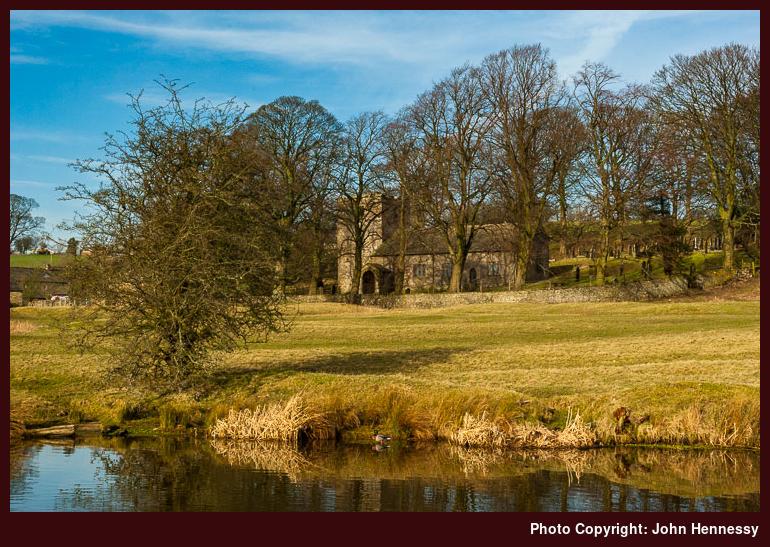
There was a gap between Lothersdale and Haworth to be closed and it wouldn't have received attention on the following weekend were it not for the fact that I couldn't muster up enough energy for a visit to Borrowdale in Cumbria on the Saturday. The fine weather was prodding my conscience, so a trip to Haworth was in order for the Sunday. The journey there involved: a bus to Manchester, a train to Hebden Bridge and a bus to Haworth. From Haworth, I got to Ponden Reservoir over public footpaths and roads in just over an hour, not very fast for some but I was satisfied. The day was glorious and icy conditions remained in places where the sun couldn't work its magic. The walking around the reservoir was easy and uneventful, but an energetic climb up and over Ickornshaw was soon to great me. Steady progress saw me up onto the moor where an observant eye kept me on track. The way down to Ickornshaw can cause confusion because of its many twists and turns with some homemade signposting in evidence; the waymarking people could do with visiting these parts. The good people of Ickornshaw have resorted to painting arrows on stone walls to keep weary walkers on track but I was to potter through to Cowling for a bus to Keighley and a railway journey back home.
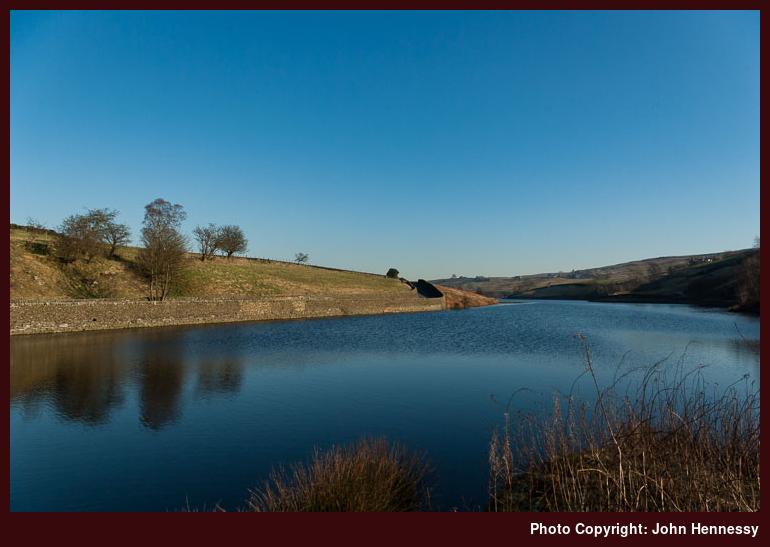
The remaining piece between Ickornshaw and Lothersdale still beckons, but that is another opportunity for exploring these parts rather than something maddening. The section itself is a reasonably short one, so further walking can be added to see these parts from another angle. It's good to see more possibilities...
Trampling snow on the edge of the Cheviots
12th February 2008 My trip reports seem to taking longer to appear here than I might like so here's a report of a visit that I made to Northumberland at the start of the month. The fine weather coaxed me out this past weekend too but there should be more on those activities to follow, hopefully later this week. Anyway, back to that trip up north...
February was beginning with a very promising outlook for snow and I was very tempted by the prospect. Having the whole weekend free for the first time in a while placed things into a sharper focus. However, the weather warnings that abounded might have tempered those thoughts but for a certain degree of cynicism regarding Met Office weather warnings. I shouldn't be getting the impression that the slightest suggestion of adverse weather results in the issuing of warnings for areas with even the slightest chance of disruption but that's what has been happening. I don't doubt that warnings need to be issued but I'd rather it if the precision was a bit better than what seems to be the case at the moment; then you can treat them with the attention that they should command.
Once I make my mind up that I am going away, I then decide on the destination. Thoughts of snow covered slopes put the idea of heading to Fort William on the the Caledonian Sleeper into my mind. Even with my scepticism of weather warnings, thoughts of marching into the face of a blizzard didn't appeal to me given my lack of experience of snowy conditions. So the Scottish escapade was placed on hold and I cast my eye over the weather map of the U.K. and that turned up Northumberland as an alternative. In particular, the hills near Wooler sounded an enticing proposition. True, I could have hugged the coast and avoided any difficulties but the prospect of trampling the white stuff wasn't at all discouraging.
With the destination decided, it was then a matter of getting there. Friday night saw Macclesfield getting a dusting of snow so I crunched my way to the train station for the first departure of the day for Manchester; this was the right kind of snow: crunchy, grippy and not icy and/or slushy. A change in Piccadilly got onto the train that was to take me to York and there plenty of sightings of snowy moorland on the way to Leeds. However, there was rather too much time to enjoy what looking outside since my train got stuck behind a late local stopping service and a lady suffered a loss/theft onboard (hope everything worked out OK for her since, any delay that I suffered was a minor problem in comparison). The result was that I missed my connection in a non too snowy York and arrived in Berwick-upon-Tweed an hour later than planned. There was no snow in Berwick either but I was to be satisfied that I still continued to Wooler by bus anyway: the white stuff was there for all to see on the hills, even if it had retreated from the lower ground.
I had been in Wooler once before, in September 2006, and I put my previous trip to use on arrival and avoided any dawdling before getting to the hills. The road to Wooler Common retained its dusting of snow and even was icy in places so rushing was not a good option. I didn't and still made my way onto St. Cuthbert's Way in good time to reach the snow after passing through some woodland. The landscape up high was well blanketed so some navigational confusion could be forgiven. However, the presence of good tracks and my having been hereabouts before served me well as I added to my experience of snowy conditions. Like my previous visit, I could only proceed so far before turning back and the turning point this time was further on than the last time. It was something of wrench to tear myself away from the quality Views west towards the Cheviot but I needed to return to civilisation.
A circular walk was in mind but my plans were changed by that late train. For a time, it looked as if my route was about to be an out and back affair until the idea of taking a diversion around by Humbleton came to mind. It was a choice that I was glad to have made as, for some reason, I started to proceed with childish abandon as my boots sank into several inches of powder dry snow. The snow had been dry and hospitable for all of my walk but this episode seems to linger in the memory. It wasn't as if I didn't enjoy the outing and I have thoughts of returning, always a good thing. Maybe, a walk from Wooler to Kirk Yetholm might be in order? Sounds good to me.
Bringing home some Staffordshire mud
7th February 2008 It's amazing how an idea can come to be planted in your head. There was a time when I used the prospect of a dull day to keep me home from the outdoors so to get other important things done. On the other hand, that might have gone too far because I then might have become far too picky about the days on which I headed out unless my determination to get out there was strong enough. Now that I think of it, I suppose that my using the prospect of making pleasant photos as a motivation for my wanderings exacerbated the situation, as did the idea of having a photo to accompany a trip report on this blog.
So, a comment from The Solitary Walker on a previous post was a useful counterpoint to all the above and this year may be the one when I head off into the outdoors without regard for the photographic possibilities. I have decided that it will not be the end of the world if a post sees no photo brightening up its text, so that gets me over one hurdle. In fact, that kind of thinking got me into the outdoors last Sunday week when the prospect of a dull day might have caused me to remain at home to do the usual chores.
Being a country lad, I have never been that bothered by imperfect conditions underfoot and, given the amount of Staffordshire mud that I encountered on my recent outing, that's just as well; thoughts, probably inaccurate, of where they get all the clay for their pottery began to enter the mind. So long as I have dry feet and gaiters to keep the muck out of my boots, I am fine. Of course, you'd never set out to come home muddy, but a misplaced foot is all that it needs sometimes. I recall going through a gate while following the Dane Valley Way in December 2004 where a single step left me with one leg up to the shin in mud so it can easily happen. The muddiness didn't relent after that, something that didn't surprise me because the year in question was far from being a dry one; I reckon that a washout would have been an appropriate description.
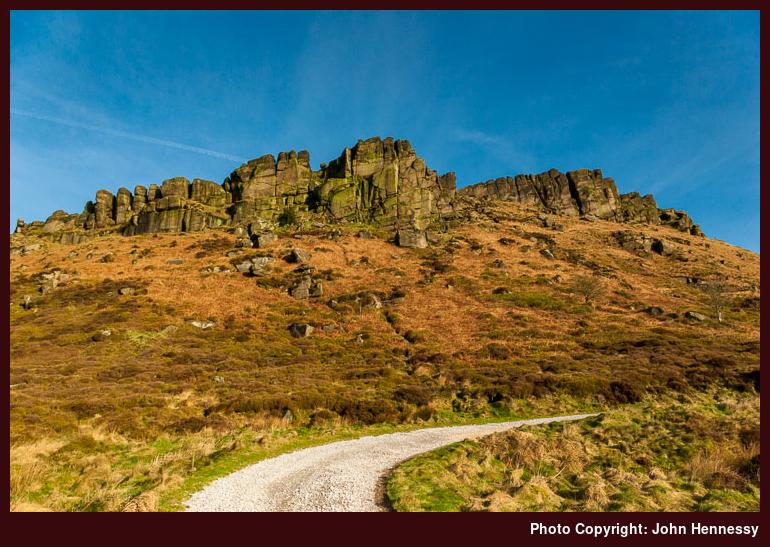
Coming back to the trip that inspired this post, a return bus ride on the 108 to Leek was enough to set me up for six hours of quality walking all around Tittesworth Reservoir and the watershed of the River Churnet. Once I managed to find my way out of Leek and onto part of the Staffordshire Moorlands Walks network, I was off tarmac with a good track to get things started. Soggy ground was quickly encountered but not for long and my hike eventually returned me to tarmac until Meerbrook, after which I lost it again. That's when things really got messy and the cause was the springs feeding the reservoir around which I was walking. A chat with a friendly farming type kept me away from what might have been the worst of it as I made my way towards Hen Cloud and the rest of the Roaches. In fact, I was momentarily back on tarmac again before walking up and over Hen Cloud in mild if blustery conditions. I wasn't hoping for sunshine, but that's what greeted me at this point when the seemingly immobile cloud began to break up. It turned a walking day into one fit for photography in less than half an hour, all a very pleasing bonus. There were plenty of cars parked on the side of the road lining the Roaches but I have no idea where everyone else was since I amazingly had Hen Cloud to myself. Some retracing of steps and following another section of the Moorlands Walks took me all the way back to Leek at the end of the satisfying and muddy day. Yes, some of that mud did come home with me but it didn't keep me from using the bus to get back. Neither will it stop me returning...
Relating adventures…
12th January 2008 Like many outdoorsy bloggers, I share my meagre adventures with the world. Of course, they are nothing like Irishman Pat Falvey's recently successful Beyond Endurance expedition to the South Pole. The Antarctic attracted its fair share of Irish with names like Bransfield, Shackleton, Crean, Keohane, Forde and McCarthy gracing the history of the continent's exploration in an era where the exploits were a world away from our interconnected present where websites can convey regular news of progress in a timely manner. In contrast to the blogs of members of Falvey's team like Shaun Menzies and Jonathan Bradshaw, the diaries of those explorers from the past were much slower in becoming publicly available. Having read Sir Ranulph Fiennes' Captain Scott, I detect resonances of similar hardships down through the ages even in the latest stories.
The heroics of Scott, Shackleton et al. were all the more profound given that they were venturing into the unknown; it wasn't as if they could fly back from the South Pole after reaching it, like present day explorers can do; they not only had to reach the pole but they had to return too and that sadly was Scott's undoing. Fiennes' descriptions of the hardships and disasters suffered on Scott's expeditions were so vivid that I needed some gentler reading to give me a break from the grim happenings being described. Damien Enright's A Place Near Heaven returned my imagination to a more temperate climate with is vividly pleasant observations of the activities of nature throughout the seasons in West Cork. Bemused recollections of crows breaking open shellfish by dropping them onto boreens, and puncturing car tyres with the resultant mess, certainly provided light relief. Maybe, I am not cut out for polar exploration.
Another world far away from mine is that of high altitude mountaineering, the type of thing for which the likes of the late Sir Edmund Hilary gained their fame. Names like Alan Hinkes and Chris Bonnington also come to mind. Climbing the world's highest mountains is another activity that more than takes the human body well outside of its zone of comfort. Reading of Irish mountaineer Gavin Bate's pulmonary oedema on Everest in a recent of Walking World Ireland certainly made me shudder (he managed to make his way back down from the death zone and is still very much with us). Stories like that do make one wonder why some people do this and that sort of wonderment brings my thoughts to Robert MacFarlane's Mountains of the Mind. Like Fiennes' book, that too ends with a hero encountering his goal and never returning alive; in Mallory's case, we may never know if he achieved his.
You might be wondering what has brought this lot on. Ironically, it isn't necessarily my wonderment at the exploits of those venturing into extreme places, though that of course plays its part. In the main, the real triggers come from a world more like that described by Damien Enright rather than that frequented by Pat Falvey and his kind. It seems that we Irish, rather than wallowing in the habitual and banal like poet Patrick Kavanagh, would rather relate the exceptional. There is a place for that but I reckon that the world is the poorer for Irish hillwalkers not relating their more accessible adventures in the Irish countryside. I, for one, would have a strong interest in them and, if I were to encounter a good blog musing over walking in Ireland as its mainstay, I'd be more than happy to give it a mention. In the meantime, I really should try to get in a proper hillwalking day over there this year. It shouldn't demand the heroics of Scott and others...


