Category: Reflections
Last hurrahs
 29th August 2024
 These days, this time of year makes me wistful at the passing of summer. However, it was not always so. This also is the season when academic years start, so there are beginnings as well as endings. Even then, the decline in hours of daylight and dropping temperatures brought any attempts to hang onto a sense of summer to an unyielding halt.
Towards the end of my secondary schooling, the purchase of a new bicycle meant cycling it home. That was not only a sixteen-kilometre distance but a frustrating struggle against autumnal winds. That which was plausible in the summer months had become less easy away from them. There were a few more years of summertime cycling, building up distance with the passage of time, that not only met shortening evenings but also the commencing of studies again. That was broken when I moved to Edinburgh, meaning that my time in Ireland was much more limited.
With the end of my university years, the association of autumn with beginnings was broken. It all ended with a job search that preceded by a tour of the Scottish highlands and islands with my brother before a quick trip to Ireland. In truth, the continuity of a research degree throughout the year had faded the sense of autumnal beginnings anyway.
My career saw me move to England, where I had much more time for exploring than I ever did. Without the ebb and flow of academic life, it was all too tempting to try overlooking the seasons, especially when moving south took up so much of spring and summer. August was when the hills of Cheshire and Derbyshire still any prospects of exploring hill country by bike. Walking became the way forward. As the month ended, I made my first trip to Wales in mixed weather that was hinting that overlooking seasons was not an option.
In ensuing years, the range of experiences broadened. A few saw me returning to Edinburgh in August to note how autumnal the place could feel at that time of year. Academic pressures and lack of experience meant that I had been overlooking this. That even included a week of conference attendance in Aberdeen during my research degree. The sense was there yet not prioritised.
Sometimes, autumn can make amends for a less satisfying summer. Being soaked around Lorn and Lochaber during a week at the end of July was enough to send me north again. Numerous visits to the Lake District in August had not healed wounds that only a weekend visit to Lochaber at the end of August could do. The year after was wet for much of the time, and I moved house too. Thus, a muddy November hike from the Cat and Fiddle Inn to Rushton Spencer marked something of a beginning.
September is a month with its illusions too. There can be a lot of sun, so it is easy to think of endless summer. That certainly fitted a sunny weekend around Moffat, crowned by a stunning walk along the Southern Upland Way. The changing colours and closure of businesses at the end of the busy tourist season countermand this. The latter hit me while on a September visit to Gougane Barra with my parents. Still, autumn can offer its chances for partial continuity with local hikes through October, November and into December. There have been a few years of that too.
Seasons are not the only transitions that we meet in life. A change of employer once became a major career event for me, Before the turmoil that led to this, there were contrasting trips to Yorkshire, one in September and another in October. The first was to a sunny Wharfedale, while an often grey Ingleton became my lot for the second. After the changeover, my energy for walking trips was curtailed, yet there was an October stroll along the High Peak Trail and a November excursion to Church Stretton. Though work pressures grew after that, the wandering was much needed and happened more often than not. When even that was halted, local cycles and walks often provided release.
Family ageing, infirmity and bereavement took hold of a few years after that. Grieving continued through spring, beyond summer and into autumn. Nothing could stop an October hike from the Cat and Fiddle inn to Whaley Bridge, such were my needs at the time. The real end of August feel pervaded a weekend divided between Durham and York. This may have been the Summer Bank Holiday one in England, but it often just feels too late for it. As it happens, the same complaint can be levelled at the timing of the British Spring Bank Holiday weekend.
Feelings eased by the next autumn, though a weekend spent in mixed weather around Oban reflected a sense of political tumult that only got more intense in ensuing years. Eventually, a sense of release emerged to allow a memorable September Swiss escapade. Bern and Kleine Scheidegg were grey under autumn clouds, yet Geneva, Zermatt and Grindelwald continued the sunny theme. Inheritance matters lay ahead, but not before a November interlude around Warwick, Stratford-upon-Avon and Bath.
International travel was getting going for me, and dotted the year for a few weeks. An end-of-August trip to sunny Oslo and rainy Bergen bookended the summer the year after the Swiss trip. Inheritance matters were coming to a head to show that office work need not note the passing of seasons, unlike outdoor activities. They were to cause exhaustion, so a later autumn would see decompression at the start of a much-needed career break. That year, there was continuity of a sort from a week in Sweden in August to October day hikes in the Peak District and South Pennines.
Before the pandemic years, my freelancing faced an autumnal challenge that got addressed before the onset of restrictions. In September, there were visits to Oxford and Bath following a summer in British Columbia. The autumnal atmosphere of those, even if people were dressed in period costume around Bath for an event, reflected my mood at the time, for more things were ending than starting in that year.
The pandemic did nothing to halt hiking and, in 2020, even caused a resurgence of cycling. Getting outdoors then was much needed, resulting in a surprisingly rich year of day trips. That more or less ended at the end of September on a day that turned from sunny to grey as I walked from Hayfield to Chapel en le Frith. In the subsequent twelve months, things became less restricted, perhaps too quickly for my sensibilities. That made the discovery of Combs Moss near Buxton an uncrowded godsend during August and September that year. More were to be found when a new variant brought more restrictions around the end of the year.
Since then, the last few years have been about changing what I own. Some is being sold, and I now have a base in Cork that I can use. Manageability is what I am trying to improve now. More time has been spent in the outdoors as well, especially in Ireland. When it comes to the ending of summer, that does not feature so much, though. In the year before last, August was ended with a sunny ascent of Helvellyn followed by less satisfying trips to the Ochil Hills and Trossachs, extending activities into September.
Last year, a longstanding personal matter got attention and progress has felt rather miraculous. That started in August of last year and was got helped by numerous hill walks in Wales in August and September, a trip to Guernsey at the end of August, and a satisfying October encounter with the Ochil Hills from Stirling. While there was a sense of curtailment as the year wore on and other matters intruded, it still is remarkable to note what was happening then in any case.
This year has seen numerous walking trips in various places. Wales, Scotland, France and Ireland all provide the locations. Irish responsibilities continue to be reduced alongside these, and I am looking to progress other work activities as well. Autumn this year is about looking forward more than looking back during a period of letting go of things.
Autumn can feel quiet, yet it is often busy. Places can feel less thronged, giving a sense of new beginning that gets thwarted by the increasing sense of approaching winter. Even so, the working lives of many become more busy, as do places of learning. The latter can be filled with hubris that then is vanquished by academic pressures. This is an odd time of year, looking forward with anticipation, but also looking back with poignancy. Maybe, that is what transition brings. Nevertheless, spring is more to my liking and likely will remain thus.
Exploring north and mid Wales through multiple seasons
28th August 2024 This time last year, I was making plenty of visits to Wales. There was a matter in my life that needed attention, and the getaways were a big help with these. Shoehorned within them was a bank holiday weekend foray to Guernsey, but that is not the subject of this piece.
Looking at my interim synopses of trip reports that await writing, I notice that there have been more in the last few years than I have mentioned above. Even 2020 had one, though there was none in 2021. That got me wondering about a multi-season survey. Though one might have felt wintry, I still believe that it fits in spring. Thus, winter gets excluded here.
Most were in Eryri National Park, while some featured parts of the Welsh coastline and even the heart of Wales. Wales is of such a size that its coastline is not far away even when hills are being climbed. On weekend stays, most of those places where I overnighted were by the sea as well. Only Chester and Wrexham, which helped with outbound travel during industrial actions on the rail network, were the exceptions. Aberystwyth, Caernarfon, Llandudno and Porthmadog were the coastal bases.
The list of hills includes Y Garn (near the Ogwen Valley), Glyder Fawr, Glyder Fach, Carnedd Gwenllian, Gyrn Wigau, Cadair Idris, and Pumlumon Fawr. The latter was summited twice, once in damp and dank conditions and the second occasion involved the endurance of chilly, obstinate gusts on what otherwise was a brighter day. Even so, I have my fill of the area for the moment.
Carnedd Gwenllian also the subject of two approaches, the first was unsuccessful in that it was halted by blustery wet conditions and lack of time. Better weather and more time made it possible to reach that summit; it may have been cloud capped, but there was plenty of sunshine at other times. Gyrn Wigau was crossed on that second trip, on the way back to Bethesda, as it happened. Cadair Idris is best known to me, and I again reached its top, albeit on a hot sunny day. That made for better views than I ever had before, so I descended to Morfa Mawddach instead of Minffordd (my staring point) or Dolgellau.
Of the Ogwen Valley hills, Y Garn got its own day on a circuit from Nant Peris. The descent proved challenging and prevented me from catching an earlier bus as I might have hoped. Glyder Fach and Glyder Fawr went beforehand and together. Such was the challenge of their terrain that I abandoned designs on reaching Llanberis for a return to the Ogwen Valley. Both days were hot, one in May and the other in July. These were day trips without any overnight stay, unlike others that have been mentioned in this posting.
The Wales Coast path got well trodden in the middle of all this traipsing. The most recent was the section between Borth and Aberystwyth last March. Sunshine felt like it was being rationed, yet that took nothing away from the walking. The coastal scenery had its own drama anyway. No weather or seasonality can remove that, no matter what.
Aside from that, it was the North Wales coast that got my attention. Even in 2020, I reached Llandudno for a stroll around the Great Orme, the only coastline exposure that I got during that very challenging year that most probably wish to delete. Last autumn saw two repeat visits, both after hill climbing the day before. On the first of these, I went on top of the headline instead of going around it. For the second, I walked along the coast to Llandudno Junction train station, savouring what I could see with some relish. The first attempt at reaching Carnedd Gwenllian may have been unsuccessful, but the Wales Coast Path got me to Bangor, and with some sunny accompaniment at times too.
All in all, there was quite a range of weather encountered, from warm sunshine to persistent rain to chilling gusts of wind. Given that, it probably is worth recording which season was which for all of these. For spring, it was the second weekend around Aberystwyth and the day hike around Y Garn. The first of these feet more like winter and the second more like summer. Speaking of the latter, that was when the day circuit of Glyderau happened and when I tried reaching the top of Carnedd Gwenllian, the latter of these followed by coastal walking leading to Bangor and around Llandudno. Again, the first was typical of high summer and the latter giving a hint of approaching autumn, which is when the Irish Celtic seasons would place it. The rest belong to autumn anyway, which remains undeniable, even given the ambiguity there often is about seasonal timings.
Pondering past trends
22nd August 2024 Some years feature multiple visits to a single area, or a sign of a developing theme. Going back in time, 2001 was the year of the Peak District, while it was the turn of the Yorkshire Dales in 2002. 2003 then became a year for the Lake District.
Other places were visited too as I began my hill wandering journey in those years. After all, the first decade of the century saw ever deeper incursions into Scotland, while Wales did not get neglected either. The mention of Wales brings me to 2005, when I spent a good deal of time around Denbighshire and Gwynedd.
2007 was a year for a single theme: long-distance trails. Both the West Highland Way and the Gritstone were completed then using a section hiking approach. That has not been the end of long-distance trail walking for me, partly because it is difficult to avoid them if you want something more established than making your own way.
Some years have not offered any meaningful trend. 2004 was one of those, and not a year best remembered for its weather. House moving also limited movements. 2008 is remembered for recovering from a mental travail as much as its most dramatic foray: spending some time around Skye and the Western Isles. 2009 did get me to the Cairngorms, but only twice before career travails overtook me.
A new job limited things from 2010 before family bereavements then dominated things. After that, international travel took over for a while from 2015 onward. Even so, 2014 can be remembered for multiple visits to the Lake District, offering a much-needed respite from what was happening at the time.
A developing taste for overseas explorations was set back with the onset of the pandemic. Before that, destinations of a Scandinavian or Alpine feel were attracting my attention, and there was a first leisure trip to North America that took me to British Columbia. Local hill country across the Peak District then became a godsend in both 2020 and 2021, though I also got to Shropshire and the Llandudno during 2020.
2022 not only marked the start of my returning to travelling farther away from home, but it also became the first year with numerous incursions into Irish hill country. The moors around Marsden also got some of my attention, as did some Lakeland fells and Scottish hills, and Wales was not excluded either. Even so, the Irish excursions in the counties of Dublin, Limerick, Clare, Tipperary, Kerry and Cork were the big feature of the year. It was as if I were moving beyond the pandemic more in my native country than anywhere else.
The Irish explorations were fewer in 2023, while Wales got much of my attention, and there was a longer distance escapade to the San Francisco Bay Area. The Channel Islands became the subject of two visits too, with the first of these allowing a day excursion to Saint-Malo in France.
Thus far, 2024 has become another year with numerous Irish explorations. The counties of Cork, Kerry, Limerick and Waterford all featured. However, it also has been a year with numerous Scottish incursions, reaching the Trossachs, Strathspey and Lochaber. Other business has deflected explorations from Inverness that would take in more around Loch Ness, as well as getting a hike in from Achnasheen. Much like a mooted trip to the American Pacific Northwest, these will need to wait. Having unused ideas cannot be a source of criticism. France also featured on two itineraries that took in its capital city, Brittany and Grenoble. They may not end explorations of a country that I scarcely had probed, but some extra reflection and learning needs to precede such things.
A roundabout route back from Knutsford
20th August 2024 Even with the attractions of using newly regained freedoms, it helps if you have the weather that allows just that. That may explain how a walk back home from Buxton during the summer of 2020 was not followed up by anything near as substantive for over a week. Another explanation might have been that exercising a newly restored right was enough at that stage. The truth might be a combination of these and other things.
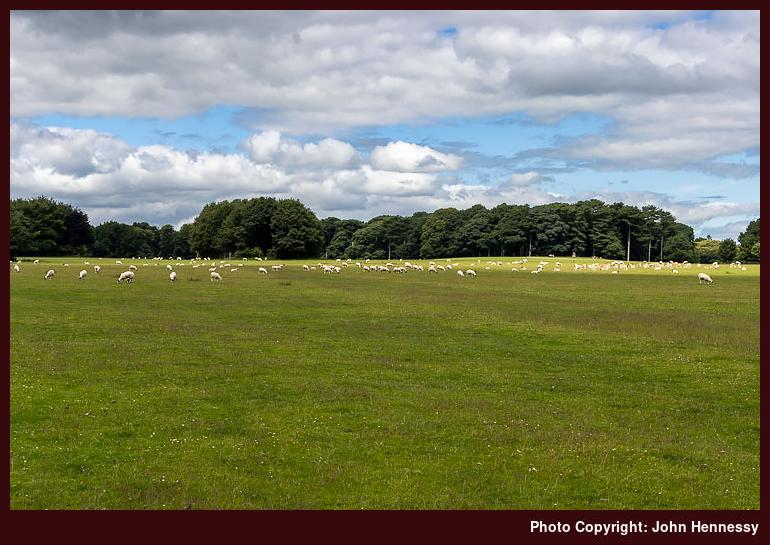
Still, a dull morning did little to stop me travelling to Knutsford by bus. There may have been earlier designs on cycling there and back once Tatton Park reopened in June, but they never came to anything. As if to emphasise how the pandemic had changed everything, I found that more were using the often quieter pedestrian entrance to the park that I started to favour instead of others. Once past that, there was more room for all in the park itself, with some sun breaking through the clouds too.
Any breaks in the cloud cover did little or nothing to help with photographic efforts around Rostherne, a pretty place and a deserted oasis where one could relax a little more. There was a return trip to both Tatton Park on a scorching Friday a few weeks later that helped with the photographic side of things. The number of cars going into Tatton Park then really struck me then, on a getaway that eased any foreboding about my being able to get through the months that lay ahead.
Returning to the first encounter with Rostherne, I then continued from there along Marsh Lane before turning onto Birkinheath Lane, which led me to join Ashley Road. The M56 lay to the north as I did all this, and I was not going to Ashley itself. Quiet unpeopled lanes were my lot, a restorative combination given all the tension of the pandemic times.
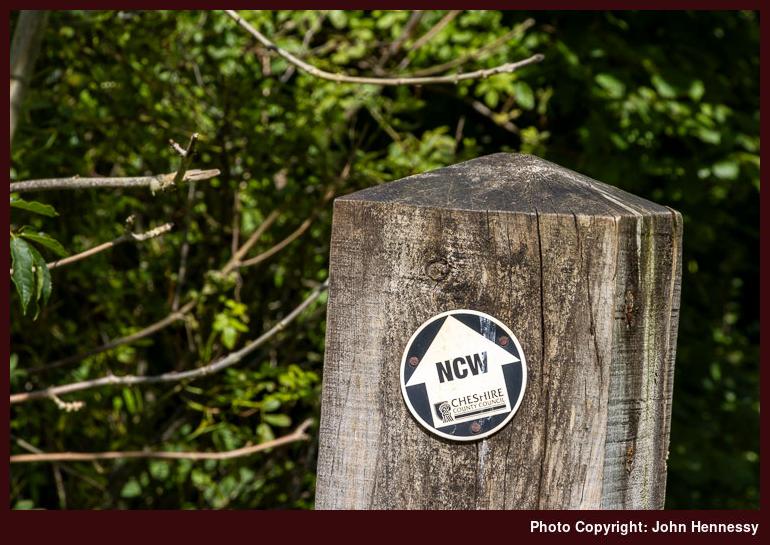
Mobberley was my next landmark. Getting there allowed me to leave tarmac tramping after me for a spell of field crossing and track travel. Others were going the way hereabouts as well, though we did not get in each other's way. After Mobberley station, I returned to field crossings again to reach the North Cheshire Way.
That conveyed me passed a deserted Manchester Airport with no flights arriving or departing. The curbs on international travel were more than evident as I strolled by the perimeter fence for the first and only time in my life. It was a far crying from the deafening din that I met while cycling underneath one of the runaways while going by the A538. My hearing thankfully recovered with no lasting effects.
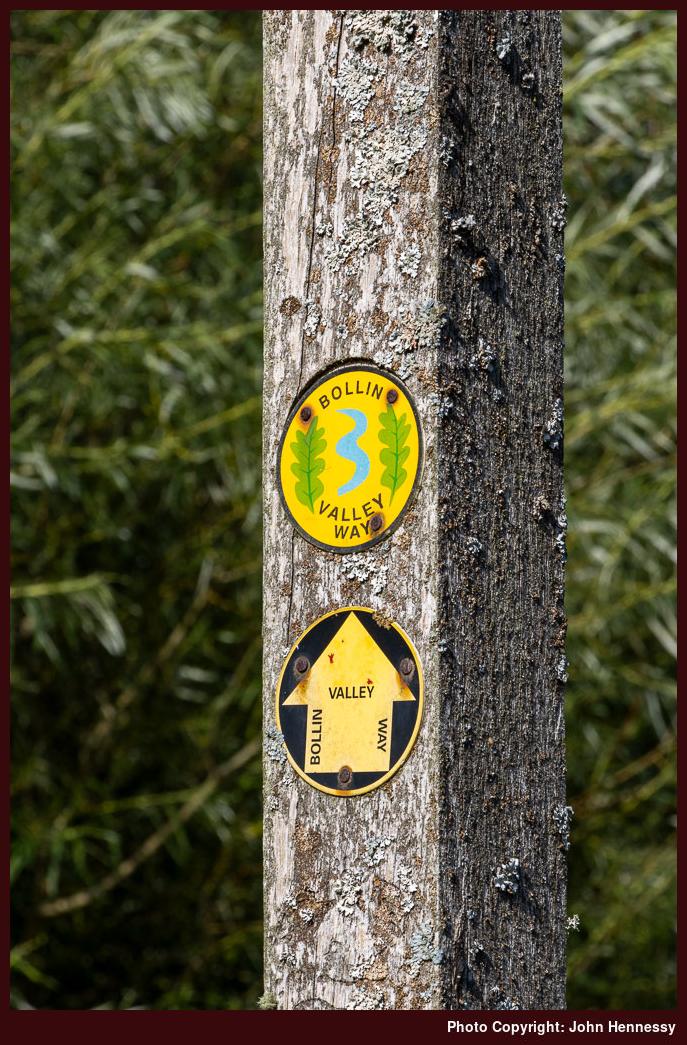
The size of the tunnel through which the River Bollin flows under the same runaways was something that surprised me when I got that far. It also meant a descent and subsequent ascent that I might have liked to avoid after walking so far and with so far to go. This also was my meeting point with the Bollin Valley Way, the course of which would convey most of the way back to Macclesfield and thus home.
Before all that, I would need to endure a very busy stretch until I passed Wilmslow. There was plenty of sun by now, and my water supplies may not have been that great at this stage. The National Trust site of Quarry Bank Mill was well peopled, as were the trails and rights of way around it. Then, there were The Carrs in Wilmslow itself, an even busier spot in many ways. This was well outside my comfort zone at the time. Nevertheless, an opportunity to buy an ice cream and a soft drink could not be passed up while in the vicinity. The first topped up my energy levels, while the second brought me added hydration.
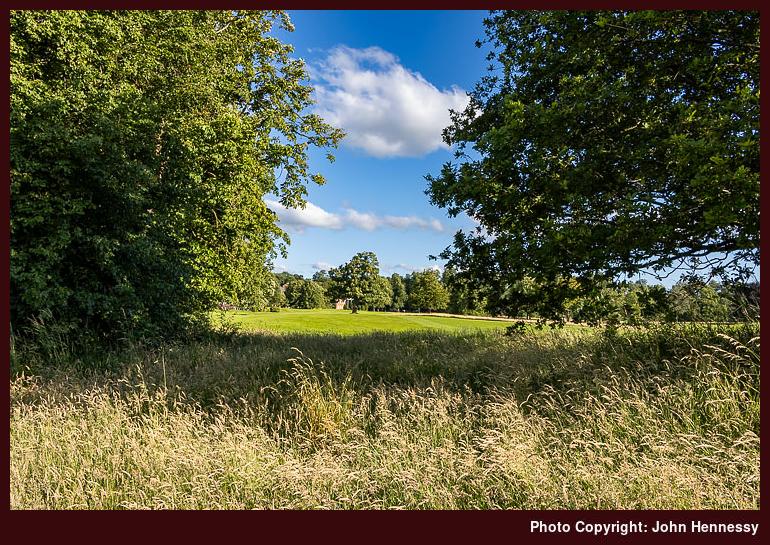
Once past where everyone had gathered, all was again blissful as I traipsed the Bollin Valley Way back to Macclesfield. This was largely unpeopled, if at times overgrown. Next to the Mottram Hall Hotel, again likely quiet because of the pandemic, was one stretch where the vegetation appeared to have gone wild. Even so, the quietude felt soothing and without worry like the busy spots where I had been. That sentiment applies to what I experienced around Prestbury and Riverside Park too. It was growing late in the day, which may have helped cut down on the numbers out and about anyway. The whole walk remains one of the longest that I have done, and I returned some with plenty of satisfaction from it all.
Travel Arrangements
Bus service 88 from Macclesfield to Knutsford.
Hiking back home from Buxton
19th June 2024 After a frustrating wait during June 2020, the essential usage restriction was removed from public transport. Though social distancing was still very much in force, I decided that local bus services could not get that busy due to their rural or interurban nature. On catching the bus to Buxton, I was proved right. There were only three or four passengers on board at any time, and the use of face coverings was a requirement. All this cut down on any sense of trepidation that anyone might have had.
Once in Buxton, I paid a brief visit to the Pavilion Gardens before setting off for Buxton Country Park under heavy grey skies. What remains in my memory from the latter is the clash between managing a dog and social distancing. That led to some imperfections in my eyes, yet it was quickly left behind me with no last ill effects. After lingering near Grinlow Tower for a while and overhearing a conversation about meeting outdoors at a campsite (some were adjusting to camping getaways at a time when hotel and guesthouse stays were heavily restricted; the summer holiday season was on the way too...), I started along the Dane Valley Way.
Before I reached Grin Low Road, I needed to brace myself for closer encounters than my contemporary sensibility would have desired. Open moorland lay ahead of me, so I gained space for my mind to relinquish any lingering qualms. After passing Ladmanlow, I headed uphill past The Terret on the way to the A54. While this is access land and I might have avoided it, I contented myself with some road walking until the trail led me away from there again.
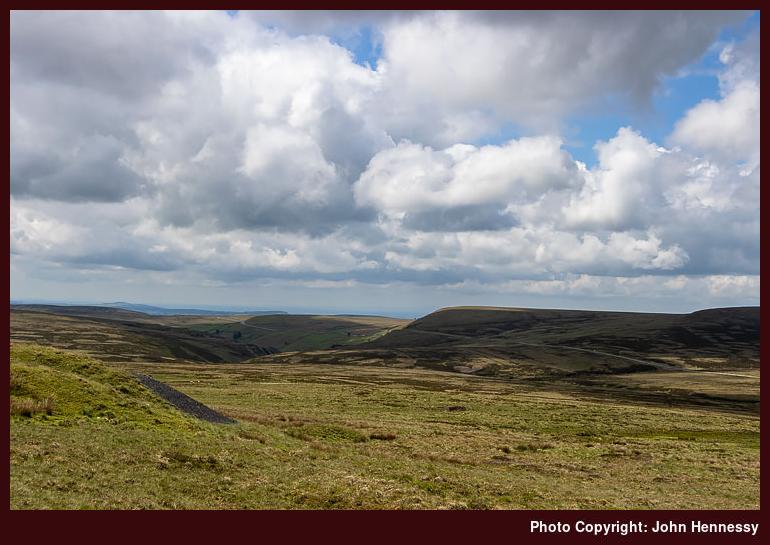
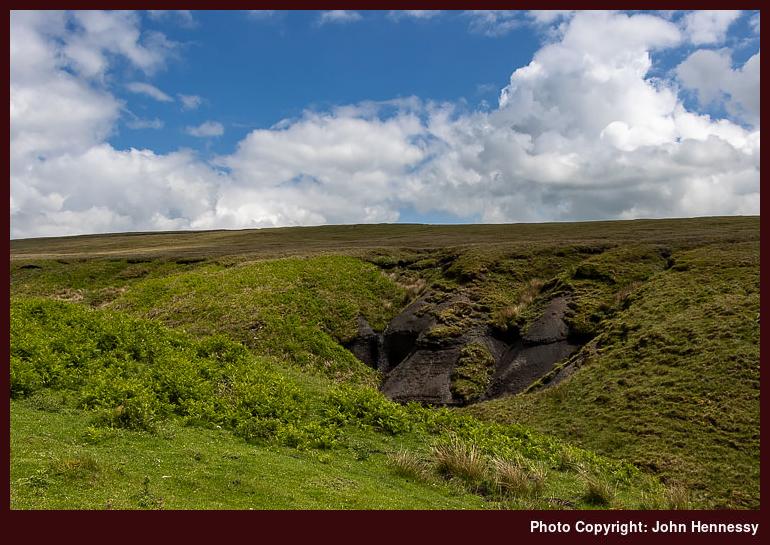
A tramp over Axe Edge Moor was my lot while I surveyed all of what lay around me. Sunshine was in short supply, though there were breaks here and there at times until clouds parted to allow longer sunny spells. The way towards and past Dane Head could have gone over soggy and sodden ground, yet that is not what I recall. All of this might have something to do with having a drier spring and early summer than often is the case.
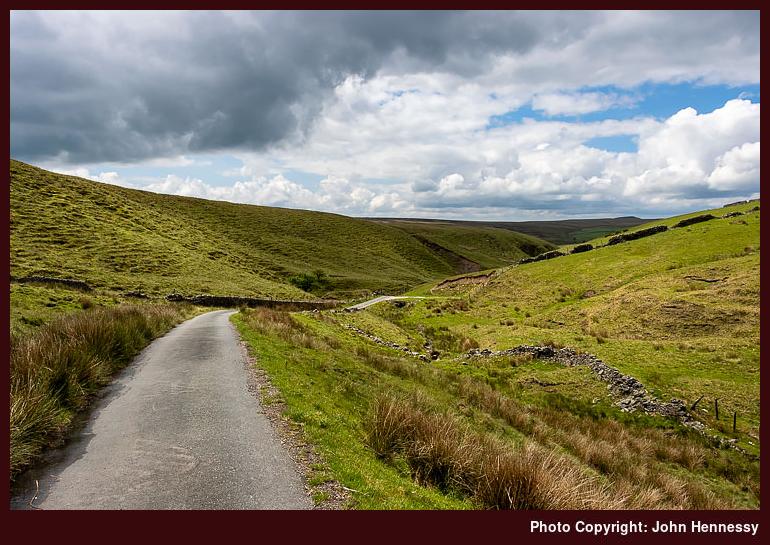
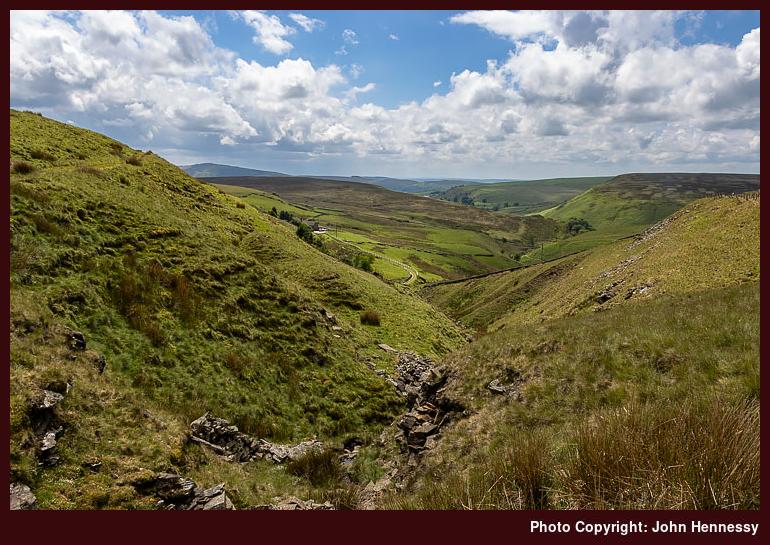
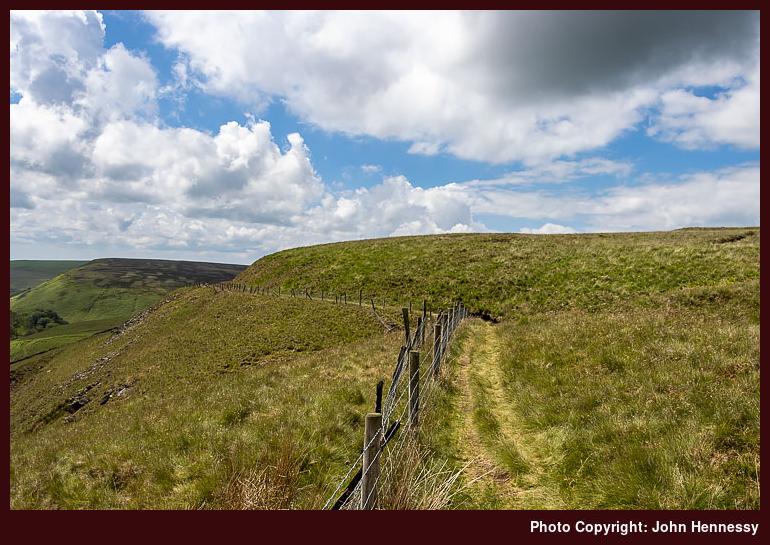
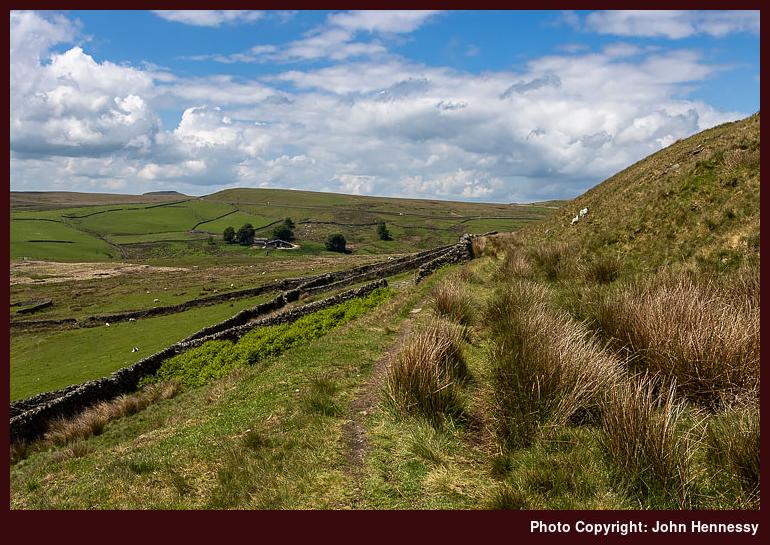
Once on a sounder track, any boggy ground was left behind me. It is not for nothing that the source of the River Dane is considered to around there, and I think I might have spotted it too. What filled my senses by then was the way by Orchard Common. The route was turning my mind to another hike walked on a frosty January day years before. That went from the Cat and Fiddle Inn to Buxton and proved to be shorter than I might have expected. That was just as well given the hours of daylight and was to show that it to be but a section of my then ongoing rambling.
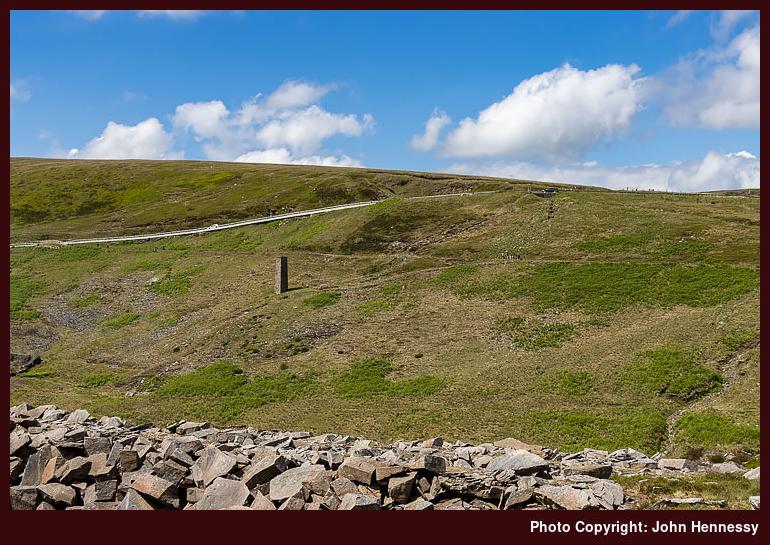
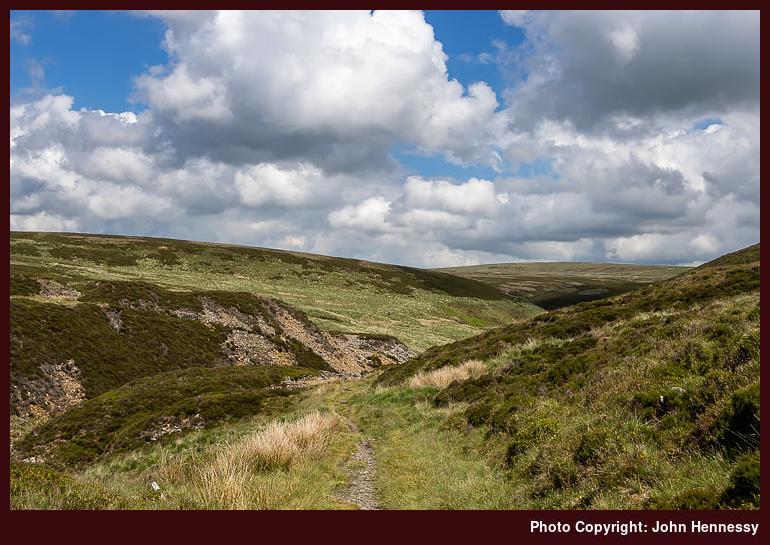
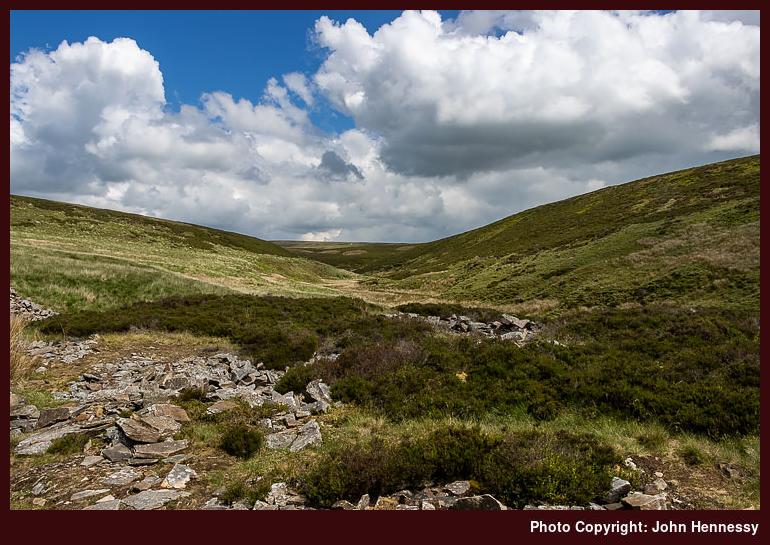
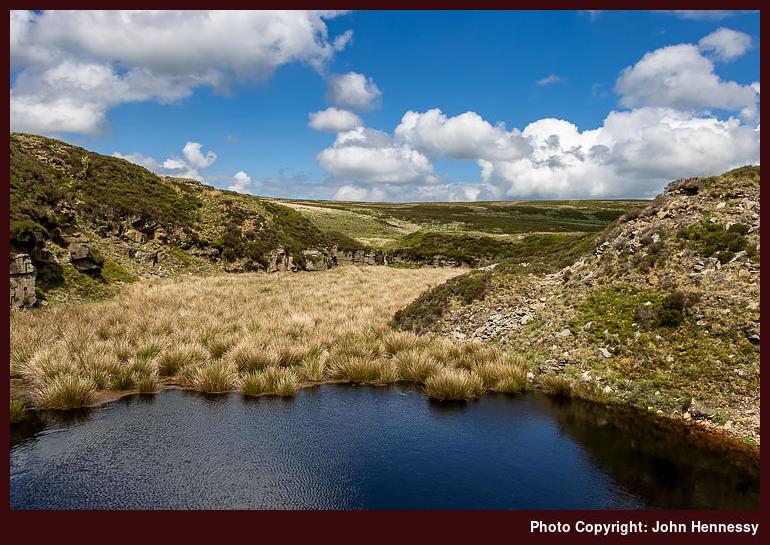
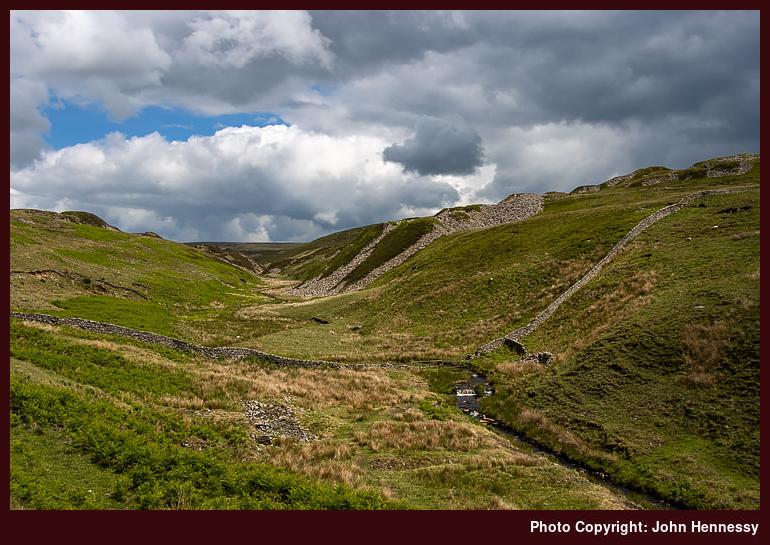
The earlier dalliance with the A54 was to be followed up with another approach. This time around, I was to be among defunct quarry workings, the Reeve-Edge and Danebower quarries. Even with a busy road nearby, these do have a scenic situation. The sun was well out by then and some photographic action ensued.
The Dane Valley does pass Three Shire Heads, an attractive spot with a pleasing packhorse bridge across the river. However, it is something of a honeypot, so I foresaw its being busy. After all, the proximity of a road allowed families to park cars and follow nearby trails. Confirming my suspicions, various groups were making their way to the aforementioned scenic and this is a narrow trail, which is no help to social distancing. Some were asking me the way, too, something that shows how many were exploring their local area for the first time.
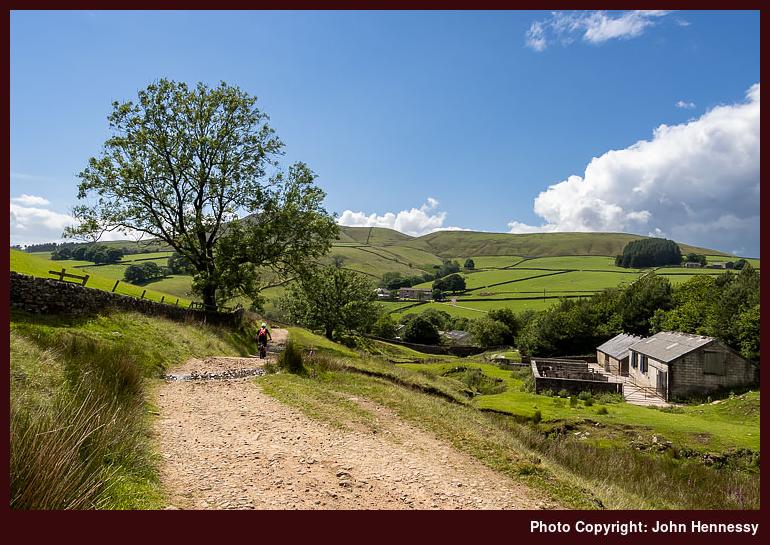
My route took me to the A54 near Holt, where I crossed to pick up the track descending to Clough House. Near Cumberland Brook, this looks like a pleasing track, yet the reality is that it was deeply rutted for much of the way. While it is designated as a byway, it would challenge any attempts of using it using wheeled means of transport for much of its length. Once my route changed direction to head straight for Clough House, I began to retrace my steps from the preceding Saturday.
Clough House was again busy, and I was happy to be past it. However, I stayed on the lane shadowing Clough Brook, then flowing peacefully in the sunshine. Be warned, though, for it is not also so placid, as the name of the nearby village of Wildboarclough testifies. Extensive damage was done in 1989 when ferocity became the nature of the flowing water.
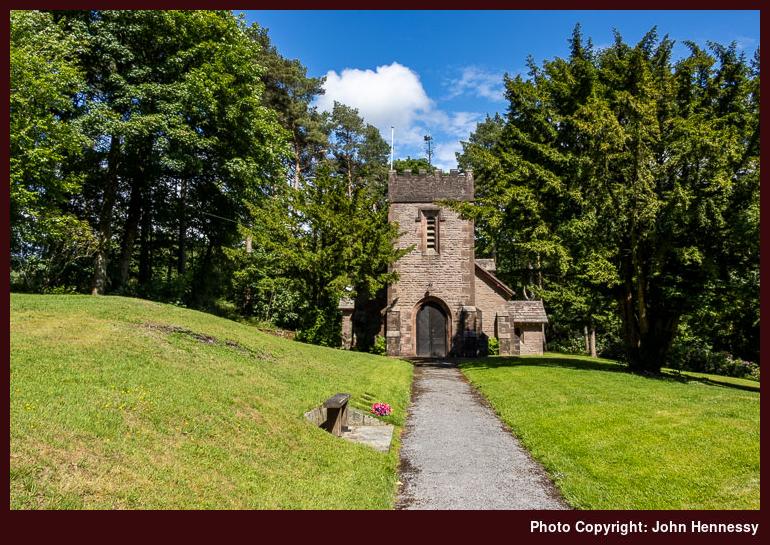
The sunshine also caused me to call to that village, hence my deciding against the public footpath that I used previously. There was a photographic call to St. Saviour's Church before I returned to what was gaining the name of Nabs Road. That took me past another pub that momentarily had become a shop before rejoining another footpath that I had trodden the previous week.
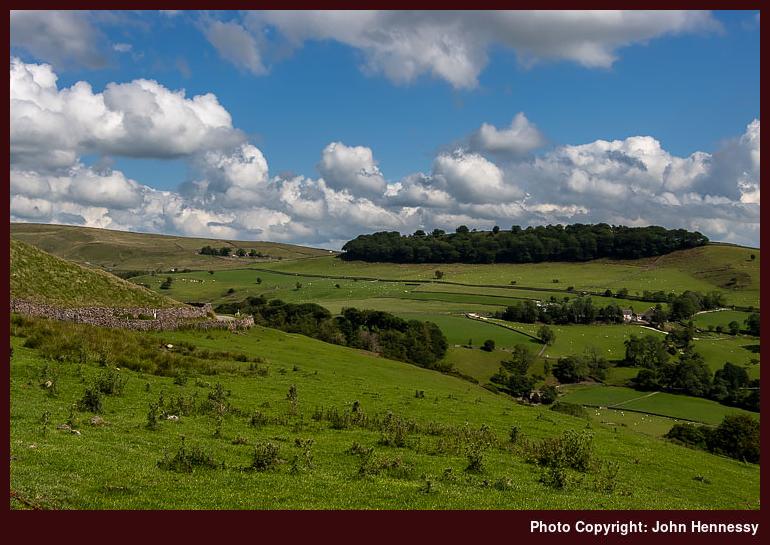
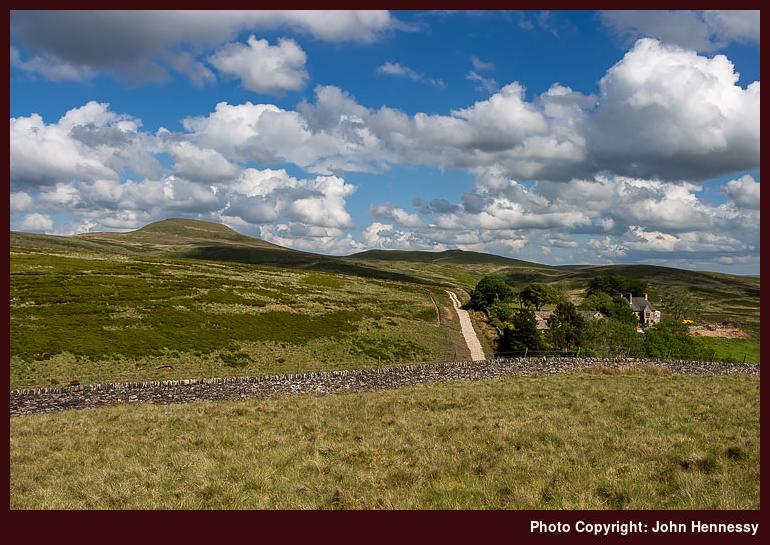
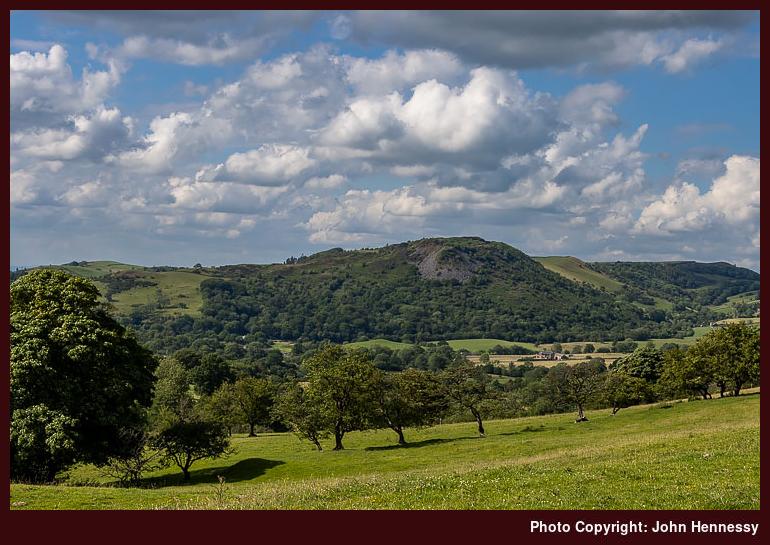
As if to continue the theme of locals discovering places where they had never gone before, I shared this with a group of dark-skinned people. My increasing weariness meant that I did not push myself to pass them until I had my chance near Lower Nabs Farm. Thereafter, I was following the route from the Shining Tor that I had completed the Saturday before. There was more sunshine this time around as I passed Greenway Bridge, Oakenclough and Higher Sutton. The consequent gain in heat began to catch me and I began to flag a bit. My having patience with slowing legs paid off on the way home, for I was there in good time at the end of a satisfying day that looked unpromising at the start.
Travel Arrangements
Bus service 58 from Macclesfield to Buxton.


