From Windermere to Kentmere and back
 12th July 2007
 A sunny Saturday escapade was out of the question because my driving lessons continue so I took my chances on Sunday. Despite the threat of thundery showers, a trek to the Lake District appealed and it didn't disappoint either. In fact, the weather in the area can do its own thing and I have been clag-bound on days when the forecast was for fabulous sunshine. This time, it was the other way around: the clouds were in plentiful supply at times but they never threatened with rain and the day turned out to be one that I will remember and treasure.
The travel arrangements involved bus journeys to and from Crewe with trains taking me from there to Windermere and back, with a change in Oxenholme. It was all fairly straightforward and I was in Windermere before 12:40. I have no idea how I managed to get this into my head but I have never thought of Windermere as a place from which to start hill walks; I had always voyaged further by bus. It took Jim Reid's Tour of the Lake District (Cicerone) to put me straight. Sunday's trek proved that there's nothing at all shabby about the hill country north of Windermere.
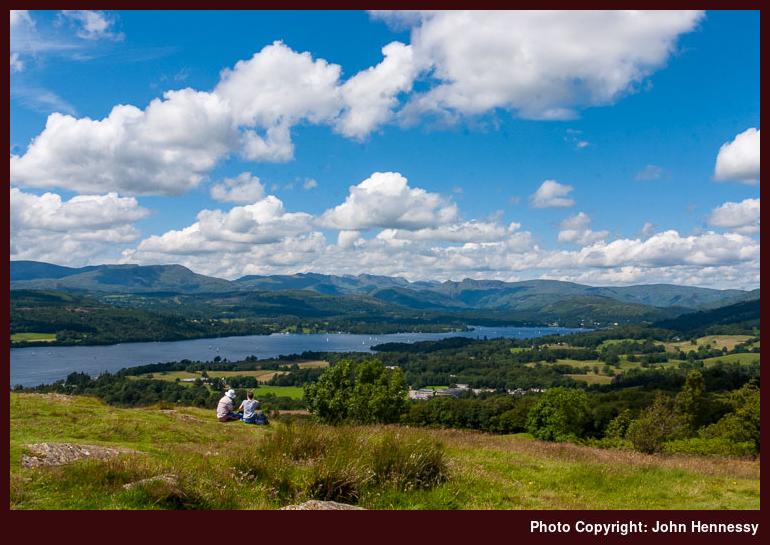
My walk took me up and over Orrest Head and the views from this modest little hill were sublime; I can see why Wainwright rated it. Its location more than makes up for any lack of height and proves that height is no prerequisite for enchanting vistas. Views up and down Windermere and the hills surrounding it are in ample supply with northern vistas also being packed fully of craggy and not so craggy delights. With sunshine in abundance, getting myself off it to continue on my way was a lengthy process.
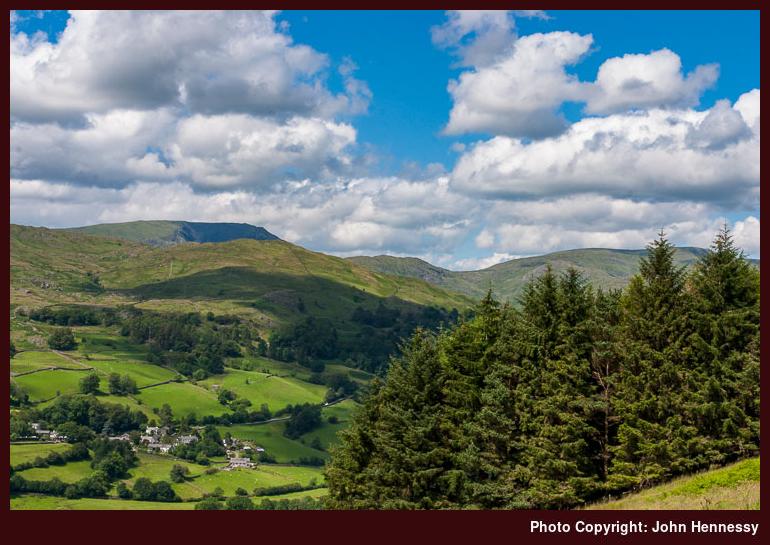
From there, I made my way to Moor Howe by a mixture of roads and public footpaths and made my way onto a track called the Dubbs Road. Deep pools almost occupying the whole width of the track in places were abundant as I walked onward to join another track, called Garburn Road. By then, I was on the slopes of Applethwaite Common above Troutbeck and road noise was percolating up from the valley below. Views of Ill Bell and other fells abounded to the north and I was soon to leave behind the bustle of road traffic to cross over Garburn Pass. A tempting track to Yoke and Ill Bell headed off to my left but I was content to leave such an excursion for another day.
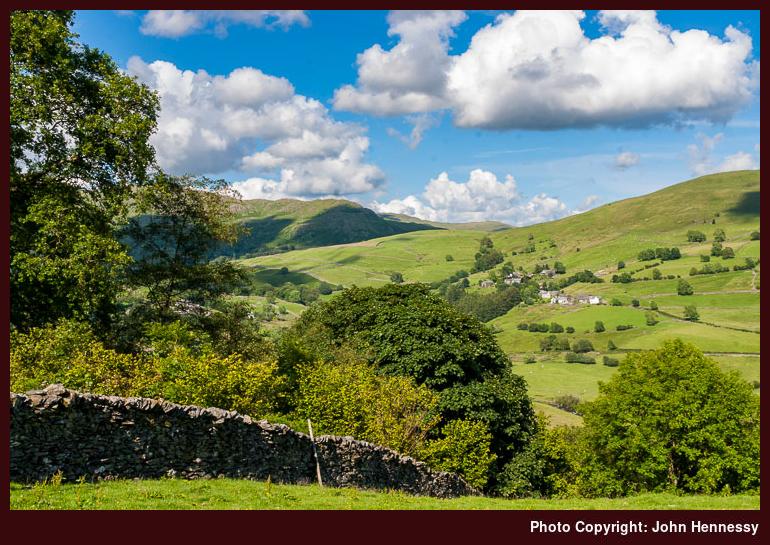
I lost height as I dropped into Kentmere valley but by then the scene was being set for a wonderful evening. I didn't go into Kentmere village itself but cut off towards Kentmere Hall and started gaining height again as I began my return to Windermere. The surrounding views were enchanting and stopping and staring slowed progress as did photographic exploits. Distractions and climbing soon became less of an issue and steady progress was made along mainly good tracks (some waterlogged patches were encountered, but that was to be expected given the weather that we have been having) until I reached High Borrans farm. From there, it was road walking all the way to Near Orrest farm and my feet weren't thanking me for it. A tramp along public footpaths offered some respite as I skirted Orrest Head took me back to Windermere where, having missed a train by ten minutes, I had a spot of time to stroll into Windermere to buy a few bits and bobs before I headed home satisfied after a good day out.
New scanner, new photos
9th July 2007 I don't normally mention computer technology on this blog, but I encountered some trouble with my scanner while trying to add new photos to the online photo gallery. As someone who continues to use film in these digital times, a scanner remains a very useful asset. I also have a digital camera, which is how most of the photos you'll find accompanying the trip reports on this blog have been captured, so I am keeping a foot in both camps.
With the inclement weather being visited upon us recently, my mind turned to some photo uploading, and I was staring with a few from trips to Wales. It was then that my usually reliable four-year-old Canon CanoScan 5000F played up. When I turned it on, the output returned was solid black. Re-running the thing a few times by hitting the preview button in Scangear saw the black turn to red and eventually the image came through but with a strong red or magenta cast that never quite went away. I fired off a query to Canon, but only got the usual stuff about drivers and cable connections. From that, I foresaw a few weeks of tick-tacking and was unconvinced that the conclusion was worth awaiting.
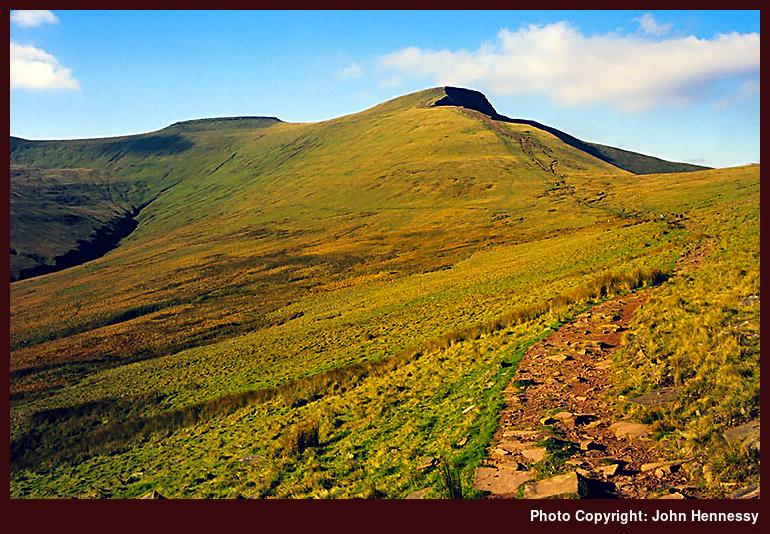
So, I picked up an Epson Perfection 4490 Photo from Dabs.com and gave it a workout with some photos from a trip to the Brecon Beacons last November. The setting up was the usual shuffle, but the software installation took an age to complete. It all works well, better than the Canon ever did, and that was a big improvement on the UMAX Astra 1220U that preceded it. A quick spot of image processing, which I always do to clean things up, was all that was required to get more than acceptable results. I was scanning prints, but negative/slide scanning is another option that I have yet to explore. Having an on/off button on the side of the scanner is a nice touch that I haven't seen before, and may even prolong the life of the machine and save a spot of energy to boot.
More recce in Rhinog country
1st July 2007 Not having ventured out on a day long hillwalking trip for most of a month (I have been venturing out locally on lovely evenings after work, but that's for another post), I took my chance on Friday and headed out to explore Rhinog country. The weather has been very unsettled recently but the promise of a mainly dry day with some sunshine lured me out and about, even if wet conditions could be expected underfoot.
The start of the day wasn't too promising: it was raining well as I made my way to Macclesfield train station. However, rain at 07:00 usually means that it dries up by 11:00 and by the time that I reached Wolverhampton, conditions were drier. Even so, showers were very much in evidence as my train passed through Shropshire and the hills of mid-Wales towards my destination. Things started to look better from Machynlleth on.
I had planned to make my Dyffryn Ardudwy but, due to some fumbling on my part (very unusual for me, but the idea of these being request stops probably made me overly cautious and I did miss the extra station because it was near a fold in the map), I unintentionally disembarked at Tal-y-bont, the preceding stop on the line. It was a fortuitous error and Tay-y-bont and Dyffryn Ardudwy are very close together anyway.
So, my walk started from Tal-y-bont and followed the delightful Afon Ysgethin with the sun making its appearance from behind the clouds every now and again. Unsurprisingly, given all the rain that we have been having, the said river was a foaming cataract (torrent would have been a tad too strong a description) and thoughts of falling into it wouldn't have been good ones to be having; as it happens, the visual delights ensured that they stayed away. If there was any doubt as to the origin of all that water, it was to be found later on the walk.
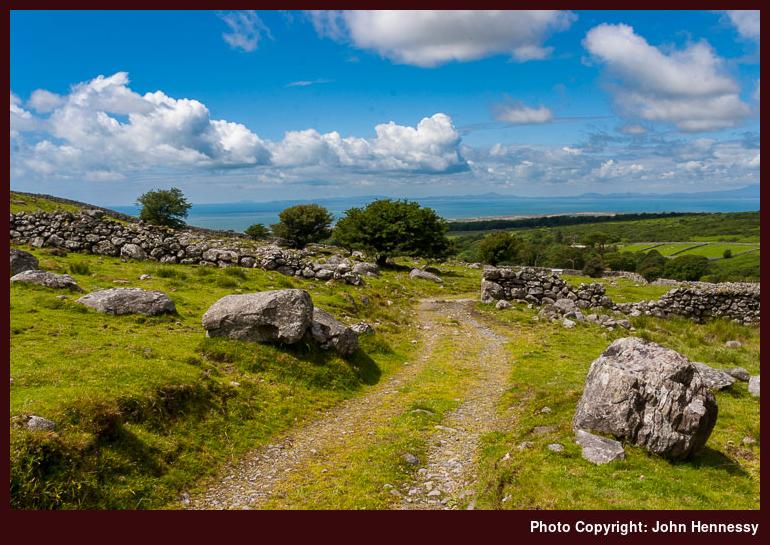
When the path among the trees ended, a right turn got me onto a track that was to expose me to views of some of the Rhinogs (Rhinogydd in Welsh). As if to draw me back again, the sun continued to be irregular in its appearances but sights of Moelfre, Diffwys, Y Llethr and others still beguiled. In time, I was to find that conditions underfoot were sodden but my Salomon boots continued to keep my feet dry and warm as I continued to find my way around to another crossing of Afon Ysgethin: Pont-Scethin. From there, I made my way to a good track that was headed from Llyn Bodlyn to Dyffryn; I left the wetness behind for a while.
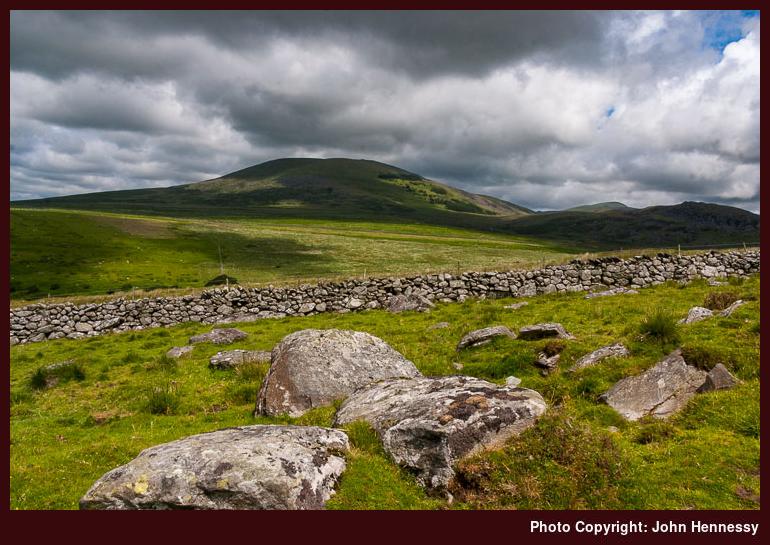
There are some wonderfully untended footpaths in Wales and, having a spot of time, I unwittingly made my way from the Llyn Bodlyn track onto one of them. Previous adventures in the Conwy valley took me through some incredibly overgrown examples of the breed but they weren't soaking underfoot like this one. Patches of Gorse provided navigational "interest" (I was beginning to wonder if undertaking this was a sign of madness) and slightly uncontrolled progress on bumpy tussocky terrain in long meadow was another "delight". By the time that I did make my way onto tarmac again, my Salomons had let some water in to wet my feet; Sealskinz socks might be a good idea for another similarly damp outing.
The diversion hadn't impacted on my making my way home and I had some time to do a quick spot of shopping in Dyffryn before I headed for the train station and home. To me, the wildness of the Rhinogs remains more than appealing and I hope to return, maybe on a longer visit; there is certainly plenty to explore here. My boots are packed with newspaper and are still drying out, so waterproof socks may well have made it onto my shopping list.
Walking in Cheshire
4th June 2007 With the long evenings upon us, the possibility of having a short evening stroll after work becomes a reality and Cheshire does supply the goods. The range of opportunities includes the hill country next to Macclesfield, public footpaths through rolling pastoral land, canal bank tracks and local long-distance trails. Friday evening saw me head into the hill country, but there'll be more on that later. Other evenings have been wiled away by the Macclesfield Canal, either by heading north to nearby Bollington or south towards Bosley and Gawsworth. Pastoral strolls have taken me between Nether Alderley to Macclesfield or, on one winter's afternoon, from my own doorstep to Wilmslow, which proved to be a shorter journey than I expected.
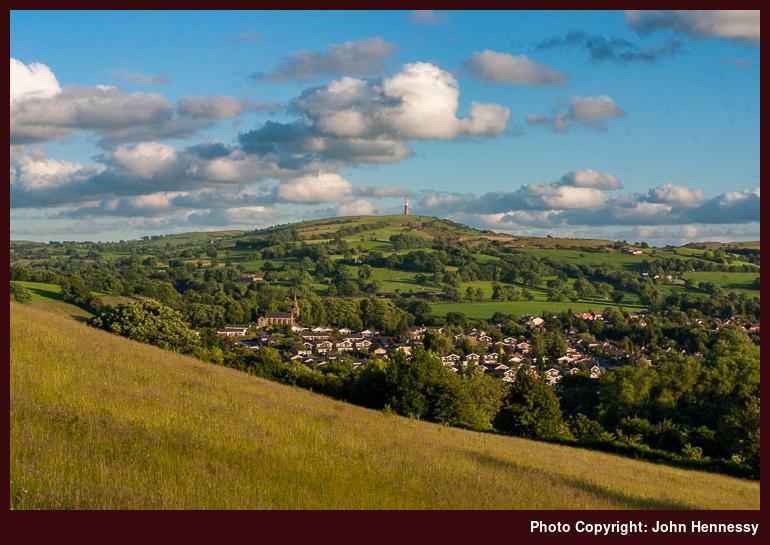
Speaking of my own doorstep, a good number of my local walks have started and/or ended right there and so it was last Friday. It was a spot of road walking that got me to Tegg's Nose Country Park, not a large place but the views make up for that. From the top of "Teggie", which was subject to quarrying in times past, I dropped down to Langley before I encountered what I consider a peach of a path; the views over the villages of Langley and Sutton towards the radio mast surmounting Croker Hill will draw me back. One afternoon, another stroll began from Teggie and that took me through Macclesfield Forest to the small settlement of Forest Chapel, over the summit of Shutlingsloe and then home via Langley. It was a six-hour venture and all I had to do was walk straight out the front door of my town centre abode.
Extending the "from my own doorstep" theme, January strolls have seen me head to Lyme Park near Disley by way of the Middlewood Way, which largely follows the alignment of the old Marple-Macclesfield railway line, and the Gritstone Trail, which extends from Kidsgrove in Staffordshire to Lyme Park. That takes me onto the longer distance paths around here. I have been known to travel over sections of the North Cheshire Way, the Bollin Valley Way (which extends from Macclesfield to Partington) and the Dane Valley Way. The latter goes from Buxton in Derbyshire to Middlewich in Cheshire and I followed part of its length while on a particularly muddy walk from the Cat and Fiddle Inn to Rushton Spencer in November 2004; the conditions underfoot were hardly a surprise given how wet 2004 was.
There's plenty of walking to be had around here all right; all that is needed is a spot of map perusal and some time to explore the possibilities. The Discover Cheshire website has a walking section where you can find out about these and other options.
Along the banks of Loch Lomond
30th May 2007 Despite the weather outlook, I decided to brave the elements and catch up with the part of the West Highland Way that follows the shores of Loch Lomond. This was going to be a two-day walk from Inverarnan to Drymen with an overnight stay at the hostel at Rowardennan, so I took my chance on the bank holiday weekend and with an extra day off work. As it happened, the weather wasn't too unkind, with only the odd light shower offering any dampness while I was out on the trail. There was a downpour at one point, but that had the good manners to wait for me to arrive at Rowardennan and savour the scenic delights on display in some fine evening sunshine before it did its thing. Thankfully, I was under cover, but that was no consolation to those campers with flooded tents - I encountered one such refugee who had made his way to the hostel for a night's stay and to dry out his gear: a very sensible decision. Other than that, it was largely dry if cloudy for a lot of the time; any sun was enjoyed with gratitude.
Loch Lomond may have a certain genteel reputation, especially with there being a song extant called "The Bonnie Banks O' Loch Lomond", but the track followed by the WHW has a reputation not in keeping with this impression. It is that part between Inverarnan and Rowardennan where the main difficulties are found; that was why my two-day walk headed south rather than north. Nevertheless, the track is not all bad, with only the section between Doune and Inversnaid being an unavoidable test of sure-footedness, balance and agility. The only other real difficulty on the WHW occurs just north of Rowardennan and a 4x4 track (a WHW route option) helpfully by-passes this obstacle course littered with fallen trees from one of this past spring's storms while also being a victim of erosion to boot.
An early morning start from Inverarnan got me on my way under predominantly cloudy skies, and they were to be with me for most of the day. In contrast, if I was heading north towards Crianlarich, blue skies and sunshine would have been my reward, but that was not the plan that I had concocted for this time around. The likes of Ben a' Chleibh, Ben Lui, Ben Oss and Ben Dubhcraig gave me much cause to gaze northwards and slow me down in the process, even if a pesky power line threatened to place a dampener on the glory of the vistas set out before me. At the very least, I know that there is some appeal to following the WHW north to bridge the gap between Inverarnan and Bridge of Orchy.
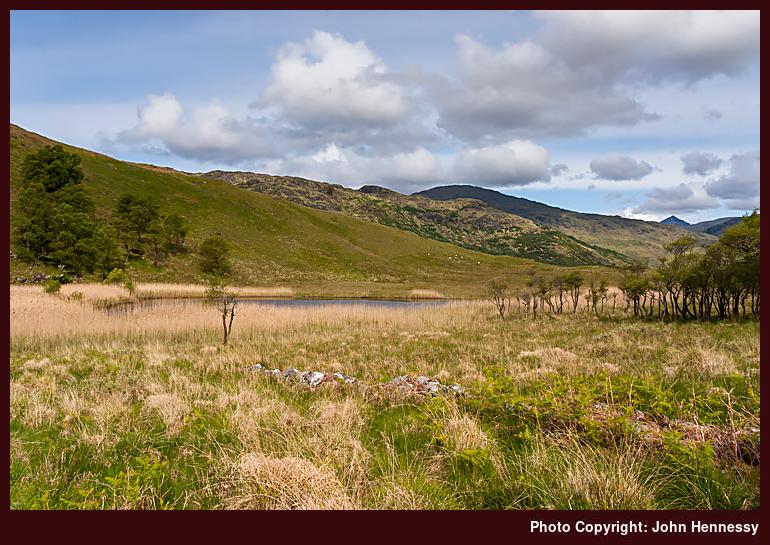
Having managed to drag myself away from the sights of such glories, it was not long until I found myself in conversation near Ardleish with a gentleman from Bangor (Wales, not N.I.) who was walking the WHW northbound with his son. We exchanged experiences before continuing our respective journeys. Having negotiated any path difficulties and enjoyed seeing bluebell carpeted woodland, I paused for a food stop at Inversnaid; I didn't venture into the hotel since I had some food with me. As I passed the hotel, I spotted a lady with a severe expression looking out through one of the front windows (no, she wouldn't have seen me taking lunch outside). It was almost as if she were on watch for aberrant walkers who might try to enter through the front door; there's a very separate entrance for us at the back and a place for us to put our rucksacks too. Severe expressions were soon replaced by far more delightful prospects: more bluebell woodland; it might have been the end of May, but they were still in their prime up here. Rowardennan remained far way, but I was at the hostel by 18:00 and, with my booking was confirmed, I found my bed for the night. This was after my adventurous side taking me away from the sensible 4x4 track at Rowchoish to follow the loch-side obstacle course; I must have been out of my senses, but it did avoid some extra ascent. Once, I sorted myself out at the hostel, I went out into the fine evening for some photographic exploits before I headed to the hotel for dinner. After that, I retired for the night.
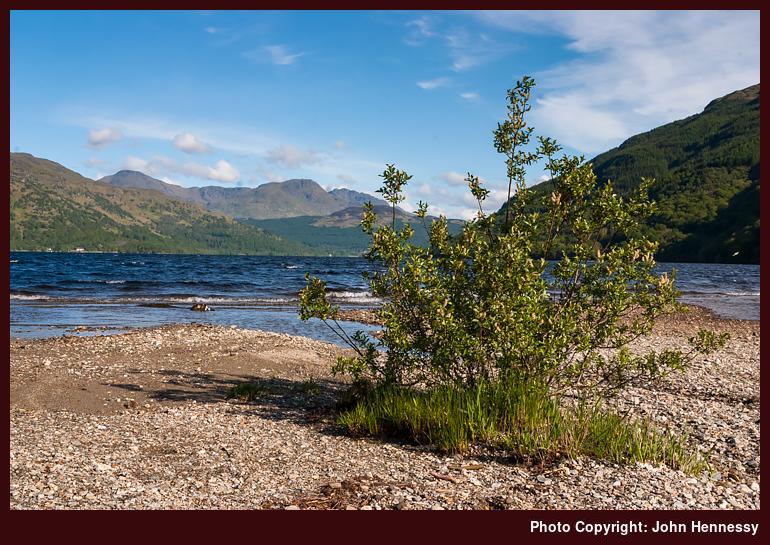
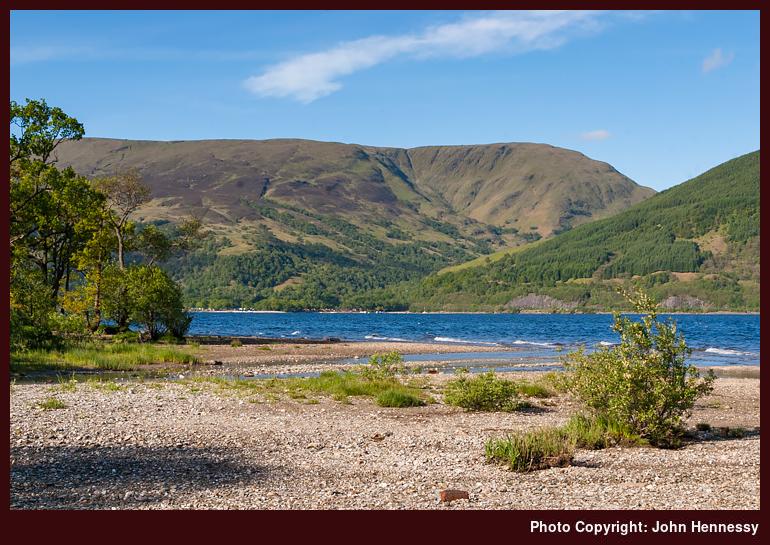
The next morning began with more photographic activity before breakfast. Knowing how fickle Scottish weather can be, I take any chance of sunshine that I get and there was plenty on offer at this time, but cloud was to dominate skies later on. A light breakfast, which included porridge, was to set me on my way and progress out of Rowardennan was slow, not because of tired muscles but because of the views that were behind me. Beyond Rowardennan, tracks are easier to negotiate, even if the way to Balmaha is still littered with sharp little ascents and descents. Proximity to the road may not be ideal, but delights are still there to be enjoyed. South of Balmaha, there is another route choice: high level via Conic Hill or low level beside the Drymen road. I stuck with the latter, even though the restrictions around Conic Hill were lifted for another year; use of the low-level route is mandatory during the lambing season. After carrying a heavy pack for a second day, I decided to leave Conic Hill for another time (combining it with a section of the Rob Roy Way for a longer hill day, perhaps?) and made my way into Garadhban Forest from Milton of Buchanan in which I negotiated a diversion due to tree harvesting operations. Much to my own surprise, I really got into my stride here, and that continued all the way to Drymen on what became a glorious evening. From there it was onto Balloch by bus for an overnight stay before I headed home again by train.


